₹170 Crore Mindset: Mr. Gandhi's Advice for Small Entrepreneurs India
Mr. Gandhi built M-Tech Innovations into a ₹170 crore tech empire starting from scratch. Here's the mindset advice he shares for small entrepreneurs in India that proves consistency beats talent every time.
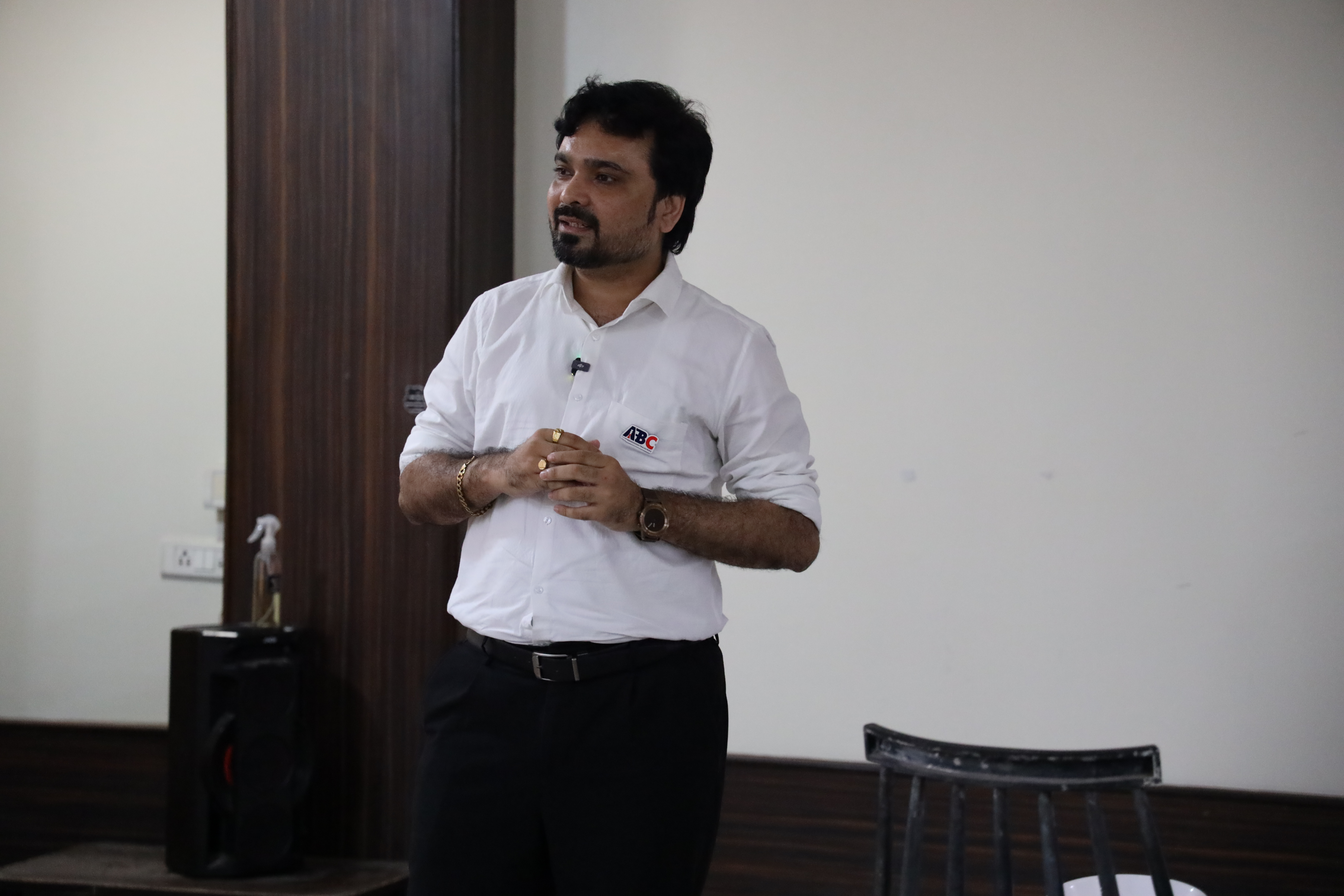
India's startup ecosystem has crossed 250 unicorns—but for every unicorn there are a thousand small entrepreneurs who never got the advice they needed in year one. Mr. Gandhi, Founder of M-Tech Innovations Ltd., built a ₹170 crore tech empire starting from almost nothing. When someone who's actually done it shares their real advice for small entrepreneurs, I listen carefully—and then I share it with every professional in my network who's thinking of making the leap, because the lessons are that good.
TL;DR- Mr. Gandhi of M-Tech Innovations (₹170 CR+) built his empire from scratch by mastering the one thing most small entrepreneurs overlook: the right mindset before the right idea.
- Consistency beats talent—the small entrepreneur who shows up daily with disciplined effort outlasts the brilliant one who acts only when inspired.
- Early-stage failures are not signals to stop; they are data. Resilience is a learnable skill, not a personality trait.
- The ONE thing most small business owners overlook: they focus on the product before they fix the mindset.
- Start small, stay consistent, build your ₹170 crore empire one disciplined decision at a time.
Who Is Mr. Gandhi and How He Built M-Tech Innovations into a ₹170 Crore Empire
Mr. Gandhi, Founder of M-Tech Innovations Ltd., did not start with funding, connections, or a market advantage. He started with a clear problem to solve and an unshakeable commitment to solving it consistently, even when conditions were against him. Over time that commitment compounded into a ₹170 crore tech enterprise that now employs hundreds of people across India. When I encounter founders with that trajectory—built from zero, not from inherited capital or IIT networks—I make it my business to understand what they actually did differently. The answer is almost always the same: mindset first, everything else second.
The Mindset Mr. Gandhi Says Every Small Entrepreneur in India Must Build First
What Mr. Gandhi emphasises most for small entrepreneurs is the priority of mindset over idea. Most aspiring entrepreneurs in India spend months perfecting a business plan before they've done the inner work of becoming someone who can execute one. The mindset needed to build from scratch includes comfort with uncertainty, tolerance for delayed gratification, the ability to fail publicly without internalising it as personal failure, and the discipline to keep showing up when results are invisible. Without these, the best business idea in India's ₹1.5 trillion startup market will fail in execution.
Why Consistency Beats Talent for Small Business Owners in India 2026
Here's the thing about consistency versus talent that Mr. Gandhi's story illustrates perfectly: talent determines your ceiling, but consistency determines how close you get to it. India produces extraordinary talent—from IITs, NITs, and thousands of engineering and management colleges across Maharashtra, Gujarat, and Karnataka. But the small entrepreneur graveyard is also full of talented people who burned bright for six months and disappeared. What kept Mr. Gandhi going through M-Tech Innovations' early years was not talent. It was a non-negotiable daily commitment to doing the next right thing, even when there was no confirmation it would work.
| Entrepreneurship Stage | Common Mistake | Mr. Gandhi's Fix | Mindset Required |
|---|---|---|---|
| Idea stage | Perfecting the plan before testing it | Validate with 10 paying customers first | Curiosity over certainty |
| Early launch | Celebrating launch; ignoring the first 30 days after | Build a daily system for the post-launch dip | Discipline over excitement |
| First failure | Treating failure as a verdict on your worth | Analyse failure as data, iterate fast | Resilience over ego |
| Growth phase | Expanding scope before mastering the first thing | Solve one problem completely first | Focus over ambition |
| Scaling | Scaling without systems, relying on founder energy | Build repeatable processes early | Consistency over inspiration |
How to Handle Early-Stage Failures and Stay Resilient as an Entrepreneur
Early-stage failure is not an exception in entrepreneurship—it's part of the curriculum. Mr. Gandhi's advice on handling failure is specific and practical: treat every failure as data, not as verdict. When a product doesn't sell, that's data about your market assumption. When a team member leaves, that's data about your culture or compensation structure. When a client says no, that's data about your pitch or your positioning. The entrepreneur who reviews failures analytically rather than emotionally recovers faster and iterates smarter. Resilience isn't a personality trait you either have or don't—it's a skill you build by staying curious about what went wrong instead of catastrophising about it.
The ONE Thing Most Small Business Owners in India Overlook Completely
The ONE thing most small business owners in India overlook, according to Mr. Gandhi, is the critical importance of the first thirty days of a new initiative. Most entrepreneurs spend their energy on the launch moment—the announcement, the pitch, the first client. But the thirty days after launch, when the initial excitement has faded and results are not yet visible, is where businesses actually live or die. The entrepreneurs who survive this window are the ones with a system: a daily routine, a clear metric to track, and a pre-committed response to the most likely early obstacle. Without the system, the dip in momentum feels like failure. With the system, it's just Tuesday.
Practical Steps Mr. Gandhi Recommends for Building from Scratch in India
Practical steps from Mr. Gandhi's framework for building from scratch in India: first, validate your core assumption with ten paying customers before building anything significant—revenue is the only real validation in India's market. Second, solve one problem completely before adding features or services; many Indian startups fail by expanding scope before mastering the first thing. Third, find one mentor who has built something similar at a smaller scale—not a celebrity entrepreneur, but someone who solved a similar problem in a similar market and can give you real, specific, actionable advice. These three steps separate businesses that survive year one from the majority that don't.
Lessons from a ₹170 Crore Founder for India's Next Generation of Entrepreneurs
What I find most valuable in Mr. Gandhi's story, and what I share in my entrepreneurship sessions across Maharashtra, is not the ₹170 crore number. It's the proof that the journey from zero to that number is available to anyone who commits to the right mindset and the right daily practices. India's startup ecosystem in 2026 has never had more accessible capital, digital infrastructure, and market opportunity. What remains the bottleneck is not resources—it's the disciplined, resilient, consistently executing founder who can convert opportunity into reality one decision at a time. That's the lesson. That's always been the lesson.
Book Avinash Chate for Your Next Event
TEDx speaker. 11+ yrs training Army, BRO, RBI, BARC, JSW. Available for keynotes, leadership training, team building & manager development at your office or event venue.
✅ Thanks! Avinash team will reach out within 24 hours.'}).catch(function(e){f.outerHTML='Something went wrong. WhatsApp +91 8793630001
'});return false;">Select ServiceKeynote / Motivational SpeakingLeadership Development TrainingTeam Building WorkshopManager DevelopmentEmployee TrainingOutbound TrainingBook Avinash Now →Or WhatsApp directly: +91 87936 30001
Related Articles by Avinash Chate
- The Real Promotion Factor: Mindset Over Qualifications India 2026
- Work-Life Balance from a ₹170 Cr Entrepreneur: India Leadership Tips
- M-Tech Gandhi's Business Ideas for India's New-Gen Entrepreneurs 2026
Avinash Chate TEDx Speaker · Founder, The Future Corporate · 11+ yrs experience Avinash has trained Indian Army, BRO, RBI, BARC, JSW Steel and 1000+ corporate leaders across India. His work focuses on leadership development, communication skills, and behavioural training rooted in Indian values and modern business needs. |
Frequently Asked Questions
Who is Mr. Gandhi of M-Tech Innovations and what makes his advice valuable?
Mr. Gandhi is the Founder of M-Tech Innovations Ltd., a tech enterprise he built from scratch into a ₹170 crore company. His advice is valuable precisely because it comes from someone who navigated the realities of building a business in India's actual market conditions—without inherited capital or a celebrity network—and arrived at a substantial outcome through disciplined effort. The lessons he shares are specific, practical, and grounded in real decisions made at real inflection points of business growth, making them directly applicable to India's current generation of small and mid-stage entrepreneurs.
What mindset does Mr. Gandhi say every small entrepreneur in India must build first?
Mr. Gandhi's primary advice is that mindset must come before business model. The mindset required to build a business from scratch includes comfort with uncertainty, tolerance for delayed gratification, the capacity to fail publicly without treating it as personal failure, and a non-negotiable daily commitment to the next right action even when results are invisible. Most aspiring entrepreneurs in India invest heavily in perfecting their business plan but skip this inner preparation entirely—and that gap is why the business idea, however strong, fails in execution when early-stage challenges arrive.
How should small entrepreneurs in India handle early-stage failures?
Mr. Gandhi's approach to early-stage failures is to treat them as data rather than verdicts. When a product doesn't sell, that's market assumption data. When a team member leaves, that's culture or compensation data. When a client says no, that's pitch or positioning data. The entrepreneur who reviews failures analytically—staying curious about what specifically went wrong—recovers faster and iterates smarter than the one who catastrophises or avoids the post-mortem. Resilience is a learnable skill built by staying analytically engaged with failure rather than emotionally defeated by it.
What is the ONE thing most small business owners in India overlook according to Mr. Gandhi?
The ONE thing most small business owners overlook, according to Mr. Gandhi, is the critical importance of the thirty days after launch—not the launch itself. Most entrepreneurs pour energy into the announcement and the first-day excitement, but the subsequent thirty days—when initial momentum has faded and results are not yet visible—is where businesses actually live or die. Entrepreneurs who survive this window have a system: a daily routine, a single clear metric to track, and a pre-planned response to the most likely early obstacle. Without that system, the post-launch dip feels like failure and breaks momentum. With the system, it's simply part of the process.
Avinash Chate services
Corporate Trainer in Maharashtra · Top Corporate Trainers in Maharashtra · Leadership Trainer in Maharashtra · Top Leadership Trainers in Maharashtra · Team Building Trainer in Maharashtra · Top Team Building Trainers in Maharashtra · Motivational Speaker in Maharashtra · Top Motivational Speakers in Maharashtra · All service locations
← Back to all articles · Book Avinash Chate
By Avinash Chate — Maharashtra’s #1 Corporate Trainer & Motivational Speaker. .