Your Brain Has Over 350 Bugs: The Cognitive Biases Quietly Destroying Your Decisions
Your brain carries over 350 cognitive biases that silently sabotage professional decisions every day. Here is how to spot and override them using Ray Dalio hyper-realism.
Let me ask you something uncomfortable: when did you last make a decision that you were absolutely certain was right — and turned out to be completely wrong? If you are being honest, it probably happens more often than you would like to admit. And here is the harder truth that I share in my book The Winning Edge, The Champion Mindset — it is not a matter of intelligence or experience. Your brain itself is the problem.
The human mind carries over 350 documented cognitive biases — systematic errors in thinking that distort how we perceive reality, evaluate information and ultimately make choices. As a corporate trainer who has worked with thousands of managers and professionals across Maharashtra and India, I have watched these invisible bugs quietly destroy careers, collapse deals, fracture teams and stall companies. The scariest part? We never see them operating. By the time we notice the damage, the decision has already been made.
In this article I want to walk you through the six cognitive biases that I see most frequently in Indian workplaces, explain what Nobel laureate Daniel Kahneman discovered about why willpower alone cannot fix them, and share the hyper-realism framework that Ray Dalio — founder of the world's largest hedge fund — uses to keep bias out of his organisation's decision-making. This is practical neuroscience you can apply starting today.
Why Your Brain Is Wired to Make Bad Decisions
Most of us were taught that thinking harder solves thinking errors. That is itself a cognitive bias. The reality, as Kahneman explained through his landmark research on System 1 and System 2 thinking, is that the brain operates on two very different tracks — and cognitive biases live in the fast lane.
System 1: The Autopilot
System 1 is your brain's automatic mode. It is fast, intuitive, emotionally driven and almost entirely unconscious. When you walk into a meeting and immediately sense that a colleague is annoyed, that is System 1 at work. When you glance at a balance sheet and instinctively know something looks off, that is System 1. It is extraordinarily useful — it handles the vast majority of daily cognitive load so you do not have to consciously process every breath you take.
But System 1 is also where virtually all cognitive biases live. It pattern-matches on incomplete data. It takes shortcuts. It reaches conclusions before the evidence is in. And crucially, it does not announce itself. You do not experience System 1 as guessing — you experience it as knowing.
System 2: The Deliberate Thinker
System 2 is slow, effortful and analytical. It is what you engage when you work through a complex financial model or carefully read a contract clause by clause. The problem is that System 2 is expensive — it consumes significant mental energy — so the brain rations it aggressively. Under pressure, in meetings, when tired, under stress: System 2 goes offline and System 1 takes over completely.
"You cannot override a System 1 bias with willpower. You need deliberate System 2 checking procedures built into your decision-making process — not just good intentions."
This is the central insight I teach in my corporate training programmes. The solution to cognitive bias is not motivation. It is architecture — building systems and habits that force System 2 engagement at the moments that matter most.
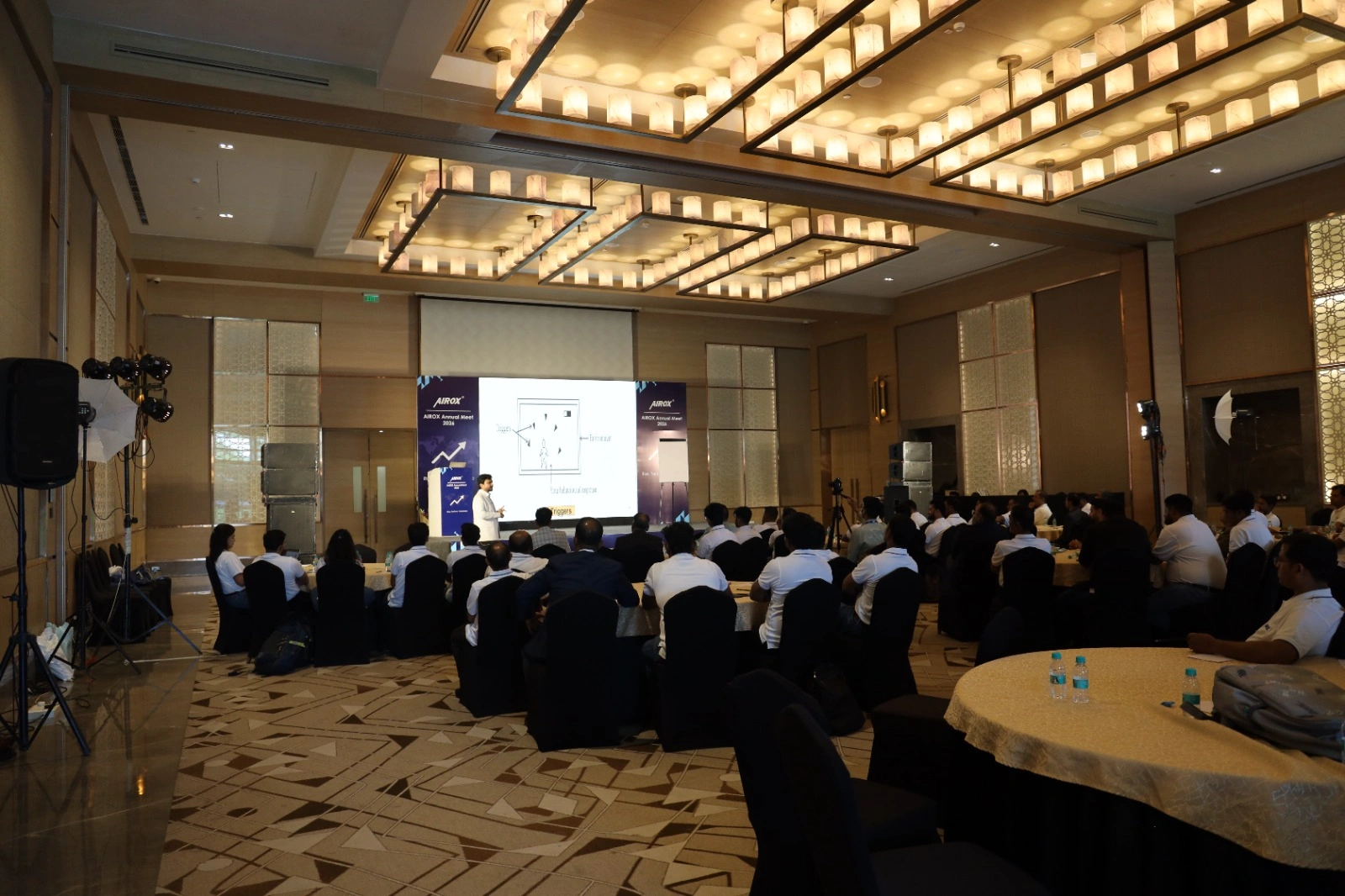
Avinash Chate leading a decision-making and cognitive bias workshop for corporate professionals.The Six Biases Most Likely to Destroy Your Professional Life
Out of the over 350 documented cognitive biases, these are the six I encounter most consistently when I work with managers, business owners and leadership teams across India. Each one is invisible in the moment and devastatingly costly in hindsight.
1. Confirmation Bias — Seeing What You Already Believe
Confirmation bias is the tendency to seek out, notice and remember information that confirms what we already believe — while unconsciously ignoring or discounting evidence that contradicts it. It is the most prevalent bias in professional settings by a significant margin.
- You are convinced a new product will succeed, so you emphasise the positive customer feedback and mentally file away the negative responses as "outliers."
- You believe a team member is underperforming, so every mistake becomes further proof — while their wins go unrecorded.
- You have decided that a particular strategy is correct, so every ambiguous data point gets interpreted in its favour.
The antidote is not to try harder to be objective. The antidote is to actively seek disconfirming evidence. Before any major decision, ask yourself: what would have to be true for me to be completely wrong about this? Then go look for that evidence deliberately.
2. Recency Bias — Mistaking the Recent for the Important
Recency bias causes us to overweight the most recent information or events when making judgements. If your last three quarters were strong, you assume the fourth will be too. If a vendor delivered late on the most recent order, you may write off a relationship that has been reliable for three years.
- Appraisal decisions that reflect the last two months of performance rather than the full year.
- Market predictions based on the last earnings season rather than long-term trend data.
- Hiring decisions influenced by the most recent candidate interviewed (who always seems most impressive).
In my workshops I call this "the fresh-paint problem" — people smell the fresh paint and forget the building is thirty years old. Always ask: what does the full data set say, not just the recent data set?
3. The Sunk Cost Fallacy — Paying for the Past With Your Future
This is the one that keeps bad projects alive for years and toxic relationships in place for decades. The sunk cost fallacy is the tendency to continue investing in a decision because of the time, money or effort already committed — even when all rational signals say to stop.
- Continuing to fund a failing product line because you have already spent significant resources on its development.
- Staying in a business partnership that is clearly damaging because you have invested years in building it.
- Persisting with a recruitment process for a candidate who is clearly not right because the interviews have already taken three months.
"The rupees you already spent are gone. The only question that matters is: given where I stand right now, does continuing this make sense going forward?"
Economics calls this "ignoring sunk costs." Neuroscience tells us why it is so hard: loss aversion — the pain of perceived loss — is twice as powerful as the pleasure of equivalent gain, and walking away from something you have invested in feels like loss even when it is actually escape.
4. Attribution Error — Blaming Others, Crediting Yourself
The fundamental attribution error has two faces. When we succeed, we attribute it to our own skill, intelligence and effort. When we fail, we attribute it to external circumstances — bad luck, difficult markets, unreliable people. When others succeed, we assume they got lucky. When they fail, we assume they lacked competence or character.
The professional cost of this bias is enormous. Leaders who cannot accurately attribute failure to their own decisions cannot learn from those failures. Teams managed by leaders who attribute every problem to external factors develop a culture of excuse-making that becomes impossible to shift.
5. The Halo Effect — One Strength, All Strengths
The halo effect is the cognitive error of assuming that because someone excels in one area, they must excel in all areas. We do this constantly in hiring: someone presents confidently in an interview, so we assume they are also technically strong, reliable and a good cultural fit. We do it with vendors: a company has an impressive office and polished branding, so we trust their delivery capability without scrutinising the evidence.
- Promoting the top salesperson into a sales management role without assessing whether their skills translate to leading a team.
- Dismissing valuable feedback because it comes from someone who made one visible mistake.
- Trusting a consultant's business recommendations because they have an impressive academic pedigree.
6. Anchoring — The First Number Owns the Room
Anchoring is the tendency to rely disproportionately on the first piece of information we receive when making decisions. In salary negotiations, the first number spoken sets the psychological reference point for everything that follows. In vendor negotiations, the opening quote anchors the entire discussion. In performance reviews, the first comment about an employee colours every subsequent evaluation.
Awareness alone is not enough to escape the anchor — research shows that even people who are told explicitly that a number is random still have their subsequent estimates significantly influenced by it. The only real defence is to deliberately generate your own independent estimate before encountering any external anchor.
Ray Dalio's Hyper-Realism: The Antidote That Actually Works
Ray Dalio, who built Bridgewater Associates into the world's largest hedge fund, developed what I describe in The Winning Edge as a practice of hyper-realism: a disciplined, systematic commitment to seeing reality as it actually is — not as you want it to be, fear it to be, or expect it to be.
For Dalio, this was not a philosophical position. It was a survival mechanism. In his view, the greatest threat to any organisation or individual is not external competition — it is the internal distortion of reality caused by cognitive bias. His response was to build structural systems that surface uncomfortable truths before they become catastrophic mistakes.
The Three Pillars of Hyper-Realism
- Actively seek disconfirming evidence. Before committing to any significant decision, deliberately look for the evidence that would prove you wrong. Do not wait for it to appear — go find it. Assign someone on your team the explicit role of arguing against your conclusion.
- Build feedback systems that surface uncomfortable truths. Most organisations are unconsciously designed to hide bad news from leadership. Information filters upward through layers of people who each soften the message slightly. Hyper-realism requires creating direct feedback channels — anonymous surveys, skip-level meetings, data dashboards that go directly to the decision-maker without interpretation.
- Separate the quality of a decision from its outcome. A good decision can produce a bad outcome due to factors outside your control. A bad decision can produce a good outcome through luck. Evaluating decisions only on outcomes is itself a cognitive bias (outcome bias). Hyper-realism means reviewing the quality of your reasoning at the time of the decision, regardless of how it turned out.
"Hyper-realism is not pessimism. It is the courage to see what is actually there — and the discipline to act on what you see rather than what you wish were true."
Practical Protocols for Indian Professionals and Managers
After training thousands of professionals across Pune, Mumbai and Maharashtra, I have identified the protocols that actually work in the fast-paced, high-pressure context of Indian corporate and business environments. Here are four you can begin this week.
The Pre-Mortem Protocol
Before launching any project or committing to any major decision, run a pre-mortem. Imagine it is twelve months from now and the project has failed completely. Write down every plausible reason why it failed. This single exercise forces System 2 engagement, surfaces confirmation bias, and makes recency bias and anchoring visible before they do damage.
The Devil's Advocate Role
In every significant meeting or decision process, formally assign one person the role of Devil's Advocate. Their explicit job is to argue against the prevailing consensus as forcefully and creatively as possible. This is not about being negative — it is about ensuring the decision has survived genuine challenge before being implemented.
The Full-Data Mandate
Every time you find yourself reaching a conclusion based on recent events, pause and ask: what does the full available data set say? Trend data, not snapshot data. A year of performance, not the last quarter. Three years of vendor history, not the last delivery. This one habit alone can largely neutralise recency bias.
The Sunk Cost Audit
Once a quarter, review your significant ongoing commitments — projects, relationships, programmes, hires — and ask of each: if I were starting fresh today, with no prior investment, would I begin this? If the honest answer is no, you are paying for the past with your future. That is the signal to stop.
Avinash Chate on stage delivering leadership and decision-making insights to corporate audiences across India.The Champion Mindset and Cognitive Clarity
In The Winning Edge, The Champion Mindset, I argue that the difference between good professionals and exceptional ones is not talent — it is the quality of their thinking. Technical skills, domain expertise and years of experience all contribute to performance. But underneath all of it is the quality of the decisions being made every day. And decision quality is directly determined by how clearly a person can see reality through the fog of their own biases.
The champion mindset does not mean being free of cognitive biases — that is neurologically impossible. It means building the habits, structures and self-awareness to catch those biases before they become costly decisions. It means having the intellectual humility to say: my first instinct may be wrong, and I am going to check it before I act on it.
This is the work I do in corporate training rooms across India. It is not motivational in the feel-good sense. It is practical, evidence-based and immediately applicable. And the professionals and teams that commit to it consistently outperform those who rely on instinct and experience alone.
Bring this to your team. I run cognitive bias and decision-making focused corporate training and keynotes for companies across Pune, Mumbai and all of Maharashtra. If your team is making decisions under pressure and you want them thinking clearer, this programme is designed for exactly that.
Book a session · Explore corporate training programs
Frequently Asked Questions
What are cognitive biases and why do they matter in the Indian workplace?
Cognitive biases are systematic errors in thinking that cause us to perceive, judge and remember information inaccurately. The human mind carries over 350 of these documented biases. In Indian workplaces — where decisions are often made quickly, hierarchically and under significant pressure — cognitive biases are especially costly. They affect hiring decisions, performance appraisals, vendor selection, market judgements and leadership calls. Understanding and countering them is one of the highest-leverage investments a professional or organisation can make.
What is confirmation bias and how does it affect managers?
Confirmation bias is the tendency to seek out and favour information that confirms our existing beliefs while discounting contradictory evidence. For managers, it means that once you have formed a view about an employee, a market or a strategy, your brain unconsciously filters all subsequent information to support that view. This makes it very difficult to course-correct. The antidote is to deliberately seek disconfirming evidence before any major decision — ask what would have to be true for you to be wrong, and then go look for it.
What is Ray Dalio hyper-realism and can it be applied in Indian organisations?
Ray Dalio hyper-realism is a discipline of seeing reality exactly as it is, not as you wish or fear it to be. Dalio built it into the culture of Bridgewater Associates through practices like radical transparency, active truth-seeking and structural feedback systems. It can absolutely be applied in Indian organisations — it does not require a Western corporate culture. It requires leaders who are willing to build systems that surface uncomfortable truths, assign Devil's Advocate roles in decisions, and evaluate decision quality independently of outcomes. I teach these practices in my corporate training programmes across Maharashtra.
How long does it take to reduce the impact of cognitive biases at work?
You cannot eliminate cognitive biases — they are wired into the brain's architecture. But you can significantly reduce their impact within weeks by adopting specific procedural habits: running pre-mortems before major decisions, separating outcome from decision quality in reviews, mandating full data sets rather than recent data, and building formal challenge roles into your decision process. Teams that practise these consistently for sixty to ninety days report measurably better decision outcomes and a culture of more honest, rigorous analysis.
The work of clearing cognitive bias from your thinking is never finished — but it is among the most important work any professional can do. If you are serious about sharpening your decision-making or bringing this clarity to your team, I invite you to connect with me directly or explore my corporate training programmes. You can also read more about the philosophy behind this work on my about page.
This article is adapted from my book The Winning Edge, The Champion Mindset.Related Articles by Avinash Chate
- Why Manufacturing Industry is Difficult to Start in India: 5 Key Challenges
- Ajit Agarkar's 21-Ball ODI Fifty Against Zimbabwe: The Silent Performer's Career Blueprint
- Clive Lloyd's 1975 World Cup Final Leadership: How Bold Captaincy Wins Under Pressure
| AC | Avinash ChateIndia's Leading Corporate Trainer | TEDx Speaker | Author With 80+ organizations trained including RBI, JSW Steels, and Ferrero, Avinash Chate delivers high-impact corporate training across India. Creator of the KITE Leadership Framework and bestselling author of "The Winning Edge." Website YouTube |
Avinash Chate services
Corporate Trainer in Maharashtra · Top Corporate Trainers in Maharashtra · Leadership Trainer in Maharashtra · Top Leadership Trainers in Maharashtra · Motivational Speaker in Maharashtra · Top Motivational Speakers in Maharashtra · All service locations
← Back to all articles · Book Avinash Chate
By Avinash Chate — Maharashtra’s #1 Corporate Trainer & Motivational Speaker. .