39 Failures Before Success WD-40’s Real Lesson for Professionals
In many workplaces today, professionals give up after the first few failures. When results do not come quickly, teams lose confidence, projects are dropped, and...
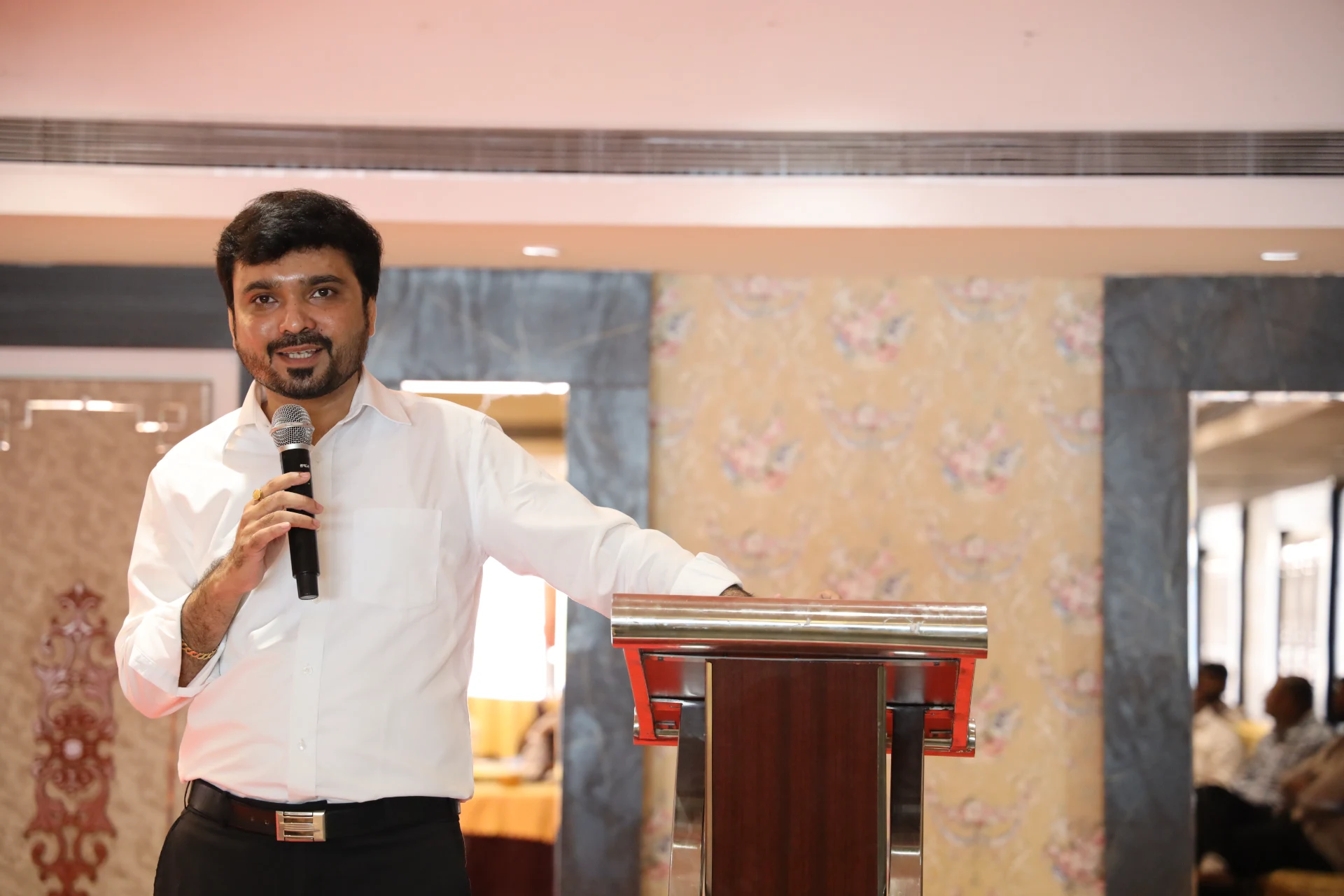
Avinash Chate - Best Motivational Speaker in India addressing corporate audience
39 Failures Before Success: The Real WD-40 Lesson Every Professional Must LearnIn many workplaces, I see a common pattern. People start with energy, enthusiasm, and ambition. But the moment they face a few setbacks, doubt begins to grow. Teams lose momentum. Managers become impatient. Individuals start asking themselves whether they are capable enough. That is exactly why the story of WD-40 matters so much.
The key takeaway is simple: failure is not always a verdict. Very often, it is feedback.
When I share this story in my sessions, I do not present it as a business anecdote. I present it as a professional reality. WD-40 did not get its winning formula immediately. It took 39 failed attempts before success came on the 40th try. That is not just a product story. It is a mindset story. It is a lesson in persistence, discipline, emotional resilience, and belief.
As a TEDx speaker, author of The Winning Edge, and someone who has worked with 80+ organizations, I have seen this truth repeatedly. The people who move ahead are not always the most talented at the beginning. Often, they are the ones who stay with the process longer than everyone else. Avinash Chate believes that this is one of the most important lessons professionals must internalize if they want long-term success.
Why the WD-40 Story Matters in Today’s Professional World
Let us look beyond the famous name. WD-40 literally reflects the 40th attempt. Imagine what happened before that. Thirty-nine times, the expected result did not come. Thirty-nine times, there was room to quit. Thirty-nine times, someone could have said, “This is not working. Let us move on.” But they did not stop.
That is the real lesson for professionals. In modern workplaces, we often expect instant outcomes. We want immediate client approval, fast promotions, quick sales conversions, smooth project execution, and perfect team collaboration. But real growth rarely works like that. Important breakthroughs usually come after confusion, correction, experimentation, and repeated effort.
I have seen this in leadership development, sales capability building, managerial effectiveness, and team performance interventions. Whether I am working with senior leaders or young professionals, the same principle applies. Early failure does not mean final failure. It simply means the method needs improvement, the approach needs refinement, or the person needs more emotional endurance.
Avinash Chate often reminds professionals that the workplace rewards consistency more than drama. Quiet persistence beats short-lived excitement.
What Professionals Usually Do Wrong After Early Failure
The biggest problem is not failure itself. The biggest problem is the meaning people attach to failure. One missed target becomes “I am not good enough.” One rejected idea becomes “Nobody values me.” One difficult presentation becomes “Public speaking is not for me.” One delayed result becomes “This effort is useless.”
This emotional overreaction damages confidence far more than the actual setback.
In my experience, professionals generally make five mistakes after initial failure.
- They personalize the setback instead of analyzing it.
- They stop too early before learning enough.
- They compare their struggles with someone else’s visible success.
- They lose discipline because motivation drops.
- They assume repeated effort means repeated pain without progress.
This is where mindset training becomes essential. We must train ourselves to ask better questions. Instead of asking, “Why am I failing?” ask, “What is this attempt teaching me?” Instead of saying, “This is not working,” ask, “What can I improve in the next version?”
That shift changes everything.
Professionals who treat failure as information become stronger. Professionals who treat failure as identity become weaker.
That is why I encourage individuals and teams to build resilience intentionally. If this topic interests you, you may also find value in Building Resilience in the Pune Manufacturing Workforce: Motivational Speaking for Pimpri-Chinchwad Industrial Belt.
The Leadership Lesson Hidden Inside 39 Failed Attempts
The WD-40 story is not only about persistence at an individual level. It is also about leadership. Leaders create the environment in which people either keep trying or give up too soon. If every failed attempt is punished, innovation dies. If every setback is mocked, confidence disappears. If every imperfect effort is judged harshly, teams stop experimenting.
Great leaders know how to create psychological safety without lowering standards. This balance is critical. I often connect this to the KITE Leadership Framework, where leaders must build not only performance orientation but also trust, involvement, and emotional ownership. A high-performing team is not built by pressure alone. It is built by helping people stay committed even when the path is difficult.
When I have worked with organizations such as RBI, one thing becomes clear very quickly. Sustainable excellence does not come from avoiding mistakes. It comes from learning faster, adapting better, and staying focused longer than the competition.
Leaders must therefore ask themselves a few important questions.
- Do my team members feel safe enough to try again after failure?
- Do I review mistakes constructively or emotionally?
- Do I reward learning agility or only immediate results?
- Do I help people separate one failed attempt from their overall capability?
These questions matter because culture is shaped in moments of disappointment, not only in moments of success.
How I Apply This Lesson in Professional Growth and Training
As Avinash Chate, I have seen many professionals transform when they stop fearing imperfect attempts. A manager who once struggled to communicate with confidence becomes a strong leader after repeated practice. A salesperson who faced rejection after rejection eventually learns how to build trust and close effectively. A team that once functioned in silos can become collaborative when they commit to improving one conversation at a time.
This is why in my sessions, I emphasize process discipline. Success is rarely one dramatic leap. It is a series of corrections. It is showing up again after a bad day. It is refining your skill after criticism. It is learning from what did not work instead of emotionally withdrawing.
If you want to build stronger teams, I recommend reading Building High Performance Teams in Corporate Pune: Strategies for Success. If you are a manager trying to improve behavioural effectiveness, you may also explore 5 Essential Managerial Behavioural Skills Every Manager Should Have in Mumbai.
These themes are deeply connected. Resilience, leadership, communication, behavioural maturity, and team alignment are not separate capabilities. They reinforce one another. When professionals become more resilient, they communicate better. When managers become more self-aware, teams perform better. When teams stop fearing failure, innovation improves.
Avinash Chate has consistently observed that breakthrough performance is usually the result of repeated refinement, not instant brilliance.
How Professionals Can Build a WD-40 Mindset
So how do you apply this lesson practically in your own career? Start with a few simple but powerful habits.
- Redefine failure as an experiment that produced data.
- Track progress, not just outcomes.
- Review what worked, what did not, and what must change.
- Build emotional stamina through routine and discipline.
- Stay in the process long enough for improvement to compound.
I also encourage professionals to create a personal reflection habit. After every setback, write down three things: what happened, what you learned, and what you will do differently next time. This prevents emotional spirals and converts disappointment into development.
Another important point is this: persistence is not blind repetition. The team behind WD-40 did not just repeat the same mistake 39 times. They kept trying, learning, adjusting, and improving. That is the kind of persistence professionals need. Not stubbornness. Intelligent persistence.
This distinction is critical. If your approach is failing, improve the approach. If your communication is not landing, refine the message. If your leadership is not creating engagement, change the style. Keep the goal, but upgrade the method.
Success Belongs to Those Who Stay in the Game
The deeper lesson of WD-40 is not about chemistry. It is about character. It reminds us that success often belongs to those who stay in the game with patience, humility, and determination. In a world obsessed with quick wins, this story brings us back to a timeless truth: meaningful achievement demands persistence.
As a TEDx speaker and author of The Winning Edge, I believe this lesson is especially important for professionals who are navigating pressure, uncertainty, competition, and changing expectations. If you have faced setbacks recently, do not let them define you too early. Your current difficulty may simply be one of the attempts before your breakthrough.
Avinash Chate encourages every professional, manager, and leader to ask one final question: am I quitting because the goal is impossible, or because the journey is uncomfortable? Many careers would change if people answered that honestly.
If you want to help your teams build resilience, leadership depth, and performance consistency, book a corporate training session here.
Frequently Asked Questions
What is the main lesson from the WD-40 story for professionals?
The main lesson is that repeated failure does not mean you should stop. It often means you are still learning, refining, and moving closer to success.
Why do professionals give up too early after setbacks?
Many professionals attach failure to their identity instead of seeing it as feedback. This creates self-doubt and causes them to quit before improvement has time to happen.
How can leaders help teams persist through failure?
Leaders can create a culture where mistakes are reviewed constructively, learning is encouraged, and people feel safe to improve without fear of humiliation.
What is the difference between persistence and stubbornness?
Persistence means staying committed to the goal while improving the method. Stubbornness means repeating the same ineffective approach without learning or adapting.
How can organizations build a more resilient workforce?
Organizations can build resilience through training, coaching, strong leadership, reflective practices, and a culture that values learning, discipline, and long-term growth.
Related Articles by Avinash Chate
- Motivational Speaker for Pune BPO and KPO Night-Shift Teams — Combating Burnout and Boosting Engagement
- Micro Management vs Ownership: Lessons for Maharashtra's Corporate Leaders
- Motivational Speaker for Lower Parel Corporate Offices — Energizing Teams in Mumbai's Evolving Business District
About the Author
Avinash Chate is a TEDx speaker, published author of The Winning Edge and The Unanswered, and founder of The Future Corporate & Business Coaching. With over 15 years of experience training 80+ organizations including RBI, JSW Steels, Ferrero, and Forbes Precision Tools, Avinash is recognized as Maharashtra's leading corporate trainer. He created the KITE Leadership Framework and the 25-Star Competency Framework™, delivering high-impact programs across leadership, team building, sales transformation, and emotional intelligence.
📞 +91 8793630001 | ✉️ connect@avinashchate.com | 🌐 avinashchate.com
Book Avinash Chate for Your Next Event
Maharashtra's #1 Corporate Trainer · India's leading Motivational Speaker & Team Building Expert · 2x TEDx · Available across India in English, Hindi & Marathi.
✅ Thanks! Avinash team will reach out within 24 hours.'}).catch(function(e){f.outerHTML='Something went wrong. WhatsApp +91 8793630001
'});return false;"> Select Service Motivational Speaking / Keynote Team Building Workshop Corporate Training / Leadership Development Manager Development Employee Training Outbound Training Book Avinash Now →Or WhatsApp directly: +91 87936 30001
Avinash Chate services
Corporate Trainer in Maharashtra · Top Corporate Trainers in Maharashtra · Leadership Trainer in Maharashtra · Top Leadership Trainers in Maharashtra · Team Building Trainer in Maharashtra · Top Team Building Trainers in Maharashtra · Motivational Speaker in Maharashtra · Top Motivational Speakers in Maharashtra · All service locations
← Back to all articles · Book Avinash Chate
By Avinash Chate — Maharashtra’s #1 Corporate Trainer & Motivational Speaker. .