Workplace Psychology: How Leaders Should React to Good News
In many workplaces, employees hesitate to share their achievements with their managers. Not because they lack confidence, but because they fear the response the...
Most leadership advice focuses on crisis management.
How to handle conflict.
How to manage failure.
How to deal with problems in the team.
But there is a quieter, more revealing leadership test that happens every day inside offices.
It appears in a simple moment.
An employee walks into your cabin and says,
“Sir, the client loved the presentation.”
Or “We finally closed that deal.”
In that moment, something bigger than the news itself is happening.
The employee is not just sharing information. They are inviting you into their success. They are silently asking a question:
“Does my success matter to you?”
Your response decides what kind of culture you are building.
The Four Ways People Respond to Good News
Research by psychologist Dr. Shelly Gable discovered that people generally respond to good news in four different ways. These responses fall into two simple dimensions: active vs passive, and constructive vs destructive.
The first type is Passive and Destructive.
This is the response where the leader ignores the achievement completely. Sometimes the conversation gets hijacked.
An employee shares success, and the leader quickly changes the topic.
“Oh good… anyway, did you finish that report?”
The message received is clear: your success is not important.
Over time, people simply stop sharing.
The second response is Active and Destructive.
Here the leader reacts, but with criticism.
“Good… but let’s see if the client stays.”
“Okay, but don’t get overconfident.”
This response quietly kills enthusiasm. Instead of celebration, the employee feels doubt.
This is why this style is often called the Dream Killer.
The third response is Passive and Constructive.
This one is very common in corporate environments.
“Nice.”
“Good job.”
“Okay.”
Technically it is supportive. But the energy is missing.
There is no curiosity, no excitement, no emotional connection. It feels like a routine acknowledgment.
Employees feel noticed, but not valued.
The fourth response is the most powerful.
It is called Active Constructive Responding.
This is when the leader becomes an amplifier of the success.
Instead of a quick reply, they show genuine enthusiasm.
They ask questions.
“What exactly did the client like?”
“How did you manage to convince them?”
“That’s fantastic. Walk me through the moment they agreed.”
This response expands the positive moment.
It tells the employee: your success matters here.
Why This Response Matters More Than You Think
We usually believe leadership is tested during difficult times.
But research suggests something surprising.
How a leader responds to good news often has a bigger impact on relationships than how they respond to bad news.
Why?
Because positive moments are opportunities to strengthen connection.
When a leader celebrates success with genuine interest, it triggers positive emotions in the employee. Motivation increases. Confidence rises. And the relationship deepens.
The workplace slowly becomes a place where people feel seen.
Small Moments Shape Workplace Culture
Culture is not created in big annual meetings.
It is created in small daily interactions.
A two-minute response to someone’s achievement can either fuel motivation or quietly drain it.
Employees remember these moments.
They remember who celebrated their wins and who brushed them aside.
Great leaders understand this simple truth:
People do not just work for salary. They work for recognition, meaning, and appreciation.
And sometimes all it takes is an enthusiastic response to good news.
About Avinash Chate
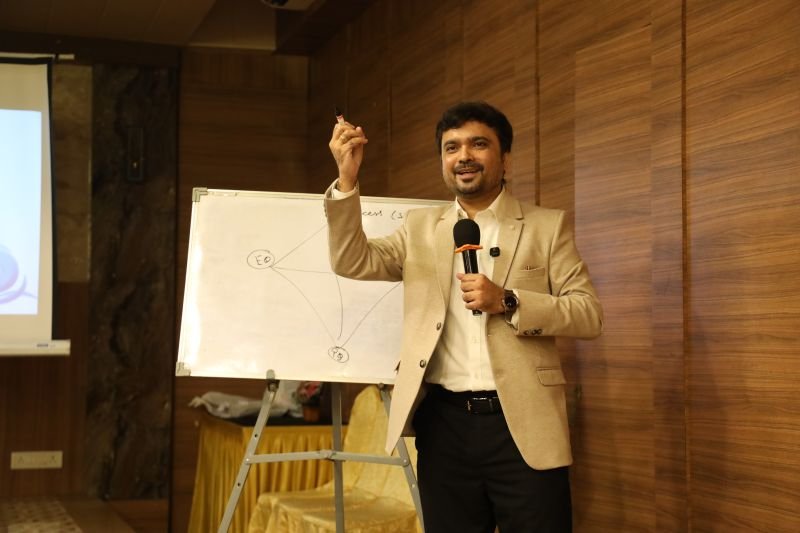
In the YouTube video attached with this topic, Avinash Chate explains the concept of Active Constructive Responding in a very practical way. Through relatable workplace examples, he shows how leaders unknowingly damage motivation by giving passive or negative reactions to good news. He also demonstrates how a simple shift in response style can energize teams, build trust, and create stronger workplace relationships. His explanation makes it clear that leadership is often revealed not in big speeches, but in small everyday reactions.
Related Articles by Avinash Chate
- From Reaction to Leadership: Mastering Emotional Control at Work
- The Drama Triangle at Work: The Hidden Pattern Destroying Team Performance
- The Ferob Model: Understanding People Before Managing Them
Avinash Chate
India's Leading Corporate Trainer | TEDx Speaker | Author
With 80+ organizations trained including RBI, JSW Steels, and Ferrero, Avinash Chate delivers high-impact corporate training across India. Creator of the KITE Leadership Framework and bestselling author of "The Winning Edge."
Website YouTubeBook Avinash Chate for Your Next Event
Maharashtra's #1 Corporate Trainer · India's leading Motivational Speaker & Team Building Expert · 2x TEDx · Available across India in English, Hindi & Marathi.
✅ Thanks! Avinash team will reach out within 24 hours.'}).catch(function(e){f.outerHTML='Something went wrong. WhatsApp +91 8793630001
'});return false;"> Select Service Motivational Speaking / Keynote Team Building Workshop Corporate Training / Leadership Development Manager Development Employee Training Outbound Training Book Avinash Now →Or WhatsApp directly: +91 87936 30001
Avinash Chate services
Corporate Trainer in Maharashtra · Top Corporate Trainers in Maharashtra · Leadership Trainer in Maharashtra · Top Leadership Trainers in Maharashtra · Team Building Trainer in Maharashtra · Top Team Building Trainers in Maharashtra · Motivational Speaker in Maharashtra · Top Motivational Speakers in Maharashtra · All service locations
← Back to all articles · Book Avinash Chate
By Avinash Chate — Maharashtra’s #1 Corporate Trainer & Motivational Speaker. .