30 नंतर वाढीसाठी Motivation नाही, Elimination गरजेचे आहे
आपल्या करिअरच्या सुरुवातीला आपल्याला सतत काहीतरी जोडायला शिकवले जाते. नवीन कौशल्ये, नवीन ओळखी, नवीन जबाबदाऱ्या. पण कधी थांबायचे आणि काय सोडायचे हे फार कमी लोक स...
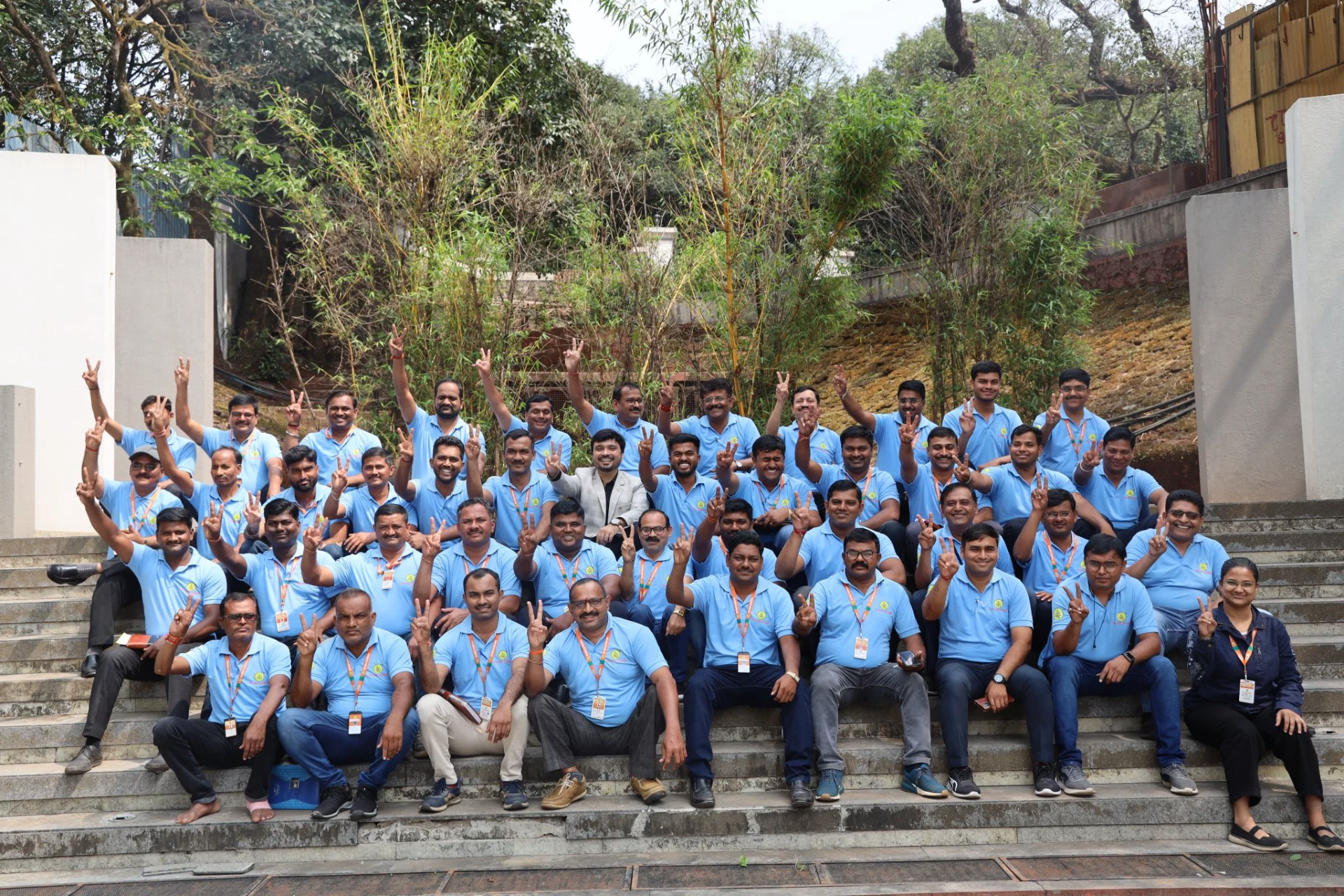
Avinash Chate - Corporate Coach at annual leadership conference
After 30, Growth Comes Less From Addition and More From EliminationIn the early years of my career, I believed growth meant adding more. More skills. More meetings. More commitments. More goals. More visibility. Like many professionals, I was conditioned to think that success was always on the other side of accumulation.
But with time, experience, and deep work with leaders and teams across industries, I realised something powerful: after 30, growth is not always about addition. Very often, it is about elimination.
Key takeaway: If you want better focus, stronger performance, and a calmer mind after 30, stop asking only, “What should I add?” Start asking, “What must I remove?”
This shift changes everything. It changes how we work, how we lead, how we protect our energy, and how we make decisions. As Avinash Chate, I have seen this pattern repeatedly while working with professionals, managers, business owners, and leadership teams. The people who grow with stability are not always the ones doing the most. They are often the ones who have learned what to stop doing.
As a TEDx speaker and author of The Winning Edge, I have had the opportunity to engage with leaders from 80+ organizations. One lesson stands out consistently: maturity is not just visible in what you pursue, but in what you consciously leave behind.
Why Addition Works Early but Fails Later
In your 20s, addition makes sense. You are learning. You are experimenting. You are building your identity. You need exposure, variety, and experience. Saying yes helps you discover your strengths.
But after 30, the game changes. Your responsibilities increase. Your time becomes more valuable. Your mental bandwidth becomes limited. If you keep operating with the same “add more” mindset, you begin to feel stretched, distracted, and emotionally drained.
This is the stage where many professionals look successful from the outside but feel disconnected on the inside. They have too many open loops. Too many expectations. Too many obligations they never consciously chose.
That is why elimination becomes a growth strategy. Not because ambition is wrong, but because clutter is expensive.
I have seen this in corporate training rooms, leadership interventions, and one-on-one conversations. Even highly capable people lose momentum when they carry outdated habits, unnecessary social comparisons, and commitments that no longer align with who they are becoming.
What Exactly Should You Eliminate?
Elimination does not mean becoming careless or detached. It means becoming intentional. It means removing what consumes energy without creating value.
Here are a few things I believe professionals must begin to eliminate after 30.
Unnecessary approval-seeking: Not every decision needs validation from friends, relatives, colleagues, or social media.
Outdated self-image: Many people still operate from labels they accepted years ago. “I am not leadership material.” “I am not creative.” “I cannot speak well.” These identities must go.
Low-value busyness: Looking occupied is not the same as creating impact.
Toxic comparison: Someone else’s timeline should not control your peace.
Relationships that drain clarity: If a connection repeatedly weakens your confidence, focus, or values, it needs boundaries.
Habits that steal attention: Constant notifications, random scrolling, and reactive work patterns quietly destroy depth.
When I say elimination, I am not talking only about external things. The bigger elimination is internal. Remove guilt that no longer serves growth. Remove fear-based decisions. Remove the pressure to impress everyone.
Avinash Chate often says in training sessions that clarity is not found only by discovering the right path. It is also found by deleting the wrong noise.
How Elimination Creates Better Leadership
One of the biggest mistakes professionals make is assuming leadership is about doing more than everyone else. In reality, leadership is often about seeing more clearly than everyone else.
This is where elimination becomes a leadership advantage. When your mind is less crowded, your judgment improves. When your calendar is less chaotic, your priorities become sharper. When your emotional energy is protected, your communication becomes more effective.
In my work through the KITE Leadership Framework, I have observed that strong leaders are rarely random. They are disciplined about what they allow into their attention. They know that every unnecessary commitment steals energy from a meaningful one.
For example, while interacting with teams from Navsahyadri Education Society's Group of Institutions, one principle became evident: institutions and individuals both grow faster when they stop carrying practices that no longer serve their present goals. Progress is not just about launching new initiatives. It is also about removing friction.
This applies to personal leadership as well. If you want to become more influential, more composed, and more effective, ask yourself:
What am I tolerating that weakens my focus?
What am I continuing only out of habit?
What part of my schedule looks important but produces little value?
What emotional baggage is shaping my decisions today?
These are not small questions. They are transformational questions.
The Hidden Cost of Not Letting Go
Many people delay elimination because it feels uncomfortable. We hold on to old routines because they feel familiar. We continue irrelevant commitments because we fear disappointing others. We keep saying yes because no feels risky.
But the cost of not letting go is far greater than the discomfort of release.
When you do not eliminate what no longer serves you, you pay in the form of confusion, fatigue, resentment, and reduced performance. You become busy but ineffective. Connected but lonely. Experienced but unclear.
I have met professionals who wanted growth but were unwilling to remove distractions. That never works for long. You cannot create extraordinary outcomes with a crowded mind and an undisciplined life.
This is also why emotional intelligence matters deeply in this phase of life. If you want to understand how self-awareness and emotional control strengthen leadership, I recommend reading Why Emotional Intelligence Is the Leadership Advantage Businesses Need Today.
Growth after 30 is not only strategic. It is emotional. You must develop the courage to disappoint the wrong expectations so that you can honour the right priorities.
A Practical Elimination Checklist for Professionals After 30
If you are wondering where to begin, start simple. Elimination does not need a dramatic life reset. It begins with small, honest decisions.
Audit your week: Identify activities that consume time but do not move your goals forward.
Reduce reactive communication: Not every message deserves an immediate response.
Review your circles: Spend more time with people who bring perspective, not pressure.
Delete one draining habit: Choose one pattern that repeatedly lowers your energy and remove it for 30 days.
Clarify your current season: What matters now may be different from what mattered at 25.
Say no with dignity: Boundaries are not arrogance. They are self-respect in action.
Professionals who do this consistently become lighter, sharper, and more effective. They stop living by default and start living by design.
At this stage, technology can either amplify your clarity or your distraction. If you want a broader perspective on how future-ready professionals and businesses must think, read AI and Data Will Decide the Next Market Leaders.
And if you want to understand my broader approach to transformation, communication, and performance development, you can also explore Motivational Speaker in Aurangabad for Corporate Training and Growth.
My Final Thought: Maturity Is Selective Focus
If I had to express this in one line, I would say this: the first half of growth teaches you to collect, but the next phase teaches you to choose.
After 30, your success depends less on how much you can carry and more on how wisely you can filter. You do not need to attend every opportunity, prove yourself in every room, or continue every pattern you once started.
You need clarity. You need focus. You need the discipline to eliminate what is misaligned.
As Avinash Chate, I believe the strongest professionals are not those who are endlessly available to everything. They are the ones who are deeply available to what truly matters.
So pause and ask yourself today: what in my life looks normal, but is silently blocking my next level of growth?
Your answer may not ask you to add more. It may ask you to let go.
If you are looking to build stronger leaders, more focused teams, and a high-performance culture in your organisation, book a corporate training session. I would be glad to support your growth journey.
Frequently Asked Questions
Why is elimination more important than motivation after 30?
After 30, most professionals are not lacking ambition. They are overloaded with distractions, expectations, and unnecessary commitments. Elimination creates space for motivation to work in the right direction.
What should I eliminate first in my professional life?
Start with low-value busyness, approval-seeking, and habits that reduce your focus. The first elimination should be something that gives immediate mental clarity.
Does elimination mean becoming less ambitious?
No. Elimination is not the opposite of ambition. It is the protection of ambition. It helps you direct your time and energy toward what matters most.
How does elimination improve leadership?
It improves decision-making, communication, emotional control, and strategic focus. Leaders perform better when they are not mentally crowded by unnecessary noise.
How can organisations apply this idea?
Organisations can eliminate redundant meetings, unclear priorities, outdated processes, and communication overload. This improves productivity, engagement, and execution quality.
Related Articles by Avinash Chate
- The Untold Truth Behind UPSC and MPSC Failure: What 99% of Aspirants Are Never Told
- Motivational Speaker for Mumbai's Hybrid Work Challenges — Bridging the Office-WFH Divide in India's Corporate Capital
- Best Motivational Speaker in Maharashtra — Top 10 Trainers 2026
About the Author
Avinash Chate is a TEDx speaker, published author of The Winning Edge and The Unanswered, and founder of The Future Corporate & Business Coaching. With over 15 years of experience training 80+ organizations including Sakla Group, Aurangabad electricals, Kaeser Compressors India, ADS Technologies, Avinash is recognized as Maharashtra's leading corporate trainer. He created the KITE Leadership Framework and the 25-Star Competency Framework™, delivering high-impact programs across leadership, team building, sales transformation, and emotional intelligence.
📞 +91 8793630001 | ✉️ connect@avinashchate.com | 🌐 avinashchate.com
Book Avinash Chate for Your Next Event
Maharashtra's #1 Corporate Trainer · India's leading Motivational Speaker & Team Building Expert · 2x TEDx · Available across India in English, Hindi & Marathi.
✅ Thanks! Avinash team will reach out within 24 hours.'}).catch(function(e){f.outerHTML='Something went wrong. WhatsApp +91 8793630001
'});return false;"> Select Service Motivational Speaking / Keynote Team Building Workshop Corporate Training / Leadership Development Manager Development Employee Training Outbound Training Book Avinash Now →Or WhatsApp directly: +91 87936 30001
Avinash Chate services
Corporate Trainer in Maharashtra · Top Corporate Trainers in Maharashtra · Leadership Trainer in Maharashtra · Top Leadership Trainers in Maharashtra · Team Building Trainer in Maharashtra · Top Team Building Trainers in Maharashtra · Motivational Speaker in Maharashtra · Top Motivational Speakers in Maharashtra · All service locations
← Back to all articles · Book Avinash Chate
By Avinash Chate — Maharashtra’s #1 Corporate Trainer & Motivational Speaker. .