Ambati Rayudu's Overnight Retirement: What It Teaches Every Professional About Learned Helplessness
One World Cup rejection ended Ambati Rayudu's career overnight. Here is what that moment reveals about learned helplessness and the explanatory style that separates champions from quitters.
On a single afternoon in April 2019, Ambati Rayudu — one of Indian cricket's most talented middle-order batsmen — was left out of India's ICC World Cup squad. By the very next morning, he had announced his retirement from all forms of international cricket. One rejection. One night. One career, closed forever.
When I first read that news, I did not feel surprised. I felt sad — because I recognised exactly what had happened, and I had seen the same pattern in boardrooms, sales floors and classrooms all across Maharashtra. In Chapter 8 of my book The Winning Edge, The Champion Mindset, I call this pattern learned helplessness — a psychological state first identified by psychologist Martin Seligman, where a person stops trying entirely after repeated perceived failures, even when the situation is still completely recoverable.
Rayudu's story is not just a cricket story. It is every professional's story — the sales manager who stops pitching after three lost deals, the entrepreneur who shuts down after one failed launch, the student who stops studying after a single bad result. The question is not whether you will face rejection. You will. The question is what story you tell yourself about it — and that story will decide everything.
What Is Learned Helplessness and Why Does It Destroy Careers?
Martin Seligman's foundational research showed that when people (and animals) experience repeated situations where their actions seem to have no effect on outcomes, they eventually stop acting altogether — even when circumstances change and action would now succeed. They learn to be helpless. They internalise a single, devastating belief: nothing I do matters.
In professional life, learned helplessness rarely arrives all at once. It builds quietly, one "no" at a time, one missed promotion at a time, one failed proposal at a time — until a person stops raising their hand, stops sending the email, stops putting in the application. From the outside it looks like laziness or lack of ambition. From the inside it feels like realism. It is neither. It is a trained response to pain.
The Three Dimensions That Determine Your Response
Seligman identified three dimensions along which people explain bad events to themselves. These dimensions create what he called your explanatory style, and they are the hidden engine behind either resilience or collapse:
- Permanence: Is this setback temporary or permanent? "I did not get selected this time" vs. "I will never get selected."
- Pervasiveness: Is this setback specific or does it contaminate everything? "I missed this opportunity" vs. "Everything in my life is ruined."
- Personalisation: Is this about external factors or is it entirely my fault? "The selectors had a different strategy" vs. "I am simply not good enough — full stop."
Champions attribute bad events as Temporary, Specific and (often) External. People heading for learned helplessness attribute bad events as Permanent, Pervasive and Personal. The events are identical. The interpretation is worlds apart.
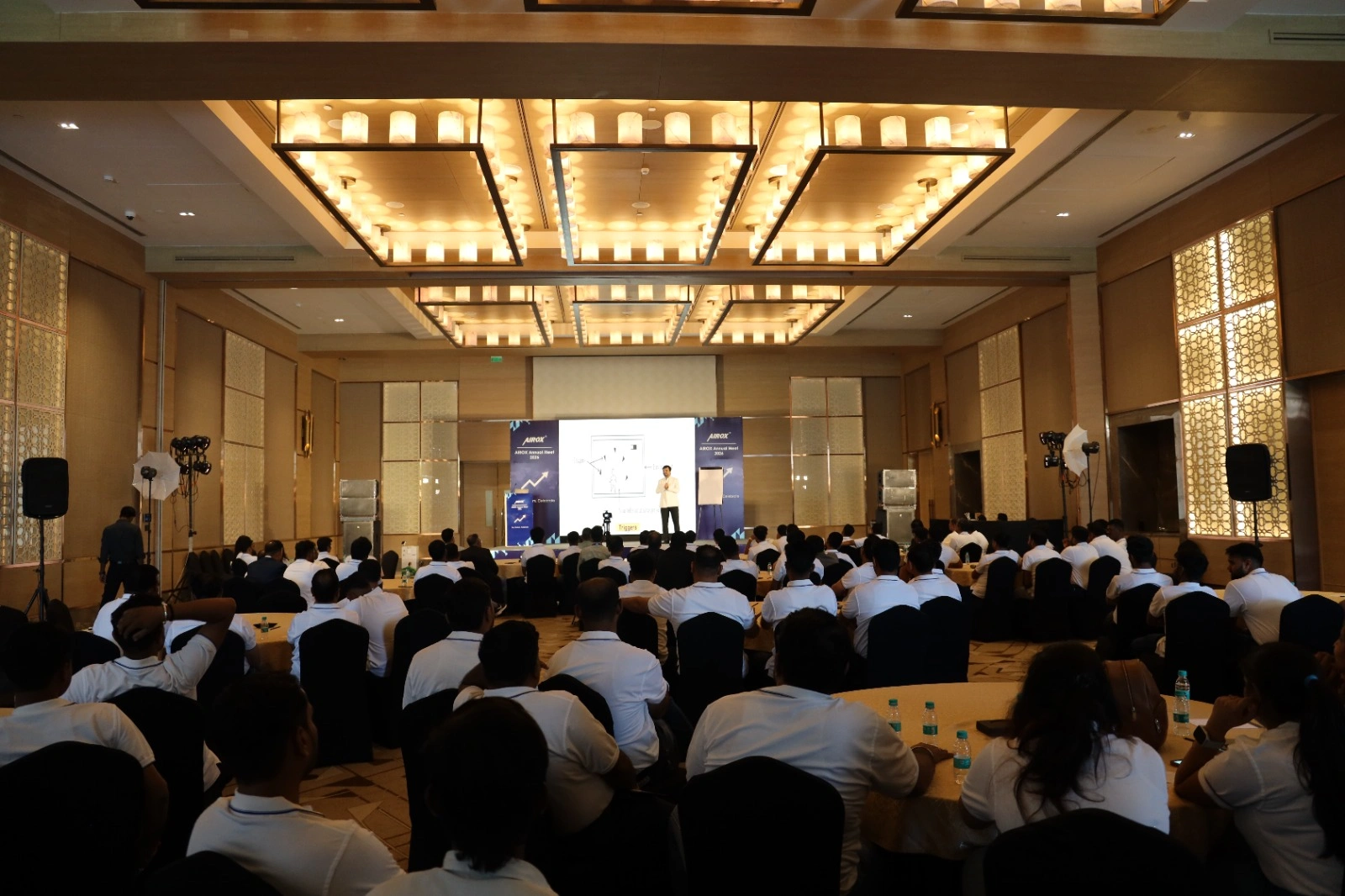
"The difference between a champion and a quitter is rarely talent. It is almost always the story they tell themselves about the same set of facts." — Avinash Chate, The Winning Edge, The Champion MindsetAvinash Chate conducting a corporate mindset workshop — helping professionals reframe setbacks with a champion explanatory style.
Ambati Rayudu vs. Matt Biondi: Two Athletes, Two Choices, Two Destinies
To make the contrast sharp, I always pair the Rayudu story with the story of American swimmer Matt Biondi at the 1988 Seoul Olympics. Biondi was expected to win seven gold medals. In his first two events, he finished with a silver and a bronze — a massive underperformance by his own standards, and the global media began writing his obituary.
Biondi did not retire. He did not give a press conference saying the Olympics had finished for him. He told himself something very different about those two results:
- Temporary: "This is one rough session. The tournament is not over."
- Specific: "These two events went badly. My other events are different."
- External: "Conditions, tactics, opponents — many variables contributed to this."
He went on to win five gold medals in his remaining events. Five. After two failures. That is the power of explanatory style.
Now look at Rayudu's response to his World Cup omission. His retirement announcement was the behavioural equivalent of saying:
- Permanent: "My chance is gone. There is no coming back from this."
- Pervasive: "Cricket has finished for me — not just the World Cup, but all cricket."
- Personal: "I am not wanted. I am not good enough."
One rejection, interpreted through a Permanent-Pervasive-Personal lens, ended a career that might have had years left in it. Biondi's temporary stumble, interpreted through a Temporary-Specific-External lens, became the platform for one of the greatest individual performances in Olympic swimming history.
"Rayudu was not a weak man. He was a talented man who used a weak explanatory style at the worst possible moment. That is the real tragedy — and the real lesson." — Avinash Chate
How This Pattern Plays Out Every Day in Indian Workplaces
In my corporate training programmes across Pune, Mumbai and Maharashtra, I see versions of the Rayudu moment every single week. The names and industries change. The pattern does not.
The Sales Professional Who Stops Calling
A salesperson loses three consecutive deals. Instead of analysing each deal separately — different clients, different objections, different contexts — they conclude: "I cannot sell. This market does not want what I offer." They start avoiding difficult calls. Their pipeline dries up. Their manager sees low activity, not low confidence, and the wrong problem gets diagnosed. The real issue is a Permanent-Pervasive attribution sitting untouched in that professional's mind.
The Manager Who Stops Proposing Ideas
A middle manager puts forward a cost-saving initiative. Senior leadership rejects it — perhaps because of budget timing, perhaps because of internal politics. The manager concludes: "My ideas are not valued here." They stop contributing in strategy meetings. Their silence is read as disengagement. They miss their next promotion. The rejection that triggered the silence had nothing to do with their ability — but their explanatory style turned a single, specific, temporary rejection into a permanent verdict on their worth.
The Entrepreneur Who Shuts Down Too Soon
A first-time founder in Pune launches a product. The initial response is lukewarm. Instead of seeing this as a specific signal about positioning or timing — both of which are correctable — they conclude: "I am not cut out for business." They shut down. Six months later, a competitor solves the same problem with a minor pivot and builds a successful venture. The original founder had the idea, the skills and the market. What they lacked was an optimistic explanatory style to carry them through the early friction.
The Champion Explanatory Style: A Practical Framework
In my workshops I teach professionals a simple but powerful reframe I call the TPE Check — Temporary, Partial, External. Whenever you face a setback, run it through these three questions before you decide what it means:
- Is this truly permanent? Will this situation still look the same in six months? In two years? Almost always, the honest answer is no. Acknowledge the time boundary.
- Is this truly pervasive? Does this failure affect every area of your work and life, or is it contained to one specific context? Draw the real boundary. Most setbacks are far smaller than they feel in the moment.
- Is this entirely personal? What external factors contributed — market conditions, timing, other people's decisions, information asymmetry? Acknowledge your role honestly, but do not absorb responsibility for factors outside your control.
This is not about denying responsibility or making excuses. It is about accurate thinking. The optimistic explanatory style is not blind positivity — it is precise attribution. Champions are more accurate about their setbacks than pessimists are, not less. They simply refuse to inflate a specific, temporary, partially-external event into a permanent verdict on their entire identity.
"Optimism is not about pretending the rejection did not happen. It is about refusing to let one rejection write the rest of your story." — Avinash Chate, The Winning Edge, The Champion MindsetAvinash Chate sharing the champion mindset framework at a leadership keynote across Maharashtra.
Building Resilience in Your Team: What Leaders Can Do Right Now
Individual explanatory style matters enormously. But leaders have a compounding responsibility — because their response to their team's failures either reinforces or reverses learned helplessness at scale. If you lead a team in India today, here is what you can do immediately:
Debrief with Precision, Not Blame
When a project fails, resist the instinct to assign blame broadly. Instead, run a structured debrief: What was Temporary about this failure? What was Specific to this project? What External factors were genuinely at play? When teams learn to analyse failure precisely, they stop catastrophising — and they come back stronger to the next challenge.
Celebrate Recovery, Not Just Success
Most organisations celebrate wins. Very few celebrate the moment a team member bounced back from a setback and tried again. Start doing that. Recognition of recovery actively trains the explanatory style of your entire team. It signals: in this organisation, trying again after failure is valued.
Watch the Language in Feedback
The words leaders use in feedback send powerful signals about permanence and pervasiveness. "You always do this" is a Permanent-Pervasive attribution. "In this particular instance, this approach did not work" is Temporary-Specific. One shuts down learning. The other opens it up. As a leader, your language is either installing a champion mindset or a helpless one — whether you intend it or not.
What Rayudu Could Have Chosen — And What You Can Choose Today
I want to be clear: I have enormous respect for Ambati Rayudu as a cricketer and as a human being. He was talented, hardworking and contributed significantly to Indian cricket. His retirement announcement was not a character flaw — it was a human response to deep pain and perceived injustice. Any of us could have done the same.
But here is what I tell every professional in my sessions: you always have a choice about your explanatory style. Not an easy choice. Not a painless one. But a real one. Rayudu could have chosen to say: "This selection decision was Temporary — my career is not over. It was Specific — one squad, one tournament. And it was at least partially External — selectors have strategies and priorities I cannot fully control." He did not. And that choice cost him years of cricket he might still have played.
You will face your own World Cup omission — your own rejection, your own missed promotion, your own failed launch. When it comes, the most important decision you will make is not about strategy or skills. It is about the three words you reach for first: Permanent, Pervasive, Personal — or Temporary, Specific, External. Those words will either end your career or extend it.
Bring this to your team. I run learned helplessness, optimism and champion mindset-focused corporate training and keynotes for companies across Pune, Mumbai and all of Maharashtra.
Book a session · Explore corporate training programs
Frequently Asked Questions
What is learned helplessness and how does it affect professionals in India?
Learned helplessness is a psychological state — identified by Martin Seligman — where a person stops trying after repeated experiences of failure or rejection, even when the situation has actually changed and effort would now succeed. In Indian workplaces it shows up as professionals who stop pitching ideas after one rejection, salespeople who stop calling after a losing streak, or managers who disengage after a missed promotion. The core issue is not ability — it is the belief that nothing they do will change the outcome.
What does Ambati Rayudu's retirement teach us about explanatory style?
Rayudu's immediate retirement after being dropped from India's 2019 World Cup squad is a textbook example of a Permanent, Pervasive and Personal explanatory style — the exact pattern that drives learned helplessness. He attributed one selection decision as meaning his entire career was over (Permanent), that all cricket was finished for him (Pervasive) and that he was simply not wanted (Personal). Compare this to Matt Biondi at the 1988 Seoul Olympics, who interpreted two early failures as Temporary, Specific and External — and went on to win five gold medals. The talent was there in both athletes; the explanatory style made the difference.
How can I build a more optimistic explanatory style as a working professional?
In my corporate training sessions I teach the TPE Check: whenever you face a setback, consciously ask yourself three questions. Is this setback Temporary or permanent? Is it specific to this one situation or Pervasive across your whole life? And is it entirely personal or were External factors involved? Running this check does not mean denying your mistakes — it means thinking accurately rather than catastrophically. Over time, practising this reframe trains your brain to default to the optimistic, resilient response rather than the helpless one.
Can a corporate trainer help my team overcome learned helplessness?
Yes — and this is some of the highest-impact work I do with organisations. Learned helplessness in a team is contagious: when one or two key people stop trying, it signals to others that effort is pointless. A structured workshop on explanatory style, optimism and resilience helps teams identify their default patterns, practise accurate attribution after setbacks and build a culture where bouncing back is celebrated as much as winning. Teams that go through this training consistently show higher initiative, lower blame culture and stronger performance under pressure.
The story of Ambati Rayudu's overnight retirement will stay with me for a long time — not as a criticism of a great cricketer, but as a mirror that every professional needs to look into honestly. If you want to explore how your team can build a champion explanatory style, I invite you to reach out directly or learn more about my corporate training programmes and motivational speaking engagements across India. The World Cup omission that ends your career does not have to come from a selection committee — sometimes we impose it on ourselves, one wrong interpretation at a time.
This article is adapted from my book The Winning Edge, The Champion Mindset.Related Articles by Avinash Chate
- Recession मध्ये Hyundai ने cars परत घेऊनही फायदा कसा कमावला
- Virender Sehwag Mindset That Most Corporate Professionals Fear
- Ajit Agarkar's 21-Ball ODI Fifty Against Zimbabwe: The Silent Performer's Career Blueprint
| AC | Avinash ChateIndia's Leading Corporate Trainer | TEDx Speaker | Author With 80+ organizations trained including RBI, JSW Steels, and Ferrero, Avinash Chate delivers high-impact corporate training across India. Creator of the KITE Leadership Framework and bestselling author of "The Winning Edge." Website YouTube |
Avinash Chate services
Corporate Trainer in Maharashtra · Top Corporate Trainers in Maharashtra · Leadership Trainer in Maharashtra · Top Leadership Trainers in Maharashtra · Motivational Speaker in Maharashtra · Top Motivational Speakers in Maharashtra · All service locations
← Back to all articles · Book Avinash Chate
By Avinash Chate — Maharashtra’s #1 Corporate Trainer & Motivational Speaker. .