K. Anders Ericsson's Life Work: The Science That Killed the Talent Myth Once and for All
K. Anders Ericsson spent a lifetime proving that elite expertise comes from deliberate practice, not inborn talent — and the evidence should change how every Indian professional thinks about growth.
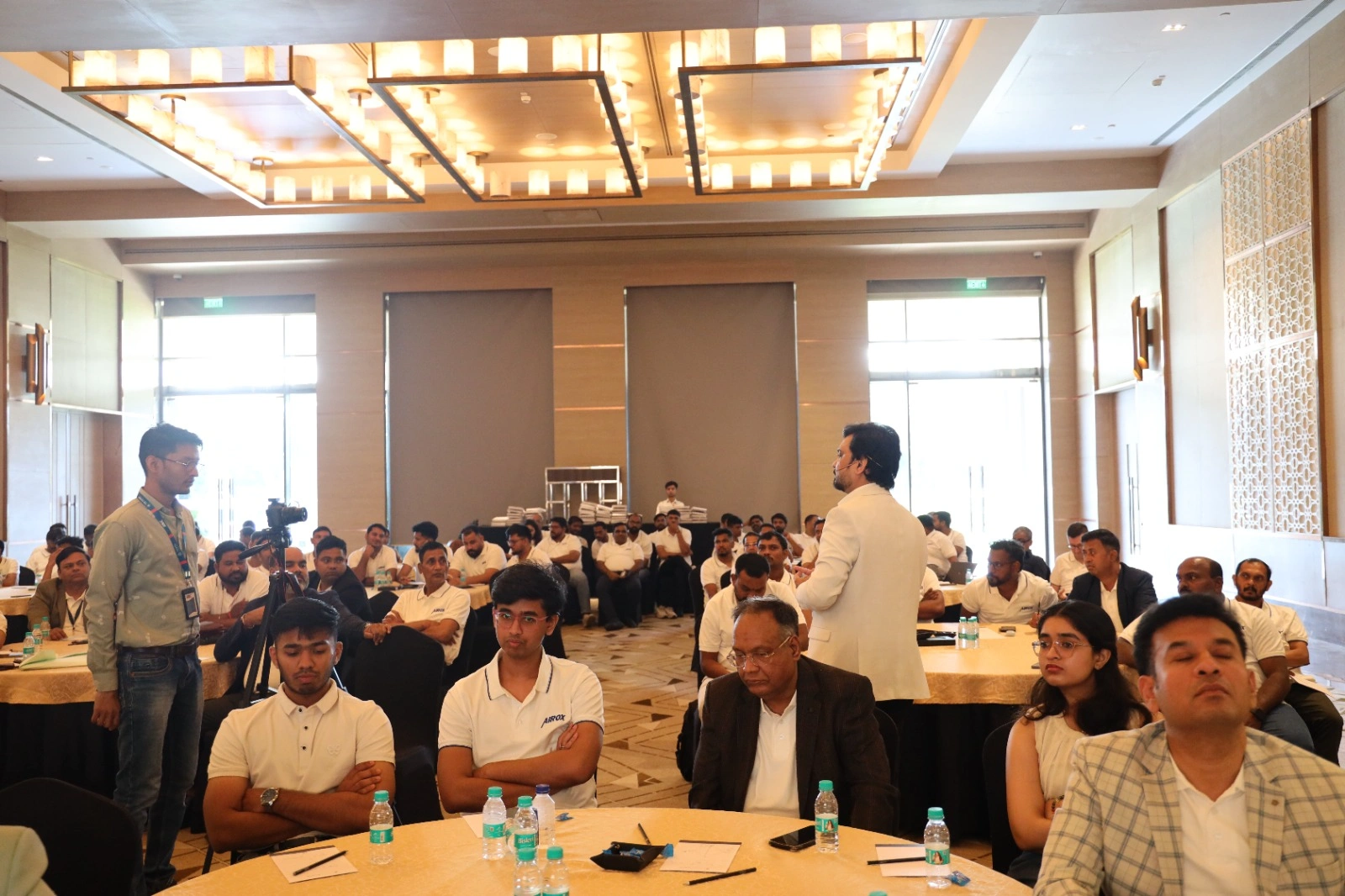
There is a conversation I have in almost every corporate training room I walk into — whether it is a manufacturing floor in Pune, a bank back-office in Mumbai or a tech startup in Bengaluru. Someone says: "Sir, some people are just naturally good at this. I was not born with that talent." The moment I hear those words, I know exactly which chapter of my book to open.
In The Winning Edge, The Champion Mindset, I dedicated an entire chapter to the life's work of one man — Swedish cognitive psychologist Knut Anders Ericsson — because his research does something no motivational speech can do on its own: it presents peer-reviewed, replicable scientific evidence that the talent myth is false. Not unlikely. Not exaggerated. False.
If you have ever told yourself — or your team — that some people simply "have it" and others do not, the next 2,500 words are going to be uncomfortable. Sit with that discomfort. It means the science is working.
Who Was K. Anders Ericsson and Why Should Every Indian Professional Care?
Ericsson was not a self-help author. He was a rigorous academic who spent the better part of four decades inside the world's best performance labs — studying violinists at the Berlin Academy of Music, chess grandmasters, surgeons, sprint swimmers, memory champions and more. His landmark 1993 paper, "The Role of Deliberate Practice in the Acquisition of Expert Performance," published in Psychological Review, became one of the most cited papers in all of psychology.
His central finding was stated without drama: "The differences between expert performers and normal adults reflect a life-long period of deliberate effort to improve performance in a specific domain." That one sentence dismantles every excuse I have ever heard in a training room.
The Berlin Violinist Study — The Evidence That Changed Everything
Let me walk you through the study that anchors my chapter on deliberate practice. Ericsson and his colleagues went to the Berlin Academy of Music and divided the violin students into three groups: those predicted to become international soloists, those expected to be competent orchestra members, and those likely to become music teachers.
The researchers then did something simple: they asked each student how many hours they had practised, alone, since first picking up the violin. The results were striking:
- The future elite soloists had accumulated roughly 10,000 hours of deliberate solo practice by age twenty.
- The good-but-not-elite group had accumulated around 8,000 hours.
- The future teachers had accumulated roughly 4,000 hours.
Crucially, there was no student in the elite group who had practised less than the others and "made it on talent." There was also no student who had practised the most and failed to reach the top tier. The correlation between deliberate practice hours and expertise level was near-perfect.
What "Deliberate" Really Means — And Why Most People Miss This
Here is where I see Indian professionals make a costly error. When Malcolm Gladwell popularised this research in his book Outliers as the "10,000-hour rule," people counted hours. Ericsson himself later clarified that he was frustrated by this simplification — because it is not simply hours. It is the quality of those hours.
Deliberate practice, as Ericsson defined it, has specific characteristics:
- It targets a specific weakness. You do not practise what you already do well. You isolate the gap and work on that alone.
- It is effortful and uncomfortable. If it feels easy, it is not deliberate practice — it is repetition, which builds habit but not expertise.
- It requires immediate, specific feedback. You must know whether you improved, and by how much, after each session.
- It is done with full concentration. Distracted practice is wasted time. Ericsson found that even elite performers could sustain truly deliberate practice for only about four hours a day before mental fatigue degraded quality.
"Talent is a myth maintained by people who have never watched experts practise. What looks like a gift from the outside is invisible hours of deliberate effort on the inside." — Avinash Chate, The Winning Edge, The Champion MindsetAvinash Chate facilitating a deliberate practice workshop for corporate teams in Maharashtra.
Chess Masters, Surgeons and Athletes — Ericsson's Research Across Domains
The violin study was not a one-off. Ericsson and his colleagues replicated their findings across wildly different fields — and the pattern held every single time.
Chess: It Is Not About the IQ, It Is About the Hours
Chess has long been considered the ultimate test of innate intelligence. Ericsson's research challenged that assumption head-on. When his team studied grandmasters, they found that the distinguishing factor was not IQ score or early indication of "brilliance." It was the number of hours spent studying chess positions alone — not playing games, but deliberately reviewing positions, identifying weaknesses in their own thinking, and correcting them.
The average grandmaster had spent roughly 10,000 hours in deliberate solo study before achieving that rank. There were no shortcuts. There were no prodigies who bypassed the hours. Even Bobby Fischer, often cited as a natural genius, began studying chess obsessively at age six and logged thousands of hours before his rise to world champion.
Surgeons: Expertise That Saves Lives Is Built, Not Born
This finding has real stakes. Ericsson's research showed that surgical expertise follows the same curve as music and chess. The surgeons with the best patient outcomes were not the ones who graduated highest in their medical class. They were the ones who had performed the most procedures — with feedback, reflection and deliberate correction between each one.
I share this in my workshops because it silences the "talent" argument permanently. When we accept that a surgeon's skill at saving lives is a product of deliberate practice, we must apply the same logic to every skill we want to develop — whether that is leadership, sales, communication or emotional intelligence.
Sprint Swimmers and the "Natural Body" Myth
Ericsson also studied elite swimmers. The assumption most people bring to elite sport is that physical attributes — height, wingspan, lung capacity — are the primary determinants of who reaches the top. Ericsson found that while physical attributes matter, the separation between good swimmers and great ones was again rooted in the structure of their practice: specificity of training, quality of feedback from coaches, and the deliberate targeting of individual weaknesses in stroke technique.
"The research does not say anyone can become world number one at anything. It says your ceiling is far higher than you think — and the only way to find out where it is, is to practise deliberately and find out." — Avinash Chate, The Winning Edge, The Champion Mindset
Why the Talent Myth Is Especially Damaging in the Indian Professional Context
I have trained teams at companies across Pune, Mumbai and Maharashtra for years. The talent myth shows up in specific, damaging ways in our culture.
"I Am Not a Natural Leader"
This is the most common thing I hear from mid-level managers nominated for leadership programmes. They believe leadership is a personality trait — something you either have or do not have. Ericsson's research obliterates this belief. Leadership, like any complex skill, is a set of learnable behaviours: active listening, decisive communication, conflict resolution, strategic thinking. Every single one of these can be developed through deliberate practice with feedback.
"Only the IIT/IIM People Get Ahead"
The pedigree myth is the Indian version of the talent myth. The assumption is that the quality of your college or entrance exam score is a fixed ceiling on your professional potential. It is not. Ericsson's research would predict — and we see this in practice — that the professional who deliberately practises the skills most relevant to their role, seeks feedback, and compounds that improvement over years, will outperform a credential-holder who relies on their pedigree and stops growing.
The "Jugaad" Shortcut Culture
We have a brilliant cultural tendency toward creative problem-solving. But applied to personal development, it sometimes becomes a search for shortcuts — a three-day bootcamp that makes you a leader, a weekend course that transforms your communication. Ericsson's research is a respectful but firm correction: there are no shortcuts to deep expertise. There are accelerators — better coaching, better feedback, better structure — but the hours cannot be wished away.
How to Apply Ericsson's Framework to Your Professional Life Right Now
In my workshops, I translate Ericsson's academic framework into a practical system that professionals can begin using the following Monday. Here is a condensed version.
Step 1: Identify Your One High-Value Skill Gap
Do not try to improve ten things at once. Ericsson's research is clear: deliberate practice requires focused attention on one specific weakness at a time. Ask yourself: what single skill, if I improved it dramatically over the next six months, would have the biggest positive impact on my career or my team's performance? Write that skill down. That is your deliberate practice target.
Step 2: Design Practice That Hurts a Little
Comfort is the enemy of expertise. If your practice sessions feel smooth and easy, you are operating inside your existing capability — you are not growing. Design sessions that put you just beyond the edge of your current ability. In communication, that means practising the conversations you avoid. In leadership, it means putting yourself in situations where you must make decisions with incomplete information and then reviewing the outcome honestly.
Step 3: Build a Feedback Loop
Ericsson's elite performers all had one thing in common beyond the hours: they had coaches, teachers or structured feedback systems that told them, precisely, what was working and what was not. Without feedback, practice can entrench bad habits rather than build expertise. Find a mentor, a peer who will give you honest input, or record yourself and review it critically.
Step 4: Track and Reflect Weekly
Keep a simple practice log. Each week, note: what did I practise, what feedback did I receive, what specific adjustment am I making next week? This is not journalling for the sake of it — it is the mechanism by which deliberate practice compounds. The people in Ericsson's studies who improved fastest were also the most meticulous in their self-review.
"In The Winning Edge, I write that the champion is not made on the day of the match. The champion is made in every deliberate practice session that nobody else sees." — Avinash ChateAvinash Chate delivering a keynote on deliberate practice and the champion mindset for corporate audiences across India.
What This Means for Teams and Organisations — Not Just Individuals
Ericsson's research has profound implications not just for individual professionals but for the organisations that employ them. When a company accepts the talent myth, it makes talent acquisition its only growth lever — hunting for "natural" high-performers and hoarding them. When a company internalises Ericsson's findings, it invests in the development of the people it already has.
Building a Deliberate Practice Culture in Your Organisation
A deliberate practice culture has three structural features:
- Regular, specific feedback cycles — not annual performance reviews, but weekly or fortnightly check-ins focused on skill development rather than just output metrics.
- Psychological safety to practise and fail — Ericsson's elite performers trained in environments where making errors in practice was expected and analysed, not punished. Teams that punish mistakes in the learning phase simply drive mistakes underground.
- Leadership that models deliberate practice visibly — when senior leaders talk openly about what they are working to improve and what feedback they are seeking, it gives permission for the whole organisation to do the same.
The ROI of Investing in Skill Development Over Talent Hunting
I have seen organisations spend enormous resources on recruiting "top talent" while underinvesting in the development of their existing team. Ericsson's research suggests this is backwards. A competent professional who undergoes well-structured deliberate practice over two years will often outperform a "talented" hire who receives no structured development. The compounding of deliberate practice is real, and it accrues inside your organisation rather than walking out the door when a competitor offers a better package.
Bring this to your team. I run deliberate practice and growth mindset focused corporate training and keynotes for companies across Pune, Mumbai and all of Maharashtra.
Book a session · Explore corporate training programs
Frequently Asked Questions
What exactly did K. Anders Ericsson research and discover?
K. Anders Ericsson was a Swedish cognitive psychologist who spent over four decades studying how expert performers — including violinists at the Berlin Academy of Music, chess grandmasters, surgeons and elite athletes — actually developed their skills. His landmark 1993 paper in Psychological Review concluded that the differences between experts and average performers are explained by a lifetime of deliberate, focused practice rather than innate talent. His research showed that the elite Berlin violinists had accumulated roughly 10,000 hours of deliberate solo practice by age twenty, and that this pattern held across every domain he studied.
Is the 10,000-hour rule actually from Ericsson's research?
Yes and no. The 10,000-hour figure came from Ericsson's violin study and was popularised by Malcolm Gladwell in his book Outliers. However, Ericsson later clarified that he was frustrated by how Gladwell's framing reduced the finding to a simple hour count. Ericsson's actual conclusion was about the quality of practice — specifically, deliberate practice that targets weaknesses, operates at the edge of current ability, and incorporates immediate feedback. Simply clocking 10,000 hours of comfortable repetition does not produce expertise; 10,000 hours of deliberate, uncomfortable, feedback-driven practice does.
How can Indian professionals and managers apply deliberate practice in their careers?
The practical application starts with identifying one specific high-value skill gap rather than trying to improve everything at once. Then design practice sessions that feel slightly uncomfortable — they should stretch your current ability, not reinforce what you already do well. Build a feedback loop by finding a mentor, peer, or coach who can give you honest, specific input. Finally, keep a weekly practice log to track what you did, what feedback you received, and what adjustment you are making the following week. These four steps translate Ericsson's academic framework into a usable professional development system.
Does Ericsson's research apply to leadership and soft skills, not just music or sport?
Absolutely — and this is the most important point I make in my corporate training programmes. Ericsson studied domains as different as surgery, memory, chess and music, and the deliberate practice mechanism explained expertise in every single one. Leadership, communication, emotional intelligence, negotiation and sales are all complex skills, which means they are all learnable through the same mechanism. The belief that leadership is a personality trait you either have or do not have is exactly the kind of talent myth that Ericsson's research dismantles. Every leader I have seen transform in my training programmes did so through deliberate practice, not through a sudden personality change.
Ericsson's life work is, at its heart, the most hopeful message in all of performance science: your capacity to grow is not fixed at birth, and the gap between where you are and where you want to be is bridgeable through deliberate effort. I built the framework in The Winning Edge, The Champion Mindset on this foundation because I wanted every Indian professional who reads it to finish the book with one unshakeable conviction — you are not limited by what you were born with. You are shaped by what you choose to practise. If you want to bring this science into your team and build an organisation where expertise is grown, not just recruited, I would love to design that journey with you. Visit my contact page to start a conversation, explore my corporate training programmes, or learn more about my approach to leadership development in Pune.
This article is adapted from my book The Winning Edge, The Champion Mindset.Related Articles by Avinash Chate
- Talent Is a Myth: The Deliberate Practice Secret of Champions
- The Ray Dalio 5-Step Model to Achieve Any Goal
- The 5 Steps of Deliberate Practice to Master Any Skill
| AC | Avinash ChateIndia's Leading Corporate Trainer | TEDx Speaker | Author With 80+ organizations trained including RBI, JSW Steels, and Ferrero, Avinash Chate delivers high-impact corporate training across India. Creator of the KITE Leadership Framework and bestselling author of "The Winning Edge." Website YouTube |
Avinash Chate services
Corporate Trainer in Maharashtra · Top Corporate Trainers in Maharashtra · Leadership Trainer in Maharashtra · Top Leadership Trainers in Maharashtra · Motivational Speaker in Maharashtra · Top Motivational Speakers in Maharashtra · All service locations
← Back to all articles · Book Avinash Chate
By Avinash Chate — Maharashtra’s #1 Corporate Trainer & Motivational Speaker. .