Never Judge a Colleague Before Knowing This Psychology | RQ Development |
Your colleague makes a mistake and you think they are careless. You make the same mistake and you blame the situation. This is Fundamental Attribution Error and...
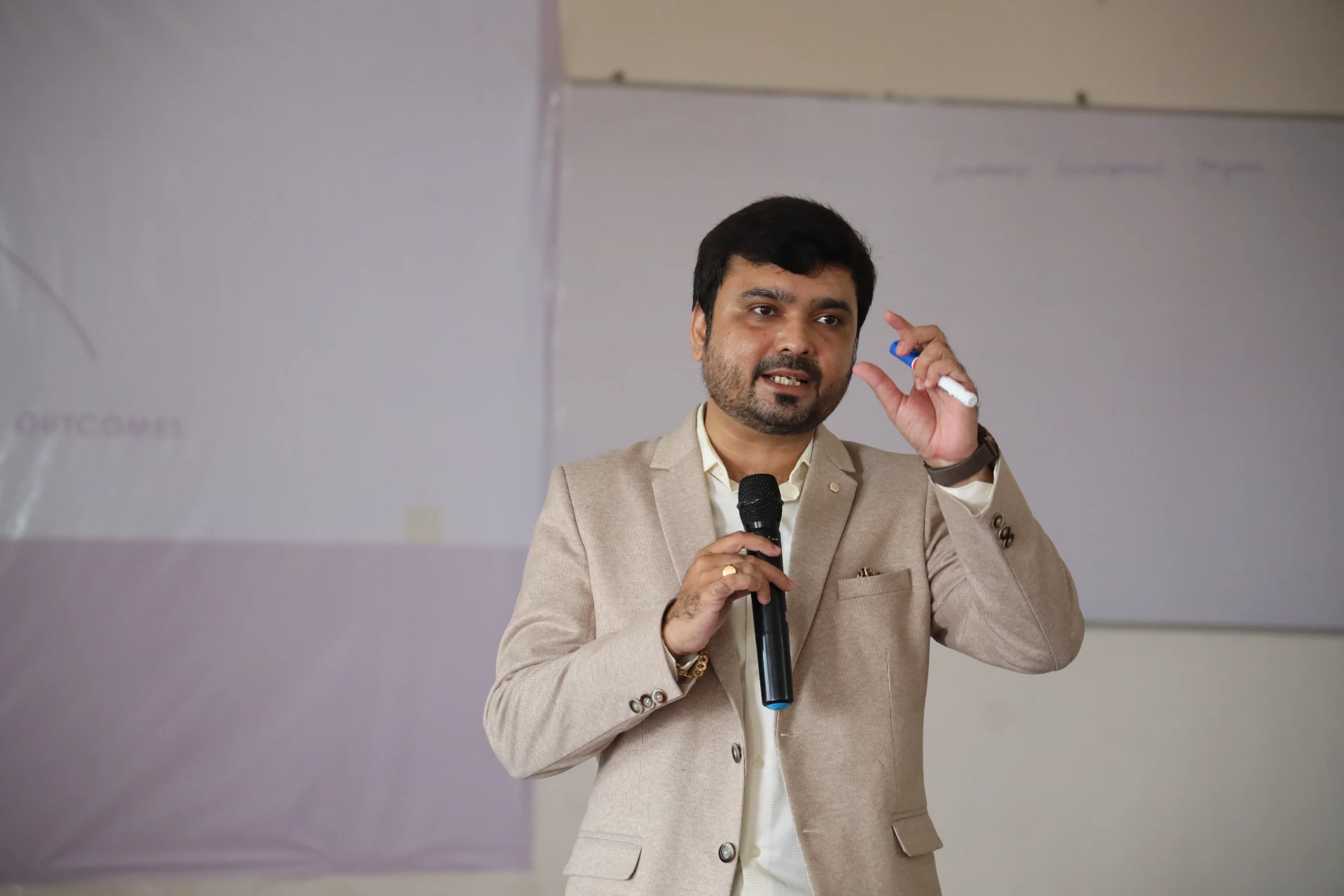
Avinash Chate - Best Corporate Trainer conducting leadership session
Before You Judge a Colleague, Understand This Psychology FirstIn every workplace, I have seen one pattern repeat itself again and again. A colleague misses a deadline, speaks sharply in a meeting, forgets an important detail, or fails to respond on time, and immediately people label that person as careless, arrogant, irresponsible, or uncommitted. But when we make a similar mistake, we quickly explain it through pressure, workload, stress, confusion, or lack of support.
This is not just hypocrisy. It is psychology.
Key takeaway: If you want stronger workplace relationships, better leadership, and less conflict, you must stop judging people only by behavior and start understanding the context behind that behavior.
This mental habit is known as the Fundamental Attribution Error. It is one of the most common reasons teams lose trust, managers misread employees, and colleagues create unnecessary friction. As Avinash Chate, I have seen this bias silently damage collaboration in training rooms across 80+ organizations. People do not always fight because of big issues. Very often, they fight because they interpret each other incorrectly.
When I coach professionals on leadership, communication, and emotional maturity, I remind them that growth begins when we become aware of the stories we tell ourselves about other people. As a TEDx speaker and author of The Winning Edge, I believe that one of the biggest signs of maturity is this: the ability to pause before passing judgment.
What Is the Fundamental Attribution Error?
The Fundamental Attribution Error means we tend to explain other people’s mistakes by blaming their character, while we explain our own mistakes by blaming the situation.
If your colleague arrives late, you may think, “He is undisciplined.” If you arrive late, you may think, “Traffic was terrible and the previous meeting ran over time.”
If someone forgets to send an update, you may think, “She is careless.” If you forget, you may say, “I had too many urgent priorities.”
Do you see the difference?
When we look at others, we focus on personality. When we look at ourselves, we focus on circumstances. This gap in perception creates misunderstanding, resentment, and emotional distance.
In teams, this becomes dangerous because once a label is attached to someone, every future action gets filtered through that label. A single mistake becomes proof of a person’s character. That is unfair, and more importantly, it is ineffective.
Avinash Chate often says in leadership sessions that perception without reflection becomes prejudice. If you want to lead people well, you cannot afford to make quick emotional judgments and call it intelligence.
Why This Psychology Damages Workplace Relationships
The workplace runs on trust, interpretation, and communication. If your interpretation is faulty, your relationship will suffer even if the other person had no bad intention.
Let us look at what happens when this bias goes unchecked.
You become less empathetic and more reactive.
You assume intent without asking questions.
You reduce people to isolated incidents.
You create invisible walls inside teams.
You weaken collaboration because people stop feeling understood.
I have worked with teams where the actual issue was small, but the interpretation was huge. One person thought another was disrespectful. In reality, the colleague was under family pressure and emotionally exhausted. A manager thought an employee lacked ownership. In reality, the employee was unclear about expectations and too afraid to ask.
In one of my learning interactions with professionals connected to Gadharva Finchart Enterprises LLP, a powerful insight emerged: many conflicts are not caused by incompetence but by assumptions. That is why emotional awareness and communication maturity matter so much in modern workplaces.
If you want to build a healthier team culture, you must learn to separate facts from assumptions. This is also deeply connected to relationship building. I encourage you to read The Networking Skill Every Leader Must Have: Build Relationships, Not Just Contacts because meaningful professional relationships are built on understanding, not snap judgments.
The PAUSE Method I Recommend
To overcome this bias, I teach a simple reflection tool called the PAUSE method. It helps professionals respond with maturity instead of reacting with ego.
P – Pause your first judgment
Your first interpretation is not always the truth. It is often just your emotional reaction. Do not let the first story in your mind become the final conclusion.
A – Ask what else could be true
Could there be pressure you do not know about? Could there be confusion, lack of clarity, overload, fear, or miscommunication? This question opens the door to empathy.
U – Understand the context
Before judging behavior, understand the situation. Great leaders do not excuse poor performance blindly, but they do investigate before they evaluate.
S – Speak with curiosity, not accusation
Instead of saying, “You are always careless,” say, “I noticed this was missed. Help me understand what happened.” One sentence damages trust. The other builds dialogue.
E – Evaluate fairly and respond wisely
After understanding the full picture, then respond. Sometimes accountability is needed. Sometimes support is needed. Sometimes both are needed.
This is the difference between emotional impulsiveness and leadership maturity. In the KITE Leadership Framework, one of the most important capabilities is learning to interpret people with balance. Strong leaders do not become weak by showing empathy. They become effective.
When you replace instant judgment with thoughtful inquiry, you reduce conflict and increase trust.
How Better Leaders and Team Players Think
A good team player does not assume the worst. A good leader does not react to behavior without understanding context. This does not mean becoming naive. It means becoming fair.
As Avinash Chate, I strongly believe that leadership is not tested only in big presentations or strategy discussions. It is tested in everyday human moments. How do you respond when someone disappoints you? How do you interpret mistakes? How do you give feedback when emotions are high?
The best professionals do three things consistently.
They observe before concluding.
They ask before accusing.
They correct without humiliating.
This is what creates psychological safety in teams. When people know they will be heard before being judged, they become more honest, more responsible, and more open to feedback.
That is also why leadership must be careful not to stretch people beyond emotional limits. If this idea interests you, I recommend reading The Rubber Band Principle: The Dangerous Leadership Mistake That Breaks Your Best People. Many workplace reactions are not personality flaws. They are signs of pressure, fatigue, and human overload.
How This Mindset Improves Communication and Trust
Every judgment affects communication. If I decide someone is lazy, my tone changes. If I assume someone is disrespectful, my body language changes. If I label someone as difficult, I stop listening openly. The relationship suffers long before the real conversation begins.
That is why trust is not only built by honesty. It is also built by fairness.
When people feel fairly understood, they engage more positively. They share concerns earlier. They admit mistakes faster. They become easier to coach. In sales conversations, client relationships, and internal teamwork, this principle is equally powerful. Trust grows when people feel seen accurately, not judged prematurely. On that note, you may also find value in How to Impress Clients with the Trust Formula, where trust is explored as a practical professional skill.
I have observed this in countless sessions over 15+ years. Teams do not become stronger only because they work harder. They become stronger because they understand one another better. Communication improves not merely when people speak more, but when they interpret each other more wisely.
Avinash Chate believes that one of the simplest ways to improve workplace culture is to replace labels with questions. Instead of saying, “He does not care,” ask, “What might be affecting his performance right now?” Instead of saying, “She is difficult,” ask, “What expectations or pressures may be shaping this behavior?”
My Final Message: Judge Less, Understand More
If you want to grow in your career, improve your relationships, and become a respected professional, remember this: not every mistake reveals character, and not every difficult behavior comes from bad intention.
Sometimes people need accountability. Sometimes they need support. The wisdom lies in knowing the difference.
Before you judge a colleague, pause. Before you label someone, ask. Before you react, understand. This one shift can transform how you lead, how you communicate, and how you build trust.
As a TEDx speaker and author of The Winning Edge, I have learned that personal growth begins when we stop assuming we are objective. We all have blind spots. The moment we become aware of them, we become better human beings and better professionals.
If you want your managers and teams to build stronger communication, emotional intelligence, leadership presence, and workplace trust, book a corporate training session here.
Frequently Asked Questions
What is the Fundamental Attribution Error in the workplace?
It is the tendency to judge a colleague’s mistake as a character flaw while explaining our own mistakes through circumstances. This creates misunderstanding and weakens trust.
How can I stop judging colleagues too quickly?
Use the PAUSE method. Pause your judgment, ask what else could be true, understand the context, speak with curiosity, and evaluate fairly.
Does empathy mean avoiding accountability?
No. Empathy means understanding the full picture before responding. Accountability is still important, but it becomes more effective when it is fair and informed.
Why do leaders need to understand this psychology?
Leaders influence team culture. If they judge too quickly, they create fear and resentment. If they understand context before reacting, they build trust and stronger performance.
How can corporate training help teams overcome workplace judgment?
Corporate training helps teams improve self-awareness, communication, emotional intelligence, and conflict handling so that people respond with maturity instead of assumptions.
Related Articles by Avinash Chate
- The Mirroring Technique That Helps You Build Trust and Close More Deals
- The Career Cost of Saying ‘I’m Not Ready’
- Motivational Speaker for Pune BPO and KPO Night-Shift Teams — Combating Burnout and Boosting Engagement
About the Author
Avinash Chate is a TEDx speaker, published author of The Winning Edge and The Unanswered, and founder of The Future Corporate & Business Coaching. With over 15 years of experience training 80+ organizations including Mahalaxmi Automotives Pvt Ltd, VishwaRaj Hospital, Mumbai Port Authority, Keshardeep Presssings, Avinash is recognized as Maharashtra's leading corporate trainer. He created the KITE Leadership Framework and the 25-Star Competency Framework™, delivering high-impact programs across leadership, team building, sales transformation, and emotional intelligence.
📞 +91 8793630001 | ✉️ connect@avinashchate.com | 🌐 avinashchate.com
Book Avinash Chate for Your Next Event
Maharashtra's #1 Corporate Trainer · India's leading Motivational Speaker & Team Building Expert · 2x TEDx · Available across India in English, Hindi & Marathi.
✅ Thanks! Avinash team will reach out within 24 hours.'}).catch(function(e){f.outerHTML='Something went wrong. WhatsApp +91 8793630001
'});return false;"> Select Service Motivational Speaking / Keynote Team Building Workshop Corporate Training / Leadership Development Manager Development Employee Training Outbound Training Book Avinash Now →Or WhatsApp directly: +91 87936 30001
Avinash Chate services
Corporate Trainer in Maharashtra · Top Corporate Trainers in Maharashtra · Leadership Trainer in Maharashtra · Top Leadership Trainers in Maharashtra · Team Building Trainer in Maharashtra · Top Team Building Trainers in Maharashtra · Motivational Speaker in Maharashtra · Top Motivational Speakers in Maharashtra · All service locations
← Back to all articles · Book Avinash Chate
By Avinash Chate — Maharashtra’s #1 Corporate Trainer & Motivational Speaker. .