Why the Same People Who Share Yoga Mats Fight in Queues: The Bhandardara Experiment
At a peaceful Bhandardara wellness camp, 100-plus yoga-practising professionals fought five times in three weeks — not because they changed, but because their environment did.
Picture a resort nestled in the hills near Bhandardara, Maharashtra. No mobile phones. Morning yoga. Clean mountain air. A hundred-plus educated, spiritually inclined professionals who chose — voluntarily — to attend a three-week fitness and wellness camp. These were the kind of people who would easily fill a TEDx front row. Calm, reflective, values-driven.
Now picture those same people shoving each other in a queue at the resort shop. Not once. Five times in three weeks.
That story is in Chapter 10 of my book The Winning Edge, The Champion Mindset, and it is the most powerful illustration I know of a truth that most HR policies, performance management systems and leadership development programmes quietly ignore: behaviour is not a personality trait. It is an environmental output.
What Actually Happened at Bhandardara
I share this incident in my workshops because it stops every audience cold. The participants at that camp had not suddenly become bad people. Their values had not evaporated overnight. Their yoga practice — an hour every single morning — was intact. So what explained five incidents of arguments and physical pushing among a hundred peaceful strangers?
Three things changed in the environment:
- Scarcity. The resort shop had limited supplies. When people believe there is not enough to go around, the rational, cooperative self steps aside and a more primal, competitive self steps forward. Scarcity is one of the most reliable trigger-generators known to human psychology.
- Physical depletion. Three weeks of intensive fitness training, unfamiliar sleeping conditions and disrupted routines left bodies tired. Research in behavioural science consistently confirms what any parent of a sleep-deprived toddler already knows: physical tiredness dramatically reduces impulse control. We become a shorter version of ourselves.
- An environmental irritant. The storekeeper was unreliable — sometimes present, sometimes not, sometimes short-changing people. Repeated small frustrations erode patience the way water erodes stone. By the time someone finally snapped, it was not really about the storekeeper at all. It was about every small irritation that had stacked up silently.
The people had not changed. The environment had. And the environment generated triggers that overrode years of trained, intentional behaviour.
"The environment is a trigger-generating machine." — Marshall Goldsmith (cited in The Winning Edge)
What Is a Trigger and Why Should Every Leader Care
A trigger is any stimulus — a person, a situation, a sound, a shortage, a smell, a deadline — that provokes an automatic behavioural response. Triggers operate faster than conscious thought. By the time your prefrontal cortex has composed a polite, rational reply, your amygdala has already sent the angry email.
In my leadership workshops across Pune, Mumbai and Maharashtra, I ask senior managers a simple question: "Think of the last time someone in your team behaved in a way that surprised or disappointed you. Was it really about that person — or was it about what happened right before that behaviour?" The room always goes quiet. Because when we think carefully, we can almost always trace the behaviour back to a trigger in the environment.
Triggers at the workplace come in many forms:
- Resource triggers: shared printers, limited parking, year-end budgets that disappear if unspent.
- Social triggers: a manager who plays favourites, a team meeting where only one voice is heard, a WhatsApp group that excludes someone.
- Physical triggers: overcrowded offices, broken air conditioning in peak summer, canteens with queues that make lunch a race.
- Information triggers: rumours about layoffs, ambiguous KPIs, a performance review system that feels rigged.
- Time triggers: quarterly closing week, appraisal season, deadlines that arrive in clusters.
None of these triggers are created by the individuals who respond to them. They are created by the system — and the system is designed, consciously or not, by leadership.
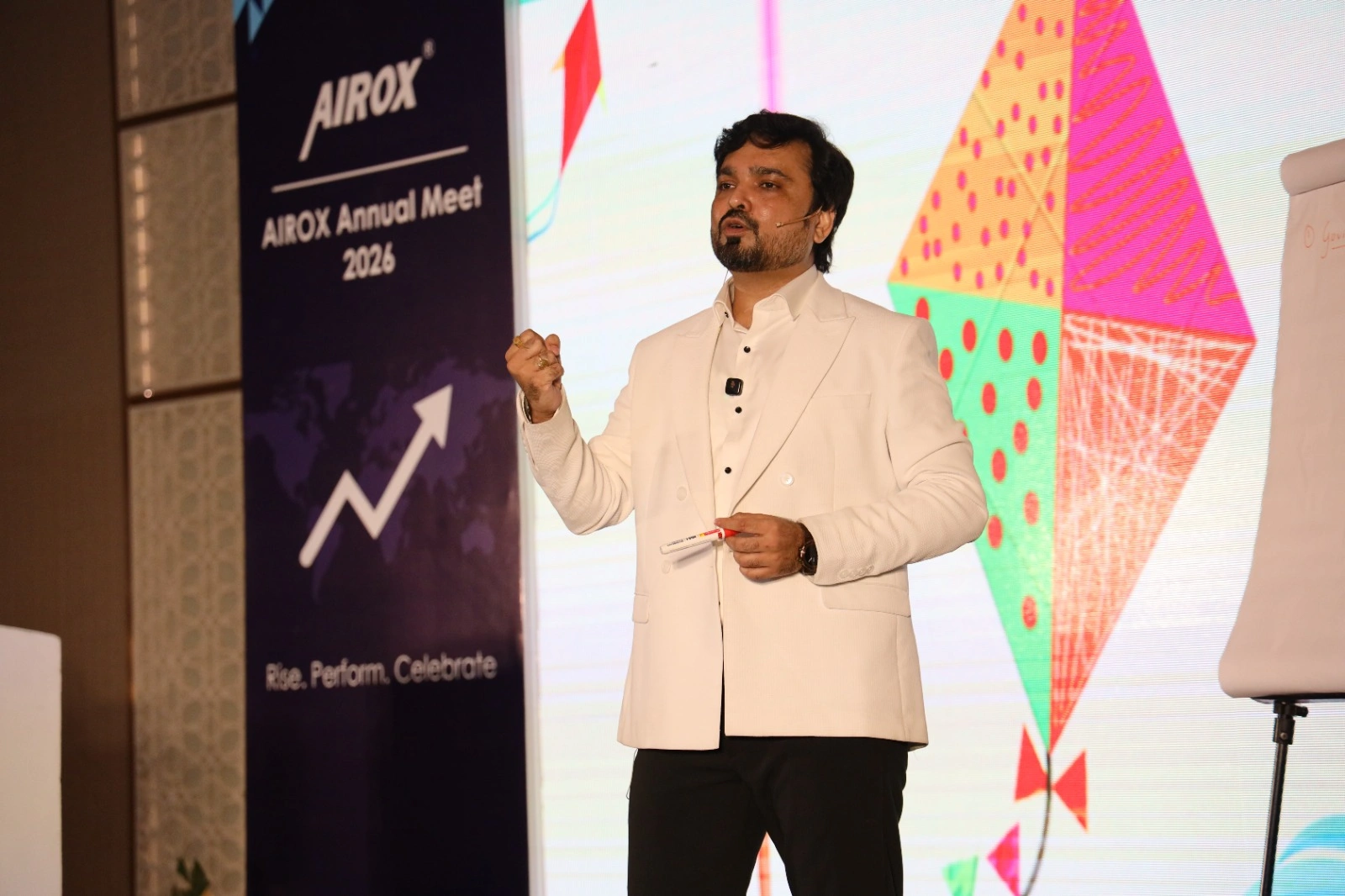
Avinash Chate facilitating a leadership session on environmental triggers and workplace behaviour — The Future Corporate.My Own Trigger: The TV Remote Next to the Bed
I want to be honest with you. I am not writing this from a position of perfect self-mastery. In my book I describe a very personal failure: I had a clear plan to read for thirty minutes every night before sleeping. A well-designed habit, with a specific time, a specific goal, a specific book. The kind of plan that looks excellent on paper.
Nine nights out of ten, I ended up watching television instead.
What defeated me? Not laziness. Not a lack of intention. Not even a weak character. The TV remote was sitting right next to my bed. That single object — its placement, its proximity, its invitation — was a trigger powerful enough to override a conscious plan I genuinely cared about.
"Superior planning, inferior doing — because triggers rule behaviour." — Avinash Chate, The Winning Edge, The Champion Mindset
The moment I moved the remote to another room and placed the book on my pillow instead, my reading rate jumped dramatically. I had not changed my values. I had not attended a motivational seminar about reading. I had redesigned one small corner of my environment — and that redesign changed my behaviour more effectively than any amount of willpower.
Why HR Policies Alone Will Never Fix Culture
This is the insight that I believe most organisations are missing in 2026, especially as they invest heavily in culture programmes, leadership development and employee engagement surveys.
We design policies for the person we wish our employees were — calm, rational, always operating from their best selves. We then apply those policies in environments that consistently trigger their worst selves. And then we are puzzled when the culture does not shift.
The gap between intent and behaviour
Every organisation I have worked with — from manufacturing plants in Chakan to IT companies in Hinjewadi to financial services firms in Mumbai — has stated values that include respect, collaboration and accountability. Most of those organisations also have environments that routinely generate triggers for disrespect, competition and blame-shifting. The values are not the problem. The environment is.
What environment design actually looks like
- Audit your scarcity triggers. Where in your workplace do people feel there is not enough — recognition, information, promotion slots, credit for ideas? Scarcity creates competition. Abundance creates collaboration.
- Reduce physical depletion triggers. Are your people eating properly? Taking adequate breaks? Are meeting schedules so back-to-back that people arrive at important decisions exhausted and irritable?
- Eliminate chronic environmental irritants. That broken process everyone complains about but no one fixes. The manager who consistently takes credit for the team's work. The system that requires three approvals for a Rs. 500 purchase. Each of these is a trigger that compounds daily.
- Design for the best self, not the average self. Place the metaphorical book on the pillow. Remove the metaphorical TV remote. Make the desired behaviour the path of least resistance.
"You do not rise to the level of your goals. You fall to the level of your systems." — a principle I reinforce in every corporate training engagement, because it is that important.
The Bhandardara Lesson for Managers and HR Leaders
When someone in your team behaves badly, the instinctive response is to address that person. Counsel them. Give them feedback. Perhaps put them on a performance improvement plan. Sometimes that is exactly right.
But the Bhandardara story asks a more uncomfortable question: what in this environment generated the trigger that produced this behaviour?
Because if ten of the hundred camp participants had resorted to pushing and shoving, and we had addressed all ten individually without changing the scarcity, the depletion and the irritant — the eleventh incident would have come from someone completely different. The environment would have found its next victim.
A three-step diagnostic for HR and team leaders
- Map the incident to a trigger. What happened in the minutes, hours or days before the behaviour? What changed in the environment recently — team size, workload, management, resources?
- Identify the trigger category. Is it scarcity, depletion, a social irritant, an information gap or a time pressure? The category points to the intervention.
- Redesign the environment, not just the person. Address the individual as needed, but also remove or modify the trigger. Otherwise you are treating the symptom, not the cause.
Practical Steps to Become a Trigger-Aware Leader
Leadership in 2026 is not just about setting vision and strategy. It is about becoming the chief architect of the environments your people live and work in every day. Here is how I recommend leaders begin:
1. Keep a trigger journal for two weeks
Every time you notice yourself or a team member reacting in a way that feels disproportionate or out of character, write it down. What was the trigger? What was the environment at that moment? You will begin to see patterns that are far more revealing than any engagement survey.
2. Do a monthly environment audit
Walk through your workspace — physical and digital — with fresh eyes. Ask: what in here would make a tired, stressed person behave badly? What friction exists that could be removed? What resource feels artificially scarce that could be made more available?
3. Build recovery time into your team calendar
Physical depletion is one of the three Bhandardara factors. If your team is running at 110 per cent capacity for months on end, you are not building resilience — you are building a trigger. Scheduled recovery is not a luxury. It is a behavioural safety measure.
4. Name the irritants openly
In my workshops I ask teams to list their top five chronic irritants — the things that everyone knows about but nobody officially discusses. Then we work systematically to eliminate them. The act of naming them publicly already reduces their power, because it converts a private frustration into a shared problem to be solved.
5. Design your own environment first
You cannot lead environment design if your own environment is producing bad triggers for you. Where in your daily routine do you consistently behave in ways you later regret? Start there. Move the remote. Put the book on the pillow. Small design changes compound into large behavioural shifts.
Bring this to your team. I run environment-and-triggers-focused corporate training and keynotes for companies across Pune, Mumbai and all of Maharashtra. If your culture initiatives are not sticking, it may be time to redesign the environment, not just the people.
Book a session · Explore corporate training programs
Frequently Asked Questions
What is the Bhandardara experiment that Avinash Chate describes?
It is a real incident from a three-week fitness and wellness camp near Bhandardara, Maharashtra, involving 100-plus educated, spiritually inclined professionals who had voluntarily chosen to attend. Despite their peaceful values and daily yoga practice, the same participants got into arguments and physical pushing five times over three weeks. The cause was not a change in their character but a change in their environment — specifically scarcity of supplies, physical depletion from intensive training, and a chronically unreliable storekeeper. Avinash discusses this story in Chapter 10 of his book The Winning Edge, The Champion Mindset to illustrate that behaviour is an environmental output, not a fixed personality trait.
What is a behavioural trigger and how does it affect workplace performance?
A behavioural trigger is any stimulus — a person, a situation, a shortage, a deadline, a sound or even an object — that provokes an automatic behavioural response, often before conscious thought can intervene. In the workplace, triggers include resource scarcity (limited budgets, parking, recognition), social irritants (favouritism, exclusion), physical depletion (back-to-back meetings, inadequate breaks) and information gaps (rumours, ambiguous KPIs). When triggers are frequent and unaddressed, even high-performing, values-driven employees can behave in ways that are out of character. Trigger-aware leaders design environments that reduce negative triggers and make desired behaviours the path of least resistance.
How can HR teams and managers use the concept of environmental triggers to improve culture?
The key shift is moving from asking "why did this person behave badly?" to asking "what in this environment generated the trigger that produced this behaviour?" Practically, HR leaders can do three things: first, map each behavioural incident back to an environmental trigger; second, categorise the trigger (scarcity, depletion, social irritant, information gap or time pressure) to identify the right intervention; third, redesign the environment alongside addressing the individual. This might mean eliminating chronic irritants, building recovery time into team calendars, making recognition more abundant, or simply reorganising a physical space to make the desired behaviour easier. Culture change that addresses only individuals without changing the environment rarely sticks.
Where can I learn more about Avinash Chate's approach to behaviour change and corporate training?
Avinash Chate is a corporate trainer and motivational speaker based in Pune, Maharashtra, and the author of The Winning Edge, The Champion Mindset. He delivers keynotes and corporate training programmes on behaviour, leadership, mindset and performance for companies across Pune, Mumbai and Maharashtra. You can explore his programmes at avinashchate.com/corporate-training, read more about his work at avinashchate.com/about-avinash-chate, or reach out directly via avinashchate.com/contact.
The Bhandardara story changed the way I look at every team conflict, every culture problem and every leadership challenge I encounter. Before I ask what is wrong with the person, I now ask what is wrong with the environment. That single shift in question transforms interventions from reactive to genuinely preventive. If you are an HR leader or a manager who wants to build a team that consistently performs at its best, I invite you to explore my corporate training programmes, visit my contact page to book a session, or learn more about my work through my leadership training practice in Pune.
This article is adapted from my book The Winning Edge, The Champion Mindset.Related Articles by Avinash Chate
- Why Manufacturing Industry is Difficult to Start in India: 5 Key Challenges
- Ajit Agarkar's 21-Ball ODI Fifty Against Zimbabwe: The Silent Performer's Career Blueprint
- Clive Lloyd's 1975 World Cup Final Leadership: How Bold Captaincy Wins Under Pressure
| AC | Avinash ChateIndia's Leading Corporate Trainer | TEDx Speaker | Author With 80+ organizations trained including RBI, JSW Steels, and Ferrero, Avinash Chate delivers high-impact corporate training across India. Creator of the KITE Leadership Framework and bestselling author of "The Winning Edge." Website YouTube |
Avinash Chate services
Corporate Trainer in Maharashtra · Top Corporate Trainers in Maharashtra · Leadership Trainer in Maharashtra · Top Leadership Trainers in Maharashtra · Team Building Trainer in Maharashtra · Top Team Building Trainers in Maharashtra · Motivational Speaker in Maharashtra · Top Motivational Speakers in Maharashtra · All service locations
← Back to all articles · Book Avinash Chate
By Avinash Chate — Maharashtra’s #1 Corporate Trainer & Motivational Speaker. .