Build a Culture of Learning: Corporate Training That Goes Beyond Basics India
Most corporate training ticks boxes. The best creates a culture of learning and excellence that transforms how teams think, communicate, and perform. Here's what beyond-basics training looks like — and why Indian companies need it in 2026.
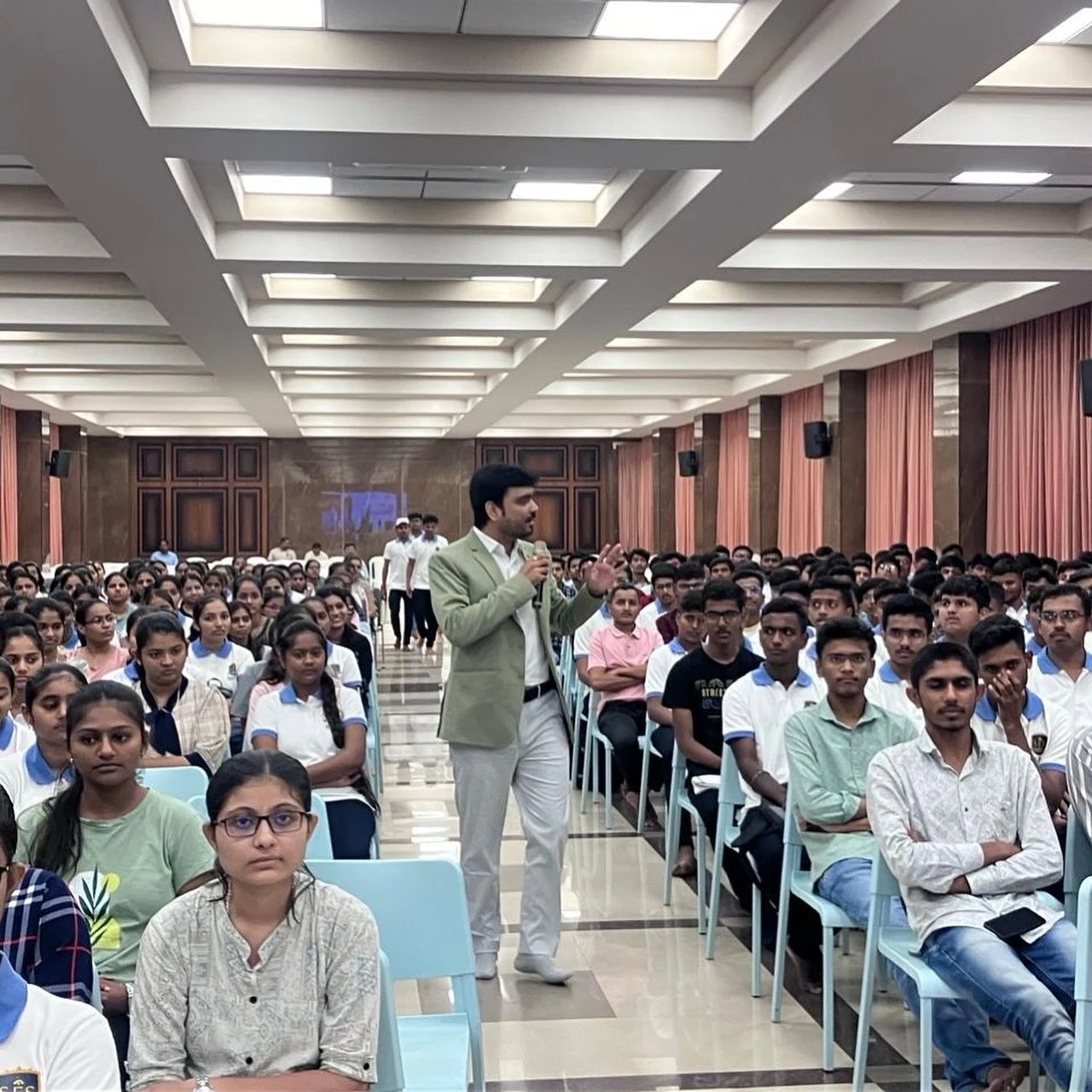
Most corporate training ticks boxes. A compliance module here. A one-day workshop there. A motivational speaker at the annual offsite. Then Monday arrives and nothing has changed. India's L&D market is worth ₹1.5 trillion — and much of it is being wasted on training that doesn't transfer to behavior. The companies that are outperforming their competitors in India's 2026 market aren't training more — they're training smarter. They're building cultures of learning and excellence where development isn't an event — it's how the organization operates every day.
TL;DR- India's ₹1.5 trillion L&D market is growing fast — but most corporate training fails to change behavior beyond the training room
- A culture of learning and excellence is built through training design, leadership modeling, reinforcement systems, and application accountability
- Beyond-basics training starts with answering "what behavior should change?" not "what content should we cover?"
- Organizations that build genuine learning cultures outperform their competitors on every metric: productivity, retention, innovation, and customer satisfaction
- Avinash Chate's corporate training programs are built for behavior change, not content delivery — deployed at companies including Tata Tech, Infosys, Siemens, and JSW
Why Most Corporate Training in India Fails to Change Anything
Here's the most common corporate training failure pattern I see in India: a company spends ₹8–15 lakh on a two-day workshop. The trainer is good. The participants are engaged during the session. The post-training feedback forms give scores of 4.5 out of 5. Three weeks later, the participants' behavior is indistinguishable from before the training. The feedback scores measured the training experience, not the behavior change. This pattern isn't unique to India — it's the dominant global corporate training failure mode. But India's ₹1.5 trillion L&D market amplifies it at scale. The root cause is almost always the same: training was designed to deliver content, not to change behavior. Content can be delivered in a day. Behavior change requires deliberate design, sustained reinforcement, and organizational conditions that support and reward the new behaviors.
What a Culture of Learning and Excellence Actually Looks Like in Practice
A genuine culture of learning and excellence looks different from a training calendar. It has specific, observable characteristics. Leaders in a learning culture openly discuss what they don't know and what they're working to improve — modeling intellectual humility as a leadership virtue. Mistakes are discussed openly and systematically — not to assign blame, but to extract organizational learning. New ideas from any level of the organization are heard, evaluated, and when good, implemented — creating a visible link between learning and impact. Professional development conversations are regular, specific, and forward-looking — not just annual performance reviews. And critically: the learning culture is consistent across the organization, not just a value posted on the wall in reception. I've seen the difference between organizations with genuine learning cultures and those with just the posters. The difference in competitive performance over three to five years is dramatic.
Beyond Content Delivery: Designing Corporate Training for Behavior Change
Beyond-basics corporate training starts with a single question that most training programs skip entirely: "What specific behavior should change as a result of this training, and how will we know if it has?" Not "what content should we cover?" Not "what topics are trending?" But: what is the specific gap between current behavior and desired behavior, and what is the most effective intervention to close that gap? This question reorients training design from content-centric to outcome-centric. It also immediately surfaces whether training is actually the right solution — sometimes the behavior gap exists because of system constraints, incentive misalignment, or lack of opportunity to practice, none of which training alone can fix. The best L&D investments I've seen in Indian organizations start with this diagnosis and only then design the intervention.
| Training Element | Basic Training (Checkbox Model) | Beyond-Basics Training (Culture Model) |
|---|---|---|
| Design starting point | "What content should we cover?" | "What behavior should change and how?" |
| Delivery format | One-time workshop or e-module | Multi-phase program with application cycles |
| Success measurement | Participant satisfaction score (4.5/5) | Behavior change at 30/60/90 days |
| Manager involvement | Optional or absent | Central to reinforcement and accountability |
| Application accountability | None — participants implement if motivated | Specific commitments tracked and followed up |
| Learning culture signal | "We did training this year" | "Learning is how we operate every day" |
| ROI typical outcome | Low — behavior unchanged in 3–6 weeks | 5–8x ROI in productivity and retention (India data) |
The Four Pillars of an Organizational Learning Culture in India 2026
A sustainable organizational learning culture rests on four pillars. Pillar 1: Leader Modeling — senior leaders visibly invest in their own learning, share what they're reading and working on, and acknowledge the gaps they're actively addressing. Pillar 2: Structural Support — dedicated time for learning is protected in the calendar, not squeezed out by operational demands. This means protected learning hours, not just "you can learn on your own time." Pillar 3: Application Accountability — after every training investment, specific behavior commitments are tracked, measured, and followed up on. Learning without application accountability has a half-life of approximately 72 hours. Pillar 4: Recognition Alignment — the organization explicitly recognizes and rewards learning behaviors: completing development programs, applying new skills to projects, sharing knowledge with colleagues. When these four pillars are in place, learning culture becomes self-sustaining.
How Leaders Create Learning Cultures by What They Model, Not What They Mandate
The most powerful and underused tool for building a corporate learning culture is the behavior of senior leaders — specifically what they choose to model publicly. When a managing director says in a town hall, "I just completed a course on AI and here's one thing I'm applying to how I make decisions," the learning culture message is more powerful than any L&D policy document. When a department head starts a team meeting with "here's one thing I learned from our last project failure," the learning culture message is more compelling than any training program. Leaders don't build learning cultures through mandates — they build them through what they choose to do and discuss publicly. In my leadership development programs at Siemens, Tata Tech, and KPIT, the single most high-leverage intervention is coaching senior leaders on their public learning modeling behaviors.
Measuring What Matters: How to Know if Your Corporate Training is Actually Working
The measurement failure in corporate training is as expensive as the design failure. Organizations routinely measure level 1 (participant satisfaction scores) and almost never measure level 3 (behavior change) or level 4 (business results). Here's what effective training measurement looks like: Before training, establish a specific behavioral baseline — how frequently does the target behavior occur today? After training, measure the same behavior at 30, 60, and 90 days. Compare. If behavior hasn't changed, the training has failed regardless of satisfaction scores. The organizations doing this well — and there are increasing numbers in India's technology and manufacturing sectors — are reallocating their L&D budgets dramatically, cutting programs that show no behavior change and doubling down on those that do. This is what data-driven L&D looks like, and it's the standard that beyond-basics corporate training should be held to.
Building a Beyond-Basics Training Program: Practical Steps for Indian Organizations
Here's what building a beyond-basics training program looks like in practice, based on programs I've designed and deployed at organizations including Infosys, JSW, Ferrero, and the Indian Army. Phase 1 — Needs Analysis (2–4 weeks): Structured interviews and observation to identify specific behavior gaps. Phase 2 — Intervention Design (2–3 weeks): Training modules designed around behavior change objectives, with application exercises and practice components built in. Phase 3 — Delivery with Application Planning (ongoing): Training delivered with explicit behavior commitments from each participant. Phase 4 — Reinforcement (30/60/90 days): Coaching follow-up, peer accountability pairs, and manager check-ins against behavior commitments. Phase 5 — Measurement and Iteration: Behavioral measurement at 90 days, followed by program adjustment based on what's working. This five-phase approach is what "beyond basics" means in practice. It's not more training hours — it's smarter training design.
Book Avinash Chate for Your Next Event
TEDx speaker. 11+ yrs training Army, BRO, RBI, BARC, JSW. Available for keynotes, leadership training, team building & manager development at your office or event venue.
✅ Thanks! Avinash team will reach out within 24 hours.'}).catch(function(e){f.outerHTML='Something went wrong. WhatsApp +91 8793630001
'});return false;">Select ServiceKeynote / Motivational SpeakingLeadership Development TrainingTeam Building WorkshopManager DevelopmentEmployee TrainingOutbound TrainingBook Avinash Now →Or WhatsApp directly: +91 87936 30001
Related Articles by Avinash Chate
- Wanting vs Doing: How to Close the Ambition-Action Gap in India 2026
- From Failure to Victory: Afghanistan Cricket's Comeback Lesson for Indian Teams
- Small Details, Big Career: How Cleanliness Shapes Your Professional Image India
Avinash Chate TEDx Speaker · Founder, The Future Corporate · 11+ yrs experience Avinash has trained Indian Army, BRO, RBI, BARC, JSW Steel and 1000+ corporate leaders across India. His work focuses on leadership development, communication skills, and behavioural training rooted in Indian values and modern business needs. |
Frequently Asked Questions
Why does most corporate training in India fail to produce lasting behavior change?
Most corporate training fails to produce lasting behavior change because it's designed to deliver content, not change behavior. The training industry has optimized for participant satisfaction scores — which measure how enjoyable the experience was, not whether anything changed. The three root causes of training failure are: (1) Design gap — no clear link between training content and specific behavior outcomes. (2) Application gap — no structured opportunity or accountability for applying the learning after the session ends. (3) Environment gap — the organizational environment doesn't support or reward the new behavior even when participants are motivated to practice it. Beyond-basics training addresses all three. It starts with behavior objectives, builds application into the program design, and works with the organizational environment — including manager behaviors and incentive systems — to support change.
What does a genuine corporate learning culture look like and how is it different from having training programs?
A genuine learning culture is distinct from having training programs in four specific ways. First, in a genuine learning culture, learning is modeled by leaders — they discuss what they're working on, what they don't know, and what they've recently learned, publicly and regularly. In a box-ticking organization, training is delegated to HR and leaders attend mandatory sessions reluctantly. Second, mistakes are discussed as learning opportunities, not managed as reputation risks. Third, professional development conversations happen throughout the year in meaningful ways, not just during annual review cycles. Fourth, the organization visibly allocates real time and real budget to development — not just the budget for an offsite, but protected calendar time for individual growth. When all four of these are present, learning culture is genuine. When even one is absent, it's still a compliance culture with a training calendar.
How should Indian companies measure whether their corporate training investment is actually working?
Effective measurement of corporate training ROI requires measuring behavioral outcomes, not training satisfaction. The Kirkpatrick Model gives the framework: Level 1 is reaction (did participants find it valuable?) — necessary but insufficient. Level 2 is learning (did knowledge or skill increase?) — measurable through assessments. Level 3 is behavior (did on-the-job behavior change?) — measurable through observation, 360 feedback, and manager assessment at 30/60/90 days post-training. Level 4 is results (did business metrics improve?) — measurable through productivity, quality, retention, and customer satisfaction data. Indian organizations that measure only Level 1 are flying blind on training ROI. The organizations investing in Level 3 and 4 measurement are making dramatically better L&D allocation decisions — and achieving 5–8x returns on their training investments.
What makes Avinash Chate's corporate training approach different from standard training programs?
My training approach differs from standard programs in four ways. First, every engagement begins with a behavior-gap diagnosis — I don't design content until I understand what specific behaviors need to change and why. Second, my programs are multi-phase by design — a single session is never the intervention; it's the start of a change process with reinforcement and accountability built in. Third, I work with the leaders and managers of participants as actively as I work with participants themselves — because the manager's environment is where behavior change either lives or dies. Fourth, I measure outcomes at 90 days, not 30 minutes after the session ends. If the behavior change data doesn't show improvement, the program is iterated, not justified. This approach is why organizations like Tata Tech, Infosys, JSW, and the Indian Army have used my programs for repeat engagements — they see the behavior change, and they see the business results.
Avinash Chate services
Corporate Trainer in Maharashtra · Top Corporate Trainers in Maharashtra · Leadership Trainer in Maharashtra · Top Leadership Trainers in Maharashtra · Team Building Trainer in Maharashtra · Top Team Building Trainers in Maharashtra · Motivational Speaker in Maharashtra · Top Motivational Speakers in Maharashtra · All service locations
← Back to all articles · Book Avinash Chate
By Avinash Chate — Maharashtra’s #1 Corporate Trainer & Motivational Speaker. .