Developing Your Team Members: The Winning Edge India 2026
Developing your team is the most underrated leadership skill in India. Avinash Chate shares The Winning Edge approach to team development — listening skills, reading people, and building team success.
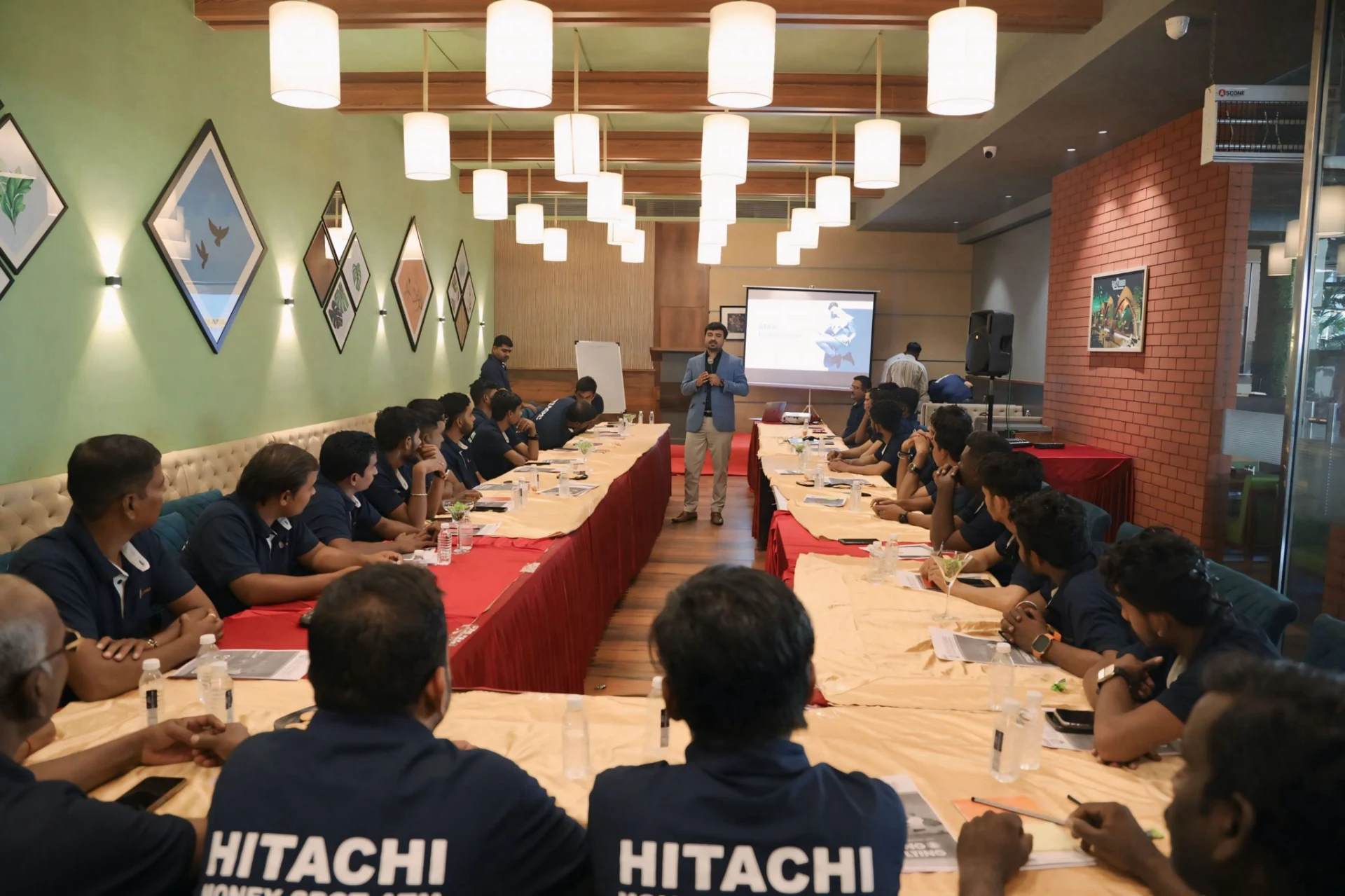
Most Indian managers are promoted for doing a job well — not for their ability to develop others. And that's where the gap lives. According to NASSCOM-Deloitte, India needs 1.25 million AI-ready professionals by 2027, and the only way to build that pipeline fast enough is through deliberate team development. The Winning Edge — as I describe in my work and my book — isn't a talent advantage. It's a development practice. And it starts with how well you listen to and read your team members.
TL;DR- Developing your team is an active leadership practice, not a passive byproduct of good management
- The Winning Edge in team development comes from listening skills and reading your team — not just task delegation
- Most Indian managers invest time in what needs to be done, not in who needs to grow to do it better
- Structured team development — regular 1-on-1s, stretch assignments, skills coaching — compounds like interest over 12 months
- The best team developers at Bajaj Auto, KPIT, and Mahindra treat developing people as the most important output of their role
Why Developing Your Team Is the Most Underrated Leadership Skill in India
Here's what I see in most Indian organisations: managers are evaluated on delivery — revenue, project milestones, customer satisfaction. They are almost never evaluated on how much their team members have grown. The result is a predictable pattern: team development happens only when there's time left over — which means it almost never happens. At Bajaj Auto, L&T, and Tata Tech, the teams with the highest long-term performance are always led by managers who treat developing their people as a primary responsibility, not a secondary one. That shift in priority is where The Winning Edge begins.
The Winning Edge: What Separates Teams That Grow from Teams That Plateau
The Winning Edge in team development isn't a single technique — it's a philosophy of continuous investment in your people. Teams that develop consistently outperform on every metric that matters in Indian organisations: delivery speed, quality, retention, innovation, and morale. What separates developing teams from plateauing ones is not the intelligence or skill of their members — it's whether their leader is actively helping each person stretch beyond their current capability. I've watched the same pool of engineers perform at radically different levels under different managers at Infosys and KPIT — same people, different development culture, dramatically different outcomes.
| Development Practice | Time Investment | What It Develops | Timeline for Results |
|---|---|---|---|
| Weekly 1-on-1 conversations | 15 min per person/week | Trust, awareness, coaching | 30 days |
| Stretch assignments | Planning + check-ins | New capabilities and confidence | 60-90 days |
| Skill-specific feedback | 5 min after key moments | Targeted skill improvement | Immediate + cumulative |
| Peer coaching pairs | 30 min/fortnight per pair | Peer learning and accountability | 60 days |
Listening Skills: The Foundation of Effective Team Development
Listening is the most undervalued skill in Indian management — and the most foundational for team development. Not listening to respond, not listening to check boxes, but listening to understand what's really happening for this team member right now. What are they finding hard? What are they excited about? Where do they feel stuck? What do they need that they're not asking for? At RBI and BARC, I run listening skills workshops for senior managers and the shift in their team relationships within 30 days is always dramatic. When people feel genuinely heard by their manager, their engagement and initiative increase measurably — often within days.
Reading Your Team: How to Identify Each Member's Development Needs
Reading your team means building a clear, updated picture of where each person is in their development journey — what they can do confidently, what they're learning, what they can't do yet and need support with. It's not about performance reviews — those are backward-looking. Development reading is forward-looking: what is this person going to need in the next 6–12 months, and what am I doing right now to get them there? At Mahindra and Ferrero, the best team developers I've worked with keep a simple mental model — or sometimes a literal note — of each team member's current capability, emerging potential, and one specific development action in play.
Practical Tools for Developing Team Members in Indian Companies
The most practical team development tools that work in Indian corporate settings are: weekly 15-minute 1-on-1 conversations (not project status updates — development conversations), stretch assignments given with explicit learning intent (not just because the work needs doing), skill-specific feedback tied to observable behaviours, and peer coaching pairs within teams. At Siemens and JSW, I've helped leadership teams implement these four tools as a 90-day practice. The results — in terms of team output quality, retention rates, and manager satisfaction — are consistently significant. The investment is 45–60 minutes per team member per month. The ROI is compounding.
How to Create a Team Development Culture That Sustains Itself
Development culture doesn't sustain itself through good intentions — it sustains through system. The key components are: development goals set at the start of each project cycle, not just at year-end reviews; regular check-ins that are explicitly framed as "what are you learning?" not "what are you delivering?"; public recognition of growth, not just output; and senior leaders who model their own continuous development visibly. At L&T and Bajaj Auto, the organisations that have the strongest development cultures all have one thing in common: their senior leaders talk openly about what they're currently learning, which signals that development is normal at every level.
The Long-Term Returns of Investing in Team Development India
Here's what 11 years of developing teams across India has taught me. An organisation that invests seriously in team development for 3 years consistently outperforms one that doesn't — on delivery, retention, innovation, and culture. The compounding effect is real: a person who grows 10% this year can grow 15% next year and 20% the year after, because each layer of capability enables faster learning. India's ₹1.5 trillion L&D market is growing for exactly this reason — organisations are starting to quantify the ROI of development. The managers who understand this now are building teams that will be irreplaceable by 2027. The managers who still think development is a nice-to-have will be managing the talent that's left after the developers have poached their best people.
Book Avinash Chate for Your Next Event
TEDx speaker. 11+ yrs training Army, BRO, RBI, BARC, JSW. Available for keynotes, leadership training, team building & manager development at your office or event venue.
✅ Thanks! Avinash team will reach out within 24 hours.'}).catch(function(e){f.outerHTML='Something went wrong. WhatsApp +91 8793630001
'});return false;">Select ServiceKeynote / Motivational SpeakingLeadership Development TrainingTeam Building WorkshopManager DevelopmentEmployee TrainingOutbound TrainingBook Avinash Now →Or WhatsApp directly: +91 87936 30001
Related Articles by Avinash Chate
- Why Manufacturing Industry is Difficult to Start in India: 5 Key Challenges
- Ajit Agarkar's 21-Ball ODI Fifty Against Zimbabwe: The Silent Performer's Career Blueprint
- Clive Lloyd's 1975 World Cup Final Leadership: How Bold Captaincy Wins Under Pressure
Avinash Chate TEDx Speaker · Founder, The Future Corporate · 11+ yrs experience Avinash has trained Indian Army, BRO, RBI, BARC, JSW Steel and 1000+ corporate leaders across India. His work focuses on leadership development, communication skills, and behavioural training rooted in Indian values and modern business needs. |
Frequently Asked Questions
What is the most important thing a manager can do to develop their team members in India?
The single most important thing a manager can do is make development a stated priority — not just in words, but in how they allocate time. This means having regular 1-on-1 conversations explicitly framed as development conversations (not status updates), giving stretch assignments with clear learning intent, and providing specific behavioural feedback tied to observable moments. At Bajaj Auto, the managers with the highest team retention and performance are those who spend at least 20% of their leadership time on explicit development activities — and who can name, for each team member, the one skill or capability they are currently developing.
How often should I have development conversations with my team in India?
I recommend a minimum of a 15-minute development-focused 1-on-1 with each direct report every week. This is separate from project updates or operational check-ins. The question that drives these conversations is not "how's the work going?" but "what are you learning?" and "where do you need support right now?" Monthly, add a slightly deeper development conversation — 30–45 minutes — focused on the team member's medium-term growth goals. At Tata Tech and L&T, managers who implement this cadence report that their team members' engagement scores improve significantly within the first 60 days — and that the conversations get easier and more valuable over time.
What does "The Winning Edge" mean in team development?
The Winning Edge in team development is the philosophy that the difference between a good team and a great team is not talent — it's deliberate investment in development. It comes from my book "The Winning Edge" and from 11+ years of training teams across India. The core idea: teams that develop consistently outperform teams that plateau, because capability compounds. A person who grows 10% in Year 1 can grow 15% in Year 2 because each new capability accelerates the next one. Managers who apply this philosophy — treating people development as their primary output — build teams that become disproportionately stronger over 2–3 years.
How do I develop team members who are resistant to feedback or growth?
Most resistance to feedback or growth comes from one of three sources: fear of exposure (the person is afraid that acknowledging a gap will hurt their standing), past experience of unhelpful feedback (they've been criticised without being supported to improve), or a belief that their development is not the manager's job. The antidote is trust-first development. Start by demonstrating genuine interest in the person's success, not just their output. Frame development in terms of opportunity rather than deficit. Celebrate small improvements loudly. Give the person control over their development plan — let them identify the gap and propose how to address it. I've used this approach to re-engage resistant team members at Bosch, RBI, and the Indian Army — and it works, but it requires patience and consistency from the manager.
Avinash Chate services
Corporate Trainer in Maharashtra · Top Corporate Trainers in Maharashtra · Leadership Trainer in Maharashtra · Top Leadership Trainers in Maharashtra · Team Building Trainer in Maharashtra · Top Team Building Trainers in Maharashtra · Motivational Speaker in Maharashtra · Top Motivational Speakers in Maharashtra · All service locations
← Back to all articles · Book Avinash Chate
By Avinash Chate — Maharashtra’s #1 Corporate Trainer & Motivational Speaker. .