Fail Faster, Succeed Sooner: The Innovator's Counter-Intuitive Route to Excellence
David Kelly and Tom Peters reveal why engineering rapid failure loops — not avoiding mistakes — is the fastest route to mastery and innovation for Indian managers.
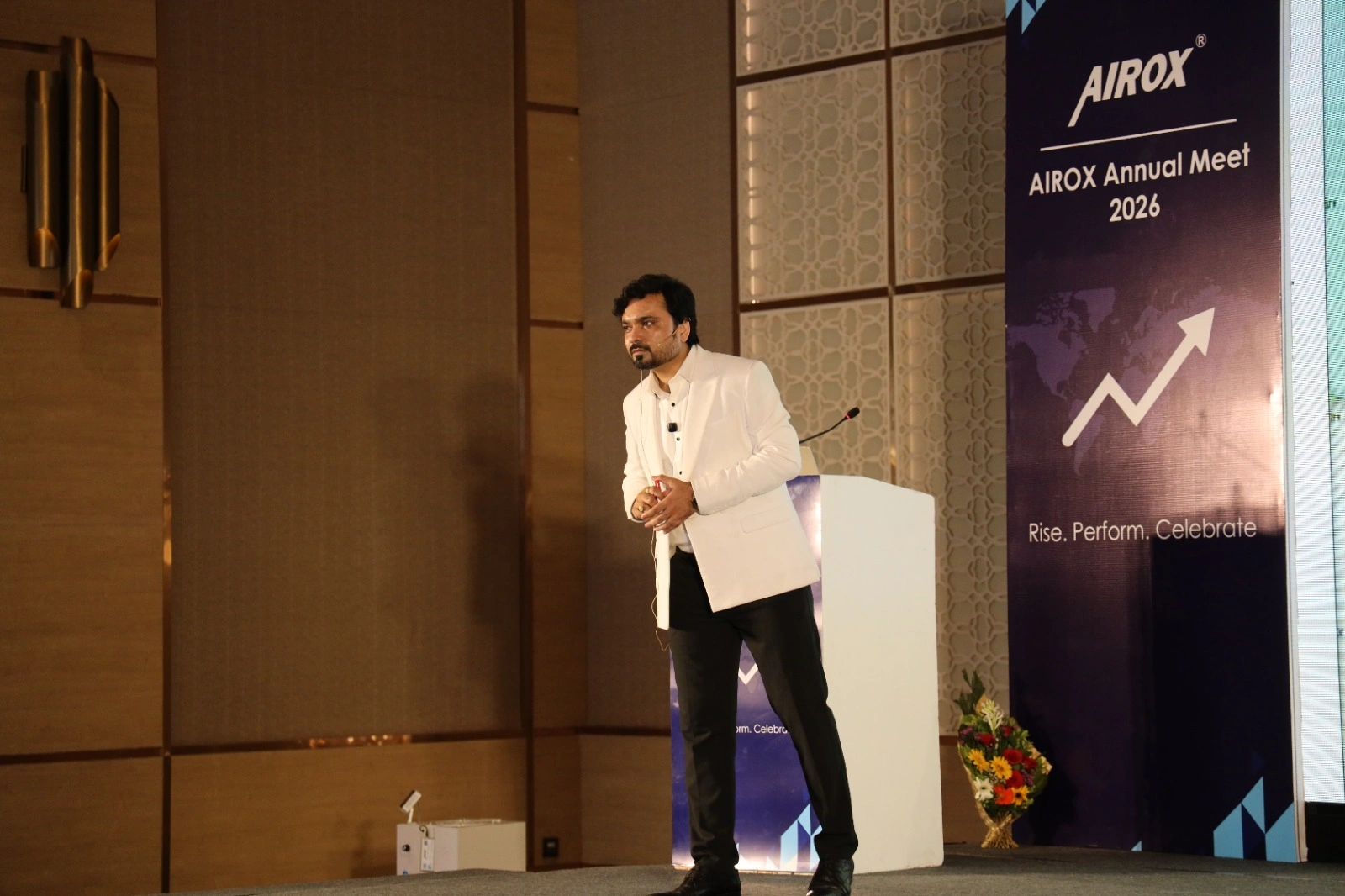
Every time I walk into a corporate training room in Pune or Mumbai, I ask one question before I begin: "How many of you have been told, either by your manager or your own inner voice, that making a mistake at work is simply not acceptable?" Almost every hand goes up. And that single habit of thinking, I believe, is the single biggest barrier keeping Indian professionals and organisations from achieving the excellence they are fully capable of reaching.
In my book The Winning Edge, The Champion Mindset, I devote an entire chapter — Chapter 3 on Deliberate Practice — to a principle that seems almost reckless at first hearing: Fail Faster, Succeed Sooner. Those four words were coined by David Kelly, the founder of the legendary design firm IDEO and the Stanford d.school. They capture a truth that champions in every field — sport, business, art, science — quietly understand, even when they cannot articulate it. The faster you collect failure data, the faster you iterate, and the faster you arrive at mastery.
This is not motivational fluff. It is a practical, engineering-minded approach to skill-building and innovation. Let me walk you through how I teach it in my workshops and why it matters specifically for Indian managers, teams and entrepreneurs in 2026.
Why the Indian Professional Fears Failure — And Why That Fear Is Costing Us
Our relationship with failure in India is complicated. From school to the boardroom, we are conditioned to treat a mistake as evidence of incompetence, as something to be hidden, explained away or, if possible, blamed on external circumstances. This conditioning is understandable — it comes from decades of scarcity-mindset education and hierarchical workplaces where being wrong meant losing face in front of a senior.
But here is the problem: in the modern knowledge economy, the rate at which you learn is the rate at which you grow. And you cannot learn without attempting things that are beyond your current ability. You cannot attempt things beyond your current ability without sometimes getting them wrong. Therefore, a culture that treats mistakes as shameful evidence of failure is, by definition, a culture that has placed a hard ceiling on its own growth.
The Hidden Cost of Playing It Safe
- Teams that never make mistakes are teams that never try anything new.
- Managers who punish failure train their people to under-report problems — which means the organisation is flying blind on risk.
- Individuals who avoid stretch assignments to protect their track record accumulate narrow experience and stagnate at the same level for years.
- Companies that demand zero defects in their innovation pipeline simply stop innovating — they optimise existing products to death while competitors build the next generation.
"Excellence lies outside the comfort zone." — Tom Peters, management author
When Tom Peters says this, he is not being inspirational for the sake of a poster on a wall. He is describing a structural reality. The skills you have already mastered sit inside your comfort zone. By definition, the skills you have not yet mastered sit outside it. You cannot grow without crossing that boundary — and crossing it always feels uncomfortable and often ends in short-term failure.
David Kelly's Principle: Engineering Failure Loops
David Kelly did not stumble upon the "Fail Faster, Succeed Sooner" principle in a motivational book. He arrived at it through the hard-won experience of building IDEO into one of the world's most consistently innovative design firms. At IDEO, the design process is explicitly structured around rapid prototyping — building rough, cheap, fast versions of an idea, testing them on real users, collecting feedback (which is usually critical), refining the concept and repeating. Each prototype is engineered to fail quickly so that the team can learn quickly.
Three Insights Hidden Inside Kelly's Principle
- Each failure is a data point, not a verdict. A prototype that does not work is not proof that the idea is bad. It is proof that this version of the idea does not work. That is enormously valuable information. A team that runs ten quick prototypes has ten data points. A team that spends six months perfecting one prototype before testing has one data point — and has invested far too much ego and budget to honestly evaluate it.
- Speed of iteration matters more than perfection of each attempt. The question is not "How can I make this attempt perfect?" The question is "How quickly can I learn from this attempt so I can make the next one better?" In a competitive market — and Indian markets in 2026 are among the most competitive in the world — iteration speed is a genuine strategic advantage.
- Psychological safety is not a nice-to-have; it is an operational requirement. Kelly's failure-loop approach only works in environments where people feel genuinely safe to share bad news, report early-stage experiments that did not work and ask naive questions. If your team hides problems from you, your failure loops are broken — you are only hearing the sanitised version of reality.
Tom Peters on Screw-Ups as the Mark of Excellence
In Chapter 3 of The Winning Edge, I pair David Kelly's principle with a quote from Tom Peters that I have seen stop people cold the first time they read it:
"Screw-ups are the mark of excellence." — Tom Peters
Read that again slowly. Peters is not saying that screw-ups are acceptable collateral damage. He is saying they are the mark — the signal, the evidence — of excellence. Why? Because the only people who are producing significant screw-ups are the people who are attempting significant things. Mediocrity produces very few visible failures because mediocrity attempts very little that is genuinely difficult.
What This Looks Like in Indian Workplaces
I have worked with hundreds of managers and senior leaders across manufacturing, technology, financial services, FMCG and pharmaceutical companies in Maharashtra. Here is a pattern I see repeatedly: the highest-performing individuals in a team are usually the ones who have the most colourful "failure stories." They attempted a bold pitch and lost the client. They launched a product feature that flopped. They proposed a process change that created confusion before it created clarity. And because they ran those experiments and absorbed those lessons, they now carry a depth of practical wisdom that their more cautious colleagues simply do not possess.
The champions — in sport, in business, in any creative field — are not people who avoided failure. They are people who had a productive relationship with failure. They extracted the lesson from every mistake and moved forward faster because of it.
Three Mindset Shifts for Managers
- From "Don't make mistakes" to "Make mistakes faster." The goal is not zero mistakes. The goal is high-quality, rapid learning from well-designed experiments.
- From "Who is to blame?" to "What did we learn?" The post-failure conversation should be a learning debrief, not a blame session. The blame session teaches people to hide the next failure. The learning debrief teaches people to surface failures early, when they are still cheap to fix.
- From "Protect your track record" to "Build your learning record." In a fast-moving market, a track record of successful experiments — including the ones that did not work — is more valuable than a track record of projects you were never genuinely challenged by.
Step Five of Deliberate Practice: Stretch Beyond the Comfort Zone
In my framework for Deliberate Practice — which I lay out in full in Chapter 3 of The Winning Edge — the fifth and most important step is this: stretch beyond your comfort zone. The Kelly and Peters quotes are the philosophical foundation of this step. Let me make them operational.
How to Design a Productive Failure Loop at Work
- Define the skill or capability you are trying to build. Vague practice produces vague improvement. Name exactly what you are working on — presenting to the board, handling a difficult negotiation, giving feedback to a resistant team member, designing a new product feature.
- Set up the smallest possible experiment you can run this week. Not a three-month project. Not a major initiative. A small, fast, low-cost attempt that will generate real feedback within days. Prototype the pitch to a friendly client. Role-play the negotiation with a colleague. Draft the new feature for one user and watch them interact with it.
- Decide in advance how you will know if it worked. Before you run the experiment, define what success looks like and what failure looks like. This is critical — without pre-defined criteria, our minds naturally re-interpret results in whatever way protects our ego.
- Run the experiment with full commitment. Half-hearted attempts produce ambiguous data. Give this experiment your full attention and effort, so that if it fails, you know the design was the problem and not the execution.
- Conduct an honest debrief within 24 hours. What worked? What did not? What would you change? Write it down. The act of writing forces clarity. A debrief that lives only in your head is easily distorted by wishful thinking.
- Feed the learning into the next iteration immediately. Do not wait a month. The next version of the experiment should incorporate what you just learned, and it should run as soon as possible.
"If you want to reach mastery faster, engineer more rapid failure loops rather than trying to avoid mistakes." — From The Winning Edge, The Champion Mindset
Building a Failure-Friendly Culture: The Leader's Role
Individual mindset matters enormously. But even the most growth-oriented individual will eventually stop taking risks if the organisational culture punishes failure. This is the leadership dimension of the "Fail Faster, Succeed Sooner" principle — and it is the part I spend the most time on when I work with senior leaders and founders.
Practical Actions for Leaders in India
- Share your own failure stories publicly. Nothing signals psychological safety faster than a senior leader saying, in front of the whole team, "Here is something I tried that did not work, and here is what I learned." If your team has never seen you fail, they have concluded that failure is not acceptable at your level — and by extension, at any level.
- Celebrate intelligent failure explicitly. Not all failures deserve celebration — only failures that came from well-designed experiments, where the team learned something genuinely useful. When you see an intelligent failure, name it publicly as such. "This did not work, and that is exactly the kind of risk we want our people taking."
- Separate learning reviews from performance reviews. If people believe that admitting failure in a learning debrief will hurt their annual appraisal, they will never be honest in learning debriefs. Keep these conversations in separate spaces with explicitly different purposes.
- Reward the attempt, not just the outcome. In high-uncertainty environments — which is most of business in India in 2026 — outcomes are partly a function of luck. What your team can fully control is the quality of their attempts and the rigour of their learning process. Reward what they can control.
The Test of a Healthy Innovation Culture
Here is a simple diagnostic I offer in my workshops: When was the last time someone in your team brought you a failure proactively — before you had to discover it yourself? If the honest answer is "I cannot remember" or "never," your team is hiding problems from you. You do not have an innovation culture. You have a fear culture dressed up in innovation language.
Building psychological safety and failure-friendly cultures — a core theme in my corporate keynotes and leadership workshops across India.From Champion Mindset to Champion Organisation
When I wrote The Winning Edge, The Champion Mindset, I was trying to answer one core question: what is the difference between the people and organisations that consistently excel and those that plateau? After years of studying champions across fields and working with thousands of professionals in corporate India, the answer I keep coming back to is this: champions have a fundamentally different relationship with difficulty and failure than average performers do.
Average performers treat difficulty as a sign that they are in the wrong place. Champions treat difficulty as a sign that they are in exactly the right place — the zone where growth happens.
Applying This in Your Own Career
- Deliberately seek out one assignment each quarter that genuinely stretches you — something where there is a real risk of falling short.
- Build a personal "failure debrief" habit: each time something does not go as planned, spend 15 minutes writing three things you learned and one thing you will do differently.
- Find a mentor or peer accountability partner who will celebrate your experiments, not just your successes.
- Track your "attempt rate," not just your "success rate." Champions attempt more. That is why they succeed more — and also why they fail more in absolute numbers.
Bring this to your team. I run Fail Faster, Succeed Sooner-focused corporate training and keynotes on deliberate practice, innovation culture and the champion mindset for companies across Pune, Mumbai and all of Maharashtra.
Book a session · Explore corporate training programs
Frequently Asked Questions
What does "Fail Faster, Succeed Sooner" mean in a business context?
The phrase, coined by David Kelly of IDEO and the Stanford d.school, means that instead of trying to avoid all mistakes, high-performing individuals and teams deliberately design rapid, low-cost experiments that generate quick feedback — including failure feedback. Each failure is treated as a data point that refines the next attempt. The result is faster learning, faster iteration and faster arrival at genuine mastery or a successful product, process or strategy.
Is it not risky to encourage failure in an Indian workplace where accountability matters?
The principle does not advocate reckless failure or negligence. It advocates intelligent, designed failure: small, fast, deliberate experiments where the downside is limited and the learning is high. Accountability and rapid experimentation are not opposites — in fact, teams that run structured failure loops tend to be more accountable because they surface problems early, when they are still inexpensive to fix, rather than hiding them until they become crises.
How can I apply this principle as a middle manager without senior leadership buy-in?
Start within the scope you already control. You do not need company-wide permission to run a two-day experiment with your own team. Protect your team members when they take intelligent risks and report failures honestly. Share your own failure stories in team meetings. Build a micro-culture of psychological safety within your immediate circle. Over time, visible results — faster learning, better products, more engaged team members — make the case upwards better than any presentation can.
Is this topic covered in Avinash Chate's corporate training programs?
Yes. The "Fail Faster, Succeed Sooner" framework, along with the full five-step Deliberate Practice model from my book The Winning Edge, The Champion Mindset, is a core module in my corporate training and leadership keynote programs. I deliver these workshops for companies across Pune, Mumbai and Maharashtra, customised to the specific industry and team context. You can visit the corporate training page or reach out directly to discuss a program for your organisation.
The "Fail Faster, Succeed Sooner" principle is not just a catchy phrase — it is a complete operating system for anyone serious about growth, whether you are an individual professional, a middle manager building a high-performance team or a founder shaping an entire organisation. I would love to bring this conversation into your workplace. Visit my contact page to book a session, explore the full range of programs on the corporate training page, or learn more about my approach on the leadership trainer page.
This article is adapted from my book The Winning Edge, The Champion Mindset.Related Articles by Avinash Chate
- Why Manufacturing Industry is Difficult to Start in India: 5 Key Challenges
- Ajit Agarkar's 21-Ball ODI Fifty Against Zimbabwe: The Silent Performer's Career Blueprint
- Clive Lloyd's 1975 World Cup Final Leadership: How Bold Captaincy Wins Under Pressure
| AC | Avinash ChateIndia's Leading Corporate Trainer | TEDx Speaker | Author With 80+ organizations trained including RBI, JSW Steels, and Ferrero, Avinash Chate delivers high-impact corporate training across India. Creator of the KITE Leadership Framework and bestselling author of "The Winning Edge." Website YouTube |
Avinash Chate services
Corporate Trainer in Maharashtra · Top Corporate Trainers in Maharashtra · Leadership Trainer in Maharashtra · Top Leadership Trainers in Maharashtra · Motivational Speaker in Maharashtra · Top Motivational Speakers in Maharashtra · All service locations
← Back to all articles · Book Avinash Chate
By Avinash Chate — Maharashtra’s #1 Corporate Trainer & Motivational Speaker. .