How Chips, RFID & Encryption Protect Your ATM Card — India 2026
Mr. Gandhi, founder of M-Tech Innovations Ltd., reveals how chips, RFID technology, and encryption layers make your ATM and credit card virtually hack-proof—and why bank-manufacturer collaboration is the real security backbone.
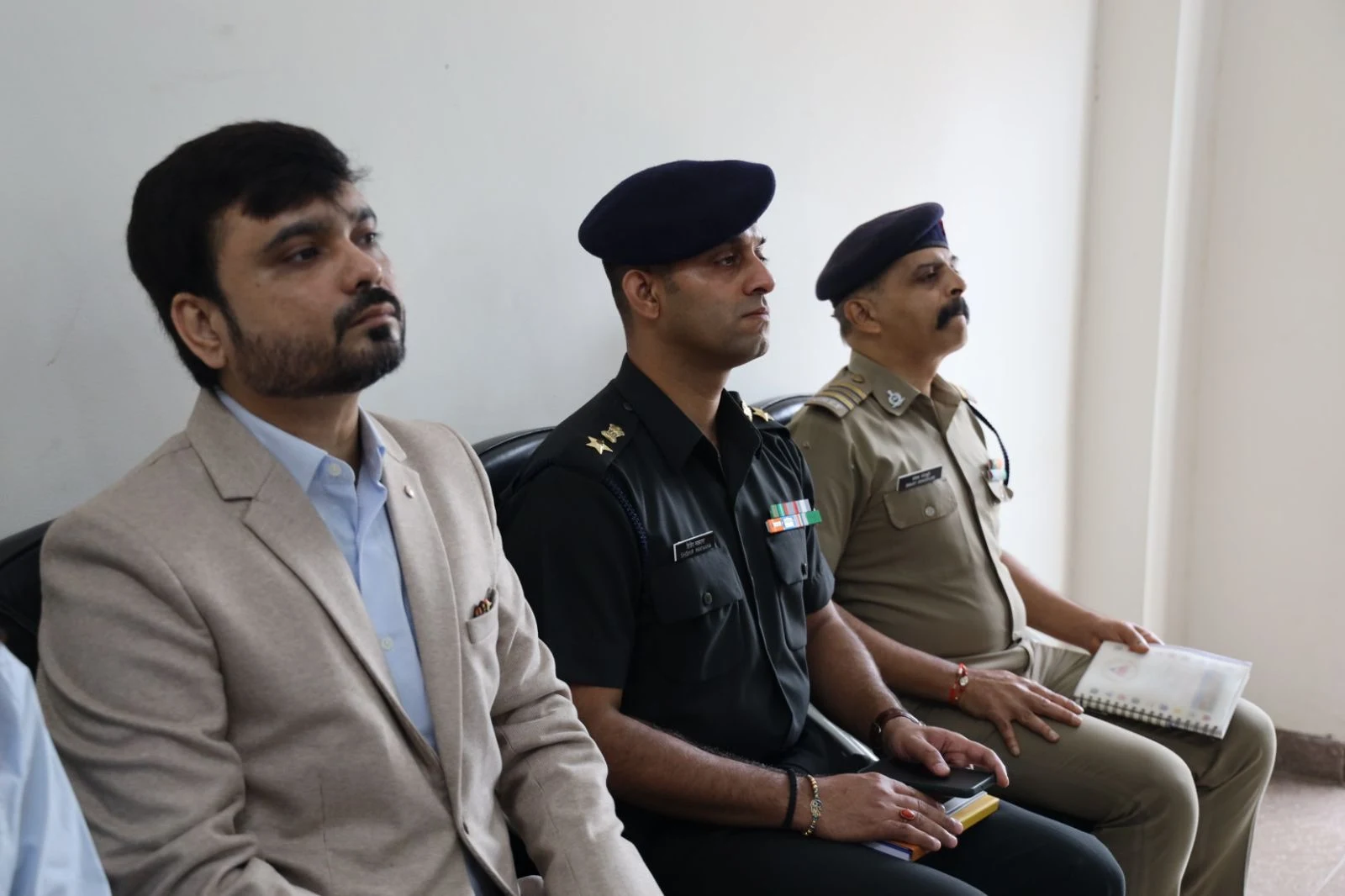
India's digital payment ecosystem—with UPI alone recording over 1,300 crore transactions a month—has made card security a mission-critical concern for every business and professional. In this conversation, Mr. Gandhi, founder of M-Tech Innovations Ltd., pulls back the curtain on exactly how chips, RFID technology, and encryption work together to keep your ATM and credit card transactions secure from hackers and fraudsters.
TL;DR- EMV chips generate a unique code per transaction, making cloned cards completely useless to fraudsters
- RFID in credit cards enables contactless payments but uses encrypted protocols to block unauthorized scanning
- Encryption is the architectural foundation of card security—not a feature bolted on at the end
- Tamper-proof card design includes holographic overlays, UV ink, and multi-layer laminates
- Bank-manufacturer collaboration like M-Tech Innovations and issuing banks is what keeps India's payment network real-time secure
How EMV Chips in ATM Cards Prevent Cloning and Fraud
The magnetic stripe card era had a fatal flaw: static data. Swipe a magnetic stripe card and it broadcasts the same information every single time—making it trivially easy to clone with a cheap skimmer. EMV chips (named after Europay, Mastercard, and Visa) solved this completely. Each transaction generates a unique, one-time cryptographic code. Even if a fraudster intercepts this code, it is mathematically useless for any future transaction. Mr. Gandhi, founder of M-Tech Innovations Ltd., explains that this dynamic authentication layer is built into the chip manufacturing process itself—not added as a software patch. It is why card cloning, once rampant in India's ATM network, has been reduced dramatically since RBI mandated chip migration. The hardware is the first line of defence, and it is a formidable one.
RFID Technology in Credit Cards: Convenience With Built-In Security
RFID—Radio Frequency Identification—is the technology that lets you tap your credit card on a payment terminal and complete a transaction in under a second. The same radio-frequency principles power India's FASTag system, used by over 6 crore vehicles on national highways. But convenience always raises a security question: if your card broadcasts signals, can someone scan it without your knowledge? Mr. Gandhi's answer from M-Tech Innovations is reassuring: yes, the card broadcasts, but what it broadcasts is encrypted with a key held only by your issuing bank. A fraudster who scans your card remotely receives data that is cryptographically locked—useless without the bank's decryption infrastructure. The signal is public; the data is private. That distinction is the entire security architecture of modern contactless payments.
| Security Layer | Technology Used | What It Prevents | India Adoption |
|---|---|---|---|
| EMV Chip | Dynamic cryptographic code per transaction | Card cloning and skimming | Mandatory since RBI directive |
| RFID Encryption | Encrypted radio-frequency signals | Unauthorized contactless scanning | All contactless cards; FASTag |
| Data Encryption | Bank-held cryptographic keys | Data interception during transit | All RBI-regulated card issuers |
| Tamper-Proof Design | Holograms, UV ink, micro-print, laminates | Physical counterfeiting | International payment network standard |
| Network Collaboration | Real-time bank-manufacturer-network-RBI coordination | Ecosystem-wide threats | Active; 72-hr response protocols |
Why Encryption Is the Invisible Backbone of Every Secure Card Transaction
When you swipe, dip, or tap your card at a terminal in Mumbai or Manali, your financial data travels through a chain of encryption layers before a single rupee moves. Mr. Gandhi explained to me that encryption is not an optional security feature—it is the foundational architecture on which secure card manufacturing is built. Every data field on your card—card number, expiry, CVV equivalent—is encrypted using algorithms so mathematically complex that breaking them with today's computing power would take longer than the age of the universe. What most people don't realize is that the encryption keys are never stored on the card itself. They live in the bank's secure servers, making the physical card alone worthless even if stolen. The card without the bank's cryptographic infrastructure is simply a piece of plastic.
Tamper-Proof Card Design: The Engineering Behind Every Secure Indian Bank Card
Walk into M-Tech Innovations' manufacturing facility and you find that a bank card's security story begins long before the chip is embedded. Holographic overlays catch light in patterns that are nearly impossible to replicate without specialized equipment. Micro-printing—text so small it requires magnification to read—appears in security zones invisible to the casual eye. UV-reactive ink patterns emerge only under ultraviolet light, invisible in normal conditions. Multi-layer PVC laminates are bonded at pressures that make delamination—a common counterfeiting technique—effectively impossible. Mr. Gandhi revealed that every card his company manufactures passes through 23 quality and security checkpoints before it leaves the facility. This is not over-engineering. It is the minimum standard required by RBI and international payment networks for cards issued in India.
How Banks and Manufacturers Like M-Tech Innovations Collaborate for Security
Here's what most cardholders never think about: the security of your card depends on a real-time collaboration between four entirely separate organizations. First, the card manufacturer like M-Tech Innovations, who builds the physical security architecture. Second, the issuing bank—say, SBI or HDFC—who manages your account and encryption keys. Third, the payment network—Visa, Mastercard, or India's own RuPay—who processes transactions globally. Fourth, the RBI, which sets minimum security standards and updates them as threats evolve. Mr. Gandhi revealed that when a new card skimming technique is detected anywhere in the world, this entire ecosystem coordinates to update protocols—sometimes within 72 hours. That speed of response is only possible because the collaboration infrastructure is permanently active, not reactive. This is the model that keeps India's rapidly growing digital payment network resilient.
The Evolving Threat Landscape for Card Security in India 2026
India's card fraud landscape in 2026 is more sophisticated than it was five years ago. The hardware—chips, RFID, encryption—has become remarkably difficult to defeat. So fraudsters have shifted their attack surface to the human layer. SIM-swap attacks, phishing SMS messages posing as banks, fake customer service calls, and social engineering now account for the majority of successful card fraud in India. The irony is sharp: M-Tech Innovations can manufacture a card so secure that no machine can defeat it—but a single moment of human carelessness hands it over voluntarily. I've trained BFSI teams including RBI staff on exactly this gap. Technical security is only as effective as the human awareness surrounding it. The 65% of Indian firms now investing in training must include digital security literacy in their workforce development agenda.
Why Business Leaders Need to Understand Card Security—Not Just IT Teams
Why should a CEO, CFO, or operations head care about chip technology and RFID encryption? Because your company's treasury operations, vendor payments, travel expense systems, and employee corporate cards all run on the same card infrastructure Mr. Gandhi described. A data breach at the card level—whether through a compromised payment terminal, a phishing attack on a finance team member, or a social engineering call to accounts payable—can trigger RBI investigations, halt operations, and destroy vendor confidence in hours. The good news is that companies like M-Tech Innovations have made the hardware side of India's card ecosystem nearly bulletproof. Your organizational responsibility is to make the human side equally secure—through regular security awareness sessions, strict card usage protocols, and a culture where questioning unusual payment requests is not just allowed but expected and celebrated.
Book Avinash Chate for Your Next Event
TEDx speaker. 11+ yrs training Army, BRO, RBI, BARC, JSW. Available for keynotes, leadership training, team building & manager development at your office or event venue.
✅ Thanks! Avinash team will reach out within 24 hours.'}).catch(function(e){f.outerHTML='Something went wrong. WhatsApp +91 8793630001
'});return false;">Select ServiceKeynote / Motivational SpeakingLeadership Development TrainingTeam Building WorkshopManager DevelopmentEmployee TrainingOutbound TrainingBook Avinash Now →Or WhatsApp directly: +91 87936 30001
Related Articles by Avinash Chate
- How Strong Information Systems Built a ₹250 CR Manufacturing Empire
- Best Motivational Speaker for Viman Nagar Kalyani Nagar Pune Teams
- RFID Crowd Management at Kumbh Mela & Vaishno Devi — India 2026
Avinash Chate TEDx Speaker · Founder, The Future Corporate · 11+ yrs experience Avinash has trained Indian Army, BRO, RBI, BARC, JSW Steel and 1000+ corporate leaders across India. His work focuses on leadership development, communication skills, and behavioural training rooted in Indian values and modern business needs. |
Frequently Asked Questions
What makes EMV chip cards more secure than magnetic stripe cards for Indian users?
EMV chips generate a unique, one-time cryptographic code for every single transaction. Unlike magnetic stripe cards, which store and broadcast the same static data every time—making them easy to clone with a cheap skimmer—chip cards make cloned data mathematically useless. Even if a fraudster captures the transaction code, it cannot be replicated for a different transaction. This dynamic authentication, built into the chip manufacturing process by companies like M-Tech Innovations, is why card cloning has decreased sharply in India since RBI mandated chip migration across the banking system.
How does RFID technology in credit cards prevent contactless fraud in India?
RFID in credit cards uses encrypted radio-frequency signals to enable tap-and-go payments. The key protection is that while the card does broadcast a signal, what it broadcasts is encrypted using keys held only by the issuing bank's secure servers. A fraudster who scans your card remotely without authorization receives cryptographically locked data that is completely useless without the bank's decryption infrastructure. This is the same principle behind India's FASTag system. The signal is technically public; the financial data within it is private and protected by encryption that would take extraordinary computational power to break.
What role do card manufacturers like M-Tech Innovations play in India's banking security ecosystem?
Card manufacturers like M-Tech Innovations Ltd. are responsible for the physical security architecture of every bank card in the system—the EMV chip embedding, RFID protocol implementation, holographic overlays, UV ink security features, and multi-layer lamination that makes counterfeiting virtually impossible. They work in constant collaboration with issuing banks, payment networks like RuPay, Visa, and Mastercard, and the RBI to ensure that security protocols are updated as new threats emerge. Mr. Gandhi revealed that when a new fraud technique is detected, this coordinated ecosystem can update security protocols across the entire manufacturing and banking chain within 72 hours.
What should Indian business leaders do to protect company card-based financial systems?
Business leaders should take three immediate actions. First, ensure all corporate and expense cards issued to employees use chip-and-PIN or chip-and-contactless technology—no magnetic-stripe-only cards. Second, run regular security awareness sessions for finance and accounts teams specifically covering phishing, SIM-swap attacks, and social engineering—the human vulnerabilities that bypass even the best card hardware. Third, establish strict protocols around unusual payment requests: any request to change payment details or approve large transactions without standard multi-person authorization should trigger an automatic verification call. The hardware is secure; the organizational culture around it determines whether that security holds in practice.
Avinash Chate services
Corporate Trainer in Maharashtra · Top Corporate Trainers in Maharashtra · Leadership Trainer in Maharashtra · Top Leadership Trainers in Maharashtra · Team Building Trainer in Maharashtra · Top Team Building Trainers in Maharashtra · Motivational Speaker in Maharashtra · Top Motivational Speakers in Maharashtra · All service locations
← Back to all articles · Book Avinash Chate
By Avinash Chate — Maharashtra’s #1 Corporate Trainer & Motivational Speaker. .