Takers मुळे Company Culture का खराब होते?
अनेक संस्थांमध्ये नेत्यांना एक प्रश्न नेहमी पडतो — अचानक टीमची संस्कृती नकारात्मक का होते? ऑफिसमध्ये गॉसिप वाढते, blame game सुरू होतो आणि सहकार्य कमी होत जाते....
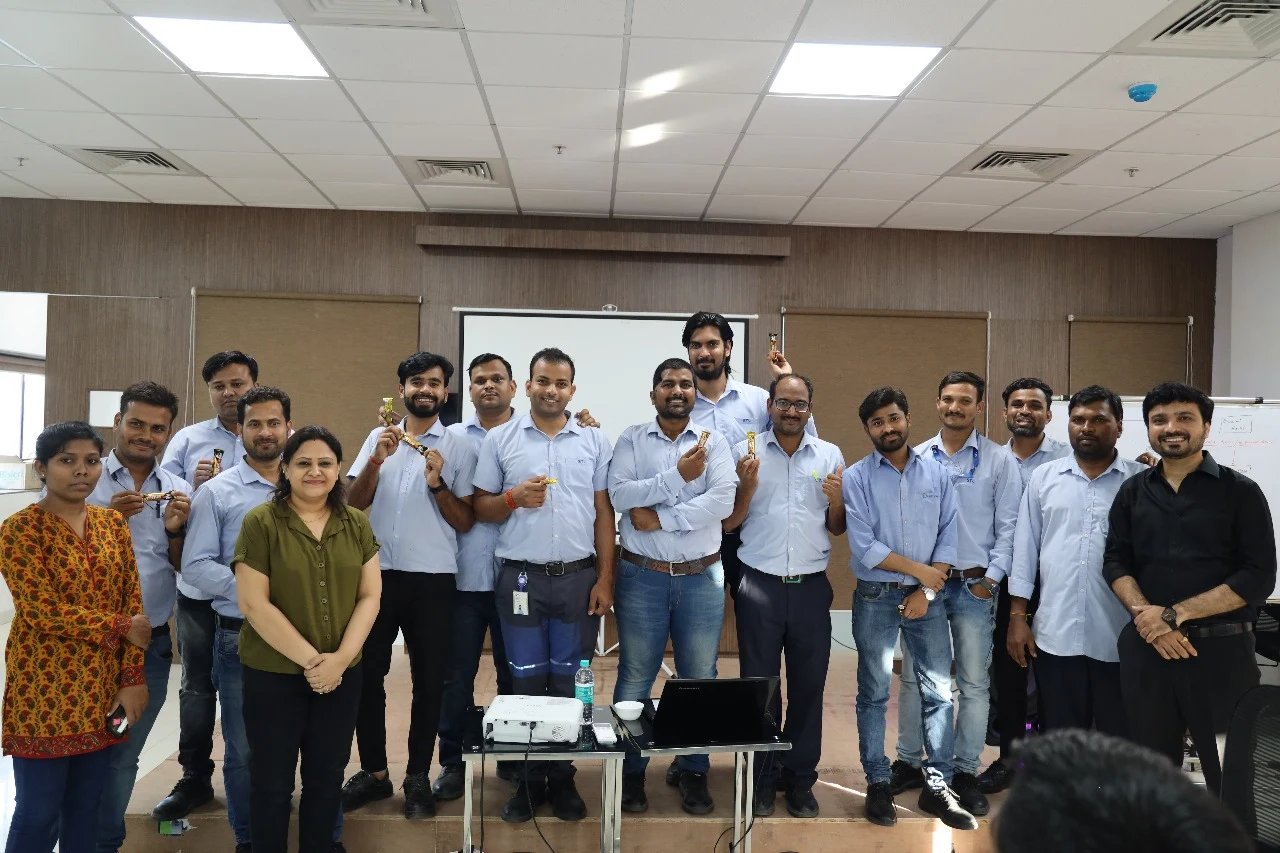
Avinash Chate - Corporate Training Expert at team building workshop
How Takers Quietly Damage Company CultureIn many organizations, leaders ask me a similar question: why does a good team suddenly become political, defensive, and low on trust? The answer is not always in strategy, structure, or policy. Very often, it is in people patterns.
As Avinash Chate, I have seen this repeatedly in my work with leaders and teams across industries. A culture does not become toxic in one day. It changes slowly when certain behaviors are tolerated for too long.
Key takeaway: When takers begin to dominate a team, collaboration drops, gossip rises, ownership weakens, and culture starts decaying from the inside.
In this article, I want to simplify a powerful idea: the difference between takers, matchers, and givers. More importantly, I want to show you why takers can quietly damage your company culture, and what leaders must do before the damage becomes normal.
Understanding the Three Types of People in a Team
Let us begin with a simple distinction. In most teams, people broadly operate in one of three ways.
- Takers focus on personal gain first. They ask, “What do I get?” They often want credit, visibility, influence, and advantage, even if the team pays the price.
- Matchers believe in balance. They help when others help them. They cooperate, but they keep score.
- Givers contribute with intent. They support, share, and collaborate because they want the team to move forward, not just themselves.
Now let me be clear. Being a giver does not mean being weak. It does not mean saying yes to everything. Healthy givers are strong, self-aware, and committed to collective success. They create trust. They build psychological safety. They make teams stronger.
Takers do the opposite. They may appear smart, ambitious, or highly visible in the beginning. Sometimes they even impress leaders because they speak confidently, push aggressively, and project competence. But over time, their impact on culture becomes expensive.
A taker does not just take credit or opportunity. A taker takes away trust, energy, and the spirit of teamwork.
How Takers Slowly Poison the Culture
The biggest danger with takers is that they are not always easy to spot early. They rarely announce themselves. They influence culture through repeated small behaviors.
First, takers avoid responsibility when things go wrong. They are quick to explain, justify, or shift blame. In a healthy culture, mistakes become learning moments. In a taker-driven culture, mistakes become political events.
Second, takers are often generous only when there is a visible return. They may help selectively, support strategically, and collaborate only when it improves their image. Teams notice this very quickly.
Third, takers create insecurity in others. When people feel that someone will steal credit, manipulate information, or use relationships for advantage, they become guarded. Once that happens, openness disappears.
Fourth, gossip increases. Why? Because trust decreases. When direct communication becomes unsafe, indirect communication becomes common. Whisper networks grow. Assumptions replace conversations. The culture becomes emotionally tiring.
Fifth, good people begin to withdraw. This is one of the most damaging outcomes. Givers and sincere contributors often stop sharing ideas when they feel exploited. They reduce effort, not because they are incapable, but because they are exhausted.
I have seen this pattern in organizations where performance looked acceptable on paper, but the emotional climate was deteriorating. Results may survive for some time, but culture debt keeps building.
Why Leaders Miss the Problem for Too Long
One reason leaders miss takers is that takers can look productive. They know how to stay visible. They know how to speak the language of outcomes. They know how to position themselves near authority.
But culture is not built only by visible outcomes. It is built by repeated everyday behavior. How people share information. How they respond to failure. How they speak about absent colleagues. How they behave when no credit is available.
As a TEDx speaker and author of The Winning Edge, I often tell leaders that culture is not what is written in values posters. Culture is what gets rewarded, ignored, and repeated.
That is why leaders must look deeper than surface performance. Ask questions such as: Does this person build trust? Do others feel safe working with them? Do they create ownership in the team, or dependence? Do they elevate others, or only themselves?
In one of my corporate interventions with RBI, I noticed a familiar challenge. The issue was not capability alone. It was the invisible erosion of cooperation. Once leaders started observing behavior patterns more carefully, they realized that a few self-serving habits were affecting the morale of many sincere contributors.
This is why leadership maturity matters. If leaders only reward visibility, takers flourish. If leaders reward contribution, consistency, and collaborative behavior, the culture becomes stronger.
The Cost of a Taker-Dominated Environment
When takers shape the environment, the cost is not only emotional. It is strategic.
Innovation drops because people stop sharing unfinished ideas. Accountability weakens because everyone is trying to protect themselves. Cross-functional collaboration suffers because trust is low. Managerial bandwidth gets wasted in conflict resolution. Attrition rises among dependable performers. Over time, the organization starts losing the very people it should have retained.
This is especially dangerous in growing companies. During growth, systems are evolving, roles are changing, and communication gaps naturally exist. In such conditions, takers can exploit ambiguity. They can use confusion for personal advantage, making alignment even harder.
Avinash Chate has worked with 80+ organizations, and one lesson stands out clearly: culture problems are rarely caused by one dramatic incident. They are usually caused by tolerated patterns. And taker behavior, when tolerated, becomes contagious.
That is the real risk. Matchers begin to mirror what they see. They think, “Why should I give more when others are only taking?” Gradually, the culture shifts from contribution to calculation.
Once that happens, even good policies struggle to create engagement.
What Leaders Must Do to Protect the Culture
The solution is not to label people casually. The solution is to build systems and leadership habits that discourage taker behavior and strengthen giver behavior.
First, define expected behaviors clearly. Most organizations define goals, but not enough define collaboration standards. Be explicit about ownership, communication, respect, and credit-sharing.
Second, reward the right people publicly. Do not celebrate only individual stars. Also recognize those who enable teams, support peers, solve quietly, and build trust.
Third, address blame culture immediately. The moment leaders allow excuse-making and finger-pointing to continue unchecked, they send the wrong message. Accountability must be fair, calm, and consistent.
Fourth, create feedback loops. Encourage managers and teams to speak about behavior, not just targets. If a person delivers numbers but damages trust, that must be discussed.
Fifth, develop leaders using a structured lens. In my work, I often connect these conversations to the KITE Leadership Framework because leadership is not only about driving tasks. It is about shaping energy, trust, and team effectiveness.
Sixth, protect your givers. This is very important. Many organizations unknowingly overload their most dependable people because they are sincere. Then those people burn out while takers remain politically active. That is not leadership. That is negligence.
If you want a stronger team culture, you may also find value in reading Building High Performance Teams in Corporate Pune: Strategies for Success, How to Create an Impactful Team-Building Retreat in Nagpur: A Complete Guide, and Internal Trainer vs External Trainer — Which Is Better for Your Organization in Maharashtra.
Build a Culture Where Givers Can Thrive
A strong culture does not happen by accident. It is built intentionally. It grows when leaders model fairness, recognize contribution, and refuse to normalize self-serving behavior.
As Avinash Chate, I believe every leader must ask one honest question: what kind of behavior are we making successful in our organization?
If takers are rising, the issue is not just individual personality. It is also a leadership signal. Somewhere, the system is rewarding the wrong things.
The good news is that culture can be repaired. When leaders become more observant, more courageous, and more consistent, teams begin to recover. Trust can return. Collaboration can improve. Ownership can rise again.
Avinash Chate, a TEDx speaker and author of The Winning Edge, has seen that the healthiest teams are not made only of high performers. They are made of people who know how to contribute without constantly calculating personal advantage.
If you want your organization to grow sustainably, do not just hire talent. Build character into the culture. Promote people who strengthen the team, not just themselves.
If you would like to build a healthier, high-trust workplace, book a corporate training session. I work with leaders and teams to strengthen culture, leadership, communication, and performance in practical, measurable ways.
Frequently Asked Questions
What is a taker in company culture?
A taker is someone who prioritizes personal gain over team success. They may seek credit, avoid responsibility, and contribute selectively based on what benefits them.
How do takers affect team morale?
Takers reduce trust, increase blame, and create insecurity in teams. Over time, sincere contributors feel drained, collaboration drops, and morale suffers.
Are matchers harmful to company culture?
Not necessarily. Matchers can function well in balanced environments, but in a taker-heavy culture they may become transactional and stop contributing beyond the minimum.
How can leaders identify taker behavior early?
Leaders should observe patterns such as credit-seeking, blame-shifting, selective cooperation, poor trust levels, and behavior that looks good upward but feels harmful sideways.
What can organizations do to build a giver-based culture?
Organizations should define expected behaviors, reward collaboration, address blame culture quickly, create feedback systems, and protect sincere contributors from burnout and exploitation.
Related Articles by Avinash Chate
- The Untold Truth Behind UPSC and MPSC Failure: What 99% of Aspirants Are Never Told
- Motivational Speaker for Mumbai's Hybrid Work Challenges — Bridging the Office-WFH Divide in India's Corporate Capital
- Motivational Speaker for Pune BPO and KPO Night-Shift Teams — Combating Burnout and Boosting Engagement
About the Author
Avinash Chate is a TEDx speaker, published author of The Winning Edge and The Unanswered, and founder of The Future Corporate & Business Coaching. With over 15 years of experience training 80+ organizations including RBI, JSW Steels, Ferrero, and Forbes Precision Tools, Avinash is recognized as Maharashtra's leading corporate trainer. He created the KITE Leadership Framework and the 25-Star Competency Framework™, delivering high-impact programs across leadership, team building, sales transformation, and emotional intelligence.
📞 +91 8793630001 | ✉️ connect@avinashchate.com | 🌐 avinashchate.com
Book Avinash Chate for Your Next Event
Maharashtra's #1 Corporate Trainer · India's leading Motivational Speaker & Team Building Expert · 2x TEDx · Available across India in English, Hindi & Marathi.
✅ Thanks! Avinash team will reach out within 24 hours.'}).catch(function(e){f.outerHTML='Something went wrong. WhatsApp +91 8793630001
'});return false;"> Select Service Motivational Speaking / Keynote Team Building Workshop Corporate Training / Leadership Development Manager Development Employee Training Outbound Training Book Avinash Now →Or WhatsApp directly: +91 87936 30001
Avinash Chate services
Corporate Trainer in Maharashtra · Top Corporate Trainers in Maharashtra · Leadership Trainer in Maharashtra · Top Leadership Trainers in Maharashtra · Team Building Trainer in Maharashtra · Top Team Building Trainers in Maharashtra · Motivational Speaker in Maharashtra · Top Motivational Speakers in Maharashtra · All service locations
← Back to all articles · Book Avinash Chate
By Avinash Chate — Maharashtra’s #1 Corporate Trainer & Motivational Speaker. .