How to Measure the ROI of Your Corporate Training Programs Without Guesswork
Learn how to measure the ROI of corporate training programs using practical business metrics, behavior change indicators, and performance outcomes that matter to leadership teams.
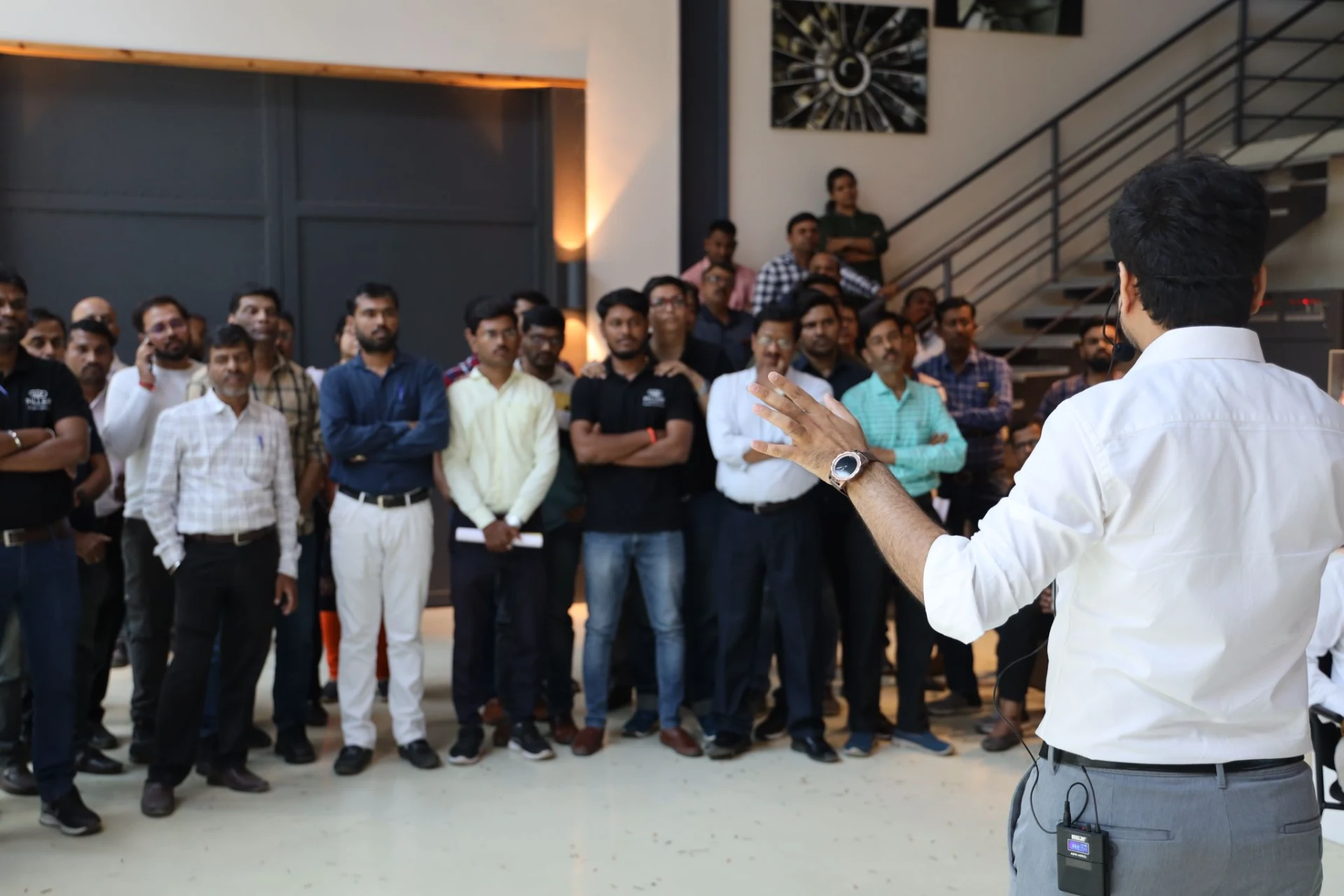
Avinash Chate - Team Building Expert conducting interactive workshop
How to Measure the ROI of Your Corporate Training Programs Without GuessworkOne of the most common questions I hear from leadership teams, HR heads, and business owners is simple: How do we know whether our corporate training actually worked? It is a fair question. Training should never be treated as a feel-good event. It must create visible business impact.
In my experience working with teams across 80+ organizations, the problem is rarely that companies invest in learning. The real problem is that many of them do not define success before the training begins. As a result, they end up measuring attendance, feedback smiles, and certificates instead of performance improvement.
Key takeaway: The ROI of corporate training is not measured by how engaging the session felt on the day of delivery. It is measured by what changes in performance, behavior, productivity, quality, and business results after the program.
As Avinash Chate, a TEDx speaker and author of The Winning Edge, I believe training ROI becomes measurable when learning is linked to business outcomes from day one. Whether I am working with frontline teams, managers, sales professionals, or leadership groups, I always encourage organizations to move from activity metrics to outcome metrics.
In this article, I will show you a practical way to measure the ROI of your corporate training programs so that your investment can be defended, improved, and scaled with confidence.
Start by Defining What Success Should Look Like
If you want to measure ROI, begin before the training starts. Ask a basic but powerful question: What business problem are we trying to solve?
Many training initiatives fail the ROI test because the objective is too vague. Statements like “improve communication,” “build leadership,” or “motivate employees” may sound good, but they are difficult to measure unless converted into specific outcomes.
Instead, define training goals in business language. For example:
Reduce customer complaints by a measurable percentage
Improve sales conversion rates
Reduce rework, errors, or quality defects
Increase manager effectiveness scores
Improve employee retention in critical teams
Reduce turnaround time for key operational processes
When I design programs using the KITE Leadership Framework, I focus on connecting capability development with observable workplace performance. That alignment makes post-training evaluation far more meaningful.
If you are still deciding how to evaluate employee behavior and ownership, you may also find this useful: Why Some Employees Deliver and Others Avoid Work.
Measure ROI at Four Levels, Not One
A major mistake organizations make is measuring training at only one level, usually participant feedback. Positive feedback matters, but it is only the beginning.
I recommend evaluating training across four practical levels.
1. Reaction
Did participants find the session relevant, engaging, and useful? This is your immediate feedback layer. It tells you whether the content connected with the audience.
2. Learning
Did participants actually understand new concepts, tools, or frameworks? This can be assessed through quizzes, role plays, simulations, case analysis, or manager observation.
3. Behavior Change
Are employees applying the learning on the job? This is where many training programs weaken. If there is no follow-through, even the best workshop becomes an event, not a transformation.
4. Business Results
Did the training improve measurable outcomes such as productivity, sales, quality, retention, customer satisfaction, or team effectiveness? This is where ROI becomes visible to leadership.
When Avinash Chate works with organizations, the strongest results usually come when managers are involved in reinforcing behavior change after the session. Training alone cannot create ROI. Reinforcement creates ROI.
Choose Metrics That Leadership Actually Cares About
To measure the ROI of corporate training programs, you need metrics that matter to decision-makers. If your report only includes attendance, satisfaction scores, and photos, it will not build credibility.
Instead, identify metrics that link directly to business performance. Depending on the training type, these may include:
Revenue growth per employee
Sales conversion ratio
Average deal size
Customer retention rate
Net promoter score or customer satisfaction
Production efficiency
Error reduction
Safety compliance improvement
Team productivity
Absenteeism reduction
Attrition reduction
Internal promotion readiness
Let us say you conduct a leadership development program for managers. Instead of only asking participants whether they liked the training, measure whether their teams show better engagement, faster decision-making, lower conflict, or improved execution over the next 60 to 90 days.
I have seen this play out in real organizations such as Matchwell Engineering, where leadership and team capability development can be connected to operational discipline and execution quality when the right metrics are defined early.
If leadership trust, perception, and intent are affecting team outcomes, this article adds another valuable lens: When People Don’t Trust Good Intentions: The Leadership Lesson Behind Free Education.
Use a Simple ROI Formula That Your Team Can Apply
Many people assume ROI measurement is too complicated. It does not have to be. A simple formula can help you bring clarity.
ROI percentage = ((Monetary benefits from training - Training cost) / Training cost) x 100
Now let us break that down.
Training Cost May Include:
Trainer fees
Venue or platform cost
Participant time cost
Travel and logistics
Training materials and assessments
Follow-up coaching or reinforcement cost
Monetary Benefits May Include:
Increase in sales revenue
Reduction in operational waste
Lower attrition cost
Fewer customer escalations
Reduction in rework and quality failures
Time saved due to better efficiency
For example, if a sales training program costs your organization a certain amount and leads to a measurable increase in conversions over the next quarter, you can estimate the revenue gain attributable to the program. If a managerial training intervention reduces attrition in a high-cost team, you can calculate the savings from lower replacement and onboarding costs.
The key is not perfection. The key is disciplined estimation backed by credible data.
Track Behavior Change After the Workshop
One-day or two-day workshops can create awareness, but awareness alone does not produce ROI. I always say that the real training begins after the session ends.
To measure lasting impact, create a post-training tracking system. This can include:
Manager check-ins after 15, 30, and 60 days
Behavior observation scorecards
Action plan reviews
Peer feedback
Performance dashboards
Coaching conversations
For example, if the training focused on communication, define the exact behaviors to observe. Are managers giving clearer instructions? Are meetings shorter and more outcome-focused? Are conflicts being resolved earlier? Are teams escalating fewer avoidable issues?
This is one reason I encourage organizations to avoid generic training requests. The more specific the expected behavior change, the easier it is to measure impact later.
If you are evaluating training partners and want more clarity before investing, read 10 Questions to Ask Before Hiring a Corporate Trainer in Maharashtra.
Build a Training ROI Culture, Not Just a Training Report
The best organizations do not measure ROI as a one-time exercise. They build a culture where every learning intervention is expected to support business performance.
That means HR, business leaders, trainers, and reporting managers must work together. Before training, define the business objective. During training, ensure relevance and engagement. After training, reinforce application and track outcomes.
As Avinash Chate, I have seen that when organizations treat training as a strategic lever rather than a calendar activity, the conversation changes completely. Learning stops being an expense and starts becoming an investment.
If you want your corporate training programs to deliver measurable value, ask these five questions before every intervention:
What business problem are we solving?
What specific behaviors must change?
What metrics will prove success?
How will managers reinforce learning?
When will we review results?
That is how training ROI becomes visible, credible, and repeatable.
Avinash Chate is a TEDx speaker, author of The Winning Edge, and a trusted corporate trainer for organizations seeking measurable capability development. If you want to build training programs that create real business outcomes, book a corporate training session.
Frequently Asked Questions
What is the best way to measure the ROI of corporate training?
The best way is to connect training with business outcomes before the program begins. Define success metrics such as productivity, sales, quality, retention, or customer satisfaction, then compare results before and after training.
Can soft skills training also have measurable ROI?
Yes. Soft skills training can be measured through changes in manager effectiveness, team collaboration, customer feedback, conflict reduction, employee engagement, and retention. The key is to define observable behaviors and related business metrics.
How long should I wait before measuring training impact?
Immediate feedback can be collected on the same day, but behavior and business impact should typically be reviewed over 30, 60, and 90 days depending on the nature of the training and the expected outcomes.
Why do many training programs fail to show ROI?
Most programs fail to show ROI because the goals are vague, success metrics are not defined in advance, managers do not reinforce learning, and organizations measure participation instead of performance improvement.
What should be included in the cost of training when calculating ROI?
Include trainer fees, platform or venue expenses, participant time cost, travel, materials, assessments, and any post-training coaching or reinforcement costs. A complete cost picture gives a more accurate ROI calculation.
Related Articles by Avinash Chate
- Why Investing in Personal Development is Key for Leadership Success in Osmanabad
- The Future of Corporate Training: Embracing Virtual Reality and AI Technologies
- The Role of Motivational Speaking in Reducing Employee Burnout
About the Author
Avinash Chate is a TEDx speaker, published author of The Winning Edge and The Unanswered, and founder of The Future Corporate & Business Coaching. With over 15 years of experience training 80+ organizations including Kaeser Compressors India, Mumbai Port Authority, VishwaRaj Hospital, Morbull Solutions, Avinash is recognized as Maharashtra's leading corporate trainer. He created the KITE Leadership Framework and the 25-Star Competency Framework™, delivering high-impact programs across leadership, team building, sales transformation, and emotional intelligence.
📞 +91 8793630001 | ✉️ connect@avinashchate.com | 🌐 avinashchate.com
Book Avinash Chate for Your Next Event
Maharashtra's #1 Corporate Trainer · India's leading Motivational Speaker & Team Building Expert · 2x TEDx · Available across India in English, Hindi & Marathi.
✅ Thanks! Avinash team will reach out within 24 hours.'}).catch(function(e){f.outerHTML='Something went wrong. WhatsApp +91 8793630001
'});return false;"> Select Service Motivational Speaking / Keynote Team Building Workshop Corporate Training / Leadership Development Manager Development Employee Training Outbound Training Book Avinash Now →Or WhatsApp directly: +91 87936 30001
Avinash Chate services
Corporate Trainer in Maharashtra · Top Corporate Trainers in Maharashtra · Leadership Trainer in Maharashtra · Top Leadership Trainers in Maharashtra · Team Building Trainer in Maharashtra · Top Team Building Trainers in Maharashtra · Motivational Speaker in Maharashtra · Top Motivational Speakers in Maharashtra · All service locations
← Back to all articles · Book Avinash Chate
By Avinash Chate — Maharashtra’s #1 Corporate Trainer & Motivational Speaker. .