IAS Flag Controversy And Corporate Leadership Truth
In every organization, leaders are expected to act with fairness and balance. But the moment neutrality is questioned, trust begins to break. Many professionals...
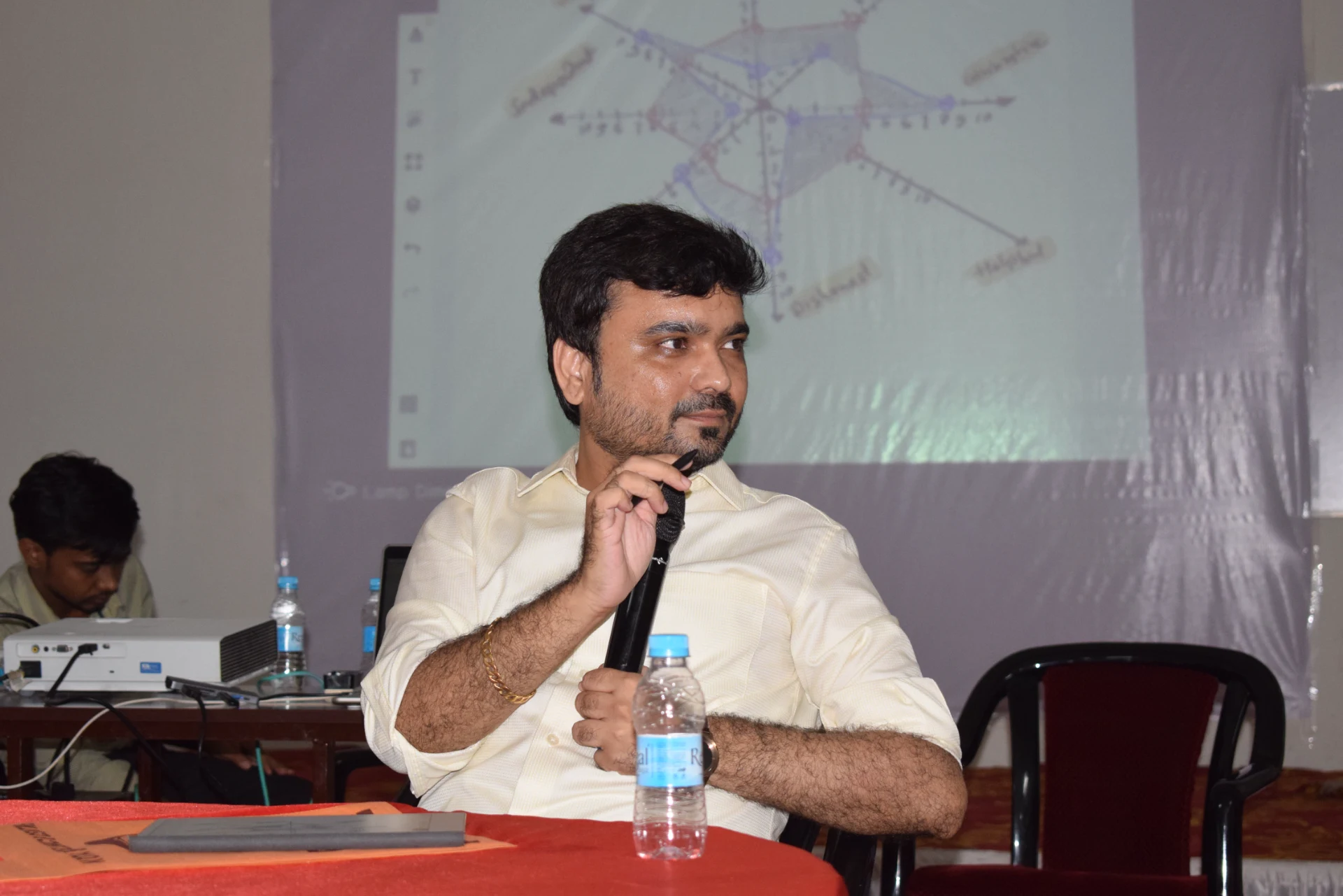
Avinash Chate - Leadership Development Expert training management team
The Leadership Truth Behind the IAS Flag Controversy: Why Neutrality Builds TrustLeadership is not tested only in boardrooms, reviews, or strategy meetings. It is tested in moments of visibility, symbolism, and public perception. When I reflected on the IAS flag controversy, I saw a leadership lesson that applies far beyond administration or public service. It applies directly to every manager, team leader, business owner, and professional who wants to build trust.
Key takeaway: a leader may have personal opinions, beliefs, and preferences, but the moment those preferences appear to influence professional behavior, trust begins to weaken.
That is why neutrality is not a soft skill. It is a leadership responsibility. As a corporate trainer, TEDx speaker, and author of The Winning Edge, I have seen this truth repeatedly across teams, factories, service businesses, and growth-stage organizations.
Why this controversy matters to every corporate leader
Many people look at such incidents as political or administrative issues. I look at them as leadership case studies. The core question is simple: when a leader represents an institution, can that leader afford to send signals that create doubt about fairness?
In organizations, this happens more often than people realize. A manager praises one group repeatedly while ignoring another. A leader spends more informal time with a few team members. A supervisor appears emotionally invested in one department and detached from the rest. None of this may be intentional. But leadership is judged not only by intention. It is judged by interpretation.
That is where many capable leaders fail. They say, “I did not mean it that way.” But teams respond, “This is how it looked.” In leadership, perception shapes culture.
Avinash Chate has often emphasized in training rooms that trust is built when people believe the system is fair. The moment employees suspect bias, they stop giving their best ideas, their honest feedback, and eventually their emotional commitment.
Neutrality does not mean lack of values
Let me clarify something important. Neutrality is not weakness. It is not indecision. It is not the absence of conviction. A strong leader can have deep personal values and still behave with complete professional balance.
In fact, true neutrality requires maturity. It demands that I separate my personal identity from my professional responsibility. If I am leading a team, I cannot allow my preferences to become a filter through which I reward, support, or judge people.
This is one of the principles I connect with the KITE Leadership Framework. Effective leadership is not only about direction and execution. It is also about trustworthiness in action. Team members must feel that the leader’s chair is larger than personal likes and dislikes.
When neutrality is visible, people feel psychologically safe. They believe they will be heard fairly. They trust that opportunities will not be decided by favoritism. They know disagreements will not become personal punishments. That is when performance rises.
The strongest leaders are not those who display power most visibly. They are those who make fairness most believable.
How bias quietly damages team performance
Most leadership damage does not begin with dramatic misconduct. It begins with small repeated signals. A leader interrupts certain people more often. One team gets flexibility while another gets scrutiny. Some mistakes are forgiven quickly, while others are remembered for months.
Over time, these signals create three dangerous outcomes.
First, trust declines. Employees stop believing that merit drives decisions.
Second, communication becomes filtered. People say what is safe, not what is true.
Third, collaboration weakens. Teams begin to operate in camps instead of as one unit.
I have worked with leaders across 80+ organizations, and one pattern is consistent: where neutrality is weak, politics becomes strong. Once politics enters the culture, energy shifts away from performance and toward perception management.
This is why even symbolic acts matter. In leadership, symbols communicate alignment. They tell people what a leader stands close to, what the leader may favor, and who may get better access. Whether that conclusion is accurate or not, the effect on trust is real.
Avinash Chate has seen this challenge in both manufacturing and service sectors. In one engagement connected with Rajarambapu Patil Sahakari Sakhar Karkhana Limited, the leadership conversation was not only about productivity. It was also about ensuring that people at every level felt respected by a fair and consistent system. Performance improves when fairness is not just spoken about but experienced daily.
What corporate leaders must learn from this moment
If you lead people, you represent more than yourself. You represent process, culture, and institutional credibility. That means your actions carry extra meaning. A casual gesture from a team member may remain personal. The same gesture from a leader may become organizational messaging.
So what should leaders do?
Be conscious of visible signals. What you endorse publicly matters.
Audit your behavior. Ask yourself whether your time, attention, and appreciation are evenly distributed.
Invite honest feedback. People close to you can often see your blind spots before you can.
Separate belief from behavior. Your role requires fairness even when your personal preferences are strong.
Create transparent decision-making. The clearer the criteria, the lower the suspicion.
I also encourage leaders to ask one uncomfortable question: “If my team watched me closely for one month, would they describe me as balanced?” That answer reveals more about leadership quality than any self-rating form.
If you want to go deeper into building stronger teams and fairer leadership systems, I recommend reading Building High Performance Teams in Corporate Pune: Strategies for Success. The principles are relevant for any organization that wants trust and performance to grow together.
Neutrality is the foundation of credibility
Credibility is not built only through knowledge, authority, or experience. It is built when people believe that the leader will remain steady, balanced, and fair even in emotionally charged situations.
This is especially important in today’s workplace. Teams are diverse. Opinions are strong. Identities are visible. The leader’s role is not to erase difference. The leader’s role is to ensure that difference does not become discrimination, favoritism, or exclusion.
When neutrality is strong, people may still disagree with decisions, but they will respect the process. When neutrality is weak, even good decisions look suspicious.
That is the leadership truth I want every professional to understand. You do not lose trust only by being wrong. Sometimes, you lose trust by appearing partial.
As Avinash Chate, I believe this is one of the most important lessons for modern leadership development. Skill can make you efficient. Vision can make you ambitious. But fairness is what makes people follow you with confidence.
For leaders looking to strengthen capability in practical, business-focused ways, Best Corporate Trainer in Nagpur for Manufacturing and IT Companies offers useful perspective on how leadership development can be aligned with real organizational needs.
From controversy to self-reflection
I do not believe the value of such incidents lies only in debate. Their deeper value lies in reflection. Every controversy gives leaders a mirror. It asks: what signals am I sending? What assumptions may my team be making? Where might my credibility be vulnerable?
The best leaders do not wait for a crisis to answer these questions. They build habits of fairness early. They communicate clearly. They avoid symbolic confusion. They ensure that every employee feels seen by the role, not filtered by the leader’s preference.
And this is where team culture becomes essential. Neutral leadership is easier to sustain when the broader culture encourages inclusion, dialogue, and shared ownership. If you are working on team trust and collaboration, Team Building Activities for Corporate Teams in Mumbai — Indoor and Outdoor can help you think about practical ways to strengthen connection and reduce informal divisions.
Avinash Chate has long spoken about the fact that leadership is visible even when leaders think no one is noticing. Teams are always reading cues. They are always interpreting patterns. They are always deciding whether to trust the person at the top.
So my invitation to every leader is simple: be excellent, but also be even-handed. Be decisive, but also be fair. Be authentic, but never forget the responsibility of representation.
If you want your people to believe in the organization, they must first believe that leadership stands above bias.
If you would like to build a stronger culture of trust, fairness, and high performance in your organization, book a corporate training session with me.
Frequently Asked Questions
Why is neutrality so important in leadership?
Neutrality helps leaders build trust, credibility, and fairness. When employees believe decisions are balanced and unbiased, they are more likely to stay engaged, communicate openly, and perform at a higher level.
Does neutrality mean leaders cannot have personal beliefs?
No. Leaders can have personal beliefs, but they must ensure those beliefs do not appear to influence professional decisions, team treatment, or organizational opportunities.
How can managers identify if they are showing favoritism?
Managers should review how they distribute attention, feedback, appreciation, and opportunities. Honest feedback from peers and team members can also reveal blind spots in behavior.
What happens when employees perceive bias from a leader?
Perceived bias reduces trust, weakens communication, increases workplace politics, and damages collaboration. Even if the leader’s intention was harmless, the impact on culture can be serious.
How can organizations develop fairer leadership cultures?
Organizations can train leaders in self-awareness, transparent decision-making, communication, and inclusive team management. Structured leadership development programs help create consistent standards of fairness.
Related Articles by Avinash Chate
- The Untold Truth Behind UPSC and MPSC Failure: What 99% of Aspirants Are Never Told
- Motivational Speaker for Mumbai's Hybrid Work Challenges — Bridging the Office-WFH Divide in India's Corporate Capital
- Best Motivational Speaker in Maharashtra — Top 10 Trainers 2026
About the Author
Avinash Chate is a TEDx speaker, published author of The Winning Edge and The Unanswered, and founder of The Future Corporate & Business Coaching. With over 15 years of experience training 80+ organizations including Rajarambapu Patil Sahakari Sakhar Karkhana Limited, Magnus Farm Fresh, JSW Steel, Nestle, Avinash is recognized as Maharashtra's leading corporate trainer. He created the KITE Leadership Framework and the 25-Star Competency Framework™, delivering high-impact programs across leadership, team building, sales transformation, and emotional intelligence.
📞 +91 8793630001 | ✉️ connect@avinashchate.com | 🌐 avinashchate.com
Book Avinash Chate for Your Next Event
Maharashtra's #1 Corporate Trainer · India's leading Motivational Speaker & Team Building Expert · 2x TEDx · Available across India in English, Hindi & Marathi.
✅ Thanks! Avinash team will reach out within 24 hours.'}).catch(function(e){f.outerHTML='Something went wrong. WhatsApp +91 8793630001
'});return false;"> Select Service Motivational Speaking / Keynote Team Building Workshop Corporate Training / Leadership Development Manager Development Employee Training Outbound Training Book Avinash Now →Or WhatsApp directly: +91 87936 30001
Avinash Chate services
Corporate Trainer in Maharashtra · Top Corporate Trainers in Maharashtra · Leadership Trainer in Maharashtra · Top Leadership Trainers in Maharashtra · Team Building Trainer in Maharashtra · Top Team Building Trainers in Maharashtra · Motivational Speaker in Maharashtra · Top Motivational Speakers in Maharashtra · All service locations
← Back to all articles · Book Avinash Chate
By Avinash Chate — Maharashtra’s #1 Corporate Trainer & Motivational Speaker. .