Barry-Wehmiller Case Study |One Decision That Turned Layoff Fear Into Company Growth
During difficult economic times, many companies quickly move toward layoffs to reduce costs. But layoffs often damage employee trust, morale, and long-term comp...
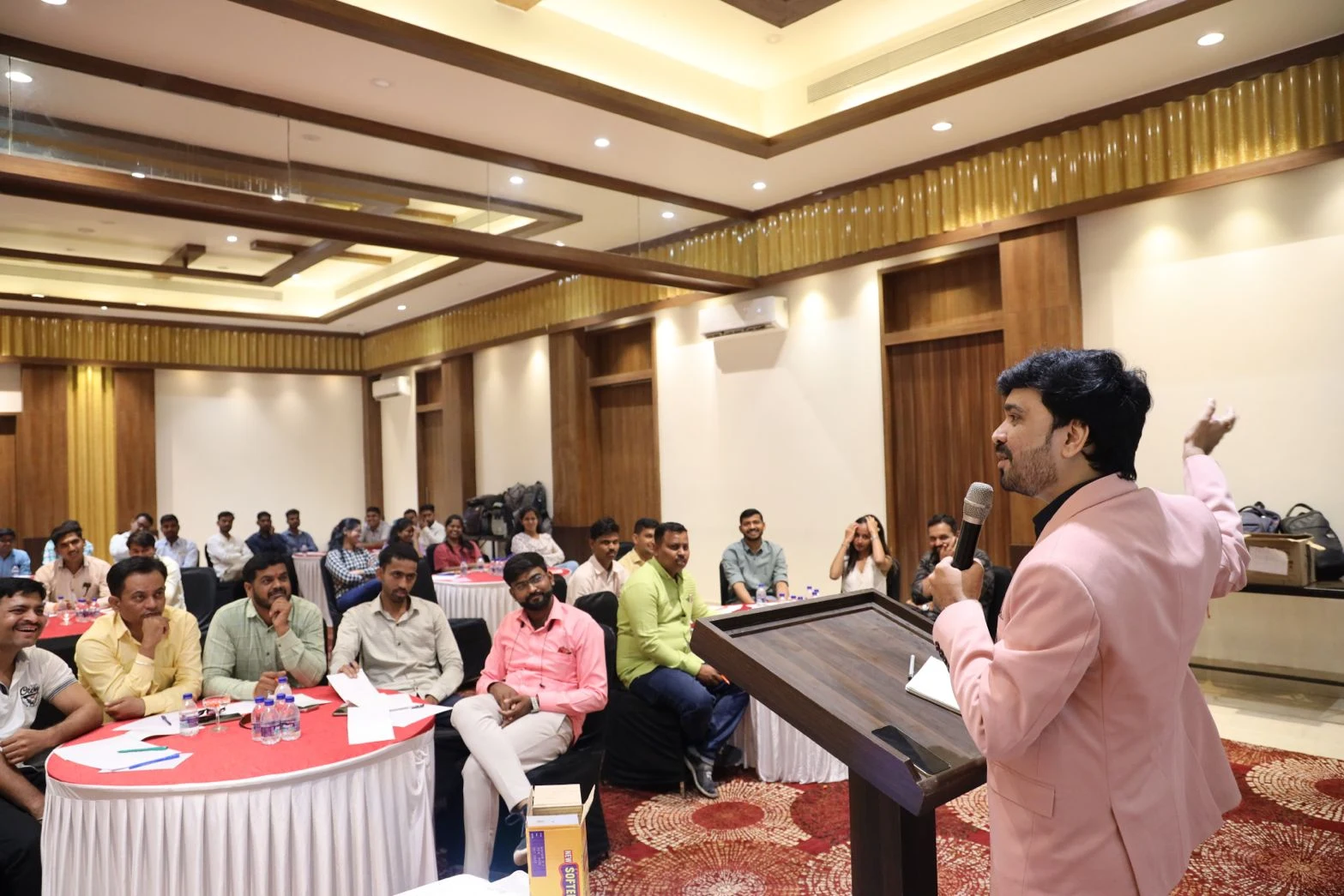
Avinash Chate - Leadership Coach at employee engagement session
The Leadership Decision That Replaced Layoff Fear With Shared GrowthIn difficult business cycles, most organizations ask one immediate question: where can we cut costs? Very few ask a deeper question: how do we protect people while protecting the business? That is why the Barry-Wehmiller case study is so powerful for me. It is not just a story about avoiding layoffs. It is a story about what leadership really means when fear enters the workplace.
Key takeaway: when leaders distribute pain with fairness instead of pushing it downward through layoffs, they protect trust, preserve dignity, and often create stronger long-term performance.
As a corporate trainer, TEDx speaker, and author of The Winning Edge, I have seen one truth repeatedly across leadership conversations: employees do not remember only the policy decision, they remember the emotional message behind that decision. Do leaders treat people as costs, or do they treat people as human beings? That one distinction shapes culture more than any vision statement on a wall.
In this blog, I want to break down the leadership lesson behind the Shared Sacrifice Principle from the Barry-Wehmiller story and show why it matters deeply for leaders, managers, founders, HR professionals, and teams across India. For me, this is not just a management case study. It is a mirror. It forces every leader to ask: when pressure rises, what kind of leader do I become?
Why layoffs look efficient but often create deeper damage
On paper, layoffs may appear practical. Reduce headcount, reduce salary burden, improve short-term numbers. But leadership is not only about spreadsheets. It is also about psychology, trust, and the invisible contract between employer and employee.
When layoffs happen suddenly, the message received by employees is rarely limited to finance. The message is emotional: you are expendable. The people who leave feel betrayed. The people who stay feel unsafe. Productivity may continue for a while, but commitment weakens. Creativity drops. Collaboration becomes cautious. People stop thinking long term because they start operating in survival mode.
This is why I often tell leaders that fear can create compliance, but it cannot create commitment. Commitment comes from trust. And trust is tested most during uncertainty.
Avinash Chate believes that leadership is not proven when everything is stable. Leadership is proven when money is tight, pressure is high, and difficult decisions cannot be avoided. In such moments, leaders reveal whether they truly stand for people-centric growth or whether people were only important during good times.
If you have read Workplace Psychology: How Leaders Should React to Good News, you already know that emotional signals from leaders shape behavior in profound ways. The same principle becomes even more important during bad news. A leader’s response during crisis can either multiply panic or build collective strength.
The Barry-Wehmiller lesson: shared sacrifice creates shared ownership
What made the Barry-Wehmiller decision remarkable was not that the company escaped economic reality. It was that leadership chose to face reality without placing the entire burden on a section of employees. Instead of layoffs, they adopted a shared sacrifice approach where everyone took a limited unpaid leave so that more people could remain employed.
Think about the emotional intelligence behind that decision. It said: we are in this together. The pain will not be pushed only onto the most vulnerable. We will distribute the burden with fairness. That one message transforms the culture of crisis.
When people experience fairness, they are far more willing to cooperate. When they see leaders protecting dignity, they respond with loyalty. When they feel included in the solution, they stop behaving like passive employees and start acting like responsible stakeholders.
Great leaders do not ask, “Who should suffer?” They ask, “How can we carry this challenge together?”
This is the essence of the Shared Sacrifice Principle. It is not softness. It is not avoiding hard decisions. It is a disciplined and humane way of making hard decisions. In my view, that is real leadership maturity.
Over 15+ years of working with leaders and teams, I have noticed that the strongest cultures are not built by comfort alone. They are built by fairness under pressure. Anybody can sound inspiring when profits are high. But when recession, uncertainty, or market contraction arrives, people watch actions, not speeches.
What Indian leaders and organizations can learn from this approach
This lesson is highly relevant for organizations across sectors. Whether you lead a manufacturing unit, a startup, a family business, a service company, or a growing enterprise, the same question applies: how do you respond when financial pressure rises?
I am not suggesting that every company can always avoid layoffs. Business realities differ. Cash flow differs. Industry cycles differ. But every leader can learn from the mindset behind the Barry-Wehmiller decision. Before cutting people, ask whether there are alternatives. Can leadership take a larger hit first? Can non-essential spending be paused? Can temporary restructuring be done with transparency? Can teams be invited into the problem-solving process?
When I interact with organizations such as Kaeser Compressors India, one thing becomes clear: sustainable performance is deeply connected to leadership credibility. Employees support tough decisions when they trust the intent behind them. They resist even reasonable decisions when they sense unfairness, secrecy, or emotional detachment.
This is where the KITE Leadership Framework becomes especially useful. In my work, I emphasize that effective leadership requires clarity of intent, emotional steadiness, trust-building behavior, and the ability to inspire collective responsibility. A crisis is not only an operational challenge. It is a leadership communication challenge. The leader must manage facts and emotions at the same time.
Avinash Chate often reminds leaders that culture is not built in annual events or motivational speeches alone. Culture is built in moments of tension. If people feel respected during difficult times, they will remember it for years. If they feel abandoned, they will also remember that for years.
The hidden business advantage of protecting people
Many leaders assume that humane decisions weaken business discipline. In reality, the opposite is often true. When people feel secure and respected, they bring more energy, more discretionary effort, and more honesty to work. They are more likely to solve problems, support customers, and protect the organization’s reputation.
A layoff-driven culture may save money quickly, but it can create hidden costs: disengagement, talent loss, slower recovery, weakened employer brand, and damaged trust. A people-first culture, on the other hand, creates resilience. It gives employees a reason to stand with the company during hard times.
This is one reason Avinash Chate’s leadership sessions focus not only on motivation but on behavior. Motivation without systems fades. But when leaders consistently act with fairness, accountability, and empathy, they create a culture where people do not have to guess what the organization stands for.
That is also why I encourage readers to explore lessons beyond one domain. For example, The Untold Truth Behind UPSC and MPSC Failure: What 99% of Aspirants Are Never Told speaks to a broader truth about preparation, mindset, and hard reality. Leadership and personal growth are connected by the same principle: success demands maturity, not illusion.
How leaders can apply the shared sacrifice principle in real life
If you want to apply this lesson in your organization, begin with honesty. Do not hide reality until panic explodes. Communicate early, clearly, and respectfully. People can handle difficult truth better than confusing silence.
Explain the business challenge in simple language.
Show what leadership is willing to sacrifice first.
Explore temporary, shared solutions before permanent, one-sided cuts.
Invite ideas from managers and teams.
Protect dignity in every communication.
Reinforce that people are partners in recovery, not just line items in cost control.
These steps may sound basic, but under pressure, many leaders forget them. They become transactional when they need to become more human. They become secretive when they need to become more transparent. They become distant when they need to become more visible.
As a TEDx speaker, I have often said that leadership is not about being in charge of people. It is about being responsible for people. That responsibility becomes real only when there is something difficult to lose.
If you are building your own leadership capability or developing your team, you may also find value in Best Motivational Speaker in Kolhapur for Industry and Education Events, which reflects how leadership communication and motivation must move beyond slogans into practical transformation.
The final leadership question every organization must answer
The Barry-Wehmiller story stays with me because it asks a moral question inside a business problem. What matters more in a crisis: immediate cost reduction at any human cost, or responsible action that protects both business continuity and human dignity as far as possible?
I believe the best leaders do not separate performance from humanity. They understand that people are not obstacles to growth. People are the foundation of growth. When leaders show courage, fairness, and empathy, teams often respond with extraordinary ownership.
Avinash Chate stands for this kind of leadership development: practical, people-centered, and performance-driven. Not leadership as theory alone, but leadership as action under pressure. If one decision can turn layoff fear into shared commitment, then one leader can also transform the emotional climate of an entire organization.
So the next time your organization faces uncertainty, do not ask only what can be cut. Ask what can be protected. Ask what message your decision will send. Ask whether your people will remember your leadership with fear or with respect.
That is the real test of leadership.
If you want to build leaders who can handle pressure with clarity, empathy, and accountability, book a corporate training session here.
Frequently Asked Questions
What is the Shared Sacrifice Principle in leadership?
It is a leadership approach where the burden of a crisis is distributed more fairly across the organization instead of being pushed only onto a smaller group through layoffs or harsh unilateral decisions. It builds trust, dignity, and shared ownership.
Why are layoffs harmful beyond financial impact?
Layoffs often damage trust, morale, psychological safety, and long-term culture. Even employees who remain may become fearful, disengaged, and less committed to the organization.
Can shared sacrifice work in every company?
Not every company has the same financial flexibility, so the exact solution may differ. However, every leader can apply the mindset of fairness, transparency, and collective responsibility before taking extreme decisions.
How does Avinash Chate teach leadership during crisis?
Avinash Chate focuses on practical leadership behaviors such as communication, emotional intelligence, trust-building, accountability, and people-first decision-making, often using frameworks like the KITE Leadership Framework.
How can I book a corporate training session?
You can book a corporate training session directly through the official website at https://avinashchate.com to explore leadership, motivation, communication, and culture-building programs.
Related Articles by Avinash Chate
- The Untold Truth Behind UPSC and MPSC Failure: What 99% of Aspirants Are Never Told
- Motivational Speaker for Mumbai's Hybrid Work Challenges — Bridging the Office-WFH Divide in India's Corporate Capital
- Best Motivational Speaker in Maharashtra — Top 10 Trainers 2026
About the Author
Avinash Chate is a TEDx speaker, published author of The Winning Edge and The Unanswered, and founder of The Future Corporate & Business Coaching. With over 15 years of experience training 80+ organizations including Kiran Gems, Kaeser Compressors India, Atlantis Group, Magnus Farm Fresh, Avinash is recognized as Maharashtra's leading corporate trainer. He created the KITE Leadership Framework and the 25-Star Competency Framework™, delivering high-impact programs across leadership, team building, sales transformation, and emotional intelligence.
📞 +91 8793630001 | ✉️ connect@avinashchate.com | 🌐 avinashchate.com
Book Avinash Chate for Your Next Event
Maharashtra's #1 Corporate Trainer · India's leading Motivational Speaker & Team Building Expert · 2x TEDx · Available across India in English, Hindi & Marathi.
✅ Thanks! Avinash team will reach out within 24 hours.'}).catch(function(e){f.outerHTML='Something went wrong. WhatsApp +91 8793630001
'});return false;"> Select Service Motivational Speaking / Keynote Team Building Workshop Corporate Training / Leadership Development Manager Development Employee Training Outbound Training Book Avinash Now →Or WhatsApp directly: +91 87936 30001
Avinash Chate services
Corporate Trainer in Maharashtra · Top Corporate Trainers in Maharashtra · Leadership Trainer in Maharashtra · Top Leadership Trainers in Maharashtra · Team Building Trainer in Maharashtra · Top Team Building Trainers in Maharashtra · Motivational Speaker in Maharashtra · Top Motivational Speakers in Maharashtra · All service locations
← Back to all articles · Book Avinash Chate
By Avinash Chate — Maharashtra’s #1 Corporate Trainer & Motivational Speaker. .