Anil Ambani Supreme Court Order What Corporate Leaders Must Learn
In many organisations, success slowly starts changing behaviour. When results come consistently, people begin to believe that rules are flexible for them. This ...
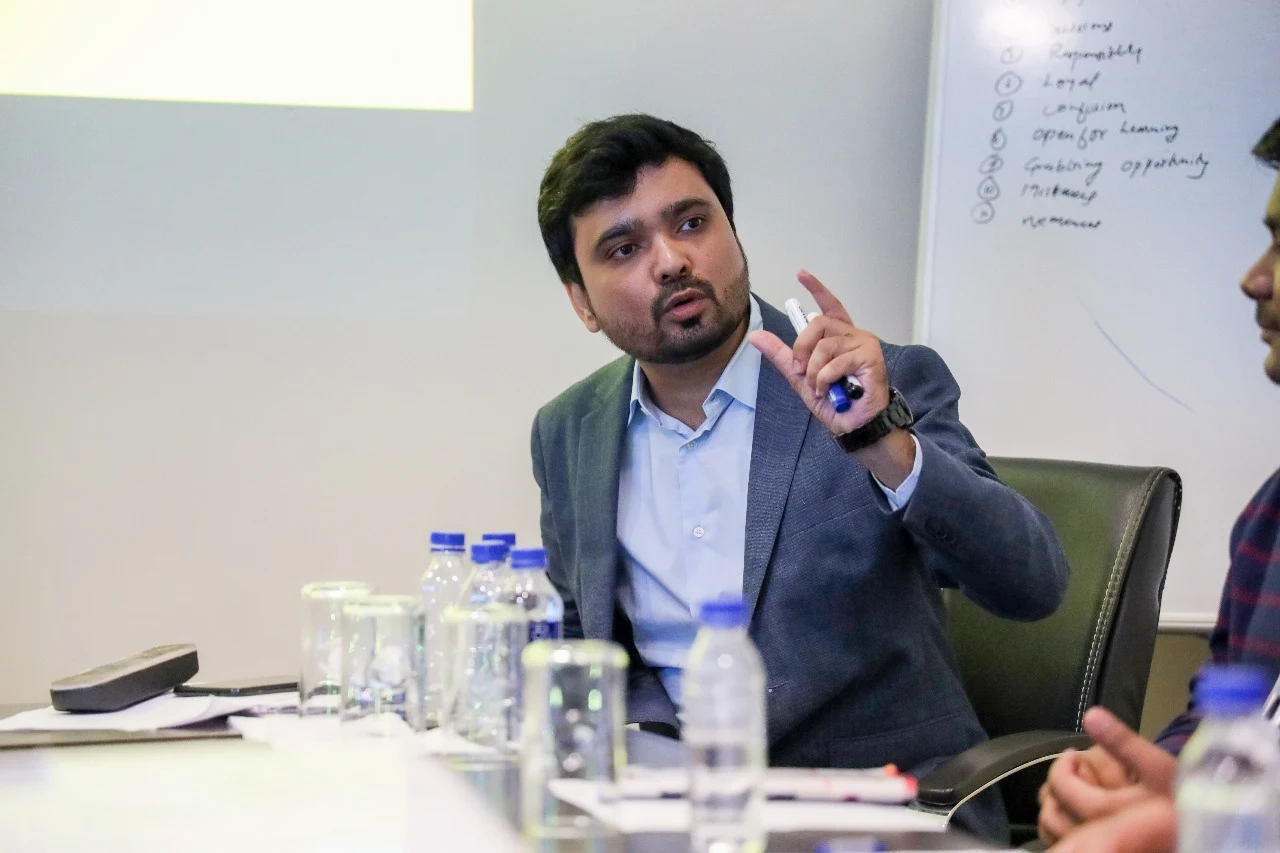
Avinash Chate - Corporate Coach at annual leadership conference
The Paradox of Power: What Corporate Leaders Must Learn Before Success Changes ThemSuccess is a beautiful thing, but it can also become dangerous when it quietly changes how we think, behave, and make decisions. I have seen this pattern repeatedly in leadership conversations across industries. A leader starts with discipline, humility, and sharp judgment. Then results begin to come in. Recognition increases. Authority grows. Slowly, often invisibly, the same success that built credibility starts weakening character.
Key takeaway: Corporate failure rarely begins with one dramatic mistake. It usually begins with small compromises that feel justified by past success.
That is why the recent public conversation around high-profile legal and corporate accountability matters offers a deeper lesson for every leader. This is not just about one individual or one incident. It is about a universal leadership truth: power can make people feel exceptional, and the moment leaders start believing they are exceptions, they begin disconnecting from reality.
As Avinash Chate, I believe this is one of the most important lessons for founders, CXOs, managers, and emerging leaders in India today. Whether you lead a large enterprise, a growing startup, or a business unit inside a corporation, the paradox of power applies to you. If you do not actively manage success, success will start managing you.
Why Success Can Become a Leadership Risk
In the early stages of growth, leaders are usually alert. They listen closely, stay involved, and respect systems because they know they are still building credibility. But once a person becomes powerful, a subtle shift happens. Appreciation becomes constant. Access becomes easy. Fewer people challenge decisions. The leader starts hearing filtered feedback instead of truth.
This is where the paradox begins. The qualities that helped someone rise, such as discipline, curiosity, empathy, and accountability, can slowly be replaced by entitlement, overconfidence, impulsiveness, and distance.
I often tell leaders in my workshops that power does not corrupt in one moment. It isolates first. And once a leader is isolated from honest feedback, poor judgment becomes more likely.
This is exactly why governance, humility, and self-awareness are not optional leadership traits. They are survival traits.
The Small Compromises That Create Big Failures
Most corporate breakdowns do not start with criminal intent. They begin with tiny internal permissions. A deadline is ignored because the leader is “too important.” A process is bypassed because “we have earned flexibility.” A compliance concern is dismissed because “nothing will happen.” A dissenting voice is silenced because “they do not understand the bigger picture.”
These are not always seen as ethical failures in the moment. They are often framed as practical decisions. That is what makes them dangerous.
Over time, these small exceptions become culture. Teams start learning that performance matters more than principles. People observe that influence can override process. Fear replaces openness. Loyalty gets rewarded more than truth. And eventually, the organisation loses the very discipline that made success possible.
As a corporate trainer who has worked with 80+ organizations, I have seen one pattern very clearly: sustainable success belongs to leaders who create systems stronger than personal ego.
That is also why I keep reminding leaders that authority should increase responsibility, not reduce accountability.
What the Paradox of Power Looks Like Inside Organisations
The paradox of power is not limited to public figures. It plays out every day inside businesses. A founder stops listening to the finance team because growth is strong. A senior manager begins overriding HR processes because targets are being met. A business head dismisses legal or compliance concerns because market pressure is high. A team leader becomes controlling because they believe only they can deliver results.
At first, these behaviours may even appear effective. The leader seems decisive. Fast. Confident. Results-driven. But beneath the surface, trust starts eroding.
People become careful instead of candid. Meetings become performative instead of productive. Risks are hidden instead of surfaced. The organisation starts looking healthy from the outside while weakening internally.
I have discussed a related dimension in Micro Management vs Ownership: Lessons for Maharashtra's Corporate Leaders. When leaders stop trusting systems and start overusing power, they do not create excellence. They create dependency, silence, and fragility.
One of the strongest examples I have seen in my training journey is with teams that wanted growth but also needed stronger behavioural discipline. In such contexts, the real transformation did not come from motivation alone. It came from leaders choosing structure, clarity, and accountability over personality-driven decision-making. That is one reason organizations such as JM Aluext Profiles Pvt Ltd value leadership development that goes beyond inspiration and enters daily practice.
How Strong Leaders Protect Themselves From the Trap of Power
The solution is not to reject ambition or authority. Leadership requires both influence and decision-making power. The solution is to build internal and organisational safeguards that keep success from distorting judgment.
I use the KITE Leadership Framework to help leaders think about this in a practical way. While leadership models can be interpreted in different contexts, one core purpose of a framework is to prevent drift. It helps leaders stay anchored when success, pressure, and visibility increase.
Here are a few practices I strongly recommend:
Invite dissent deliberately. Create spaces where people can disagree without fear. If no one challenges you, you are already at risk.
Respect process even when you can bypass it. Character is revealed not when rules constrain you, but when power allows you to ignore them.
Separate identity from position. You are not your title. The moment your self-worth depends on authority, you will start defending your ego instead of serving the organisation.
Review your exceptions. Ask yourself what rules you have stopped following because you believe your role justifies flexibility.
Reward truth-tellers. The healthiest cultures are not those where leaders are admired most. They are those where leaders are informed best.
These sound simple, but they demand maturity. Leadership is not tested only in crisis. It is tested in success, when the temptation to believe your own mythology becomes strongest.
The Role of Humility in Long-Term Corporate Success
Humility is often misunderstood as softness. It is not softness. It is accuracy. A humble leader sees reality clearly. They know that past wins do not guarantee future wisdom. They understand that systems matter, institutions matter, and consequences apply to everyone.
This is especially important in a fast-moving business environment where speed is celebrated. Speed without discipline creates damage. Confidence without reflection creates blind spots. Power without humility creates eventual collapse.
As Avinash Chate, a TEDx speaker and author of The Winning Edge, I believe humility is one of the most underrated strategic advantages in leadership. Humble leaders learn faster, recover better, and build stronger teams because they do not waste energy protecting false superiority.
When leaders remain grounded, they create cultures where compliance is not seen as obstruction, feedback is not seen as disrespect, and accountability is not seen as punishment. That is how trust is built.
And trust, far more than authority, is what sustains leadership over time.
What Corporate Leaders Must Do Now
If this lesson feels relevant, do not treat it as a commentary on someone else’s story. Treat it as a mirror. Ask yourself a few uncomfortable questions.
Have I started believing that my results give me the right to bend norms?
Do people around me tell me the truth, or only what is safe?
Am I building a culture of responsibility, or a culture of dependence on my power?
What small compromises am I normalising today that may become bigger risks tomorrow?
These questions matter because leadership decline is rarely visible to the leader first. It is visible to the team first. By the time the leader notices it, the damage is often already cultural.
If you want to build resilient, values-driven organisations, I also recommend reading How to Develop Resilience in Teams During Times of Change and Uncertainty and Corporate Training for Hospital and Healthcare Staff in Pune, Maharashtra. Though the contexts differ, the core principle remains the same: strong teams are built when leaders model discipline, emotional balance, and accountability consistently.
Avinash Chate has always emphasized that leadership is not about how much control you accumulate. It is about how responsibly you use influence. The real test of leadership is not whether you can rise. It is whether you can remain grounded while rising.
So my message to every corporate leader is simple: success is not permission. Power is not exemption. Position is not protection. The higher you rise, the more deeply you must commit to principles.
If you want your organisation to grow without losing its ethical center, invest in leadership development before success creates blind spots. Book a corporate training session with me and let us build leaders who combine performance with humility, authority with accountability, and ambition with character.
Frequently Asked Questions
What is the paradox of power in leadership?
The paradox of power is the idea that the qualities that help leaders gain influence, such as empathy, discipline, and sound judgment, can weaken once they become powerful. Success can create overconfidence, reduce openness to feedback, and increase the tendency to bypass rules.
Why do successful leaders sometimes make poor decisions?
Successful leaders may begin to feel that their past performance justifies exceptions. When honest feedback reduces and authority increases, they can become isolated from reality. This makes poor decisions more likely even without bad intentions.
How can organisations prevent power from damaging culture?
Organisations can prevent this by strengthening governance, encouraging healthy dissent, rewarding truth-telling, and ensuring that no individual is treated as above process. Strong systems reduce the risk of personality-driven cultures.
What role does humility play in corporate leadership?
Humility helps leaders stay accurate, grounded, and open to learning. It allows them to respect systems, listen to diverse perspectives, and make better decisions without being trapped by ego or entitlement.
How can I book Avinash Chate for a corporate training session?
You can book Avinash Chate for a corporate training session by visiting the official website at https://avinashchate.com. These sessions are designed to help leaders and teams build accountability, resilience, communication, and ownership.
Related Articles by Avinash Chate
- The Untold Truth Behind UPSC and MPSC Failure: What 99% of Aspirants Are Never Told
- Motivational Speaker for Mumbai's Hybrid Work Challenges — Bridging the Office-WFH Divide in India's Corporate Capital
- Best Motivational Speaker in Maharashtra — Top 10 Trainers 2026
About the Author
Avinash Chate is a TEDx speaker, published author of The Winning Edge and The Unanswered, and founder of The Future Corporate & Business Coaching. With over 15 years of experience training 80+ organizations including Mtech Innovation, Bhabha Atomic Research Centre, JSW Steel, USK agro science, Avinash is recognized as Maharashtra's leading corporate trainer. He created the KITE Leadership Framework and the 25-Star Competency Framework™, delivering high-impact programs across leadership, team building, sales transformation, and emotional intelligence.
📞 +91 8793630001 | ✉️ connect@avinashchate.com | 🌐 avinashchate.com
Book Avinash Chate for Your Next Event
Maharashtra's #1 Corporate Trainer · India's leading Motivational Speaker & Team Building Expert · 2x TEDx · Available across India in English, Hindi & Marathi.
✅ Thanks! Avinash team will reach out within 24 hours.'}).catch(function(e){f.outerHTML='Something went wrong. WhatsApp +91 8793630001
'});return false;"> Select Service Motivational Speaking / Keynote Team Building Workshop Corporate Training / Leadership Development Manager Development Employee Training Outbound Training Book Avinash Now →Or WhatsApp directly: +91 87936 30001
Avinash Chate services
Corporate Trainer in Maharashtra · Top Corporate Trainers in Maharashtra · Leadership Trainer in Maharashtra · Top Leadership Trainers in Maharashtra · Team Building Trainer in Maharashtra · Top Team Building Trainers in Maharashtra · Motivational Speaker in Maharashtra · Top Motivational Speakers in Maharashtra · All service locations
← Back to all articles · Book Avinash Chate
By Avinash Chate — Maharashtra’s #1 Corporate Trainer & Motivational Speaker. .