Peter Drucker's Three Signals That Your Organisation Is Wasting Time
Peter Drucker identified three diagnostic signals that reveal systemic time waste in any organisation — and most Indian managers walk past them every single day.
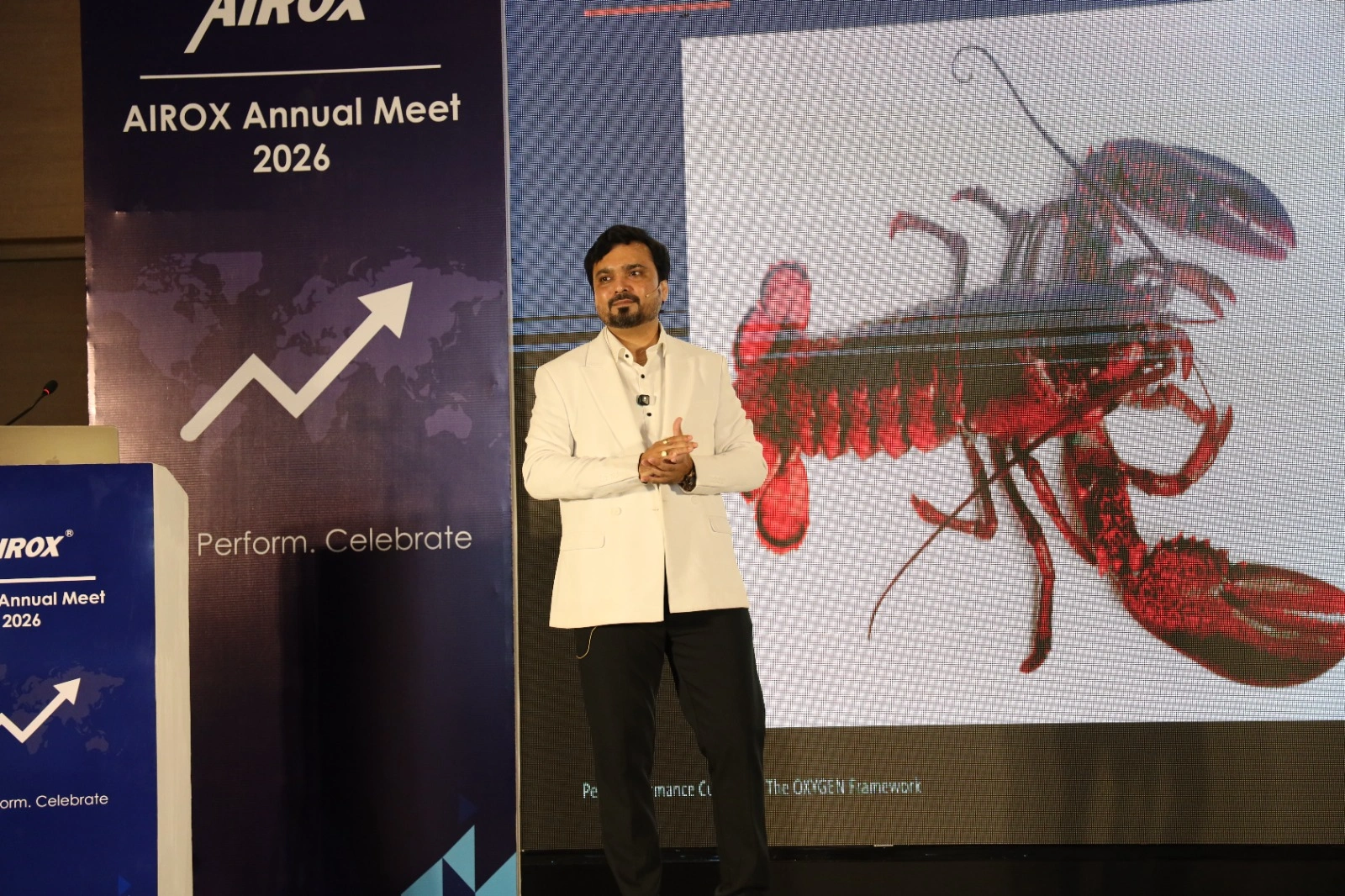
Every manager I have ever trained in my workshops across Pune, Mumbai and across Maharashtra has told me they are too busy. Calendars packed. Fires to fight. Meetings back to back. And yet, when I ask them what meaningful progress they made last week, there is an uncomfortable pause. Busyness is not the same as effectiveness — and one of the greatest management thinkers of the twentieth century explained exactly why, decades ago.
Peter Drucker wrote that effective executives do not start with their tasks. They start with their time. In Chapter 4 of my book The Winning Edge, The Champion Mindset, I explore Drucker's three-step method — record, manage, consolidate — but I want to go deeper today into three specific diagnostic signals Drucker identified that tell you, with surgical precision, whether your organisation has a systemic time problem. These signals are not subtle. They are hiding in plain sight in most Indian companies right now.
If you are a manager, a business owner or a senior executive in 2026, read this carefully. Because the organisation that learns to read these signals will outperform the one that simply buys more productivity software.
Why Time Is Unlike Any Other Resource
Before we get to the three signals, we need to understand why Drucker treated time so differently from every other resource. In my workshops, I often begin this section with a question: "What is the one resource you cannot save, cannot earn more of, cannot borrow, and cannot substitute?" The room always falls silent for a moment.
Money can be raised. People can be hired. Equipment can be leased. But time? Time is the scarcest, most perishable, most inelastic and most non-substitutable resource any leader manages. Once a Tuesday morning is gone, it is gone forever. No board resolution brings it back.
"Effective executives do not start with their tasks. They start with their time." — Peter Drucker
This is why Drucker's three diagnostics are so powerful. They are not about personal habits or individual productivity tricks. They are about the organisation itself — the system — leaking time at scale. When one manager wastes an hour, you lose an hour. When the system wastes time, you lose thousands of hours across every level of the hierarchy, every week, invisibly.
Signal One: The Same Crisis Keeps Coming Back
The first diagnostic signal is this: if the same crisis keeps recurring in your organisation, you have no system — or a broken one. A system, by definition, would have prevented recurrence.
Think about that for a moment. When a fire breaks out the first time, it is a problem. When the same fire breaks out three months later, it is a management failure. And when it becomes a quarterly ritual, it has become a cultural norm disguised as bad luck.
What Recurring Crises Actually Look Like
- The month-end accounts always go haywire because one team delays data submission.
- Every product launch is plagued by last-minute coordination chaos.
- Every quarter, the same client escalations surface because the on-boarding process was never fixed.
- Every year, the appraisal season triggers the same confusion about KPIs that were never properly defined.
In Indian organisations especially, I notice a pattern I call "firefighting culture with pride." Teams wear the fact that they resolved a crisis as a badge of honour — without anyone stopping to ask why the crisis happened again. We celebrate the hero who stayed till midnight to fix the server. We do not ask why the server was never properly maintained.
The System Drucker Was Pointing At
When Drucker said "a system would have prevented recurrence," he was pointing at something specific: the absence of documented, owned, reviewed processes. A recurring crisis is a process gap dressed up as urgency. The solution is not to work harder during the crisis — it is to do the unglamorous work of designing the process that makes the crisis impossible to repeat.
"If you are spending your best hours fighting fires that you fought last quarter, your time is not your own — the crisis owns it."
In my corporate training sessions, I ask teams to list their top five recurring crises from the last twelve months. Almost always, the list surfaces in under three minutes. The crises are well-known. Everyone knew they would come back. Nobody built the system to stop them. That is the real time waste — not the hours spent in the crisis, but all the hours spent knowing the crisis is coming and not preventing it.
Avinash Chate facilitating a leadership and productivity workshop for corporate teams across Maharashtra.Signal Two: You Are in Too Many Meetings
The second diagnostic signal from Drucker is blunt: if you are in too many meetings, your work is disorganised and your team does not have enough decision-making clarity to act without constantly involving you.
Let me be direct about this because I have seen a dangerous myth spread through Indian corporate culture over the last decade — the idea that the busier a leader looks, the more important they are. The leader who attends fifteen meetings a week is seen as indispensable. Drucker would say that same leader is a symptom of an organisational failure.
What Excessive Meetings Really Signal
When a team cannot move forward on a decision without calling a meeting with the manager, it means one or more of the following is true:
- Roles and responsibilities are not clearly defined — people do not know who owns what decision.
- Authority has not been delegated — team members need sign-off for decisions they should own.
- There is a trust deficit — either the manager does not trust the team, or the team is afraid to act without cover from above.
- Processes and guidelines do not exist — so every situation feels new and requires a group discussion to navigate.
The Real Cost of Meeting Overload in Indian Organisations
Here is a practical exercise I run in my workshops. I ask each participant to add up the total person-hours spent in meetings in their team last week. Then I ask: how many of those meetings produced a written decision, an action, an owner and a deadline? The ratio is almost always painful to look at.
Meetings are not inherently wasteful. The problem is meetings that exist because the system around them — the clarity of roles, the delegation of authority, the documented playbooks — does not exist. When those structures are absent, meetings become the default substitute for management. They fill the vacuum that clarity should occupy.
"A leader who is in every meeting is in none of them fully. Presence everywhere is presence nowhere."
The fix is not to refuse meetings. The fix is to build the organisational clarity that makes most of those meetings unnecessary. Define who owns each class of decision. Document the boundaries of authority at each level. Create the playbooks and escalation criteria. When those exist, your team will act — and they will call you only when they genuinely need you, not because they are afraid to move without you.
Signal Three: Information Does Not Flow Smoothly
The third and perhaps most underestimated diagnostic signal is this: if people are constantly asking for updates, chasing approvals or hunting for information, there is a communication breakdown somewhere in the system — hoarding, distortion or the outright absence of information flow.
In my experience training teams across industries in India — manufacturing, pharma, IT services, BFSI, retail — this signal is the most invisible of the three because information breakdowns wear disguises. They look like individual behaviours: "Rajesh never shares the numbers on time." "The sales team never tells ops what was promised to the client." "Marketing and product are always on a different page."
The Three Faces of Information Breakdown
Drucker was pointing at three distinct failure modes:
- Hoarding: Information sits with one person or one team and is not shared proactively. This is often not malicious — it is habit. The person who holds information has never been told that sharing it is part of their job, or they have been incentivised to be the only one who knows something because it makes them feel indispensable.
- Distortion: Information is shared but changes as it moves through the hierarchy. A nuanced customer concern becomes "the client is unhappy" by the time it reaches the senior manager, who then treats it as a crisis. A realistic project timeline becomes an optimistic promise because nobody wants to be the one who says "we need more time."
- Absence: Some information simply does not exist in documented form. Institutional knowledge lives in people's heads. When they resign, are transferred, or go on leave, the knowledge goes with them — and everyone else wastes time reconstructing what was already known.
How to Build Information Flow That Works
The solution begins with asking a deceptively simple question: who needs what information, when, and in what form? Most organisations have never answered this systematically. They rely on relationships, WhatsApp groups and individual initiative to move information — which works until it does not, and then it wastes enormous amounts of time while everyone figures out who has the data.
In the organisations I have worked with that run best, information flows are designed deliberately: dashboards with agreed metrics that all stakeholders can see, structured update cadences, clear escalation paths with defined response times. These are not bureaucratic luxuries. They are the infrastructure that makes time available for actual work.
Avinash Chate addressing senior managers on building communication systems that eliminate organisational time waste.The Three Signals Together: A System Diagnosis
What makes Drucker's framework so powerful is that these three signals are not independent. They are symptoms of the same underlying condition: an organisation that has grown its headcount and complexity without growing its systems, clarity and information infrastructure at the same pace.
When you have recurring crises, it means your processes have not kept up with your scale. When you have too many meetings, it means your delegation and decision-making frameworks have not kept up with your team's growth. When information does not flow, it means your communication architecture has not kept up with your operational complexity.
And all three together produce the same outcome: your best people — the ones you pay most and rely on most — are spending their hours on symptoms rather than causes. They are fighting fires, sitting in meetings, and chasing information, when they should be building, growing, and leading.
What Effective Executives Do Differently
In Chapter 4 of The Winning Edge, The Champion Mindset, I lay out Drucker's three-step method for taking back control of time: record it (track where time actually goes, not where you think it goes), manage it (systematically eliminate the time wasters the diagnostic reveals), and consolidate it (protect large blocks of uninterrupted time for the work that only you can do).
But the diagnostic must come first. If you jump to time-blocking your calendar without first fixing the recurring crises, the broken meetings culture, and the information voids, you are optimising a leaking bucket. The bucket has to be fixed before you can meaningfully optimise what goes into it.
A Practical Starting Audit for Indian Managers
Here is what I recommend as a first step for any manager who recognises these signals in their organisation:
- List your top three recurring crises from the last six months. For each one, ask: what process change would make this impossible to recur?
- Review your meeting calendar for last month. For each meeting, ask: could this decision have been made without the meeting if roles and authority were clearer?
- Identify the last three times your team lost time chasing information. Ask: where did the information live, who owned it, and what would have made it automatically available?
These three questions will not give you a complete answer. But they will give you the right starting point — which is, as Drucker said, not your task list, but your time.
Bring this to your team. I run time management and leadership-focused corporate training and keynotes for companies across Pune, Mumbai and all of Maharashtra.
Book a session · Explore corporate training programs
Frequently Asked Questions
What are Peter Drucker's three diagnostic signals of organisational time waste?
Drucker identified three signals: first, if the same crisis keeps recurring, you have no system preventing it; second, if you are in too many meetings, your organisation lacks decision-making clarity and proper delegation; third, if information does not flow smoothly and people are constantly chasing updates, there is a communication breakdown — through hoarding, distortion or absence of documented information.
How do too many meetings indicate a management problem rather than a workload problem?
According to Drucker, excessive meetings are a symptom of disorganisation. When teams cannot make decisions without constantly involving the manager, it reveals unclear roles, undelegated authority, or missing playbooks. The solution is not to attend fewer meetings arbitrarily — it is to build the organisational clarity that makes most of those meetings unnecessary in the first place.
How can Indian managers start fixing information flow in their organisations?
Start by identifying who needs what information, when, and in what form — and then design the system to deliver it proactively rather than reactively. Practical steps include shared dashboards with agreed metrics, structured update cadences, and documented escalation paths. The goal is to move from information that lives in people's heads or WhatsApp groups to information that is accessible by design.
Is this time management advice relevant for Indian companies in 2026?
Absolutely. In fact, as Indian organisations scale rapidly — adding headcount, entering new markets, managing hybrid teams — the gap between organisational complexity and management systems widens faster than ever. Drucker's diagnostics are even more urgent today because the cost of unmanaged time is compounding at scale. The three signals he described are visible in virtually every growing Indian company I train.
If these three signals feel familiar — if your organisation is fighting the same fires, holding too many meetings, and losing hours chasing information — you are not alone, and you are not out of options. The path forward begins with honest diagnosis. I work with managers, leadership teams and entire organisations across India to build the systems, clarity and communication infrastructure that make these time leaks permanent history. I invite you to explore my corporate training programs, connect with me on the contact page, or read more about my approach on the leadership training page.
This article is adapted from my book The Winning Edge, The Champion Mindset.Related Articles by Avinash Chate
- Why Manufacturing Industry is Difficult to Start in India: 5 Key Challenges
- Ajit Agarkar's 21-Ball ODI Fifty Against Zimbabwe: The Silent Performer's Career Blueprint
- Clive Lloyd's 1975 World Cup Final Leadership: How Bold Captaincy Wins Under Pressure
| AC | Avinash ChateIndia's Leading Corporate Trainer | TEDx Speaker | Author With 80+ organizations trained including RBI, JSW Steels, and Ferrero, Avinash Chate delivers high-impact corporate training across India. Creator of the KITE Leadership Framework and bestselling author of "The Winning Edge." Website YouTube |
Avinash Chate services
Corporate Trainer in Maharashtra · Top Corporate Trainers in Maharashtra · Leadership Trainer in Maharashtra · Top Leadership Trainers in Maharashtra · Motivational Speaker in Maharashtra · Top Motivational Speakers in Maharashtra · All service locations
← Back to all articles · Book Avinash Chate
By Avinash Chate — Maharashtra’s #1 Corporate Trainer & Motivational Speaker. .