The Role of Motivational Speaking in Reducing Employee Burnout
Employee burnout is no longer a silent productivity issue. In this article, I explain how motivational speaking can help organizations reduce stress, restore engagement, and build healthier, high-performing teams.
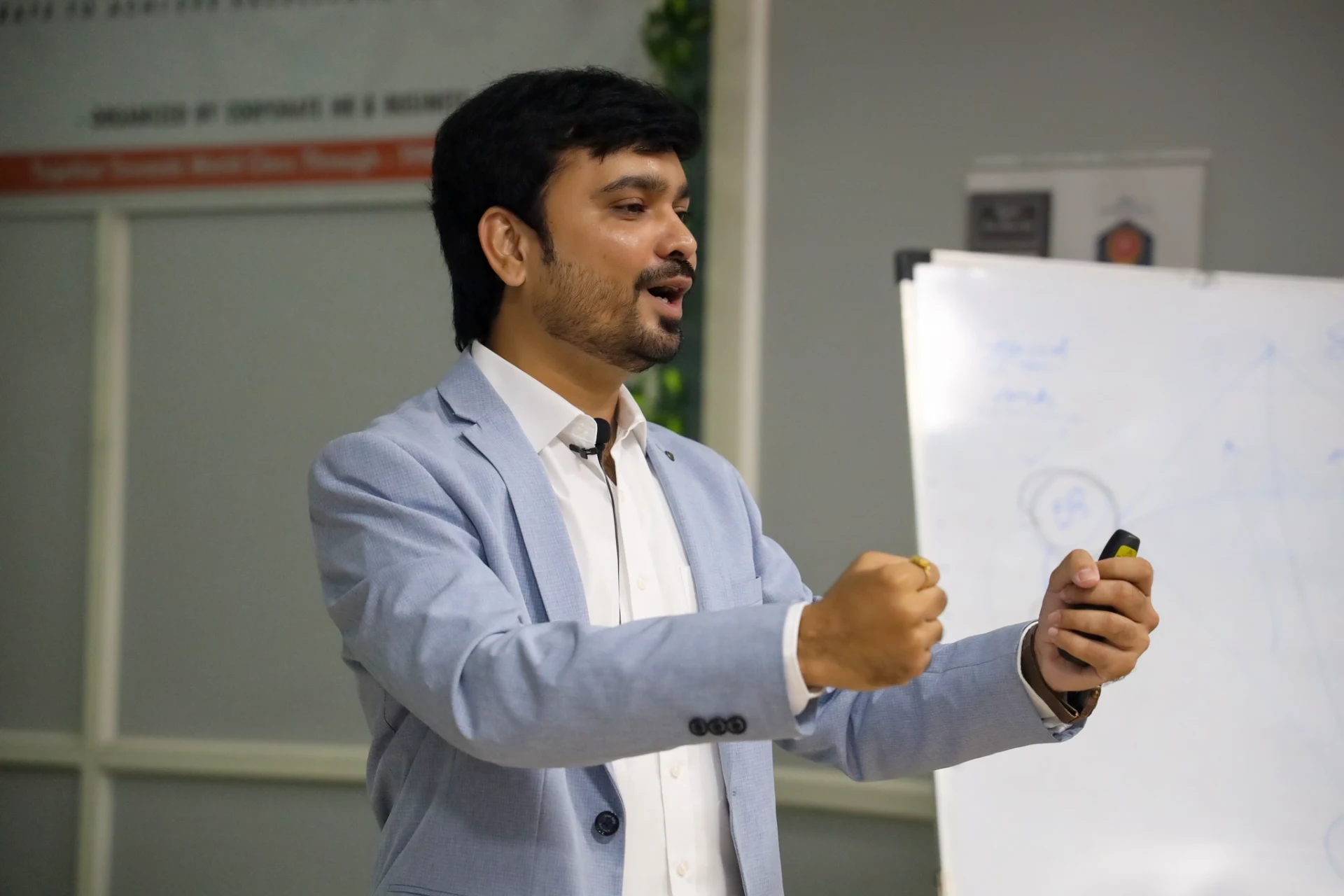
Avinash Chate - Corporate Training Expert at team building workshop
The Role of Motivational Speaking in Reducing Employee BurnoutEmployee burnout has become one of the most serious workplace challenges I see across industries today. It affects energy, morale, collaboration, retention, and long-term business performance. When people feel emotionally exhausted, mentally overloaded, and disconnected from their work, even the most capable teams begin to slow down. That is why I believe motivational speaking, when done with depth and relevance, can play a meaningful role in reducing burnout and rebuilding workplace enthusiasm.
Key takeaway: motivational speaking is not about temporary excitement. It is about helping people reconnect with purpose, regain emotional strength, and see practical ways to move forward with clarity.
As Avinash Chate, I have worked with leaders and teams across 80+ organizations, and one pattern is clear: burnout does not begin with weakness. It begins when capable people operate too long without recognition, recovery, communication, or meaning. A well-designed motivational session can interrupt that cycle. It can give employees language for what they are feeling, tools to manage pressure better, and renewed confidence that their efforts matter.
My work as a TEDx speaker and author of The Winning Edge has shown me that people do not need exaggerated inspiration. They need honest insight, emotional connection, and practical direction. That is where motivational speaking becomes powerful.
Understanding What Employee Burnout Really Looks Like
Burnout is often misunderstood as simple tiredness. In reality, it is deeper and more dangerous. It shows up as chronic fatigue, irritability, lack of focus, emotional withdrawal, reduced ownership, and declining motivation. In many organizations, employees continue performing on the surface while internally feeling depleted.
I have seen burnout affect first-time managers, frontline staff, sales teams, support functions, and senior leaders alike. It is not limited to one industry or one role. It appears wherever pressure remains high and emotional recovery remains low.
Some common drivers of burnout include unclear expectations, nonstop workload, poor listening culture, lack of appreciation, weak manager support, and the feeling that effort is no longer connected to growth. Over time, this creates disengagement. Disengagement then affects customer experience, teamwork, and business results.
That is why organizations cannot treat burnout as a personal issue alone. It is also a leadership and culture issue. Motivational speaking can support this challenge by creating awareness at scale and helping employees reflect on what needs to change within themselves and within the system around them.
How Motivational Speaking Helps Employees Recover Emotionally
One of the most important roles of motivational speaking is emotional reset. Employees who are burned out often carry invisible stress. They may feel unheard, unappreciated, or trapped in repetitive pressure. A meaningful session creates a pause in that cycle. It gives people a chance to breathe, reflect, and emotionally reconnect.
When I address teams, I focus on real workplace struggles rather than generic positivity. People respond when they feel understood. They open up when the message acknowledges deadlines, fatigue, performance pressure, workplace politics, and the challenge of balancing personal and professional expectations.
This matters because burnout reduces emotional bandwidth. People stop seeing possibilities. They become reactive instead of creative. Motivational speaking helps widen perspective again. It reminds employees that stress can be managed, communication can improve, and performance can rise without self-destruction.
In one engagement with JSW Steels, the emphasis was not on excitement for one day. It was on helping participants reconnect with resilience, accountability, and team energy. That is the difference between entertainment and transformation. A session should not only make people feel good. It should make them feel stronger.
When people feel seen, heard, and valued, their energy begins to return. Motivation grows where emotional exhaustion is acknowledged, not ignored.
Why the Right Message Can Change Workplace Energy
Words matter in the workplace. The language leaders use, the stories teams tell themselves, and the meaning employees attach to their work all influence motivation. Burnout grows faster in environments where people feel like machines. It reduces when people feel like contributors.
This is why motivational speaking can shift workplace energy so effectively. A strong session changes the emotional climate in the room. It replaces helplessness with ownership, isolation with connection, and monotony with purpose. It helps employees remember why their work matters and how their mindset shapes their experience.
As Avinash Chate, I believe motivation must be anchored in action. Inspiration without application fades quickly. That is why I often draw from the KITE Leadership Framework to help teams think about self-awareness, initiative, trust, and execution in practical ways. Employees do not need abstract slogans. They need frameworks that help them respond better to pressure, communicate better with colleagues, and take charge of their energy.
When teams begin to shift from emotional fatigue to intentional action, burnout starts losing its grip. This does not happen because a speaker magically removes stress. It happens because the right message helps people think differently about how they work, recover, collaborate, and lead.
Motivational Speaking Is Most Effective When It Supports Culture
I always tell organizations that motivational speaking should not be treated as a one-time fix. Burnout is rarely solved by a single event. It improves when the speaking intervention supports a broader culture of listening, recognition, learning, and leadership accountability.
For example, if employees leave a motivational session feeling energized but return to poor communication and constant overload, the impact will fade. But when the session becomes part of a larger commitment to employee wellbeing and performance, the results become stronger and more sustainable.
This is why I encourage leaders to combine motivational interventions with better team conversations, manager coaching, realistic goal-setting, and recognition practices. Motivation grows in healthy systems. Burnout grows in broken ones.
If you want to explore related ideas, I recommend reading Building High Performance Teams in Corporate Pune: Strategies for Success. Team performance and burnout are deeply connected. High performance is not about constant pressure. It is about clarity, trust, and shared energy.
I also strongly believe listening is central to reducing burnout. Many employees are not asking for less ambition. They are asking to be heard. That is why this article is relevant: Why Listening Power Matters in Corporate Life: A Leadership Lesson from the Heineken CEO Case. Listening is not a soft skill on the side. It is a strategic leadership capability.
What Organizations Should Expect From a Burnout-Focused Motivational Session
When organizations invite me for a motivational session around burnout, they often ask what outcomes they should realistically expect. My answer is simple: expect renewed awareness, emotional release, mindset shift, and practical action points. Do not expect overnight cultural change unless leadership follows through.
A strong burnout-focused session should help employees do several things:
- Recognize the signs of burnout before they become severe
- Understand that asking for support is a strength, not a weakness
- Reconnect daily work with larger purpose and contribution
- Improve personal ownership of energy, habits, and communication
- Feel emotionally re-engaged with their team and organization
For managers and leaders, the session should also create reflection. Are expectations clear? Is recognition visible? Are people being stretched without support? Are managers listening enough? These questions matter because burnout is often a signal, not just a symptom.
Some teams, especially those working unconventional hours or under repetitive pressure, need even more targeted support. In such cases, specialized interventions can make a major difference. This is why many leaders find value in Motivational Speaker for Pune BPO and KPO Night-Shift Teams — Combating Burnout and Boosting Engagement. The principle applies broadly: context-specific motivation works better than generic messaging.
My Perspective on Motivation, Performance, and Human Sustainability
Over the years, I have become even more convinced that organizations must redefine how they think about motivation. Motivation is not noise. It is not dramatic language. It is not a temporary high. Real motivation creates human sustainability. It helps people perform without losing themselves.
As Avinash Chate, I see motivational speaking as a bridge between performance and wellbeing. Organizations need results, but people need emotional strength to deliver those results consistently. When the two are disconnected, burnout rises. When they are aligned, engagement improves.
My role is to help teams rediscover that alignment. As a TEDx speaker and author of The Winning Edge, I aim to bring not just inspiration but perspective, structure, and practical relevance. Employees deserve more than pressure. They deserve leadership that energizes them, workplaces that value them, and messages that help them move from exhaustion to intention.
If your teams are showing signs of fatigue, disengagement, or emotional overload, this is the right time to act. A thoughtful motivational intervention can become the first step toward healthier performance, stronger morale, and better retention.
Book a corporate training session with Avinash Chate to help your teams reduce burnout, rebuild motivation, and perform with greater clarity and confidence.
Frequently Asked Questions
Can motivational speaking really reduce employee burnout?
Yes, motivational speaking can help reduce employee burnout when it addresses real workplace challenges, emotional fatigue, and practical coping strategies. It works best as part of a larger culture of support, communication, and leadership accountability.
How is motivational speaking different from entertainment at corporate events?
Entertainment may create temporary excitement, but meaningful motivational speaking creates reflection, emotional reset, and action. It helps employees reconnect with purpose, resilience, and practical ways to manage workplace stress.
What signs show that a team may be experiencing burnout?
Common signs include low energy, irritability, poor focus, disengagement, reduced collaboration, absenteeism, and a noticeable drop in ownership or enthusiasm. Burnout can also appear as silent withdrawal rather than open complaint.
Who should attend a burnout-focused motivational session?
Such sessions are valuable for employees, managers, team leaders, and senior leadership. Burnout affects every level of an organization, so a shared understanding helps create stronger collective action.
How can organizations sustain the impact after a motivational session?
Organizations can sustain impact by improving manager communication, encouraging listening, recognizing effort, supporting wellbeing, and aligning workloads with realistic expectations. Follow-up actions are essential for long-term change.
Related Articles by Avinash Chate
- Why Investing in Personal Development is Key for Leadership Success in Osmanabad
- The Future of Corporate Training: Embracing Virtual Reality and AI Technologies
- How to Create an Impactful Team-Building Retreat in Nagpur: A Complete Guide
About the Author
Avinash Chate is a TEDx speaker, published author of The Winning Edge and The Unanswered, and founder of The Future Corporate & Business Coaching. With over 15 years of experience training 80+ organizations including RBI, JSW Steels, Ferrero, and Forbes Precision Tools, Avinash is recognized as Maharashtra's leading corporate trainer. He created the KITE Leadership Framework and the 25-Star Competency Framework™, delivering high-impact programs across leadership, team building, sales transformation, and emotional intelligence.
📞 +91 8793630001 | ✉️ connect@avinashchate.com | 🌐 avinashchate.com
Book Avinash Chate for Your Next Event
Maharashtra's #1 Corporate Trainer · India's leading Motivational Speaker & Team Building Expert · 2x TEDx · Available across India in English, Hindi & Marathi.
✅ Thanks! Avinash team will reach out within 24 hours.'}).catch(function(e){f.outerHTML='Something went wrong. WhatsApp +91 8793630001
'});return false;"> Select Service Motivational Speaking / Keynote Team Building Workshop Corporate Training / Leadership Development Manager Development Employee Training Outbound Training Book Avinash Now →Or WhatsApp directly: +91 87936 30001
Avinash Chate services
Corporate Trainer in Maharashtra · Top Corporate Trainers in Maharashtra · Leadership Trainer in Maharashtra · Top Leadership Trainers in Maharashtra · Team Building Trainer in Maharashtra · Top Team Building Trainers in Maharashtra · Motivational Speaker in Maharashtra · Top Motivational Speakers in Maharashtra · All service locations
← Back to all articles · Book Avinash Chate
By Avinash Chate — Maharashtra’s #1 Corporate Trainer & Motivational Speaker. .