Scaling Profits Is Strategy — Scaling People Is Leadership: India's Real Growth Challenge
Scaling profits is strategy. Scaling people is leadership. Avinash Chate explains why the real bottleneck in Indian business growth isn't the business model — it's the team you need to grow with you.
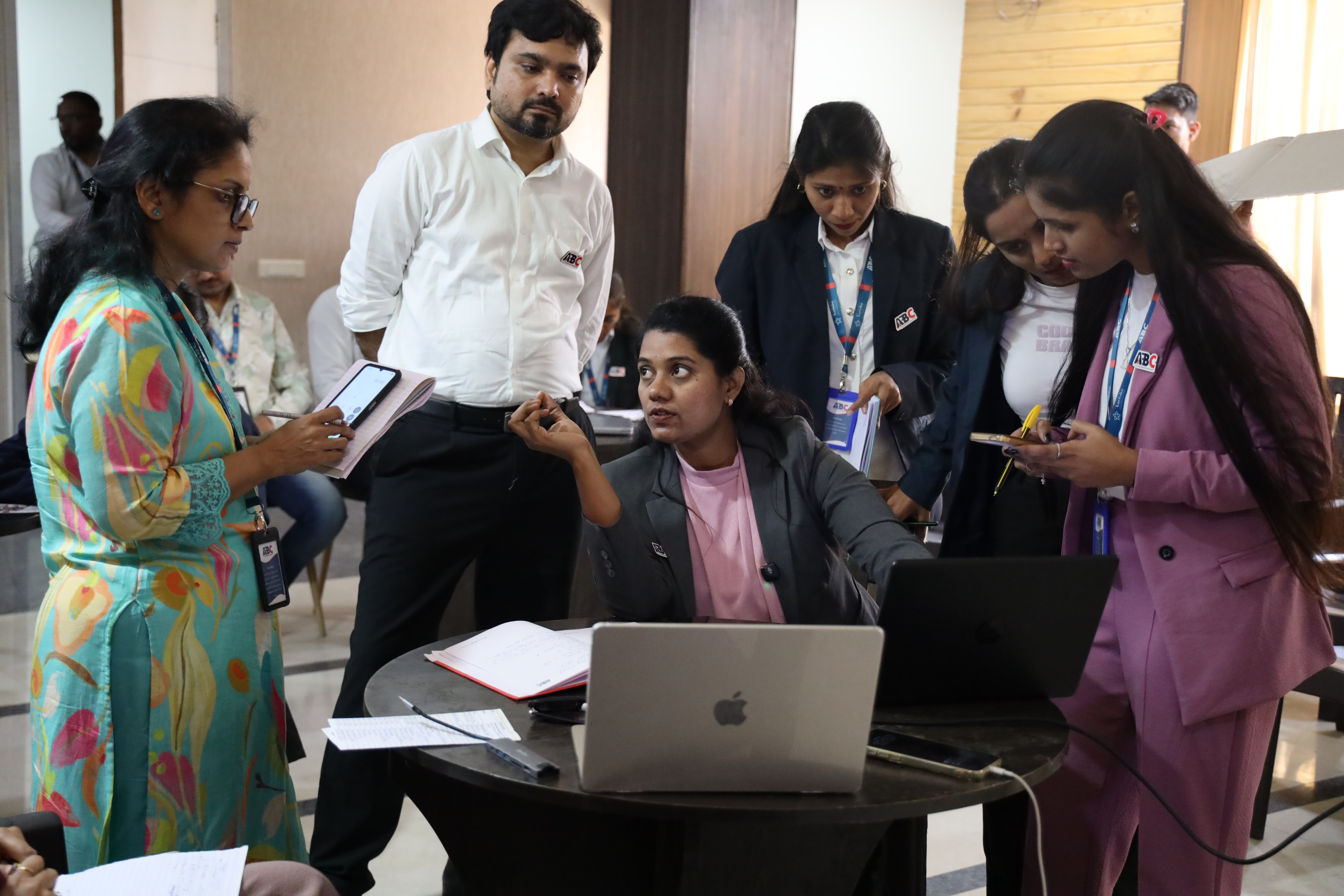
Here's something I tell every leadership team I work with: scaling profits is strategy, but scaling people is leadership — and the second one is always harder. India's 250+ unicorns prove the country can build businesses that grow fast. What they reveal less comfortably is that most of those businesses hit a ceiling not because of market or product, but because the team did not grow at the same speed as the ambition. That gap between business scale and people scale is where most Indian growth stories quietly stall.
TL;DR- Scaling profits requires strategy — but scaling people requires deliberate, sustained leadership development investment
- The real bottleneck in Indian business growth is almost always the team's inability to grow at the same pace as the business
- HRs, directors, and business managers who scale business without scaling people create a ceiling that no strategy can break
- Building a leadership pipeline is not a nice-to-have — it is the infrastructure that makes sustained growth possible
- Avinash Chate helps Indian leadership teams develop the people capacity needed to sustain and accelerate business scale
Scaling Profits Is Strategy — Why Scaling People Is a Completely Different Challenge
Every ambitious Indian business leader I have worked with can articulate a strategy for scaling revenue. They have market maps, product roadmaps, funding plans, and growth targets broken into quarterly milestones. What is almost always missing from that same strategy document is a plan for scaling the people who must execute it. Business plans scale on paper. People scale through deliberate, sustained development — and the two timelines are rarely aligned. When business growth outpaces people growth, the result is not just underperformance. It is leadership burnout, team dysfunction, and eventually, stall.
The Real Growth Bottleneck: Why Indian Companies Hit a People Ceiling Before a Market Ceiling
Here's the thing — the ceiling that stops most Indian companies from reaching the next growth stage is not a market ceiling. It is a people ceiling. I see this consistently in manufacturing companies in Pune, technology firms in Hyderabad, and BFSI organisations in Mumbai. The strategy is sound. The market is ready. The product is competitive. But the managers who were excellent at 100 crore are struggling at 500 crore. The team leads who worked well in a 30-person team are overwhelmed in a 200-person structure. Scaling business without simultaneously scaling people creates a structural growth ceiling that no amount of additional strategy can break through.
What Happens When a Business Scales Faster Than the Team That Runs It?
When a business scales faster than the team running it, specific and predictable problems emerge. Decision-making slows because there are not enough leaders who can be trusted to decide independently. Quality declines because the people being promoted into larger roles are not yet ready for those roles. Culture dilutes because the original values and behaviors that made the company successful are no longer modelled or reinforced across the larger structure. Customer experience suffers because the people closest to customers are overwhelmed and under-developed. I have seen all four of these problems at Indian companies scaling aggressively — and all four are people problems, not market problems.
| Growth Stage | Business Scale Challenge | People Scale Challenge |
|---|---|---|
| ₹10 Cr → ₹50 Cr | Build repeatable sales and delivery process | Develop first-line managers from individual contributors |
| ₹50 Cr → ₹200 Cr | Add product lines, expand geographies | Build middle management layer ready to lead independently |
| ₹200 Cr → ₹500 Cr | Professionalize operations, raise capital | Build senior leadership team capable of running business units |
| ₹500 Cr+ | Market dominance, M&A, international | Develop next-generation C-suite and leadership pipeline |
The Wake-Up Call for HRs, Directors, and Business Managers Scaling Indian Companies in 2026
HRs, directors, and business managers who are scaling Indian companies need to hear this directly: if your people are not growing at the same speed as your business, you are building on an unstable foundation. The McKinsey India study showing Indian managers spend 21 hours per week in internal meetings — 35% more than their US counterparts — is a symptom of this. When people are not developed enough to handle their scope independently, everything escalates upward. Every manager's time fills with decisions that should be made two levels below. Growth stalls because the people who should be enabling it are stuck firefighting.
How to Build a Leadership Pipeline That Grows at the Same Speed as Your Business
Building a leadership pipeline means systematically identifying the roles that will exist 12 to 24 months from now as the business scales, and investing in developing the people who will fill those roles today — not waiting until the vacancy exists and then scrambling to fill it. This requires a deliberate talent philosophy: identify high-potential individuals early, give them stretch assignments before they are fully ready, invest in formal development alongside on-the-job experience, and create mentoring structures where scaling leaders learn from those who have already made the growth journey. I help Indian companies build this pipeline through structured leadership development programs at ABC Trainings.
People Development as Business Infrastructure: What India's Fastest-Growing Companies Do Differently
India's fastest-scaling companies treat people development as business infrastructure — not as a cost or a benefit, but as the foundation that makes revenue growth sustainable. They budget for leadership development the same way they budget for technology or facilities. They measure leadership readiness metrics alongside financial metrics. They make people development a standing agenda item in board and leadership team reviews, not just a quarterly HR report. This shift in perspective — from people development as HR's job to people development as the CEO's strategic infrastructure — is the single most important shift I see separating companies that sustain growth from those that hit the ceiling.
A Practical Approach to Scaling People Alongside Business in Indian Corporate Settings
The practical approach starts with a leadership capacity audit: where are your current gaps between the roles you have and the roles you need in 18 months? Then build a targeted development plan for each gap — not a generic training calendar, but specific, role-relevant development aligned to the business growth milestones. Pair this with accountability structures where business leaders own people development as a KPI, not just HR. And measure progress quarterly: are the people who need to grow actually growing at the speed the business requires? This is the framework I use with leadership teams at Bajaj Auto, Tata Tech, and JSW — and it consistently turns people ceilings into people engines.
Book Avinash Chate for Your Next Event
TEDx speaker. 11+ yrs training Army, BRO, RBI, BARC, JSW. Available for keynotes, leadership training, team building & manager development at your office or event venue.
✅ Thanks! Avinash team will reach out within 24 hours.'}).catch(function(e){f.outerHTML='Something went wrong. WhatsApp +91 8793630001
'});return false;">Select ServiceKeynote / Motivational SpeakingLeadership Development TrainingTeam Building WorkshopManager DevelopmentEmployee TrainingOutbound TrainingBook Avinash Now →Or WhatsApp directly: +91 87936 30001
Related Articles by Avinash Chate
- Karoly Takacs: Lost His Right Hand in 1938, Won Olympic Gold in 1948 With His Left
- Why Most Team Building Activities Fail: It's Not the Games, It's the Gaps
- One Thank You That Says It All: Inside the Sahakari Bank Majalgaon Session
Avinash Chate TEDx Speaker · Founder, The Future Corporate · 11+ yrs experience Avinash has trained Indian Army, BRO, RBI, BARC, JSW Steel and 1000+ corporate leaders across India. His work focuses on leadership development, communication skills, and behavioural training rooted in Indian values and modern business needs. |
Frequently Asked Questions
Why do Indian companies struggle to scale people at the same speed as their business?
Indian companies struggle to scale people at the same speed as business because people development is treated as a secondary priority rather than a growth infrastructure investment. Business scaling decisions — entering new markets, launching products, raising capital — are made continuously. People development decisions are often deferred until a crisis makes the gap undeniable. By the time the leadership shortage becomes obvious, the business has already paid the price in poor decisions, high attrition, and missed growth milestones. Proactive, pipeline-focused people development is the missing infrastructure in most Indian growth strategies.
What is a leadership pipeline and why do scaling Indian companies need one?
A leadership pipeline is a systematic investment in developing the leaders who will run your business at its next stage of scale — before those roles become vacant and urgent. It identifies high-potential individuals today, gives them stretch experiences and targeted development, and ensures that when the business grows to its next size, qualified internal leaders are ready to step into larger roles. Without a pipeline, scaling Indian companies are forced to either hire externally at premium cost for every new senior role, or promote people who are not yet ready — both of which create significant risk and cost during the most critical growth phases.
How can HRs and business directors build people capacity for business scale in India?
HRs and business directors can build people capacity by starting with a leadership capacity audit — mapping the roles that will exist 12 to 24 months from now as the business scales and identifying the gap between current capability and future requirement. From this audit, build targeted development plans that are specific to each identified gap, not generic training calendars. Make people development a standing CEO and board agenda item, not just a quarterly HR report. Create accountability by measuring leadership readiness alongside financial performance metrics. And invest in external expertise — structured corporate training programs that accelerate leadership capability development faster than on-the-job experience alone.
What specific approach does Avinash Chate use to help Indian companies scale their leadership teams?
Avinash Chate uses a four-stage approach: first, a leadership capacity audit to identify the specific capability gaps created by current and projected business scale; second, targeted development programs for identified high-potential leaders, combining workshops, coaching, and stretch assignments; third, culture-building interventions that ensure the values and behaviours that drive the business forward are modelled consistently at every leadership level; and fourth, accountability frameworks that make people development a measurable business outcome owned by the CEO and leadership team, not just tracked by HR. This approach has been implemented at Bajaj Auto, Tata Tech, and JSW Steel, consistently turning people ceilings into scalable leadership infrastructure.
Avinash Chate services
Corporate Trainer in Maharashtra · Top Corporate Trainers in Maharashtra · Leadership Trainer in Maharashtra · Top Leadership Trainers in Maharashtra · Team Building Trainer in Maharashtra · Top Team Building Trainers in Maharashtra · Motivational Speaker in Maharashtra · Top Motivational Speakers in Maharashtra · All service locations
← Back to all articles · Book Avinash Chate
By Avinash Chate — Maharashtra’s #1 Corporate Trainer & Motivational Speaker. .