The 10,000-Hour Apprenticeship: 3 Stages From Beginner to Master
In my book The Winning Edge, I explain the three-stage self-apprenticeship every professional needs: observe, practice and experiment your way from beginner to true master.
Early in my career I made a mistake that almost every young professional in India makes: I chased the salary before I chased the skill. In my book The Winning Edge, The Champion Mindset, I call this the great trap of the modern career, and undoing it is the single most important shift a beginner can make. The truth is simple but uncomfortable. Before money, before titles, before recognition, you owe yourself a rigorous apprenticeship of roughly 10,000 hours.
This is not a romantic idea. It is the most logical, most proven path that exists. The guitar legend Chet Atkins put it plainly, and I keep his words on my desk to this day.
A long apprenticeship is the most logical way to success. - Chet Atkins
In this article, adapted directly from The Winning Edge, I want to give you the exact blueprint I teach in my corporate workshops across Maharashtra: the three overlapping stages that carry you from a nervous beginner to a calm, capable master. They are the Passive stage, the Practice stage and the Active stage. Walk through them honestly and you will never again feel like an imposter in your own field.
Why the 10,000-Hour Apprenticeship Matters More Than Ever
We are living in an era where freshers want to skip the queue. A widely cited KPMG finding put a number on the cost of this impatience: roughly 75 percent of Indian graduates are simply not employable. When I read that, it did not surprise me, because I see the pattern every week. Freshers job-hop chasing money instead of learning. They treat honest feedback as personal criticism. They struggle to concentrate long enough to get genuinely good at anything.
The apprenticeship mindset is the cure. Borrowed from the centuries-old idea of learning a craft under a master, it reframes your first years not as a place to earn but as a place to learn. Robert Greene, in his book Mastery, describes this phase as three overlapping modes of working, and I have built my entire training philosophy on top of them.
The mindset shift: value learning over money
The advice I give every young manager is uncomfortable but liberating. Early in your career, value learning over money. Surrender your ego. Be willing to feel inferior to those who know more than you. The person who can sit in a room and quietly admit "I do not know this yet" will, within a few years, overtake every clever colleague who was too proud to learn.
- Stop treating feedback as an attack. Feedback is free coaching. The fresher who flinches at correction is choosing comfort over growth.
- Stop measuring a job by its package alone. A role that pays less but teaches more is, in your twenties, the better-paying job.
- Stop running. Skill compounds only when you stay long enough to go deep.
Stage One: Passive Mode - Observe Without Ego
The first stage is the most underrated. In Passive or Observe mode, your job is not to perform. Your job is to absorb. You watch the rules, the methods and the hidden power dynamics of your environment. You learn how decisions are really made, who holds influence, and how work actually flows, not how the org chart pretends it flows.
The key discipline here is to see reality without ego or preconception. Most beginners cannot do this because they walk in already convinced they know how things should be. A true apprentice empties the cup first.
It is a process. You have to start on the ground floor. - Sachin Tendulkar
What to observe in your first 1,000 hours
- The methods. How do the best people in your team actually do the work, step by step?
- The unwritten rules. What behaviour gets rewarded here, and what quietly gets punished?
- The power dynamics. Who is genuinely respected, and why?
I think of the philosopher Plato here. At the age of 28, in 399 BC, he left Athens and travelled through Egypt, Sicily and Italy for twelve long years. He did not rush back to build his reputation. He observed, absorbed and expanded his horizons, and returned a far wiser man. That is the spirit of Passive mode: a deliberate widening of what you can see before you ever try to lead.
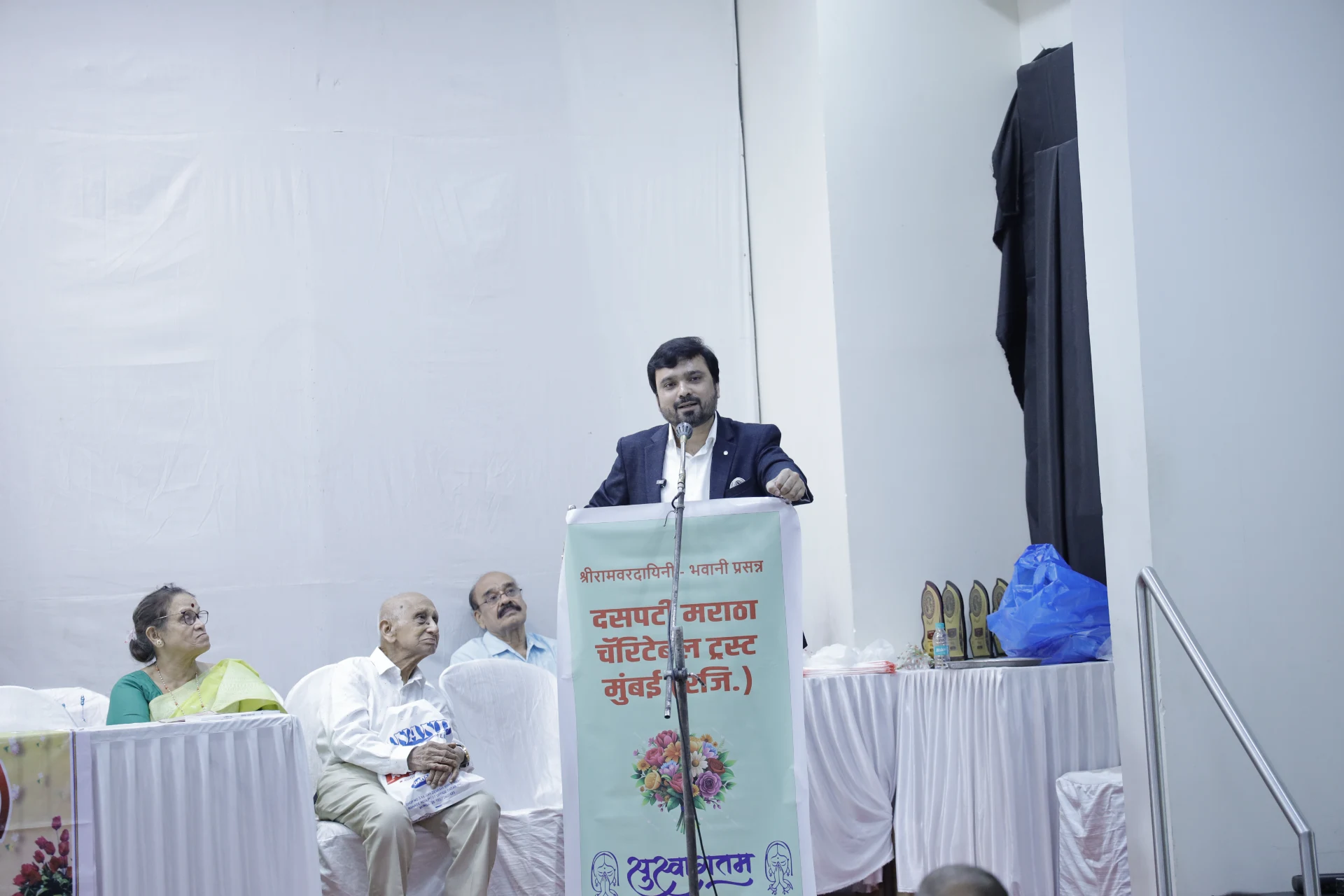
Teaching the three-stage apprenticeship to managers in one of my corporate workshops.Stage Two: Practice Mode - Move Toward the Pain
Once you can see clearly, the second stage begins. In Practice mode you stop merely watching and start aggressively acquiring skills. This is where the real 10,000 hours are logged. And here is the rule that separates the masters from the merely busy: move toward the pain, not away from it.
Most people practise only what they are already good at, because it feels nice. The apprentice deliberately practises what is hard, awkward and uncomfortable, because that is the only place capacity actually expands.
PAIN + Reflection = SUCCESS
That simple formula comes from the investor Ray Dalio, and it is the heartbeat of Practice mode. Pain alone makes you tired. Pain combined with honest reflection makes you better. After every difficult day, the apprentice asks: what exactly went wrong, and what one thing will I do differently tomorrow?
Practise like the greats
Look at the people the world calls geniuses and you will find the same habit underneath: a fixed daily practice protected like a sacred ritual, combined with a child-like curiosity that refuses to assume it already knows everything.
- Garry Kasparov at the chessboard.
- Cristiano Ronaldo and David Beckham on the training ground long after teammates went home.
- Sachin Tendulkar in the nets, decades into a legendary career, still treating it as a process.
None of them practised to feel comfortable. They practised to expand. That is the difference between someone who has done a task for ten years and someone who has genuinely mastered it.
Stage Three: Active Mode - Experiment Beyond Your Limits
The third stage is where the apprentice quietly becomes a master. In Active or Experiment mode you push beyond your established limits and deliberately leave your comfort zone. You take on the project nobody else wants. You volunteer for the assignment that is slightly above your current grade. You test your skills against real consequences.
This is also where you must expand your horizons on purpose. I draw here on ideas from Borrowing Brilliance by David Murray, the relentless self-reinvention of an industrialist like Lee Iacocca, and Howard Gardner's notion of the synthesising mind, the ability to pull lessons from many fields and weave them into something new. The master is rarely the narrowest specialist. The master is the one who connects.
You can only connect the dots looking backward
In his 2005 Stanford address, Steve Jobs gave the apprentice the perfect piece of patience. You cannot connect the dots looking forward; you can only connect them looking backward. Every uncomfortable experiment, every skill you acquired when it seemed irrelevant, becomes a dot that one day forms a line you could never have planned.
You cannot connect the dots looking forward; you can only connect them looking backward. - Steve Jobs
That is why the apprenticeship must come before the chase for money. The dots you collect now, in your years of patient observation, deliberate practice and bold experiment, are the raw material of every future you have not yet imagined.
Helping teams move from passive observation into deliberate, pain-facing practice.Putting the Three Stages to Work in Your Team
In my workshops I never present these stages as neat, separate boxes. They overlap. A seasoned professional is observing, practising and experimenting all at once, simply weighting them differently as the task demands. What changes is the discipline behind it.
A simple weekly rhythm
- Observe one new method or pattern in your environment and write down what you noticed.
- Practise one skill that is currently uncomfortable, and reflect on the pain afterward.
- Experiment with one small thing that is just beyond your proven ability.
Do that for a year and you will not recognise the professional you have become. That is the quiet power of the apprenticeship: it does not promise an overnight leap, it promises an inevitable one.
Bring this to your team. I run apprenticeship-and-mastery-focused corporate training and keynotes for companies across Pune, Mumbai and all of Maharashtra.
Book a session · Explore corporate training programs
Frequently Asked Questions
Is the 10,000-hour apprenticeship literal, or is it a mindset?
It is both. The roughly 10,000 hours signal that real mastery takes years of focused effort, not weeks. But the deeper point is the mindset: treat your early career as a place to learn rather than only to earn, and put rigorous, deliberate practice ahead of chasing money.
Why should freshers value learning over money early on?
Because skill compounds and salary does not, at least not at first. A widely cited KPMG finding suggests about 75 percent of Indian graduates are not employable, largely because they job-hop for money, take feedback personally and struggle to go deep. Choosing learning early builds the capacity that makes the money inevitable later.
What are the three stages of the apprenticeship?
Passive mode, where you observe the rules, methods and power dynamics without ego; Practice mode, where you aggressively acquire skills and move toward the pain; and Active mode, where you experiment beyond your limits and leave your comfort zone. They overlap rather than run in a strict sequence.
Can you run this as a corporate training programme?
Yes. I deliver this three-stage framework as corporate training and keynotes for teams across Pune, Mumbai and Maharashtra, tailored to managers, freshers and business owners. You can reach me through the contact page to design a session for your organisation.
If this resonated, I would love to bring it to your people in person. Get in touch to plan a session, explore my corporate training programs, or learn more about my approach as a motivational speaker. This article is adapted from my book The Winning Edge, The Champion Mindset.
Related Articles by Avinash Chate
- Ajit Agarkar's 21-Ball ODI Fifty Against Zimbabwe: The Silent Performer's Career Blueprint
- Zero Defects: How Sundram Fasteners Won GM Supplier of the Year 5 Times
- Clive Lloyd's 1975 World Cup Final Leadership: How Bold Captaincy Wins Under Pressure
| AC | Avinash ChateIndia's Leading Corporate Trainer | TEDx Speaker | Author With 80+ organizations trained including RBI, JSW Steels, and Ferrero, Avinash Chate delivers high-impact corporate training across India. Creator of the KITE Leadership Framework and bestselling author of "The Winning Edge." Website YouTube |
Avinash Chate services
Corporate Trainer in Maharashtra · Top Corporate Trainers in Maharashtra · Leadership Trainer in Maharashtra · Top Leadership Trainers in Maharashtra · Motivational Speaker in Maharashtra · Top Motivational Speakers in Maharashtra · All service locations
← Back to all articles · Book Avinash Chate
By Avinash Chate — Maharashtra’s #1 Corporate Trainer & Motivational Speaker. .