3 People Who Ruin Every Office | Which One Are You?– Drama Triangle Explained
What is the Drama Triangle? How does it affect your workplace? The Drama Triangle is a social model created by Dr. Stephen Karpman in 1968. It identifies three ...
Every Workplace Has Drama
Every workplace has targets.
Every workplace has pressure.
But not every workplace has drama.
Yet, many teams unknowingly run on a psychological pattern that drains energy, damages trust, and quietly reduces performance.
In 1968, psychiatrist Stephen Karpman introduced a powerful model called the Drama Triangle. It explains why conflicts repeat themselves — even among intelligent, well-meaning professionals.
The model identifies three roles people unconsciously play during conflict:
- Victim
- Persecutor
- Rescuer
And the most surprising part?
The same person can switch between all three within minutes.
The Three Roles in Indian Workplaces
1. The Victim
This is not someone who is actually powerless.
It is someone who feels powerless.
You may hear:
- No one supports me.
- Management is biased.
- I always get the worst projects.
The Victim avoids responsibility but seeks sympathy. Over time, this mindset spreads like a silent virus across teams.
2. The Persecutor
This role operates from control and blame.
Typical behaviours:
- Micromanaging
- Public criticism
- Harsh tone under pressure
- If you can’t perform, you can leave.
The Persecutor believes pressure creates performance. In reality, it creates fear — and fear reduces innovation.
3. The Rescuer
This role looks positive on the surface.
The Rescuer says:
- Don’t worry, I’ll handle it.
- Let me talk to the boss for you.
- I’ll fix the presentation.
But constant rescuing weakens accountability.
It builds dependency, not capability.
Why Do People Switch Roles?
This is where the Drama Triangle becomes dangerous.
A manager who starts as a Rescuer may become frustrated and turn into a Persecutor.
An employee who feels attacked becomes a Victim.
Later, that same employee may rescue someone junior to feel powerful again.
It is a cycle — not a personality trait.
And research indicates nearly 70% of workplace conflicts are rooted in these patterns. The cost?
- Up to 60% lower productivity
- 3X higher attrition
- Emotional exhaustion across teams
Not because people lack talent.
But because they are trapped in roles.
The Way Out: The TED Framework
To break this pattern, a shift in mindset is required. This is where the TED framework comes in:
- Victim → Creator
- Persecutor → Challenger
- Rescuer → Coach
Creator
Instead of “Why is this happening to me?”
A Creator asks: “What can I do next?”
Ownership replaces helplessness.
Challenger
A Challenger does not attack.
They push for standards without attacking identity.
Accountability without humiliation.
Coach
A Coach does not solve problems for others.
They ask questions.
They build thinking, not dependence.
A Real Case Study with Measurable Results
In one mid-sized Indian organization, internal surveys showed rising conflicts and declining engagement scores. Managers believed employees were “too sensitive.” Employees felt “management doesn’t listen.”
During behavioural diagnostics, the Drama Triangle pattern became visible.
After leadership workshops based on the TED framework:
- Internal escalation reduced by 42%
- Project delivery speed improved by 28%
- Voluntary attrition dropped within two quarters
No new policies were introduced.
Only mindset shifts.
Culture changed because conversations changed.
Why This Matters More Than Ever
In today’s fast-paced corporate environment, technical skills are not enough.
Organizations don’t lose talent because of workload.
They lose talent because of emotional climate.
When teams move from Drama to Ownership, something powerful happens:
- Meetings become solution-oriented
- Feedback becomes constructive
- People feel respected
- And performance improves naturally.
How Avinash Chate Explains This in His Video
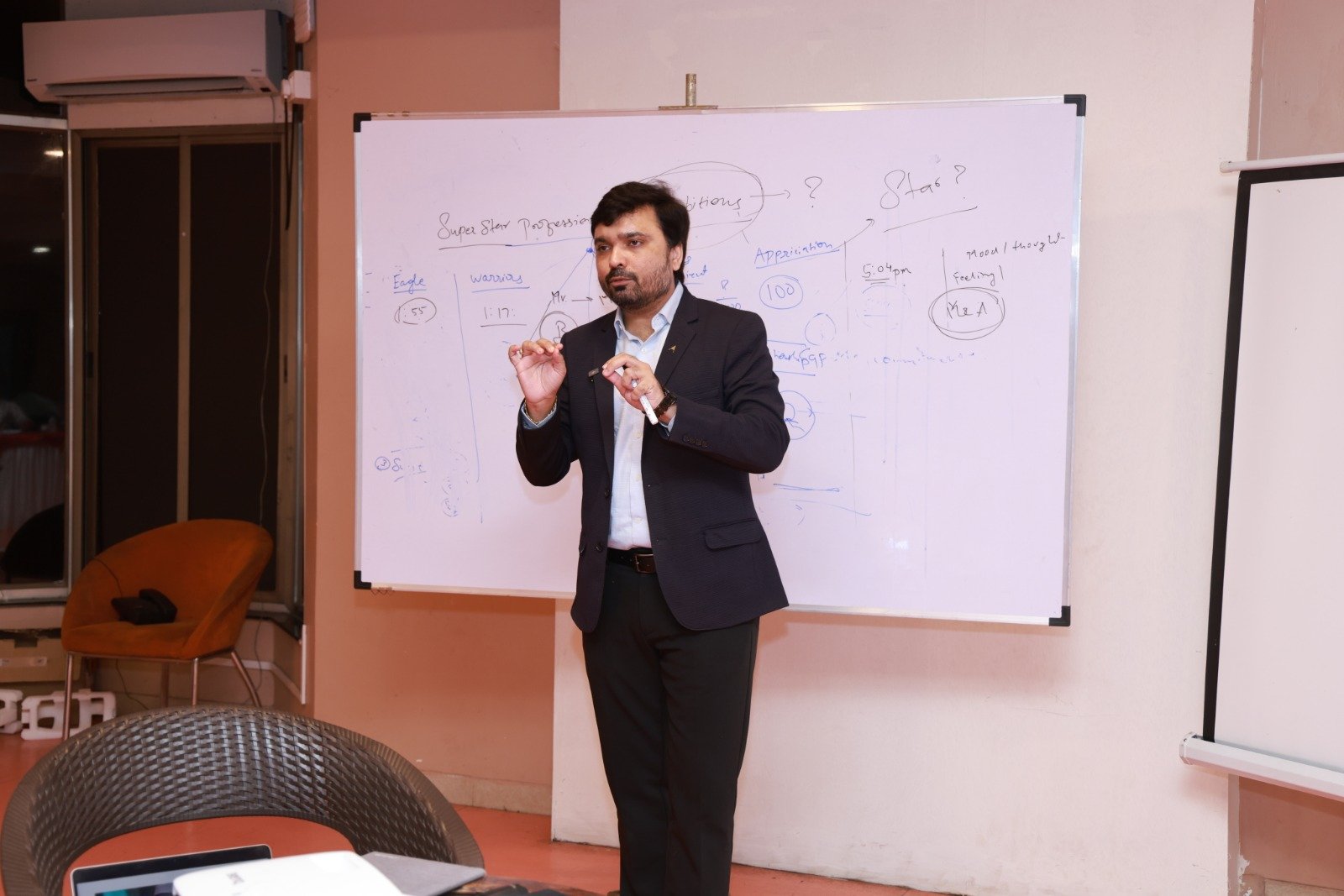
In this insightful session, corporate trainer Avinash Chate breaks down the Drama Triangle using relatable examples from Indian workplaces — from family-run businesses to fast-growing startups. He explains how managers unknowingly become Rescuers, how high performers slip into Victim mode under pressure, and how leadership must consciously move toward the Creator–Challenger–Coach mindset. Through a real case study backed by measurable results, he demonstrates that transforming workplace drama is not about changing people — it’s about changing awareness.
The real question is not whether the Drama Triangle exists in your organization.
The real question is —
Are you willing to see it?
Because once you see it, you can never unsee it.
Related Articles by Avinash Chate
- From Reaction to Leadership: Mastering Emotional Control at Work
- The Ferob Model: Understanding People Before Managing Them
- Credibility, Reliability, Intimacy: The Three Pillars of Trust
Avinash Chate
India's Leading Corporate Trainer | TEDx Speaker | Author
With 80+ organizations trained including RBI, JSW Steels, and Ferrero, Avinash Chate delivers high-impact corporate training across India. Creator of the KITE Leadership Framework and bestselling author of "The Winning Edge."
Website YouTubeBook Avinash Chate for Your Next Event
Maharashtra's #1 Corporate Trainer · India's leading Motivational Speaker & Team Building Expert · 2x TEDx · Available across India in English, Hindi & Marathi.
✅ Thanks! Avinash team will reach out within 24 hours.'}).catch(function(e){f.outerHTML='Something went wrong. WhatsApp +91 8793630001
'});return false;"> Select Service Motivational Speaking / Keynote Team Building Workshop Corporate Training / Leadership Development Manager Development Employee Training Outbound Training Book Avinash Now →Or WhatsApp directly: +91 87936 30001
Avinash Chate services
Corporate Trainer in Maharashtra · Top Corporate Trainers in Maharashtra · Leadership Trainer in Maharashtra · Top Leadership Trainers in Maharashtra · Team Building Trainer in Maharashtra · Top Team Building Trainers in Maharashtra · Motivational Speaker in Maharashtra · Top Motivational Speakers in Maharashtra · All service locations
← Back to all articles · Book Avinash Chate
By Avinash Chate — Maharashtra’s #1 Corporate Trainer & Motivational Speaker. .