What's REALLY Going On in Sanjay Kapoor's Estate War? Handover Black Hole
What happens when a senior person in your team suddenly leaves? No passwords, no files, no vendor contacts, and complete chaos begins. This is called the Handov...
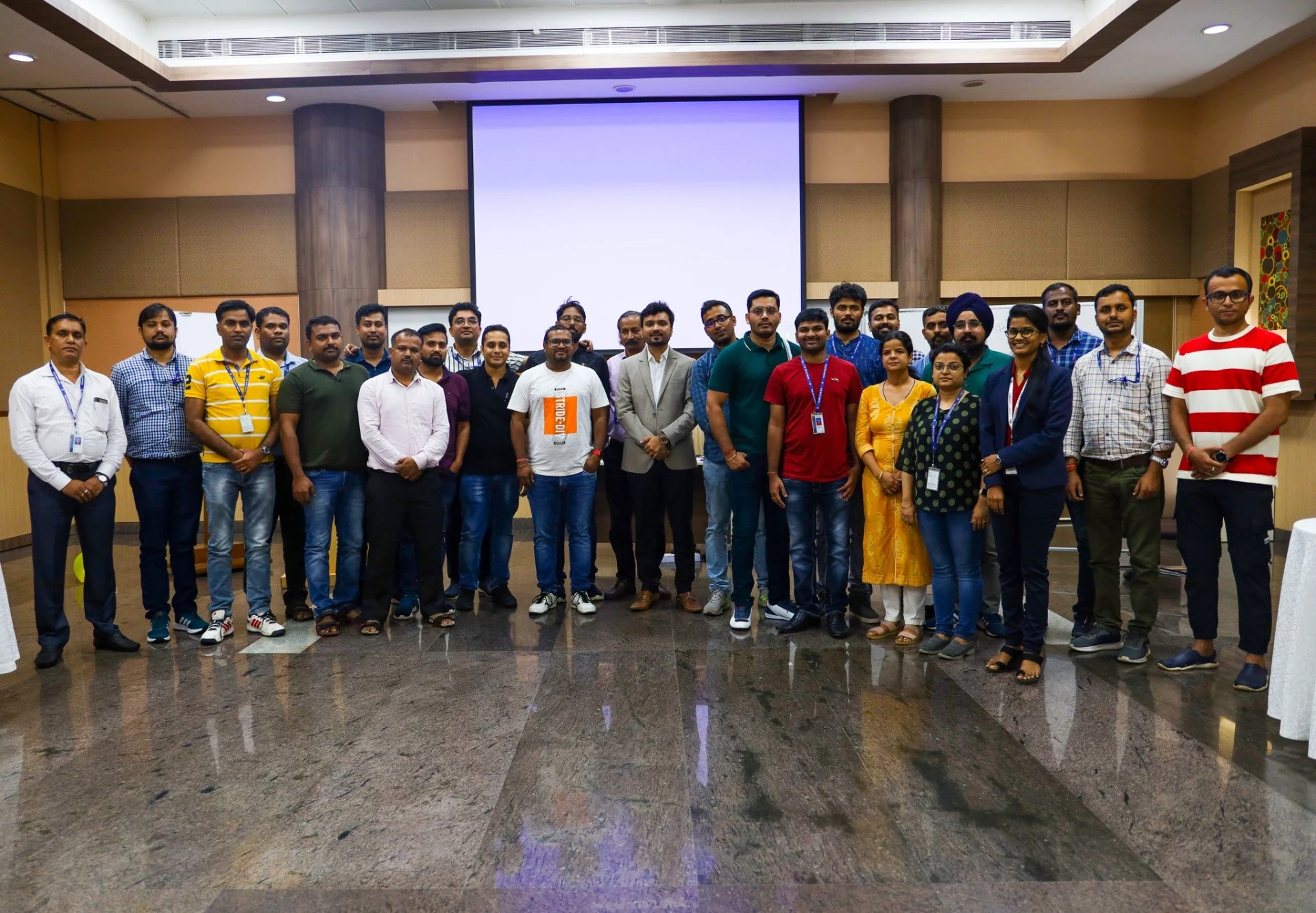
Avinash Chate - Leadership Coach at employee engagement session
The Handover Black Hole: What Every Leader Must Learn Before Chaos Takes OverIn every organization, there comes a moment when one person leaves and everyone suddenly realizes how much invisible responsibility that person was carrying. Files are missing. Important contacts are unavailable. Commitments are unclear. Ownership becomes blurred. And what looked like a smooth team on the outside starts collapsing under confusion.
Key takeaway: A weak handover is not an administrative mistake. It is a leadership failure that can damage trust, continuity, morale, and business performance.
Recently, a widely discussed estate dispute reminded many people of a simple truth: when responsibilities, documents, and decisions are not handed over properly, conflict multiplies. Whether it is a family matter, a business matter, or a workplace transition, the result is the same: uncertainty creates chaos.
I have seen this pattern repeatedly in my work with leaders and teams across 80+ organizations. As Avinash Chate, a TEDx speaker and author of The Winning Edge, I can say with confidence that most workplace chaos does not begin with bad intent. It begins with poor communication, unclear ownership, and the assumption that someone else knows what to do.
That is exactly what I call the handover black hole. Work goes in, but clarity never comes out.
Why the Handover Black Hole Is More Dangerous Than Most Leaders Realize
Many leaders underestimate handover because they think it is only about files, lists, and signatures. It is much deeper than that. A proper handover transfers not just tasks, but context. It passes on not just responsibility, but judgment. It captures not just information, but relationships, priorities, risks, and expectations.
When this does not happen, teams begin operating with partial knowledge. People make assumptions. Departments blame each other. Small delays become major problems. Emotional tension rises because nobody wants to be held accountable for something they never fully received.
This is where leadership maturity becomes visible. Strong leaders do not wait for a resignation, transfer, promotion, or emergency to start thinking about continuity. They build continuity into the culture.
In my leadership sessions, I often tell participants that succession is not only for top management. Handover discipline is needed at every level. A team leader, a sales manager, an operations coordinator, an administrator, or a relationship owner can all create disruption if they leave without structured closure.
If you want to understand how hidden behavior patterns damage teams, I also recommend reading The Drama Triangle at Work: The Hidden Pattern Destroying Team Performance. Very often, poor handovers trigger blame, rescue behavior, and victim thinking inside teams.
The Real Cost of Poor Handover: It Is Emotional, Operational, and Cultural
Let us be honest. The damage of a poor handover is not limited to lost papers or missed updates. The deeper cost is emotional. Teams lose confidence. New owners feel unsupported. Senior leaders get dragged into avoidable firefighting. Clients or partners sense instability. Trust starts weakening silently.
I have worked with organizations where one person’s exit created months of confusion because no one knew the status of commitments already made. In some cases, there was no clear record of who had promised what. In others, crucial stakeholder relationships were built around one individual and never institutionalized.
This is why I keep emphasizing that handover is a people issue before it becomes a process issue. It reflects how seriously an organization values accountability, collaboration, and communication.
At Veritas Engineering & Erectors, as in many growing organizations, leadership conversations around continuity become critical when responsibilities expand rapidly. Growth without clarity creates stress. Progress without transfer of knowledge creates dependency. And dependency without backup creates risk.
Avinash Chate has consistently spoken about this in corporate training programs: if your team depends too heavily on memory, personality, or informal understanding, then your system of people development is incomplete.
What a Strong Handover Actually Includes
A meaningful handover is not a rushed conversation on the last working day. It is a structured transfer of clarity. It should answer five practical questions.
- What responsibilities are currently active and what is their exact status?
- Who are the key internal and external stakeholders connected to this role?
- What commitments, deadlines, and risks need immediate attention?
- What background knowledge is necessary to make sound decisions?
- What unresolved issues could become future conflict points?
But beyond these practical questions, there is also a human question: has the incoming person been set up for confidence or confusion?
That is where communication becomes central. If your leaders cannot communicate clearly during transitions, they create avoidable anxiety. This is why I strongly encourage professionals to strengthen this capability. You may also find value in reading Why Communication Skills Are Essential for Modern Leadership Success.
In my programs, I connect this with the KITE Leadership Framework. One of the most important marks of leadership is the ability to create continuity through clarity. Real leaders do not hoard information to feel important. They transfer understanding to make the team stronger.
A leader’s true value is not proven when everything depends on them. It is proven when the team can continue with confidence because they created clarity before stepping away.
How Leaders Can Prevent the Handover Black Hole
The good news is that this problem is preventable. But prevention requires intention. If you only react after someone leaves, the damage has already started. Instead, leaders must normalize handover as an ongoing discipline.
First, create a culture where critical responsibilities are visible. Work should not live only inside one person’s head. Second, encourage regular review conversations, not just final exit discussions. Third, make role clarity and ownership part of team meetings. Fourth, train managers to document commitments, key relationships, and unresolved matters in a way others can understand. Fifth, ensure the receiving person gets time to ask questions, not just receive instructions.
This is not about bureaucracy. It is about reducing dependency and increasing resilience.
As Avinash Chate, I have seen that high-performing teams do one thing consistently: they do not confuse busyness with clarity. They pause to align. They review before transition. They ask uncomfortable questions early. They understand that prevention is always less painful than recovery.
For organizations looking to strengthen people capability and continuity through practical learning interventions, Corporate Training for Logistics and Supply Chain Companies in Mumbai, India also offers useful insight into how structured training supports accountability and operational discipline across teams.
The Leadership Lesson Hidden Inside Every Messy Exit
Every messy exit teaches the same lesson: what is undocumented becomes disputed, what is unclear becomes emotional, and what is delayed becomes expensive.
That is why I believe handover is not a closing activity. It is a leadership habit. It reflects whether your organization is mature enough to protect continuity, relationships, and trust.
Too many leaders focus only on performance while ignoring transferability. But if performance cannot survive transition, it is fragile. Strong teams are not just productive. They are prepared.
As a TEDx speaker and author of The Winning Edge, I often remind leaders that sustainable success depends on what remains stable when people change roles. Titles may shift. Team structures may evolve. But clarity, ownership, and communication must remain strong.
Avinash Chate believes that organizations grow faster when they reduce confusion at points of transition. A handover done well sends a powerful cultural message: we respect the next person, we value continuity, and we take responsibility seriously.
My Final Message to Leaders and Teams
If you are a leader, do not wait for a resignation, emergency, promotion, or dispute to expose the weakness in your team. Start now. Ask yourself: if one key person leaves tomorrow, what confusion will be created? What knowledge will disappear? What relationships will become vulnerable? What decisions will get delayed?
These are not negative questions. They are leadership questions.
When teams build a strong handover culture, they reduce panic, protect trust, and improve execution. They also create a healthier environment where people can move roles, grow careers, and support each other without leaving behind confusion.
If you want to build stronger leadership, communication, accountability, and team alignment in your organization, Book a corporate training session. I would be glad to help your team create a culture where transitions are smooth, responsibilities are clear, and performance remains strong.
Frequently Asked Questions
What is the handover black hole in the workplace?
The handover black hole is a situation where a person exits or changes roles without transferring important responsibilities, context, commitments, and relationship details clearly. This creates confusion, delays, and conflict for the team.
Why is proper handover important for leaders?
Proper handover is important because leaders are responsible for continuity. A strong handover protects trust, reduces dependency on individuals, and helps teams continue performing smoothly during transitions.
What should be included in a good handover?
A good handover should include active responsibilities, current status of work, important stakeholders, pending commitments, risks, deadlines, unresolved issues, and practical context needed for decision-making.
How does poor handover affect team culture?
Poor handover weakens accountability and trust. It creates blame, uncertainty, and emotional stress. Over time, it can make teams dependent on individuals instead of building a collaborative and resilient culture.
How can organizations improve handover practices?
Organizations can improve handover practices by training managers, creating role clarity, reviewing responsibilities regularly, documenting key commitments, and making knowledge transfer a normal part of team culture rather than a last-minute activity.
Related Articles by Avinash Chate
- The Mirroring Technique That Helps You Build Trust and Close More Deals
- Motivational Speaker for Pune BPO and KPO Night-Shift Teams — Combating Burnout and Boosting Engagement
- Micro Management vs Ownership: Lessons for Maharashtra's Corporate Leaders
About the Author
Avinash Chate is a TEDx speaker, published author of The Winning Edge and The Unanswered, and founder of The Future Corporate & Business Coaching. With over 15 years of experience training 80+ organizations including Kiran Gems, Matchwell Engineering, JSW Steel, VishwaRaj Hospital, Avinash is recognized as Maharashtra's leading corporate trainer. He created the KITE Leadership Framework and the 25-Star Competency Framework™, delivering high-impact programs across leadership, team building, sales transformation, and emotional intelligence.
📞 +91 8793630001 | ✉️ connect@avinashchate.com | 🌐 avinashchate.com
Book Avinash Chate for Your Next Event
Maharashtra's #1 Corporate Trainer · India's leading Motivational Speaker & Team Building Expert · 2x TEDx · Available across India in English, Hindi & Marathi.
✅ Thanks! Avinash team will reach out within 24 hours.'}).catch(function(e){f.outerHTML='Something went wrong. WhatsApp +91 8793630001
'});return false;"> Select Service Motivational Speaking / Keynote Team Building Workshop Corporate Training / Leadership Development Manager Development Employee Training Outbound Training Book Avinash Now →Or WhatsApp directly: +91 87936 30001
Avinash Chate services
Corporate Trainer in Maharashtra · Top Corporate Trainers in Maharashtra · Leadership Trainer in Maharashtra · Top Leadership Trainers in Maharashtra · Team Building Trainer in Maharashtra · Top Team Building Trainers in Maharashtra · Motivational Speaker in Maharashtra · Top Motivational Speakers in Maharashtra · All service locations
← Back to all articles · Book Avinash Chate
By Avinash Chate — Maharashtra’s #1 Corporate Trainer & Motivational Speaker. .