The Hidden Cost of Leadership: My Premature Grey Hair Story
My friend called me handsome, but then he pointed out my "salt-and-pepper" look. I was confused. Why do we feel so unwanted because of materialistic body change...
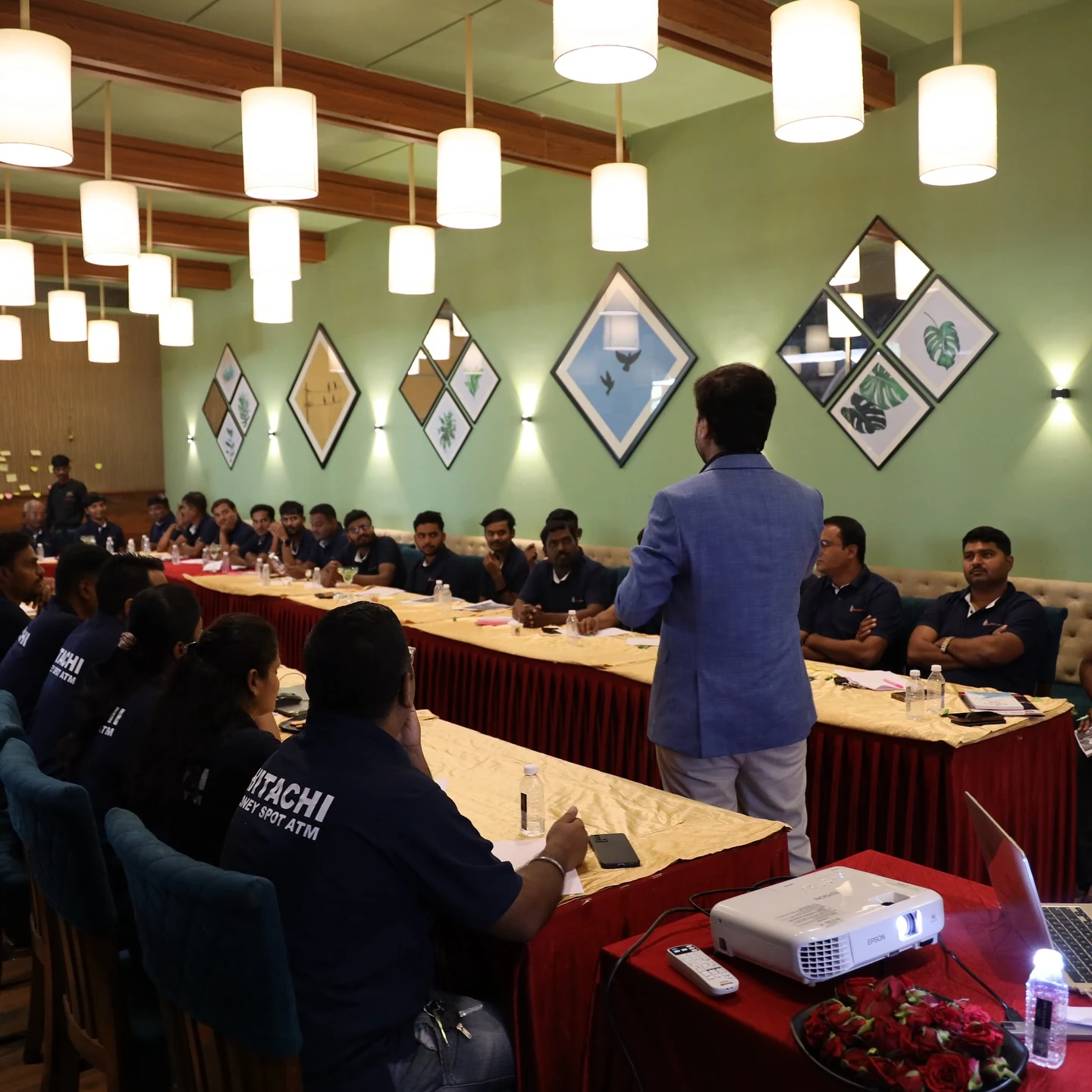
Avinash Chate - Sales Training Specialist motivating sales team
The Hidden Cost of Leadership: What My Premature Grey Hair Taught MeA friend once looked at me, smiled, and said, “You are looking handsome these days.” I laughed. Then he added, “That salt-and-pepper look is working for you.” For a moment, I was confused. Salt and pepper? Then I realized he was talking about my grey hair.
I smiled, but the conversation stayed with me. Why do we react so strongly to visible changes in our appearance? Why do we quietly associate grey hair with stress, decline, or loss? And why do so many young leaders feel they must hide the physical signs of responsibility?
My grey hair did not arrive as a warning sign. It arrived as a reminder that leadership leaves visible marks long before success becomes visible to others.
I want to make one thing normal: not every early grey hair is a problem to be solved. Sometimes, it is simply the visible cost of carrying invisible responsibility. As Avinash Chate, I have spent 15+ years working with leaders, teams, and professionals across 80+ organizations, and I have seen this pattern repeatedly. The world celebrates the title, but very few people talk about the emotional weight that comes with it.
Leadership Changes You Before the World Notices
When people see a leader, they usually see confidence, authority, and visibility. They see someone speaking clearly, making decisions, and guiding others. What they do not see is what happens internally.
They do not see the sleepless questions. They do not see the emotional balancing act. They do not see the quiet moments of doubt, the burden of difficult decisions, or the pressure of being responsible for not just outcomes, but also people.
There was a phase in my journey when I was leading a team of more than 100 people. That kind of responsibility changes the way you think, feel, and carry yourself. You are not just managing tasks. You are managing morale. You are not just driving performance. You are protecting confidence. You are not just solving problems. You are absorbing pressure so that others can keep moving.
This is why I call it premature leadership. Sometimes, your age says one thing, but your responsibilities say another. Your face may still look young, but your mind has already lived through years of decision-making, accountability, and emotional endurance.
Leadership is not heavy because of the chair. It is heavy because of the people, the expectations, and the silent responsibility that comes with influence.
Why We Need to Stop Treating Grey Hair Like a Personal Failure
Somewhere along the way, we started attaching too much emotional meaning to natural change. A few grey strands become a source of insecurity. A visible sign of maturity becomes something to hide. We begin to believe that if we look different, we are somehow losing something.
I disagree.
I believe that many of these changes deserve a more respectful interpretation. Of course, health matters. Rest matters. Balance matters. But not every visible change is a sign that something is wrong. Sometimes, it is a sign that something significant has been carried with courage.
As Avinash Chate, I have met young managers, sales leaders, entrepreneurs, and team heads who quietly carry this emotional conflict. They want to appear fresh, energetic, and in control at all times. They fear that any visible sign of strain will make them look weak. But true leadership is not about looking untouched. It is about staying grounded while being tested.
That is why I often remind people that self-image must be built on identity, not appearance. If your confidence depends only on how polished you look, it will shake easily. But if your confidence comes from your values, your contribution, and your character, then even your grey hair becomes part of your story, not a threat to it.
The Invisible Responsibilities That Shape a Leader
When I speak in organizations, one truth comes up again and again: leadership is often misunderstood from the outside. People assume leaders have more power, more recognition, and more control. What they miss is that leaders also carry more emotional labor.
You are expected to stay calm when others panic.
You are expected to stay clear when others are confused.
You are expected to stay hopeful when results are uncertain.
You are expected to give feedback, handle conflict, motivate teams, and still maintain your own inner stability.
This is exactly why leadership development cannot be limited to strategy and targets. It must include emotional resilience, communication maturity, self-awareness, and people understanding. In my work, I often draw from the KITE Leadership Framework because leadership must be built from the inside out. Knowledge matters, but so do intent, trust, and execution.
A leader who ignores emotional fitness may still hold a title, but will struggle to sustain influence. A leader who develops inner strength can carry pressure without letting pressure define them.
I have seen this in my sessions with teams from organizations such as VishwaRaj Hospital, where people performance is deeply connected to emotional clarity, communication, and leadership behavior. Across industries, the pattern is the same: people do not just need capable leaders; they need emotionally steady leaders.
What Young Leaders Must Understand Early
If you are a young leader reading this, let me say something directly to you: do not be ashamed of the signs that responsibility leaves behind. Respect them, but also learn from them.
Your journey will become healthier when you stop asking, “How do I look unaffected?” and start asking, “How do I lead without losing myself?” That question changes everything.
Here are a few lessons I have learned personally.
- Do not confuse pressure with weakness. Pressure is often proof that your role matters. The real skill is learning to process it wisely.
- Do not carry everything alone. Leadership is not silent suffering. Build trusted conversations. Speak. Reflect. Ask for perspective.
- Do not make appearance your measure of strength. Calm eyes, kind words, and clear decisions matter more than looking perfect.
- Do not ignore recovery. Even committed leaders need emotional reset, reflection, and moments of stillness.
- Do not disconnect from meaning. When purpose is strong, pressure becomes easier to carry.
This is one reason I encourage leaders to become better at feedback, reflection, and self-correction. If this resonates with you, I recommend reading Why Feedback Hurts—and How I Learned to Use It for Growth. Growth becomes lighter when we stop resisting what it is trying to teach us.
Leadership Is Not About Looking Perfect. It Is About Becoming Real.
One of the biggest mistakes in professional life is trying to look invincible. We think respect comes from appearing unaffected. In reality, respect comes from authenticity, stability, and consistency.
People do not trust leaders because they seem flawless. They trust leaders because they seem real. They trust leaders who can admit challenge without spreading panic. They trust leaders who can carry responsibility without becoming bitter. They trust leaders who remain human while guiding performance.
As a TEDx speaker and author of The Winning Edge, I have often shared that personal growth begins when we stop fighting every sign of change and start understanding what it represents. The world may comment on your grey hair. Let it. What matters is whether you understand the story behind it.
For me, those grey strands are not a symbol of decline. They are a symbol of seasons I survived, teams I led, decisions I carried, and people I stood up for. They remind me that growth is not always glamorous. Sometimes, it is visible in ways we did not choose. But that does not make it ugly. It makes it honest.
If you enjoy reflections on purpose, contribution, and meaningful leadership, you may also like When an Engineer Chooses to Build a School Instead of a Factory. Stories like these remind us that success becomes powerful when it serves people.
Normalize the Human Side of Success
I believe we need to normalize the human side of achievement. We need to stop pretending that growth leaves no marks. We need to stop rewarding only polished outcomes while ignoring the emotional discipline behind them.
Every leader pays a price for growth. Sometimes that price is comfort. Sometimes it is certainty. Sometimes it is speed. And sometimes, yes, it may even show up as grey hair earlier than expected.
But let us not label every mark as damage. Some marks are evidence. Evidence that you cared. Evidence that you carried. Evidence that you kept going.
Avinash Chate believes that leadership is not just about leading others to results; it is also about leading yourself through pressure with dignity. That is the kind of leadership I want more people to embrace. Not performative leadership. Not cosmetic leadership. Real leadership.
If you are building a team, shaping future leaders, or strengthening workplace motivation, you may also explore Best Motivational Speaker in Bangalore for Startup Culture for more insights on high-energy, people-centered growth.
And if this message speaks to your organization, I invite you to book a corporate training session. Because the strongest teams are not built only on targets and talent. They are built on emotionally strong leaders who know how to carry responsibility without losing their humanity.
Frequently Asked Questions
Is grey hair at a young age always caused by stress?
No. Grey hair can happen for many reasons, including genetics, lifestyle, and natural body changes. In leadership, it can also become a symbolic reminder of responsibility, maturity, and the emotional load a person carries.
What does premature leadership mean?
Premature leadership refers to taking on significant responsibility at a relatively young age. It means your emotional and decision-making burden may become much heavier long before people expect it.
How can young leaders handle pressure without losing confidence?
Young leaders can handle pressure better by building self-awareness, seeking feedback, communicating openly, creating support systems, and separating self-worth from appearance or temporary setbacks.
Why is emotional resilience important in leadership?
Emotional resilience helps leaders stay calm, make better decisions, support their teams, and recover from setbacks without becoming overwhelmed. It is one of the most important foundations of sustainable leadership.
How can organizations support young leaders better?
Organizations can support young leaders through coaching, communication training, feedback culture, leadership development programs, and by creating psychologically safe environments where leaders can grow without pretending to be perfect.
Related Articles by Avinash Chate
- The Mirroring Technique That Helps You Build Trust and Close More Deals
- The Career Cost of Saying ‘I’m Not Ready’
- Motivational Speaker for Pune BPO and KPO Night-Shift Teams — Combating Burnout and Boosting Engagement
About the Author
Avinash Chate is a TEDx speaker, published author of The Winning Edge and The Unanswered, and founder of The Future Corporate & Business Coaching. With over 15 years of experience training 80+ organizations including JM Aluext Profiles Pvt Ltd, CIE Aluminium casting India Ltd, Morbull Solutions, Coriolis Corp, Avinash is recognized as Maharashtra's leading corporate trainer. He created the KITE Leadership Framework and the 25-Star Competency Framework™, delivering high-impact programs across leadership, team building, sales transformation, and emotional intelligence.
📞 +91 8793630001 | ✉️ connect@avinashchate.com | 🌐 avinashchate.com
Book Avinash Chate for Your Next Event
Maharashtra's #1 Corporate Trainer · India's leading Motivational Speaker & Team Building Expert · 2x TEDx · Available across India in English, Hindi & Marathi.
✅ Thanks! Avinash team will reach out within 24 hours.'}).catch(function(e){f.outerHTML='Something went wrong. WhatsApp +91 8793630001
'});return false;"> Select Service Motivational Speaking / Keynote Team Building Workshop Corporate Training / Leadership Development Manager Development Employee Training Outbound Training Book Avinash Now →Or WhatsApp directly: +91 87936 30001
Avinash Chate services
Corporate Trainer in Maharashtra · Top Corporate Trainers in Maharashtra · Leadership Trainer in Maharashtra · Top Leadership Trainers in Maharashtra · Team Building Trainer in Maharashtra · Top Team Building Trainers in Maharashtra · Motivational Speaker in Maharashtra · Top Motivational Speakers in Maharashtra · All service locations
← Back to all articles · Book Avinash Chate
By Avinash Chate — Maharashtra’s #1 Corporate Trainer & Motivational Speaker. .