Toyota’s Andon Cord Secret For Better Teams
अनेक ऑफिसमध्ये कर्मचारी समस्या पाहतात पण बोलत नाहीत. कारण त्यांना वाटतं की जर आपण काही सांगितलं तर लोक काय विचार करतील, बॉस रागावतील किंवा आपल्यावर दोष येईल. हळ...
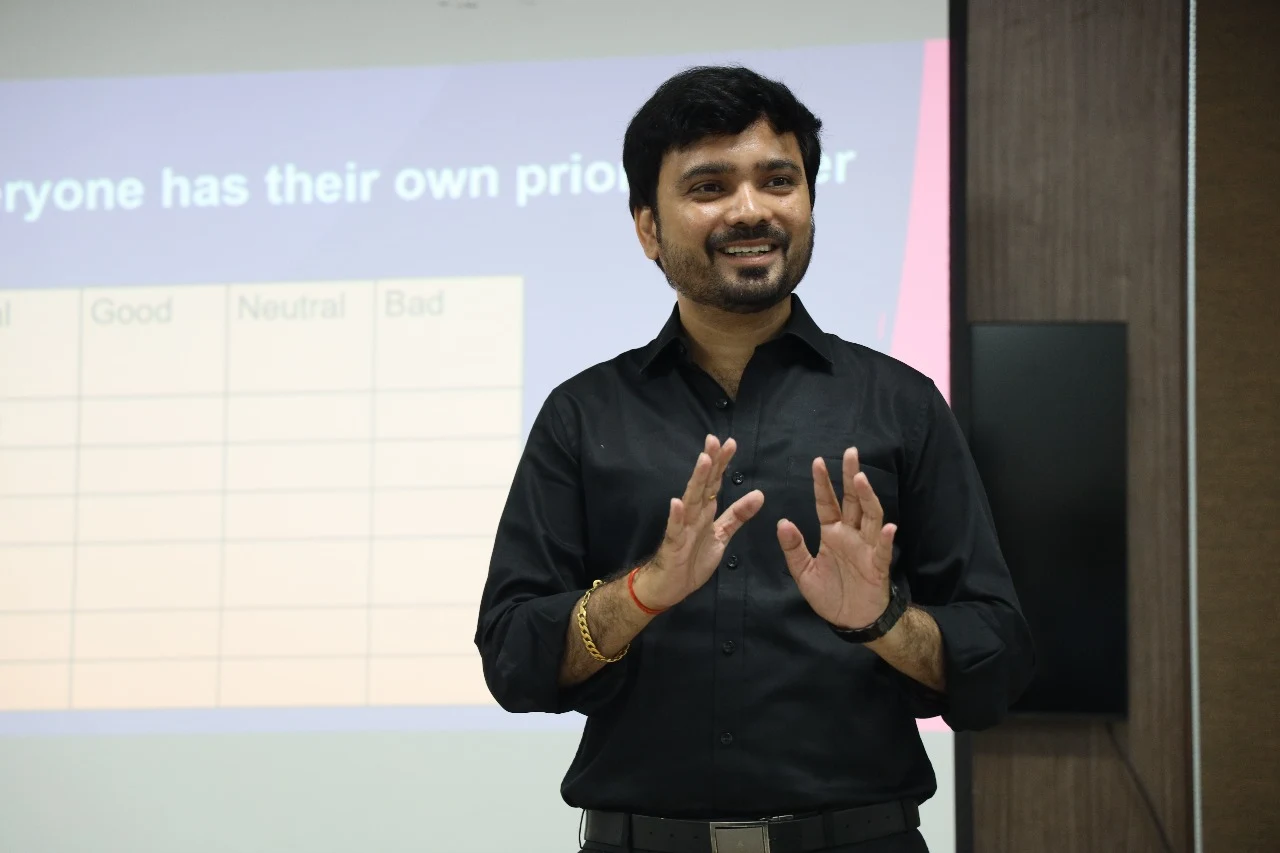
Avinash Chate - Best Corporate Trainer conducting leadership session
Toyota’s Andon Cord Secret for Building Teams That Speak UpIn many workplaces, people see problems early but choose silence. They worry about being judged, blamed, ignored, or misunderstood. I have seen this pattern repeatedly in my work with leaders and teams across industries. A small issue is noticed, nobody raises it, and over time that silence turns into delay, conflict, customer dissatisfaction, or a much bigger operational failure.
Key takeaway: great teams are not built only on talent and targets; they are built on the courage to raise concerns early and the safety to do so without fear.
Toyota’s famous Andon Cord represents one of the most powerful cultural ideas in business: if you see a problem, stop the line. Do not hide it. Do not postpone it. Do not hope someone else will fix it. Raise it immediately so the system can learn and improve.
I believe this idea is relevant far beyond manufacturing. Whether you are in sales, HR, operations, IT, healthcare, education, or leadership, the principle remains the same. Healthy teams create space for truth. Weak cultures punish truth until people become silent.
As Avinash Chate, a TEDx speaker and author of The Winning Edge, I often remind organizations that performance excellence is never just about speed. It is about visibility, ownership, and trust.
What the Andon Cord Really Means
Many people think the Andon Cord is just a process tool. I see it as a leadership philosophy. In Toyota’s system, any worker who spots a defect or abnormality can trigger an alert and even stop production. That sounds risky to many managers. Why would you allow a frontline employee to interrupt output?
Because the cost of stopping early is far lower than the cost of ignoring reality.
The Andon Cord sends a powerful message: quality is everyone’s responsibility, and speaking up is an act of commitment, not disobedience. When employees know they will be respected for flagging a problem, they become more alert, more accountable, and more invested in the outcome.
In contrast, when teams are trained to remain quiet, they learn a dangerous lesson: appearances matter more than truth. That is the beginning of cultural decline.
I have worked with leaders who unintentionally create this fear. They say they want transparency, but their reactions tell a different story. The moment someone points out a risk, the leader becomes defensive, angry, or dismissive. After that, the team learns to keep quiet. Silence then looks like harmony, but in reality it is suppressed intelligence.
Why Employees Stay Silent Even When They Care
Most silence in organizations does not come from laziness. It comes from fear. People ask themselves difficult questions before they speak:
- Will my boss think I am creating trouble?
- Will I be blamed if this turns into a bigger issue?
- Will others think I am negative?
- Will anyone even listen?
- Will this affect my image or growth?
These are not irrational fears. They are learned responses shaped by culture.
In my sessions, I often tell managers that every team is constantly answering one invisible question: Is it safe to tell the truth here? If the answer is no, your team may still function, but it will never fully flourish.
This is where leadership maturity matters. Through the KITE Leadership Framework, I emphasize that effective leaders build trust not by controlling every outcome, but by creating an environment where issues surface early. Leaders must make it easy for people to raise red flags without risking embarrassment or punishment.
Avinash Chate has seen that the best teams are not those with zero problems. They are the teams where problems are surfaced, discussed, and solved quickly.
How Leaders Can Create an Andon Culture in Any Workplace
You do not need a factory floor to apply this principle. You need clarity, consistency, and courage. Here are practical ways leaders can build an Andon culture in modern teams.
1. Reward early warning, not just final success
If employees only get recognition for smooth outcomes, they will hide rough realities. Appreciate people who identify risk early. Thank them publicly when they prevent bigger damage.
2. Separate problem reporting from personal blame
When an issue is raised, focus first on understanding the process failure, not attacking the individual. Blame shuts down learning. Curiosity opens it up.
3. Make escalation simple
People should know exactly how to raise a concern, whom to inform, and what happens next. If escalation is unclear, people hesitate. If it is easy, they act faster.
4. Respond calmly
A leader’s emotional reaction trains the team. If you react with anger, people will hide things next time. If you respond with steadiness and seriousness, they will trust the system more.
5. Review patterns, not just incidents
One complaint may look small. Repeated complaints reveal a system issue. Great leaders do not only solve the immediate problem; they ask what the pattern is trying to teach them.
I have seen this shift create remarkable results in organizations, including respected institutions such as Bhabha Atomic Research Centre, where precision, accountability, and timely communication matter deeply. In such environments, silence is never a strength.
The Hidden Cost of Not Stopping the Line
When people do not speak up, organizations pay a price in many ways. Errors multiply. Rework increases. Customers lose trust. Team morale drops. Innovation slows down because people stop sharing not only risks, but also ideas.
Over 15+ years, I have observed that unresolved small issues often become emotional issues as well. A missed update becomes frustration. A hidden error becomes mistrust. A delayed conversation becomes conflict between departments. What could have been solved in a five-minute discussion turns into a five-week problem.
This is why I encourage leaders to normalize constructive interruption. Stopping the line is not a sign of weakness. It is a sign that the team values standards more than ego.
If your culture makes people feel that raising a concern is career risk, then your systems are already weaker than they appear. The numbers may look fine for a while, but the foundation is fragile.
For leaders managing diverse age groups and work styles, this becomes even more important. You may also find value in Strategies for Communicating Effectively with Multigenerational Workforces, where I discuss how communication habits differ across teams.
From Fear to Trust: The Mindset Shift Teams Need
The real transformation is psychological. Teams must move from fear-based compliance to trust-based contribution. In a fear culture, people ask, “How do I protect myself?” In a trust culture, they ask, “How do I protect the work, the customer, and the team?”
That shift does not happen through slogans on office walls. It happens through repeated leadership behavior. Every meeting, every review, every response to a mistake is shaping culture.
Sometimes, leaders tell me, “My team should be more proactive.” My answer is simple: proactivity grows where honesty is safe. If people feel punished for speaking up, they will wait to be asked. If they feel respected for raising concerns, they will act like owners.
This is also closely linked to change readiness. Organizations that want agility must build the habit of surfacing friction early. That is why I often recommend leaders explore Change Management Training for Indian Manufacturing Companies in Maharashtra for insights on how teams adapt better when communication is open and timely.
Trust can also be strengthened through communication techniques that reduce defensiveness and increase connection. One useful perspective is in Mirroring: The Science of Trust Used by the FBI and Top Sales Closers.
My Final Thought: Build Teams Where Truth Travels Fast
If there is one lesson I want every leader to take from Toyota’s Andon Cord, it is this: do not build a culture where people are afraid to interrupt the flow. Build a culture where responsible interruption is respected.
As Avinash Chate, I believe strong teams are not defined by the absence of issues. They are defined by the speed, honesty, and maturity with which they address them. When employees know they can raise a concern without being shamed, they become more engaged. When leaders listen without ego, quality improves. When truth travels fast, teams become stronger.
Avinash Chate, as a TEDx speaker and author of The Winning Edge, has consistently championed one idea: sustainable success comes from cultures of trust, accountability, and learning. The Andon Cord is not just Toyota’s secret. It can become your team’s strength too.
If you want to build a workplace where people speak up, collaborate better, and take ownership early, book a corporate training session with me.
Frequently Asked Questions
What is the Andon Cord in simple words?
The Andon Cord is a system that allows an employee to immediately signal or stop work when they notice a problem. Its deeper meaning is cultural: people are encouraged to raise issues early instead of hiding them.
How can office teams use the Andon Cord idea without a factory setup?
Office teams can apply the same principle by creating clear escalation channels, encouraging early reporting, and ensuring that people are not punished for highlighting risks, errors, or process gaps.
Why do employees hesitate to speak up at work?
Employees often stay silent because they fear blame, embarrassment, conflict, or negative judgment. If past experiences taught them that honesty leads to trouble, silence becomes a self-protection habit.
What should leaders do when someone raises a problem?
Leaders should respond calmly, appreciate the courage to speak up, understand the root cause, and focus on solving the issue rather than assigning immediate blame. This builds trust and encourages future openness.
How can corporate training help build this culture?
Corporate training helps leaders and teams develop communication habits, trust, accountability, and practical systems for escalation. It creates a shared understanding of how to surface problems early and solve them collaboratively.
Related Articles by Avinash Chate
- The Untold Truth Behind UPSC and MPSC Failure: What 99% of Aspirants Are Never Told
- Motivational Speaker for Mumbai's Hybrid Work Challenges — Bridging the Office-WFH Divide in India's Corporate Capital
- Best Motivational Speaker in Maharashtra — Top 10 Trainers 2026
About the Author
Avinash Chate is a TEDx speaker, published author of The Winning Edge and The Unanswered, and founder of The Future Corporate & Business Coaching. With over 15 years of experience training 80+ organizations including Global-Tech India Pvt Ltd, Meri Property, Deogiri College – Aurangabad, USK agro science, Avinash is recognized as Maharashtra's leading corporate trainer. He created the KITE Leadership Framework and the 25-Star Competency Framework™, delivering high-impact programs across leadership, team building, sales transformation, and emotional intelligence.
📞 +91 8793630001 | ✉️ connect@avinashchate.com | 🌐 avinashchate.com
Book Avinash Chate for Your Next Event
Maharashtra's #1 Corporate Trainer · India's leading Motivational Speaker & Team Building Expert · 2x TEDx · Available across India in English, Hindi & Marathi.
✅ Thanks! Avinash team will reach out within 24 hours.'}).catch(function(e){f.outerHTML='Something went wrong. WhatsApp +91 8793630001
'});return false;"> Select Service Motivational Speaking / Keynote Team Building Workshop Corporate Training / Leadership Development Manager Development Employee Training Outbound Training Book Avinash Now →Or WhatsApp directly: +91 87936 30001
Avinash Chate services
Corporate Trainer in Maharashtra · Top Corporate Trainers in Maharashtra · Leadership Trainer in Maharashtra · Top Leadership Trainers in Maharashtra · Team Building Trainer in Maharashtra · Top Team Building Trainers in Maharashtra · Motivational Speaker in Maharashtra · Top Motivational Speakers in Maharashtra · All service locations
← Back to all articles · Book Avinash Chate
By Avinash Chate — Maharashtra’s #1 Corporate Trainer & Motivational Speaker. .