Goa Nightclub Tragedy: Who Was Really Responsible?
One of the biggest behavioral problems in modern workplaces is the diffusion of responsibility. When work is divided across multiple departments, accountability...
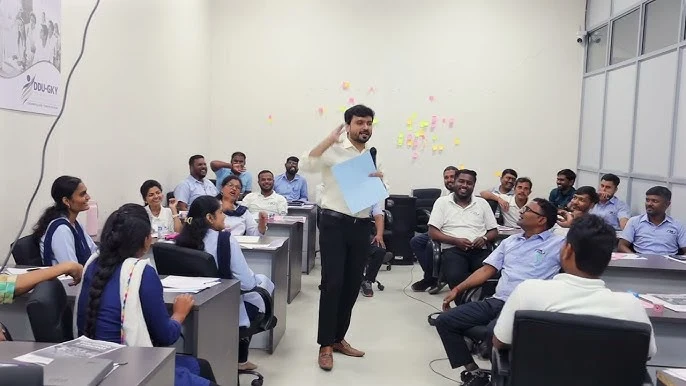
Avinash Chate - Top Motivational Speaker at corporate training program
When Everyone Thinks It’s Someone Else’s Job: The Workplace Cost of Diffused ResponsibilityIn my work with leaders and teams across 80+ organizations, I have seen one pattern repeat itself with alarming consistency: when responsibility is shared vaguely, accountability disappears quietly. A problem grows in silence, warning signs are ignored, and when the crisis finally erupts, everyone has an explanation but nobody has ownership.
Key takeaway: A team does not fail only because people are careless. It often fails because people assume someone else is responsible.
This is one of the most dangerous behavioral problems in the workplace. I often discuss it in my corporate training sessions because it affects leadership, communication, team coordination, execution, and trust.
As a TEDx speaker and author of The Winning Edge, I believe that the real lesson from any public tragedy is not only about what happened, but about what it reveals about human behavior. The question is never just, “Who made the mistake?” The deeper question is, “Why did so many people feel it was not their job to act?”
That is exactly where leadership begins.
Why diffused responsibility is so common in workplaces
In many organizations, work is divided into departments, levels, functions, and reporting structures. This division is necessary for scale, but it also creates a hidden risk. The moment people start thinking in narrow roles instead of shared outcomes, accountability becomes fragmented.
One person assumes operations will check. Operations assumes compliance has already reviewed. Compliance believes the supervisor has signed off. The supervisor thinks management has approved. Management assumes the frontline team has control. In the end, everyone has touched the issue, but nobody has owned it.
I have seen this in sales teams, manufacturing environments, service organizations, leadership groups, and cross-functional teams. The language is always similar: “I thought someone else was looking into it.” That sentence may sound harmless, but in reality it is a warning sign of a weak culture.
Avinash Chate has often emphasized in leadership workshops that responsibility cannot survive in an environment where roles are clear on paper but unclear in behavior. A job description is not enough. Teams need emotional ownership, decision clarity, and the courage to speak up early.
The real issue is not workload, but ownership
Many people assume accountability problems happen because teams are too busy. Sometimes that is true, but more often the issue is psychological, not operational. People distance themselves from responsibility when they feel the issue belongs to a system, not to them personally.
This is where dangerous passivity begins.
Someone notices a warning sign but does not escalate it because it is “not in my scope.” Someone sees a process gap but stays silent because “senior people must already know.” Someone spots a risk but hesitates because “I don’t want to interfere.” These are not small moments. These are the exact moments that shape whether a team prevents a problem or becomes part of it.
In my sessions, I remind participants that professionalism is not only about doing assigned tasks well. It is also about responding responsibly when something important is at stake. Mature professionals do not hide behind role boundaries when consequences are serious.
This is one reason the KITE Leadership Framework is so relevant. Leadership is not a title-based activity. It is a behavior of awareness, initiative, trust-building, and execution. If people wait for authority before taking responsibility, the team becomes slow, reactive, and fragile.
When people protect their role more than the outcome, the organization becomes vulnerable.
How leaders unknowingly create a culture of “not my job”
Let me say something clearly: diffused responsibility is not only an employee problem. Very often, leaders create it unintentionally.
When leaders punish initiative, people stop speaking up. When leaders over-control every decision, people stop thinking independently. When leaders celebrate results but ignore process discipline, teams learn that short-term success matters more than responsible action. And when leaders do not define ownership clearly, confusion becomes normal.
I have worked with organizations like Ferrero Rocher, and one thing strong cultures understand well is that accountability must be visible, repeatable, and modeled from the top. Teams watch what leaders tolerate. If blame-shifting is common at senior levels, it spreads rapidly across the organization.
Avinash Chate often tells managers that accountability is not built during annual reviews. It is built in everyday conversations. It is built when leaders ask, “Who is owning this?” It is built when teams review not only outcomes, but handoffs, assumptions, and missed signals. It is built when people are encouraged to raise concerns without fear.
If your workplace has frequent confusion, repeated escalations, weak follow-through, or finger-pointing after failure, do not treat these as isolated incidents. They are cultural symptoms.
What teams must do to prevent responsibility gaps
If you want to reduce diffused responsibility, you need more than motivation. You need behavioral discipline. Here are a few principles I strongly recommend in every corporate training intervention.
Define direct ownership clearly. Every critical task, risk, and decision must have one clearly identified owner. Shared responsibility often sounds collaborative, but without a final owner it becomes vague.
Create escalation habits. Teams must know when to raise a concern, to whom, and how quickly. Silence should never be treated as maturity.
Encourage responsible dissent. If people cannot question assumptions, errors remain hidden until they become costly.
Review handoffs carefully. Many failures happen not within departments, but between them. The transition point is where responsibility often becomes weakest.
Reward ownership behavior. Appreciate people who act early, raise concerns, and take initiative. Culture grows where recognition goes.
In my experience, teams do not become accountable by accident. They become accountable when responsibility is discussed openly, practiced consistently, and reinforced by leadership.
If this topic interests you, you may also find value in The Drama Triangle at Work: The Hidden Pattern Destroying Team Performance. It explores another hidden pattern that weakens teams from within.
Personal responsibility is a leadership skill, not a personality trait
Some people think ownership is something a person either has or does not have. I disagree. Ownership can be developed. It is a learnable leadership skill.
When I coach managers and emerging leaders, I ask them to reflect on three questions. What am I noticing that others may be missing? What action can I take before the issue grows? What conversation am I avoiding because it feels uncomfortable? These questions build self-leadership.
Avinash Chate believes that the strongest professionals are not those who simply complete tasks. They are the ones who think beyond tasks. They connect actions to consequences. They understand that trust is built when people know they can depend on you not only to do your part, but to care about the whole.
This is also why communication matters so deeply. A team may have talented individuals, but if concerns are not voiced clearly and early, talent cannot compensate for silence. For those interested in strengthening facilitation and people-development capability, I recommend reading The Essential Skills Every Corporate Trainer Should Master to Create Lasting Impact.
The culture we need: from blame to ownership
After every crisis, organizations often rush to identify who was wrong. That is understandable, but incomplete. If we stop at blame, we miss the larger lesson. The real transformation happens when teams ask, “What allowed responsibility to become so diluted?”
In healthy cultures, people do not wait helplessly for perfect instructions. They stay alert. They communicate. They verify. They escalate. They act. That is not overstepping. That is ownership.
As a TEDx speaker and author of The Winning Edge, I have seen how powerful this shift can be. When people move from “This is not my job” to “Let me ensure this is handled,” organizations become safer, stronger, and more trustworthy.
This mindset is especially important in high-pressure environments where coordination, discipline, and commitment matter deeply. On that note, you may also explore Motivational Speaker for Pune’s Defense Sector — Inspiring Excellence at DRDO Labs, Ordnance Factories, and NDA, which reflects the importance of responsibility and excellence in demanding professional settings.
My message is simple. Do not wait for a crisis to discover whether your team has ownership. Build that culture now. Clarify roles, but go beyond roles. Encourage initiative, not excuses. Teach people that accountability is not a burden. It is a mark of leadership.
If you want to build a culture of ownership, accountability, communication, and team responsibility in your organization, book a corporate training session. Avinash Chate works with leaders and teams to create practical, high-impact learning experiences that strengthen workplace behavior where it matters most.
Frequently Asked Questions
What is diffused responsibility in the workplace?
Diffused responsibility happens when multiple people or departments are involved in a task, but no one feels fully accountable for the final outcome. As a result, warning signs are ignored, action is delayed, and blame increases after failure.
Why do teams say “this is not my job” during a crisis?
This usually happens when ownership is unclear, communication is weak, and people are conditioned to stay within narrow role boundaries. It is often a cultural issue, not just an individual attitude problem.
How can leaders reduce accountability gaps?
Leaders can reduce accountability gaps by defining clear ownership, encouraging early escalation, rewarding initiative, reviewing cross-functional handoffs, and creating a safe environment for people to raise concerns.
Is ownership a natural trait or a learnable skill?
Ownership is a learnable skill. With the right coaching, reflection, and team culture, people can develop stronger initiative, responsibility, and decision-making behavior.
How can corporate training improve responsibility and team coordination?
Corporate training helps teams understand behavioral patterns, improve communication, clarify roles, strengthen leadership habits, and build a culture where people take responsibility before issues become crises.
Related Articles by Avinash Chate
- The Mirroring Technique That Helps You Build Trust and Close More Deals
- Motivational Speaker for Pune BPO and KPO Night-Shift Teams — Combating Burnout and Boosting Engagement
- Micro Management vs Ownership: Lessons for Maharashtra's Corporate Leaders
About the Author
Avinash Chate is a TEDx speaker, published author of The Winning Edge and The Unanswered, and founder of The Future Corporate & Business Coaching. With over 15 years of experience training 80+ organizations including Rajuri Steels, Deogiri College – Aurangabad, Kwality Walls, Vascon, Avinash is recognized as Maharashtra's leading corporate trainer. He created the KITE Leadership Framework and the 25-Star Competency Framework™, delivering high-impact programs across leadership, team building, sales transformation, and emotional intelligence.
📞 +91 8793630001 | ✉️ connect@avinashchate.com | 🌐 avinashchate.com
Book Avinash Chate for Your Next Event
Maharashtra's #1 Corporate Trainer · India's leading Motivational Speaker & Team Building Expert · 2x TEDx · Available across India in English, Hindi & Marathi.
✅ Thanks! Avinash team will reach out within 24 hours.'}).catch(function(e){f.outerHTML='Something went wrong. WhatsApp +91 8793630001
'});return false;"> Select Service Motivational Speaking / Keynote Team Building Workshop Corporate Training / Leadership Development Manager Development Employee Training Outbound Training Book Avinash Now →Or WhatsApp directly: +91 87936 30001
Avinash Chate services
Corporate Trainer in Goa · Top Corporate Trainers in Goa · Leadership Trainer in Goa · Top Leadership Trainers in Goa · Team Building Trainer in Goa · Top Team Building Trainers in Goa · Motivational Speaker in Goa · Top Motivational Speakers in Goa · All service locations
← Back to all articles · Book Avinash Chate
By Avinash Chate — Maharashtra’s #1 Corporate Trainer & Motivational Speaker. .