Deepinder Goyal Steps Down as Zomato CEO | Business Leadership
In many organizations, growth does not stop because of lack of talent or resources. It stops because leaders refuse to let go of power. Ego becomes more importa...
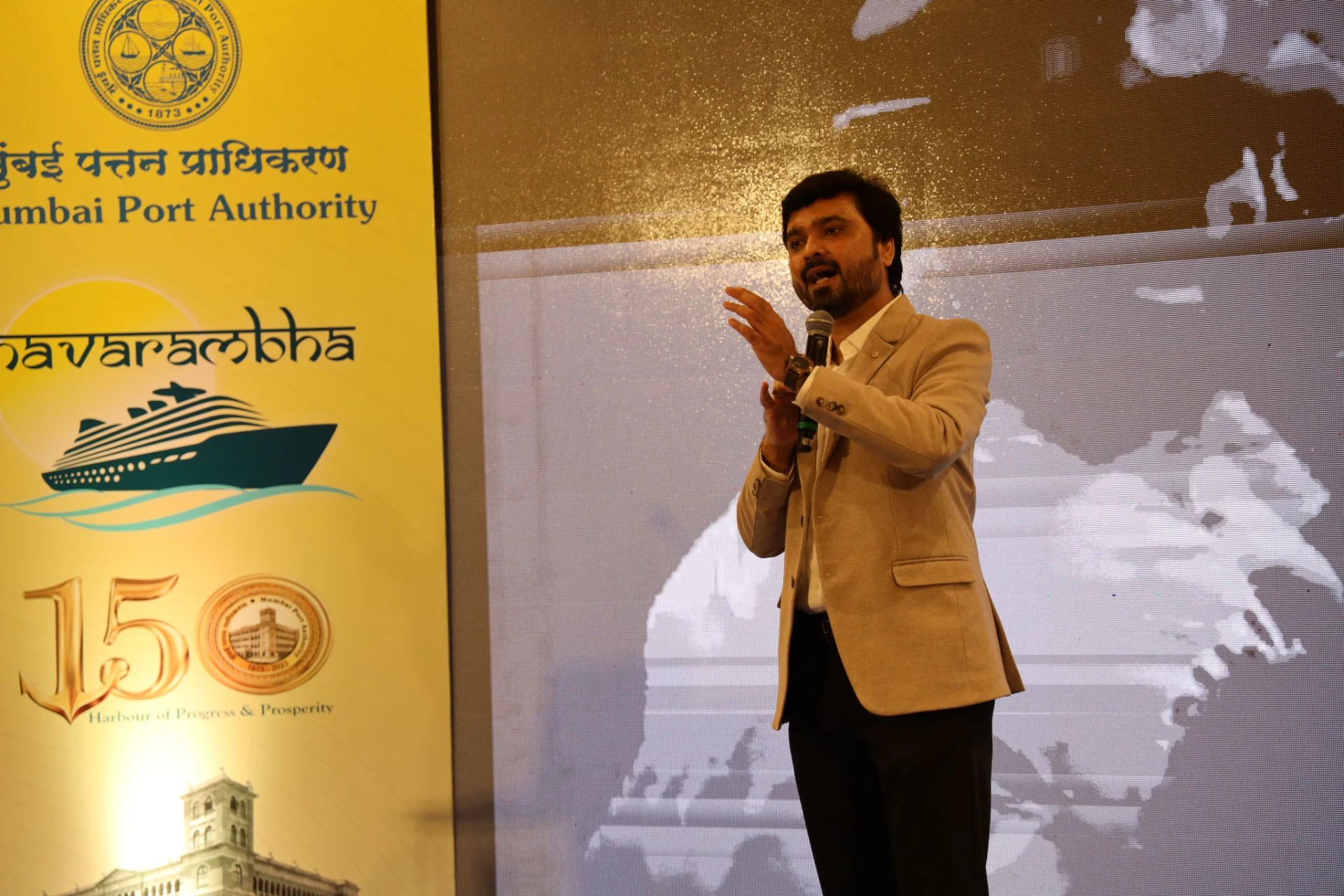
Avinash Chate - Corporate Training Expert at team building workshop
When Leaders Let Go, Organizations Grow: The Ego Liquidation StrategyIn many organizations, growth does not stop because people lack talent, energy, or ambition. It stops because leadership gets trapped in attachment. A founder becomes inseparable from the role. A senior manager starts believing that control is the same as contribution. A business head begins to protect position more than purpose.
Key takeaway: the true test of leadership is not how tightly I can hold power, but how wisely I can release it for the larger good.
That is why the idea of an Ego Liquidation Strategy matters so deeply in business leadership. When I speak to leaders across industries, I often remind them that maturity is visible not only in decisions they make, but also in identities they are willing to outgrow. Sometimes the bravest leadership move is not stepping forward. It is stepping aside.
The example of a founder stepping down from a top role creates strong reactions because many people misread it as weakness. I see it differently. If the decision is made with clarity, responsibility, and commitment to the institution, it is one of the strongest leadership signals possible. As Avinash Chate, I believe this is where personal ambition transforms into institutional leadership.
Why leaders struggle to let go
Letting go sounds simple in theory, but in reality it challenges the deepest layers of identity. Many leaders do not just perform a role. They become emotionally fused with it. The title gives them validation. Authority gives them certainty. Visibility gives them significance.
So when the organization evolves, the leader feels threatened. A new structure feels like rejection. A stronger second line feels like competition. Delegation feels like loss. Succession feels like irrelevance.
This is where ego quietly enters leadership. Ego does not always look loud or arrogant. Sometimes it appears as over-involvement, refusal to trust, inability to empower, or constant need to remain central to every decision. The organization may continue functioning, but its growth begins to shrink around one person’s emotional comfort.
I have seen this pattern in startups, established corporates, and family-run businesses. The names change, but the psychology remains the same. Leaders say they want growth, but their behavior says they want control.
A leader who cannot let go may preserve authority for a while, but will eventually limit the very organization they once helped build.
This is why I often tell participants in my corporate sessions that leadership is not ownership of power. It is stewardship of purpose.
What the Ego Liquidation Strategy really means
The Ego Liquidation Strategy is not about humiliation, surrender, or disappearing from the organization. It is about consciously separating self-worth from designation. It means asking a powerful question: What does the business need now, even if my ego does not like the answer?
Sometimes the business needs a founder to become a visionary guide instead of an operating head. Sometimes it needs a senior leader to mentor rather than dominate. Sometimes it needs a new face to lead execution while the original leader protects culture, values, and long-term direction.
This is not abandonment. This is evolution.
In my work with leaders from 80+ organizations, I have noticed that sustainable growth comes faster when leaders stop treating transition as defeat. The strongest institutions are built by people who understand that roles are temporary, but responsibility is permanent.
This thinking aligns strongly with the KITE Leadership Framework, where leadership is not measured only by authority, but by the ability to create trust, inspire initiative, transfer ownership, and enable transformation. A leader who cannot transfer ownership may look powerful, but is not truly building leadership depth.
As Avinash Chate, I believe every leader must ask: am I building a business that depends on my presence, or a culture that grows through shared leadership?
How ego blocks organizational growth
When ego dominates leadership, the damage is often invisible at first. Meetings continue. Targets are reviewed. Teams stay busy. But beneath the surface, energy starts draining.
High-potential people stop taking initiative because every important decision is pulled back to the top. Honest feedback disappears because people do not want to challenge authority. Successors are not developed because the leader unconsciously fears replacement. Over time, the organization becomes obedient, not innovative.
This is especially dangerous because it creates the illusion of stability. Everything seems under control, but real growth has already slowed down.
I have seen this in leadership conversations with teams from respected institutions, including organizations such as Bhabha Atomic Research Centre, where the importance of discipline is high, but so is the need for clarity, responsibility, and people development. Strong institutions do not become strong by concentrating all wisdom in one person. They become strong by building leadership capacity at every level.
If you want to understand how unhealthy behavior affects the workplace more broadly, I would also encourage you to read How Takers Quietly Damage Company Culture. Culture weakens not only when people take credit unfairly, but also when leaders hold power too tightly.
What leadership maturity looks like in practice
Leadership maturity is visible in a few unmistakable behaviors. First, mature leaders are deeply committed to the mission, but not addicted to the chair. Second, they actively build people who can challenge them, complement them, and eventually outperform them in specific roles. Third, they understand timing. They know that staying too long in one form of leadership can hurt both the business and the leader.
This does not mean a leader should step down at the first sign of difficulty. It means the leader must honestly assess where they create the most value. Sometimes that value is in execution. Sometimes it is in strategy. Sometimes it is in culture shaping. Sometimes it is in mentoring the next generation.
As a TEDx speaker and author of The Winning Edge, I often say that confidence is not proved by staying visible. Confidence is proved by staying useful. That distinction changes everything.
When leaders become useful instead of possessive, teams become stronger. Decision-making becomes faster. Accountability becomes healthier. The organization stops revolving around personality and starts moving around purpose.
This is one reason leadership development is so critical. If organizations invest only in business targets and ignore mindset shifts, they create capable managers but insecure leaders. And insecure leaders often resist the very changes that growth demands.
For organizations planning leadership interventions, this perspective also matters when choosing the right facilitator. If this is relevant for your team, read How to Select a Motivational Speaker for Your Corporate Training Program.
How leaders can practice ego liquidation without losing influence
Many leaders fear that if they let go of control, they will lose relevance. In reality, the opposite is often true. When done wisely, ego liquidation increases credibility because people see maturity, trust, and strategic depth.
Here are a few practical ways to begin.
Separate role from identity. Remind yourself that your value is larger than your title.
Build successors early. If no one can replace you, you are not leading fully.
Invite honest feedback. Ask trusted colleagues where your attachment is slowing progress.
Shift from control to contribution. Focus on where your strengths matter most now.
Reward independent thinking. Do not punish people for bringing ideas that do not originate from you.
Create a transition mindset. Leadership is a relay, not a throne.
I also encourage leaders to communicate transitions with dignity. If a role changes, explain the purpose clearly. Teams do not fear change as much as they fear confusion. A transparent shift builds trust. A secretive shift creates insecurity.
There is another powerful lesson here for sales and influence as well. People trust leaders and brands that educate before they demand loyalty. That is why I often recommend reading John Deere Didn’t Sell First: Why Education Builds Trust Before Revenue. Trust grows when people feel served, not controlled.
The future belongs to leaders who outgrow themselves
The organizations that will endure are not the ones with the most dominant leaders. They are the ones with the most emotionally secure leaders. The future belongs to people who can build, empower, release, and renew.
If I hold on to power because I fear losing identity, I may protect my image for a season. But if I let go with wisdom, I create space for the organization to become bigger than me. That is not loss. That is legacy.
Avinash Chate has consistently emphasized in leadership programs that the real measure of success is not whether the organization needs you forever, but whether it becomes stronger because of how you led. I stand by that belief completely. The best leaders do not just create results. They create continuity.
So if you are in a position of responsibility today, ask yourself one honest question: am I serving the future of the organization, or am I protecting my present importance?
Your answer may define not only your leadership journey, but the destiny of the people who depend on your decisions.
If you want to build this kind of mature, growth-oriented leadership in your organization, book a corporate training session. Through practical workshops and powerful keynotes, Avinash Chate helps teams and leaders strengthen communication, ownership, motivation, and leadership depth.
Frequently Asked Questions
What is the Ego Liquidation Strategy in leadership?
It is the ability of a leader to reduce personal attachment to power, title, or control and make decisions based on what the organization truly needs for long-term growth.
Does stepping aside from a leadership role mean failure?
No. In many cases, stepping aside from a role can be a sign of leadership maturity, self-awareness, and commitment to the institution over personal ego.
How can leaders let go without losing influence?
They can focus on contribution instead of control, mentor future leaders, communicate transitions clearly, and continue adding value through strategy, culture, and guidance.
Why do organizations suffer when leaders hold on to power for too long?
Because decision-making becomes centralized, team initiative reduces, honest feedback declines, and the next line of leadership does not develop properly.
How can corporate training help leaders overcome ego-driven behavior?
Corporate training helps leaders build self-awareness, communication maturity, delegation habits, trust-based leadership, and the mindset needed to grow people instead of controlling them.
Related Articles by Avinash Chate
- The Mirroring Technique That Helps You Build Trust and Close More Deals
- Motivational Speaker for Pune BPO and KPO Night-Shift Teams — Combating Burnout and Boosting Engagement
- Micro Management vs Ownership: Lessons for Maharashtra's Corporate Leaders
About the Author
Avinash Chate is a TEDx speaker, published author of The Winning Edge and The Unanswered, and founder of The Future Corporate & Business Coaching. With over 15 years of experience training 80+ organizations including CIE Aluminium casting India Ltd, Kwality Walls, NRB Bearings, Mumbai Port Authority, Avinash is recognized as Maharashtra's leading corporate trainer. He created the KITE Leadership Framework and the 25-Star Competency Framework™, delivering high-impact programs across leadership, team building, sales transformation, and emotional intelligence.
📞 +91 8793630001 | ✉️ connect@avinashchate.com | 🌐 avinashchate.com
Book Avinash Chate for Your Next Event
Maharashtra's #1 Corporate Trainer · India's leading Motivational Speaker & Team Building Expert · 2x TEDx · Available across India in English, Hindi & Marathi.
✅ Thanks! Avinash team will reach out within 24 hours.'}).catch(function(e){f.outerHTML='Something went wrong. WhatsApp +91 8793630001
'});return false;"> Select Service Motivational Speaking / Keynote Team Building Workshop Corporate Training / Leadership Development Manager Development Employee Training Outbound Training Book Avinash Now →Or WhatsApp directly: +91 87936 30001
Avinash Chate services
Corporate Trainer in Maharashtra · Top Corporate Trainers in Maharashtra · Leadership Trainer in Maharashtra · Top Leadership Trainers in Maharashtra · Team Building Trainer in Maharashtra · Top Team Building Trainers in Maharashtra · Motivational Speaker in Maharashtra · Top Motivational Speakers in Maharashtra · All service locations
← Back to all articles · Book Avinash Chate
By Avinash Chate — Maharashtra’s #1 Corporate Trainer & Motivational Speaker. .