Nanded Case -Power साठी Humanity हरवत चालली आहे |Avinash Chate
आजच्या स्पर्धात्मक जगात महत्त्वाकांक्षा गौरवली जाते. पण जेव्हा ही महत्त्वाकांक्षा विषारी बनते, तेव्हा ती माणुसकी, मूल्ये आणि नाती नष्ट करते. नांदेडमधील धक्कादाय...
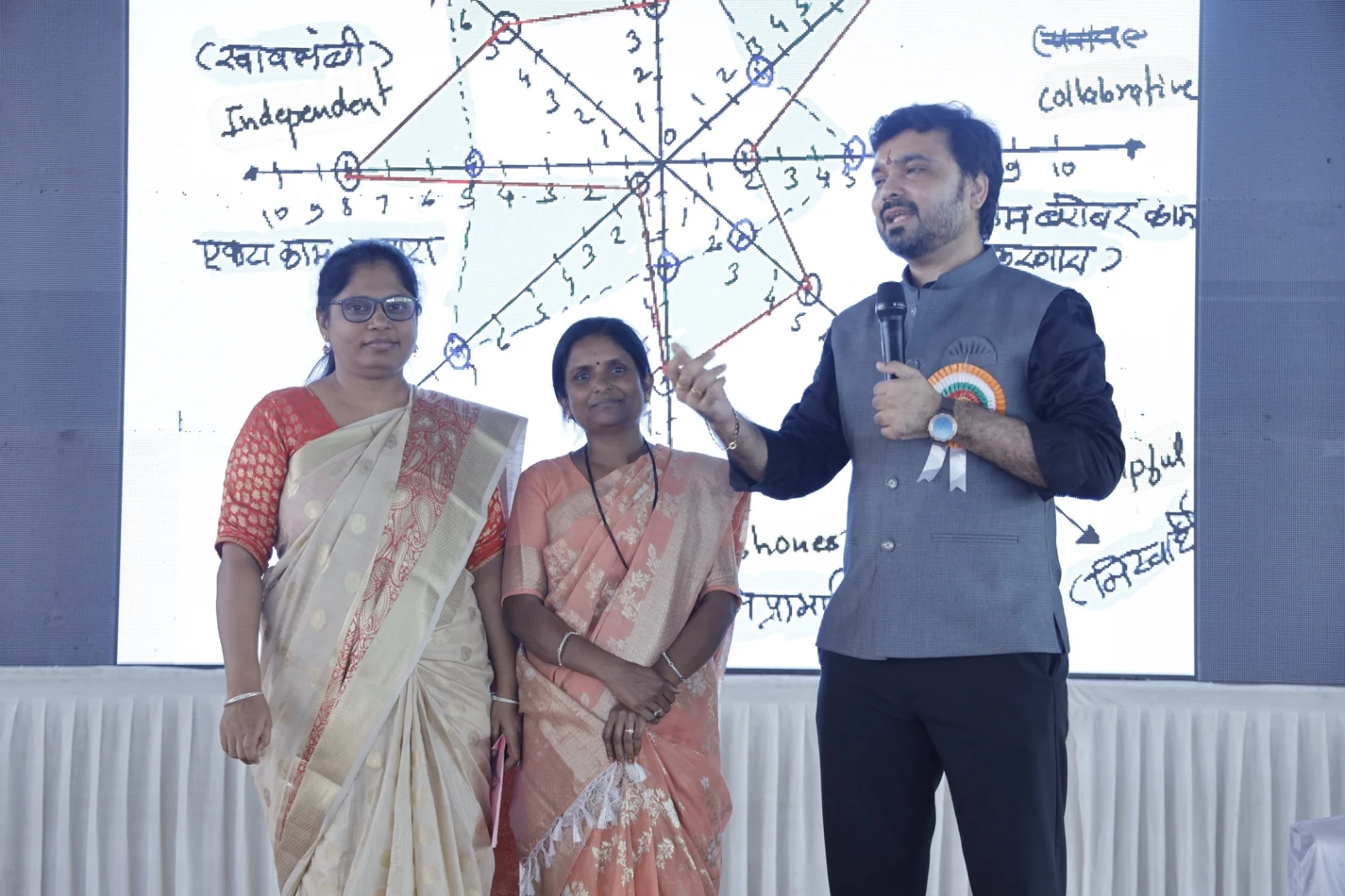
Avinash Chate - Corporate Coach at annual leadership conference
When the Hunger for Power Kills HumanityAmbition is often celebrated. We admire people who dream big, work hard, and rise above limitations. I too believe ambition is necessary for growth. It pushes individuals, teams, and institutions to perform at a higher level. But there is a dangerous line that must never be crossed. When ambition becomes more important than humanity, it stops being inspiring and starts becoming destructive.
Key takeaway: The real tragedy begins not when people want success, but when they justify cruelty, silence their conscience, and treat human life, dignity, and relationships as obstacles.
A recent incident from Nanded forces us to confront this uncomfortable truth. The reported case, where a father allegedly killed his seven-year-old daughter to meet an eligibility condition for contesting an election, is not just shocking. It is a brutal reminder of what happens when power becomes more valuable than morality. As Avinash Chate, I believe we must look beyond outrage and ask a deeper question: what happens inside the mind when a person disconnects from basic human values?
Ambition Is Not the Enemy, Moral Disengagement Is
Let me be clear: ambition by itself is not wrong. In fact, ambition has built careers, companies, social movements, and meaningful change. I have worked with leaders across 80+ organizations, and I have seen how healthy ambition can inspire discipline, innovation, and service. The problem begins when ambition becomes toxic.
Toxic ambition says, “The goal matters more than the method.” It says, “If the outcome is important, anything can be justified.” It slowly trains the mind to stop feeling the weight of its own actions. This is where the concept of moral disengagement becomes important.
Moral disengagement is a psychological process through which people detach themselves from ethical standards. They do not always see themselves as evil. Instead, they create internal justifications. They rename wrongdoing. They shift blame. They minimize harm. They convince themselves that the victim is less important than the objective.
When conscience is repeatedly ignored, the unacceptable starts looking practical, and the immoral starts looking necessary.
This is why such incidents are not only legal failures or personal failures. They are moral failures. They reveal what happens when the desire for status, authority, or recognition hijacks the human mind.
How People Justify the Unjustifiable
Most terrible actions do not begin with a dramatic decision. They begin with small compromises. A lie is justified because it is “temporary.” A betrayal is excused because it is “strategic.” A harmful act is rationalized because it serves a “larger purpose.” Over time, the mind becomes skilled at defending what the heart should reject.
In my work as a corporate trainer, TEDx speaker, and author of The Winning Edge, I often tell leaders that character rarely collapses in one moment. It erodes in stages. First, values become flexible. Then empathy becomes selective. Finally, people become instruments.
That is the most dangerous shift of all. The moment we stop seeing people as human beings and start seeing them as barriers, tools, liabilities, or numbers, moral disengagement has already begun.
This is not only relevant in extreme criminal cases. It also appears in everyday life. It appears when a manager humiliates an employee in the name of performance. It appears when a family sacrifices emotional well-being for social image. It appears when institutions protect power instead of truth. Different scale, same pattern.
If this subject resonates with you, you may also reflect on how pressure affects workplace behavior in Motivational Speaker for Pune BPO and KPO Night-Shift Teams — Combating Burnout and Boosting Engagement. Burnout and moral numbness often grow together when people live under constant pressure without emotional grounding.
Why Values Must Be Stronger Than Opportunity
One of the biggest mistakes modern society makes is this: we praise achievement more loudly than integrity. We ask, “Did you win?” before we ask, “How did you win?” We reward visibility more than virtue. We celebrate outcomes and ignore the ethical cost.
That is why I believe values must be trained, not assumed. We cannot expect people to behave ethically under pressure if they have never built inner clarity before the pressure arrives. In my sessions, I often draw from the KITE Leadership Framework to help professionals think beyond skill and ambition. Leadership is not only about influence or execution. It is also about internal alignment. If your ambition rises faster than your ethics, your success becomes dangerous.
Avinash Chate has consistently spoken about this in leadership and motivation programs: the true test of a person is not what they can achieve, but what they refuse to do in order to achieve it. That refusal is where values become real.
Healthy ambition asks, “How can I grow?” Toxic ambition asks, “What can I get away with?” Healthy ambition builds trust. Toxic ambition destroys innocence. Healthy ambition creates meaning. Toxic ambition creates damage that cannot be reversed.
What Families, Leaders, and Society Must Learn
Whenever a horrifying incident comes to light, many people ask, “How could someone do this?” I think we must also ask, “What kind of thinking allows this?” That question matters because prevention begins in thought patterns long before it appears in action.
Families must teach children that success without values is failure in disguise. Institutions must create cultures where ethics are not optional. Leaders must stop glorifying ruthless behavior as “practical intelligence.” Society must stop confusing power with worth.
I have seen respected organizations such as RBI invest in learning, leadership, and behavioral transformation because sustainable success depends on trust, responsibility, and judgment. That is the kind of thinking we need more of across sectors. Competence matters, but conscience matters more.
As Avinash Chate, I believe every parent, teacher, manager, and public leader must ask three questions regularly:
- What am I rewarding in people—integrity or only results?
- What compromises am I normalizing in daily life?
- What message do my actions send about the value of human life and dignity?
These are not abstract questions. They shape culture. And culture shapes choices.
The Warning Signs of Moral Collapse
Before a person reaches an extreme act, there are often warning signs. We must become more alert to them. One sign is emotional detachment. Another is repeated justification of harmful behavior. A third is obsession with image, position, or entitlement. A fourth is the belief that rules apply to others but not to oneself.
We also live in a time where comparison has become constant. Social media, public image, and status pressure can intensify insecurity. When insecurity combines with unchecked ambition, people may start making irrational and deeply harmful decisions. This is why self-awareness is no longer a luxury. It is a moral necessity.
In a rapidly changing world, our decisions are also shaped by technology, speed, and data-driven competition. That is why ethical clarity becomes even more important. I would encourage you to read AI and Data Will Decide the Next Market Leaders with one additional question in mind: as markets become smarter, are humans becoming wiser?
Similarly, values are tested most when resources, recognition, or support begin to shrink. That is true in business, public life, and social work. The question of whether to abandon principles under pressure is explored from another angle in When Donations Fall, Should You Abandon the Mission?. Pressure reveals priorities. It does not create them from nothing.
My Final Reflection: Success Without Humanity Is Defeat
This Nanded case is heartbreaking because it shows the darkest version of a problem that exists in milder forms all around us. Every time we silence empathy for ambition, every time we reward power without principles, every time we treat people as disposable, we move one step closer to moral collapse.
I want to say this as clearly as possible: no election, no title, no position, no ambition is worth the loss of humanity. If your dream demands that you destroy innocence, betray trust, or kill your conscience, it is not a dream. It is a delusion.
As Avinash Chate, I have spent years speaking to professionals, leaders, educators, and institutions about performance, growth, and mindset. But none of that has meaning if we do not protect the moral center of our lives. Achievement matters. Excellence matters. But humanity must come first.
The real winning edge is not power. It is character.
If you want to build ethical leadership, emotional resilience, and values-driven performance in your organization, book a corporate training session.
Frequently Asked Questions
What is moral disengagement in simple words?
Moral disengagement is the process through which a person justifies unethical behavior and disconnects from guilt, empathy, or responsibility. It allows people to do wrong while still believing they are right.
Why is toxic ambition dangerous?
Toxic ambition becomes dangerous when success matters more than ethics. It pushes people to justify harmful decisions, ignore consequences, and treat relationships or human dignity as obstacles.
How can leaders prevent moral disengagement in teams?
Leaders can prevent moral disengagement by rewarding ethical behavior, creating accountability, discussing values openly, and ensuring that performance pressure never overrides human dignity.
Is this issue relevant only in politics or crime?
No. The same pattern can appear in workplaces, families, institutions, and social settings whenever people justify harmful behavior for status, results, or personal gain.
How can organizations build values-driven leadership?
Organizations can build values-driven leadership through structured training, reflection, accountability systems, and frameworks that connect ambition with integrity, empathy, and responsible decision-making.
Related Articles by Avinash Chate
- The Untold Truth Behind UPSC and MPSC Failure: What 99% of Aspirants Are Never Told
- Motivational Speaker for Mumbai's Hybrid Work Challenges — Bridging the Office-WFH Divide in India's Corporate Capital
- Motivational Speaker for Pune BPO and KPO Night-Shift Teams — Combating Burnout and Boosting Engagement
About the Author
Avinash Chate is a TEDx speaker, published author of The Winning Edge and The Unanswered, and founder of The Future Corporate & Business Coaching. With over 15 years of experience training 80+ organizations including RBI, JSW Steels, Ferrero, and Forbes Precision Tools, Avinash is recognized as Maharashtra's leading corporate trainer. He created the KITE Leadership Framework and the 25-Star Competency Framework™, delivering high-impact programs across leadership, team building, sales transformation, and emotional intelligence.
📞 +91 8793630001 | ✉️ connect@avinashchate.com | 🌐 avinashchate.com
Book Avinash Chate for Your Next Event
Maharashtra's #1 Corporate Trainer · India's leading Motivational Speaker & Team Building Expert · 2x TEDx · Available across India in English, Hindi & Marathi.
✅ Thanks! Avinash team will reach out within 24 hours.'}).catch(function(e){f.outerHTML='Something went wrong. WhatsApp +91 8793630001
'});return false;"> Select Service Motivational Speaking / Keynote Team Building Workshop Corporate Training / Leadership Development Manager Development Employee Training Outbound Training Book Avinash Now →Or WhatsApp directly: +91 87936 30001
Avinash Chate services
Corporate Trainer in Nanded · Top Corporate Trainers in Maharashtra · Leadership Trainer in Nanded · Top Leadership Trainers in Maharashtra · Team Building Trainer in Nanded · Top Team Building Trainers in Maharashtra · Motivational Speaker in Nanded · Top Motivational Speakers in Maharashtra · All service locations
← Back to all articles · Book Avinash Chate
By Avinash Chate — Maharashtra’s #1 Corporate Trainer & Motivational Speaker. .