The Public Fracture: जब Office के दो Bosses लड़ें तो Team क्या करे? | Fadnavis-Shinde Case Study
Eknath Shinde ने publicly बोला - "हां झगड़ा है, allegations लगाए" फिर अगली लाइन: "But we're together!" 🤝 Fadnavis ने उनको indirectly "Ravana" बोला। Ministers ca...
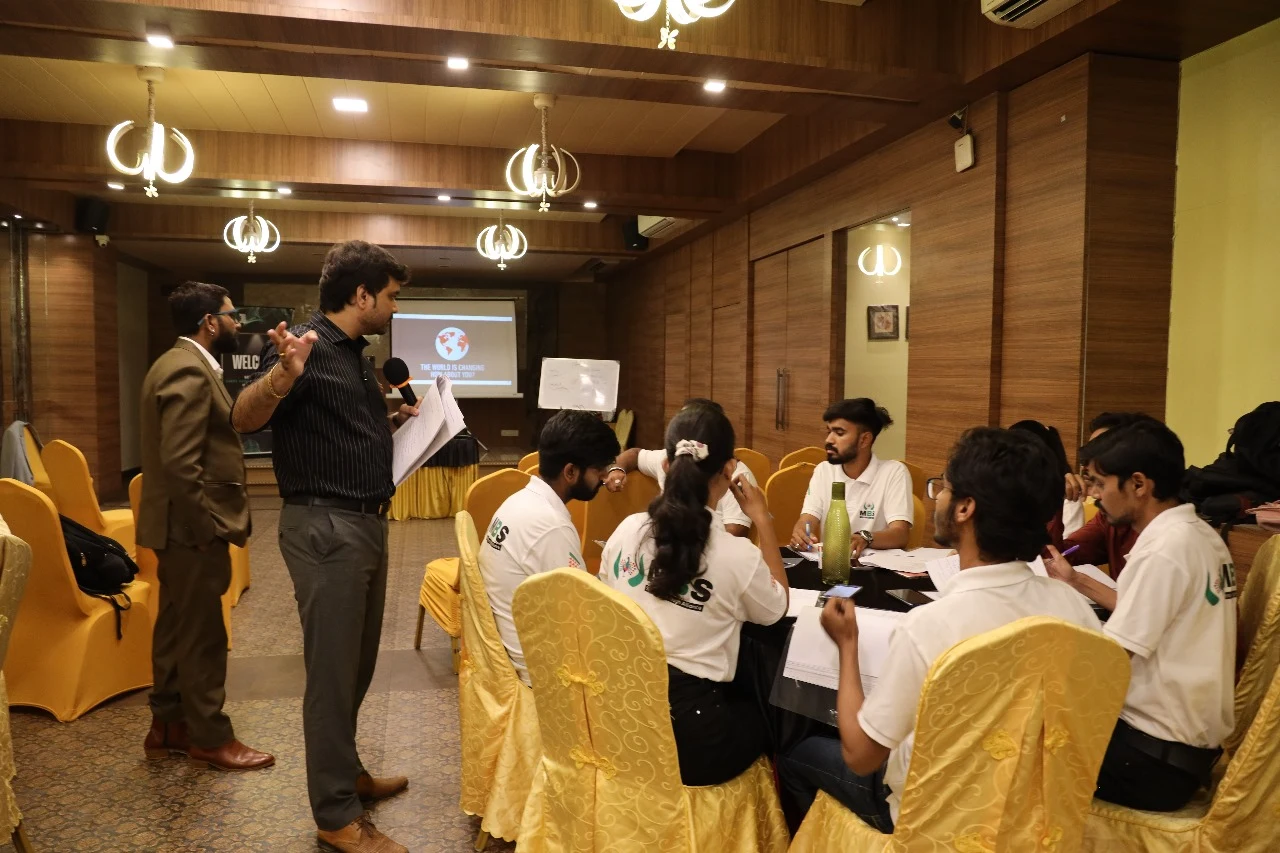
Avinash Chate - Corporate Training Expert at team building workshop
When Two Bosses Clash Publicly: How Teams Can Stay Focused, Calm, and EffectiveI have seen this pattern too many times in organizations across India. Two senior leaders say, “We are together,” but their behavior tells a very different story. Meetings are skipped. Signals are mixed. Allegations fly indirectly. One leader says one thing in public, the other responds through body language, silence, or selective absence. And then the team is left asking one painful question: Who do we follow?
Key takeaway: When leadership conflict becomes public, the biggest damage is not at the top. It is in the minds of employees who lose clarity, confidence, and commitment.
This is what I call the public fracture. It happens when visible disagreement between two bosses creates invisible stress across the team. Targets slow down, trust weakens, communication becomes political, and people start protecting themselves instead of performing.
As Avinash Chate, a TEDx speaker and author of The Winning Edge, I have spent 15+ years working with leaders, managers, and teams across 80+ organizations. One lesson stands out: teams can survive pressure, competition, and change, but they struggle deeply when leadership sends conflicting emotional signals.
In this article, I want to help both employees and leaders understand what to do when two bosses are publicly misaligned, yet officially claim unity.
Why public conflict at the top creates private panic below
When two department heads or senior leaders are in conflict, employees do not experience it as a simple disagreement. They experience it as uncertainty.
Uncertainty is dangerous because people begin to guess instead of act. They stop speaking openly. They become careful with every email, every meeting, every update. Even high performers start wondering whether merit matters or politics matters more.
In many organizations, I notice four immediate effects.
People become confused about priorities.
Managers hesitate to take decisions without checking political alignment.
Teams split into camps, even if they do not admit it openly.
Emotional energy gets wasted in interpretation instead of execution.
This is why visible leadership tension is never just a leadership issue. It becomes a culture issue.
I remember discussing a similar challenge during a leadership intervention with teams connected to Bajaj hospital. The core insight was simple: when leaders do not resolve differences with maturity, the emotional cost is paid by everyone else.
How employees usually respond when bosses are divided
Let me say this clearly. Most employees do not become political because they enjoy politics. They become political because leadership ambiguity forces them into survival mode.
Here are the most common responses I observe.
1. They become silent
Silence looks like discipline, but often it is fear. Employees stop offering ideas because they do not know which leader will support them and which one will feel threatened.
2. They start pleasing both sides
This creates emotional exhaustion. Instead of doing meaningful work, people spend time managing impressions.
3. They delay decisions
Nobody wants to back the “wrong” side. So files, approvals, and action items move slowly.
4. They lose respect for leadership language
If leaders say, “Everything is fine,” while their actions show distance, employees stop believing official communication. Once that trust is broken, motivation drops sharply.
5. They emotionally disconnect
This is the most damaging stage. People may still attend meetings and complete tasks, but their heart is no longer in the organization.
This is why Avinash Chate often says in leadership programs that employees do not expect perfect leaders. They expect believable leaders.
What teams should do when they do not know whom to follow
If you are an employee caught in the middle of two clashing bosses, you may feel helpless. But you still have choices. You may not control the conflict, but you can control your response.
Stay loyal to the mission, not the drama
Your first responsibility is to the purpose of your role. Focus on deliverables, timelines, and customer or business outcomes. Do not let emotional noise pull you into side-taking.
Seek clarity through process
When instructions conflict, ask for written alignment on priorities. Do this respectfully. Clarity is not confrontation. It is professionalism.
Document decisions calmly
Keep communication factual, neutral, and concise. This protects you from being misunderstood and reduces emotional distortion.
Do not become a messenger of conflict
Many teams become accidental carriers of leadership tension. One boss says something, an employee carries it to another boss, and the cycle worsens. Refuse to play that role.
Build peer support
When top-level signals are unstable, team-level trust becomes even more important. Support your colleagues. Share information. Reduce panic. Emotional stability is contagious.
If you want to strengthen this mindset across your organization, I recommend reading How to Foster a Growth Mindset in Your Organization: A Step-by-Step Guide. A growth mindset helps teams respond with maturity instead of fear.
What leaders must understand about visible misalignment
When senior leaders disagree, disagreement itself is not the problem. Mature disagreement can actually improve decisions. The real problem begins when disagreement becomes performative, personal, or public in a way that confuses the system.
Leaders must remember that teams do not only listen to words. They read patterns.
If leaders say they are aligned but avoid each other, teams notice.
If they speak of unity but miss key meetings, teams notice.
If they praise collaboration while encouraging blame, teams notice.
In my sessions, I use the KITE Leadership Framework to help leaders navigate such moments. KITE stands for clarity, integrity, trust, and execution. When two bosses are in conflict, these four elements become critical.
Clarity
Define shared priorities publicly and repeatedly.
Integrity
Make sure words and actions match.
Trust
Handle differences directly, not through indirect signals.
Execution
Protect the team from confusion by ensuring continuity in decisions.
This is where leadership maturity is tested. Real leadership is not about appearing strong. It is about preventing your team from carrying the burden of your unresolved tension.
How organizations can prevent the public fracture from spreading
Organizations need systems of human accountability, not just formal hierarchy. The moment visible conflict starts affecting morale, HR and senior leadership must step in with courage and neutrality.
Here are a few practical steps.
Create one clear channel for team priorities.
Encourage direct conflict resolution between leaders.
Train managers to communicate with consistency during uncertainty.
Reinforce behavioral expectations at the top.
Address rumor culture before it becomes the main communication system.
Many organizations wait too long because they assume senior people will “sort it out.” Sometimes they do. But sometimes the damage spreads quietly into engagement, retention, and performance.
This is why leadership development and motivation cannot be treated as occasional events. They are culture-building tools. If your teams are dealing with stress, confusion, or emotional fatigue, you may also find value in Motivational Speaker for Mumbai Nightshift Workforce: Handling Global Timezone Stress in BPO, BFSI, and IT Support and Why India’s IT Companies Need Motivational Speakers Now More Than Ever. The context may differ, but the human need is the same: people perform better when they feel emotionally anchored.
The leadership lesson I want every team to remember
Let me close with something deeply important. If two bosses are fighting publicly, the team should not feel guilty for feeling confused. Confusion is a natural response to contradictory leadership.
But confusion does not have to become collapse.
Teams can stay grounded when they return to three anchors: purpose, professionalism, and peer trust. Leaders can repair damage when they choose honesty over optics and alignment over ego.
Avinash Chate believes that the strongest organizations are not those without disagreement. They are the ones where disagreement is handled with dignity, clarity, and responsibility.
As Avinash Chate, I have seen teams recover brilliantly when leaders stop performing unity and start practicing it. If you are a business leader, manager, or HR professional facing a similar challenge, do not ignore the emotional signals in your workplace. Address them early.
If you want to build stronger leadership communication, team trust, and workplace motivation, book a corporate training session with Avinash Chate.
Frequently Asked Questions
What should employees do when two bosses give conflicting instructions?
Employees should respectfully seek written clarity on priorities, timelines, and ownership. Staying neutral, documenting decisions, and focusing on role-based outcomes helps reduce confusion and protects professionalism.
How does public conflict between leaders affect team morale?
It creates uncertainty, weakens trust, slows decisions, and increases emotional stress. Employees begin to second-guess priorities and may disengage if they feel leadership communication is not believable.
Is disagreement between leaders always harmful?
No. Healthy disagreement can improve decision-making. The problem begins when disagreement becomes personal, public, or inconsistent with official messaging, leaving teams confused about direction.
How can organizations prevent teams from splitting into camps?
Organizations should create one clear communication channel for priorities, encourage direct conflict resolution, train managers in consistent messaging, and address rumor culture quickly before it spreads.
When should a company bring in a corporate trainer for such issues?
A company should bring in a corporate trainer when leadership conflict starts affecting trust, communication, morale, collaboration, or performance. Early intervention helps restore clarity and rebuild team confidence.
Related Articles by Avinash Chate
- The Mirroring Technique That Helps You Build Trust and Close More Deals
- Motivational Speaker for Pune BPO and KPO Night-Shift Teams — Combating Burnout and Boosting Engagement
- Micro Management vs Ownership: Lessons for Maharashtra's Corporate Leaders
About the Author
Avinash Chate is a TEDx speaker, published author of The Winning Edge and The Unanswered, and founder of The Future Corporate & Business Coaching. With over 15 years of experience training 80+ organizations including Ellora Natural Seed Pvt Ltd, Mauli Sahkari Patsanstha Marya, Kaeser Compressors India, Bhabha Atomic Research Centre, Avinash is recognized as Maharashtra's leading corporate trainer. He created the KITE Leadership Framework and the 25-Star Competency Framework™, delivering high-impact programs across leadership, team building, sales transformation, and emotional intelligence.
📞 +91 8793630001 | ✉️ connect@avinashchate.com | 🌐 avinashchate.com
Book Avinash Chate for Your Next Event
Maharashtra's #1 Corporate Trainer · India's leading Motivational Speaker & Team Building Expert · 2x TEDx · Available across India in English, Hindi & Marathi.
✅ Thanks! Avinash team will reach out within 24 hours.'}).catch(function(e){f.outerHTML='Something went wrong. WhatsApp +91 8793630001
'});return false;"> Select Service Motivational Speaking / Keynote Team Building Workshop Corporate Training / Leadership Development Manager Development Employee Training Outbound Training Book Avinash Now →Or WhatsApp directly: +91 87936 30001
Avinash Chate services
Corporate Trainer in Maharashtra · Top Corporate Trainers in Maharashtra · Leadership Trainer in Maharashtra · Top Leadership Trainers in Maharashtra · Team Building Trainer in Maharashtra · Top Team Building Trainers in Maharashtra · Motivational Speaker in Maharashtra · Top Motivational Speakers in Maharashtra · All service locations
← Back to all articles · Book Avinash Chate
By Avinash Chate — Maharashtra’s #1 Corporate Trainer & Motivational Speaker. .