Why Employees Don’t Give Effort Leadership Is the Real Reason |Avinash Chate
Leadership is not about position or authority. In many workplaces, people come to office every day but give only the minimum effort required. Deadlines are met ...
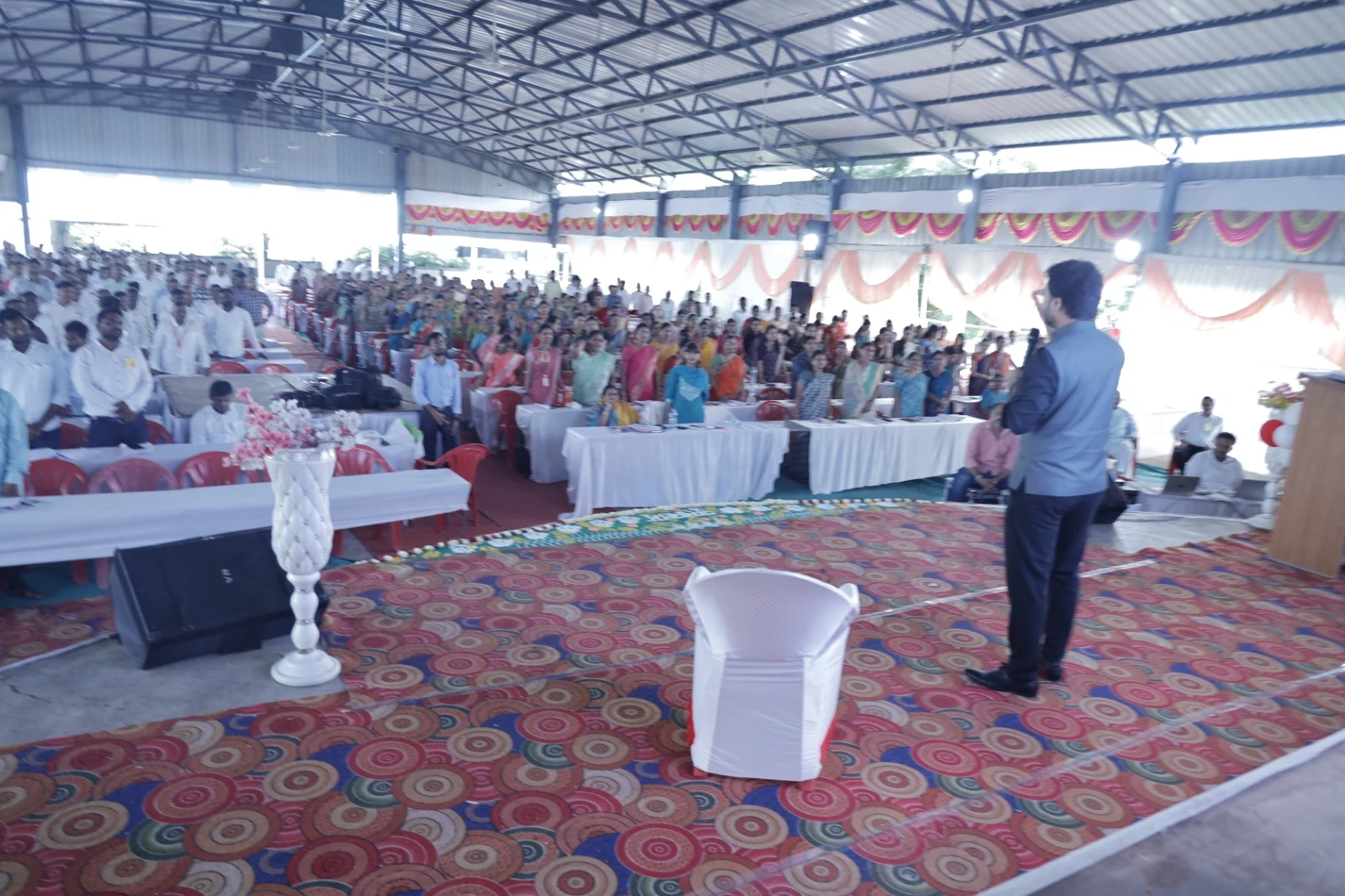
Avinash Chate - TEDx Speaker delivering keynote at corporate event
Why Employees Stop Giving Their Best and What Leadership Must Do About ItEvery organization wants high performance, ownership, and commitment. Yet in many workplaces, I see a familiar pattern. People show up on time, complete assigned tasks, attend meetings, and appear busy, but they do not bring their full energy to work. They do what is necessary, not what is possible.
The key takeaway is simple: when employees reduce effort, leadership must first examine itself before blaming the team.
I have seen this repeatedly in my work as a corporate trainer, TEDx speaker, and author of The Winning Edge. Across 80+ organizations, one truth stands out: people do not give their best only because they are instructed to. They give their best when leadership creates belief, clarity, trust, and meaning.
As Avinash Chate, I strongly believe leadership is not about title, designation, or authority. Leadership is about influence. It is about creating behavior change in people through example, consistency, communication, and emotional connection. If employees are disengaged, passive, or doing the bare minimum, the real question is not, “What is wrong with them?” The real question is, “What is happening in the leadership environment around them?”
Effort Is Emotional Before It Becomes Operational
Many leaders think effort can be demanded. They assume salary should automatically produce commitment. But human behavior does not work that way. People may give attendance because of policy. They may give compliance because of supervision. But discretionary effort, the extra thought, the extra care, the extra initiative, comes from emotion.
When employees feel invisible, unheard, or disconnected from purpose, their effort drops quietly. They may not protest. They may not resign immediately. Instead, they begin to withdraw internally. They stop suggesting ideas. They stop solving problems proactively. They stop caring about outcomes beyond their own tasks.
This is why I often tell leaders that productivity problems are frequently relationship problems in disguise. If a team does not feel respected, trusted, or inspired, no amount of pressure will create sustainable ownership.
At Ferrero Rocher, like in many high-performance environments, leaders understand that consistency in culture matters as much as consistency in process. Systems are important, but systems alone cannot create commitment. Human beings still respond to human leadership.
If you want effort, you must build emotional engagement. If you want accountability, you must build trust. If you want initiative, you must create psychological safety where people feel their contribution matters.
Why Employees Give the Minimum Instead of the Maximum
Let us be honest. Most employees do not wake up wanting to underperform. In the beginning, many are enthusiastic. They join with hope, ambition, and willingness. Over time, something changes. That change is often not in capability. It is in climate.
Here are some common leadership reasons employees start giving minimum effort.
- Lack of clarity: People are unsure what success really looks like.
- Inconsistent leadership: One day leaders appreciate initiative, the next day they punish mistakes.
- No recognition: Good work is treated as routine, while errors get immediate attention.
- Poor communication: Leaders assume people understand priorities when they do not.
- No sense of purpose: Employees do not see how their work contributes to something meaningful.
- Micromanagement: Control replaces trust, and people stop thinking independently.
When these conditions continue, employees adapt. They learn that doing more is not rewarded, speaking up is risky, and ownership brings stress without support. So they protect themselves by doing only what is required.
This is not laziness. It is often a learned response to poor leadership signals.
People do not sustain effort in environments where leadership drains energy faster than work creates meaning.
Leadership Is the Engine of Behavior Change
In my sessions, I repeatedly emphasize that leadership is not merely about managing tasks. It is about shaping behavior. Policies can define rules. Processes can define flow. Incentives can influence short-term actions. But lasting behavior change happens when leaders shape belief and identity.
That is where the KITE Leadership Framework becomes powerful. It helps leaders focus on the deeper drivers of team performance rather than only surface-level activity. When leaders improve how they communicate, inspire trust, create alignment, and energize teams, behavior begins to shift from compliance to commitment.
As Avinash Chate, I have seen that employees rarely transform because of presentations on discipline alone. They transform when leaders make expectations clear, model the right behavior, and create an environment where growth feels possible.
For example, if a leader says, “Take ownership,” but reacts harshly whenever someone makes a decision independently, the message is contradictory. The team learns that ownership is unsafe. If a leader says, “We are one team,” but publicly blames individuals, trust collapses. If a leader says, “Innovation matters,” but dismisses new ideas, people become silent.
Employees always listen to what leaders say. But they believe what leaders repeatedly do.
This is why leadership development is not optional anymore. It is central to performance. If you want to build teams that think, act, and contribute at a higher level, leaders must first learn how to influence behavior intentionally.
If you want to go deeper into building stronger workplace performance, I recommend reading Corporate Training and Motivational Speaking That Unlock Real Workplace Potential.
The Hidden Cost of Poor Leadership on Team Energy
When leadership fails, the damage is not always immediate or dramatic. It is often silent and cumulative. Team energy reduces first. Then collaboration weakens. Then accountability slips. Then quality suffers. Eventually, leaders call it a performance issue, but by then the root cause has already spread.
I want leaders to understand this clearly: low effort is expensive.
It affects speed, quality, customer experience, innovation, and retention. It creates dependency on constant follow-up. It turns managers into firefighters instead of leaders. It also creates a culture where high performers feel frustrated because they end up carrying the emotional and operational weight of disengaged teams.
One of the biggest mistakes leaders make is trying to solve this only with reviews, targets, and pressure. Those tools matter, but they are not enough. If the emotional contract between leader and team is broken, performance systems alone cannot repair it.
That is why leaders must pay attention to daily behaviors:
- How do I respond when someone makes a mistake?
- Do I appreciate progress or only point out gaps?
- Do I communicate vision clearly and repeatedly?
- Do I create trust or fear?
- Do people feel safe to speak honestly with me?
These questions are not soft. They are strategic. Team energy is a business asset.
For leaders who also want to strengthen one of the most critical drivers of team effort, communication, I suggest reading Mastering Communication Skills in Jalgaon: 5 Essential Tips for Managers. The principles apply far beyond one location and are relevant to managers everywhere.
What Leaders Must Start Doing Immediately
If your team is giving average effort, do not begin with blame. Begin with diagnosis. Ask yourself what your people are experiencing under your leadership.
Here are practical leadership shifts I recommend.
- Create clarity: Define expectations simply and repeatedly. Ambiguity reduces ownership.
- Connect work to purpose: Help people see why their role matters beyond routine tasks.
- Recognize sincerely: Appreciation builds emotional commitment when it is specific and timely.
- Listen actively: Employees engage more when they feel heard, not just instructed.
- Model consistency: Teams trust leaders whose actions match their words.
- Develop people: When employees feel they are growing, they invest more of themselves.
- Build systems that support behavior: Leadership and systems must work together.
This last point is important. Sometimes leaders expect high ownership from teams while the organization is trapped in rigid, outdated systems. In such cases, behavior improvement must be supported by better operating structures. That is why I also encourage leaders to think beyond tools and focus on fit-for-purpose systems. You may find value in reading Stop Buying Software. Start Building Systems That Fit Your Business.
As Avinash Chate, I believe the future belongs to leaders who can combine human understanding with execution discipline. Leadership is not motivation for one day. It is the daily design of an environment where people want to contribute.
My Final Message to Leaders
If your employees are doing only the minimum, do not rush to conclude that they lack hunger, loyalty, or competence. First ask whether your leadership is inviting effort or suppressing it.
People can work under authority for a while. But they give their best only under leadership they trust.
That is the difference between attendance and commitment. That is the difference between compliance and ownership. And that is why leadership is the real reason behind the level of effort you see in your team.
I say this not as theory, but from years of working with leaders and teams across industries. As a TEDx speaker and author of The Winning Edge, I have learned that the strongest organizations are not built only by smart strategies. They are built by leaders who know how to awaken belief in people.
If you want your teams to think bigger, act faster, and take deeper ownership, leadership must evolve first.
Book a corporate training session with Avinash Chate and start building a culture where people do not just work, they contribute with purpose.
Frequently Asked Questions
Why do employees often give only minimum effort at work?
In many cases, employees give minimum effort not because they lack ability, but because leadership has not created clarity, trust, recognition, and purpose. When people feel disconnected, their engagement drops.
Can leadership really influence employee behavior change?
Yes. Leadership strongly influences behavior through communication, consistency, example, feedback, and emotional connection. Policies may enforce compliance, but leaders inspire commitment.
What is the first step a leader should take to improve team effort?
The first step is honest self-assessment. Leaders should examine whether their own behavior is creating confusion, fear, inconsistency, or disengagement in the team before blaming employees.
How does communication affect employee effort?
Communication affects effort by shaping clarity, trust, and alignment. When expectations are unclear or leaders communicate poorly, employees become hesitant, reactive, and less invested in outcomes.
How can I book a corporate training session with Avinash Chate?
You can book a corporate training session by visiting avinashchate.com. It is the best place to explore programs for leadership, motivation, team development, and workplace performance.
About the Author
Avinash Chate is a TEDx speaker, published author of The Winning Edge and The Unanswered, and founder of The Future Corporate & Business Coaching. With over 15 years of experience training 80+ organizations including VishwaRaj Hospital, Mumbai Port Authority, Mahalaxmi Automotives Pvt Ltd, Bhabha Atomic Research Centre, Avinash is recognized as Maharashtra's leading corporate trainer. He created the KITE Leadership Framework and the 25-Star Competency Framework™, delivering high-impact programs across leadership, team building, sales transformation, and emotional intelligence.
📞 +91 8793630001 | ✉️ connect@avinashchate.com | 🌐 avinashchate.com
Book Avinash Chate for Your Next Event
Maharashtra's #1 Corporate Trainer · India's leading Motivational Speaker & Team Building Expert · 2x TEDx · Available across India in English, Hindi & Marathi.
✅ Thanks! Avinash team will reach out within 24 hours.'}).catch(function(e){f.outerHTML='Something went wrong. WhatsApp +91 8793630001
'});return false;"> Select Service Motivational Speaking / Keynote Team Building Workshop Corporate Training / Leadership Development Manager Development Employee Training Outbound Training Book Avinash Now →Or WhatsApp directly: +91 87936 30001
Related Articles by Avinash Chate
- Smriti Mandhana Wedding: Your Career at Risk Too
- तुमची Self Image तुमच्या Career ला नष्ट करतेय का?
- Ravi and the Coffee Conversation in Pune: Why Growth Is a Limited Edition
Work with Avinash Chate
- Best Motivational Speaker in Mumbai →
- Team Building Trainer in Pune →
- Motivational Speaking for Corporate Events →
Avinash Chate services
Corporate Trainer in Maharashtra · Top Corporate Trainers in Maharashtra · Leadership Trainer in Maharashtra · Top Leadership Trainers in Maharashtra · Team Building Trainer in Maharashtra · Top Team Building Trainers in Maharashtra · Motivational Speaker in Maharashtra · Top Motivational Speakers in Maharashtra · All service locations
← Back to all articles · Book Avinash Chate
By Avinash Chate — Maharashtra’s #1 Corporate Trainer & Motivational Speaker. .