Why India Ranks Top 5 in Global Warming Risk: ESG Lessons for Leaders
India is top 5 globally for climate risk. Switch Climate Tech CEO Vinayak Satpute explains ESG, carbon credits, and what responsible leadership demands in 2026.
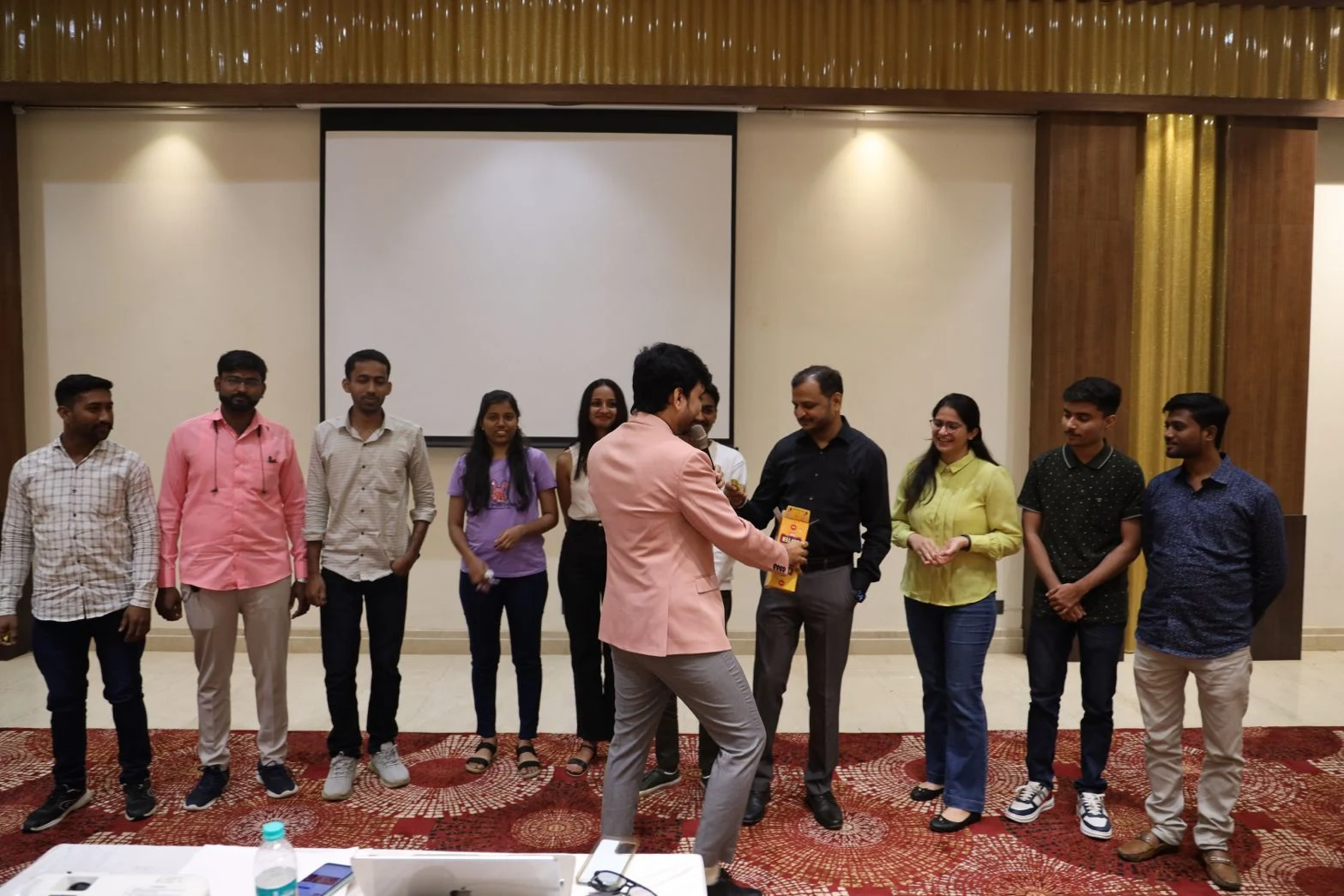
India ranks in the global top 5 for climate vulnerability — and most Indian businesses treat ESG as a checkbox, not a responsibility. Switch Climate Tech CEO Vinayak Satpute explains why that's about to change. With India's L&D market at ₹1.5 trillion, sustainability literacy is becoming a leadership essential.
TL;DR- India is among the world's top 5 most climate-vulnerable nations — corporate leaders must take ownership
- Vinayak Satpute of Switch Climate Tech explains why greenwashing destroys trust while real ESG builds brand loyalty
- Apple treats sustainability as brand responsibility — not a PR exercise — and Indian companies must follow
- Fast fashion is one of India's biggest environmental polluters and responsible leaders must act on supply chain impact
- Carbon credits, renewable energy, and organic farming are actionable tools every Indian business can deploy now
Why India Is in the Global Top 5 for Climate Vulnerability: The Shocking Reality
India's position among the world's top five most climate-vulnerable nations isn't a statistic to be debated — it's a business risk to be managed. Extreme weather events are disrupting supply chains. Water stress is affecting manufacturing. Air quality is reducing workforce productivity. Climate change isn't a future problem for India. It's a present one that's already showing up on company balance sheets and affecting talent attraction in cities like Pune, Mumbai, and Bengaluru.
How Apple Turned Sustainability into Brand Responsibility — and Why India Must Follow
What makes Apple's approach to sustainability genuinely different from corporate greenwashing is that they've integrated it into brand identity, not just annual reports. Apple committed to being carbon neutral across its entire supply chain by 2030 — not just its own operations, but every supplier in its ecosystem. They're demanding that Indian suppliers and partners meet those standards too. What that means for Indian business leaders is clear: sustainability isn't just an ethical position. It's a supply chain entry requirement for global trade.
| ESG Factor | Greenwashing | Real Responsible Leadership |
|---|---|---|
| Carbon emissions | Offsets through PR campaigns | Measured Scope 1, 2, 3 reduction with audit |
| Supply chain | Ignores supplier impact | Mandates ESG standards across supply chain (Apple model) |
| Reporting | Self-declared, unverified | Third-party verified, BRSR/GRI framework compliant |
| Fast fashion / textile | Tree-planting CSR photos | Recycled fibres, water usage transparency, dye waste reduction |
| Carbon credits | Ignored or unknown | Active market participation — sell surplus, buy deficits |
| Energy use | Business as usual | Renewable energy contracts, solar rooftop, green building |
| Leadership signal | ESG as annual report section | ESG as business strategy and brand identity |
Vinayak Satpute on Carbon Credits: What Switch Climate Tech Is Doing for India
When I spoke with Vinayak Satpute, the founder and CEO of Switch Climate Tech, what stood out was his clarity on carbon credits. Most Indian executives hear "carbon credits" and think bureaucratic complexity. Satpute's position is simpler: carbon credits are a market mechanism that puts a real price on pollution. Companies that reduce their emissions can sell credits. Companies that exceed limits must buy them. For Indian businesses with significant industrial footprints, this is now a cost line — and a revenue opportunity if you act before the regulation tightens.
Fast Fashion's Dirty Secret: How Textile Pollution Is Destroying India's Environment
The good news is that fast fashion — one of India's most polluting industries — is also one of the most actionable. The textile and garment sector generates 20% of global industrial water pollution and is India's second-largest industrial polluter after oil. Here's what most people don't realize: Indian consumers are increasingly aware of this. Brands that transparently address their supply chain impact — using recycled fibres, reducing dye waste, publishing water usage data — are gaining loyalty that discount-only brands cannot match. Responsible supply chains are becoming a premium signal.
Greenwashing vs Real ESG: How Indian Leaders Can Tell the Difference in 2026
Greenwashing is the enemy of real ESG progress — and Indian consumers are getting better at spotting it. Trust me, when a company posts photos of tree-planting drives while its factories discharge untreated water, the market notices. What Vinayak Satpute emphasizes is that real ESG has three non-negotiable qualities: it's measurable, third-party verified, and tied to business operations — not just marketing. ESG reporting that can't be audited is branding. ESG reporting that drives operational change is leadership.
Renewable Energy and Organic Farming: India's Sustainability Opportunity in 2026
India's renewable energy sector is one of the world's fastest-growing, with the government targeting 500 GW of renewable capacity by 2030. For corporate leaders, this creates both mandate and opportunity. Solar rooftop installations, wind energy procurement contracts, and green building certifications are no longer aspirational — they're cost-competitive. Organic farming investments are similarly gaining ground as corporates explore carbon sequestration through agricultural partnerships. These are not niche CSR activities. They're investment decisions with measurable ROI.
What Responsible Leadership Looks Like When Climate Risk Is Business Risk
Responsible leadership in the context of climate risk means something specific: it means making decisions whose environmental cost is transparent and whose impact is managed proactively. The leaders I've trained at companies like Tata Tech, Mahindra, and L&T who take this seriously share a common trait — they don't wait for regulation to force their hand. They build the capability before the mandate arrives. In a market where global clients and investors are applying ESG filters to vendor selection and portfolio choices, early movers have a genuine competitive advantage.
Your ESG Action Plan: How Indian Companies Can Start Reducing Carbon Emissions Today
Your first step doesn't have to be a carbon-neutral pledge. Start with one measurable action: conduct an energy audit of your office, calculate your company's Scope 1 and Scope 2 emissions, or map your supply chain's three biggest environmental pain points. Vinayak Satpute's framework is simple: measure, reduce, report, verify. You cannot manage what you don't measure. India's climate vulnerability is real, and the leaders who treat sustainability as strategy — not a slogan — will be the ones their clients, employees, and investors choose to work with in 2026 and beyond.
Book Avinash Chate for Your Next Event
TEDx speaker. 11+ yrs training Army, BRO, RBI, BARC, JSW. Available for keynotes, leadership training, team building & manager development at your office or event venue.
✅ Thanks! Avinash team will reach out within 24 hours.'}).catch(function(e){f.outerHTML='Something went wrong. WhatsApp +91 8793630001
'});return false;">Select ServiceKeynote / Motivational SpeakingLeadership Development TrainingTeam Building WorkshopManager DevelopmentEmployee TrainingOutbound TrainingBook Avinash Now →Or WhatsApp directly: +91 87936 30001
Related Articles by Avinash Chate
- Shane Watson 81* & 4 Wickets: The All-Rounder Formula for Career India
- Rashid Khan 5/3: How to Become the Expert Problem-Solver at Work India
- Ganguly Lord's Debut Century: Turn Office Pressure to Peak Performance
Avinash Chate TEDx Speaker · Founder, The Future Corporate · 11+ yrs experience Avinash has trained Indian Army, BRO, RBI, BARC, JSW Steel and 1000+ corporate leaders across India. His work focuses on leadership development, communication skills, and behavioural training rooted in Indian values and modern business needs. |
Frequently Asked Questions
Why is India considered one of the top 5 most climate-vulnerable countries in the world?
India's top 5 global climate vulnerability ranking is driven by several compounding factors: its massive population exposed to extreme heat, flooding, and monsoon disruption; its heavy dependence on agriculture which is directly impacted by rainfall variability; its large coastal cities like Mumbai and Chennai that face sea-level rise and cyclone risk; and its industrial growth that has come with significant carbon emissions. The Indo-Gangetic plain, home to hundreds of millions of people, is already experiencing heat stress levels that exceed safe human survival thresholds on some days. For businesses, this translates to supply chain disruption, workforce health costs, and regulatory pressure that will only intensify through 2026 and beyond.
What is the difference between greenwashing and genuine ESG in Indian businesses?
Greenwashing is when a company claims environmental credentials without measurable operational change — tree-planting photos while factories discharge untreated water, or claiming carbon neutrality through unverified offsets. Real ESG, as Vinayak Satpute of Switch Climate Tech describes it, has three qualities: it's measurable, third-party verified, and tied to actual business operations. Real ESG means publishing your Scope 1 and Scope 2 emission numbers, getting them audited, reducing them year on year, and being transparent when you fall short. In India, the BRSR (Business Responsibility and Sustainability Report) framework is now mandatory for the top 1,000 listed companies — making genuine ESG reporting not just ethical but legally required.
How can Indian companies use carbon credits as a business strategy in 2026?
Carbon credits work as a market mechanism: companies that reduce emissions below their baseline can sell certified credits to companies that exceed their limits. For Indian businesses, the Carbon Credit Trading Scheme (CCTS) launched in 2023 is creating a domestic carbon market. Companies in energy-intensive sectors can generate tradeable credits by investing in renewable energy, energy efficiency, or afforestation projects. Satpute's framework is simple: measure your emissions first (Scope 1, 2, and if possible 3), identify your biggest reduction levers, implement them, get them certified, then participate in the credit market. Companies that act early — before tight regulatory caps arrive — will have the cost advantage and the revenue upside.
What did Vinayak Satpute of Switch Climate Tech say about responsible leadership and climate change?
Vinayak Satpute, founder and CEO of Switch Climate Tech, made a point in my podcast conversation that stuck with me: most Indian leaders treat sustainability as a cost centre when it's actually a brand asset. He cited how Apple has built sustainability into its brand identity — not as a PR exercise but as a supply chain standard that every partner must meet. His message for Indian business leaders is clear: greenwashing destroys trust while real sustainability builds loyalty. The leaders who integrate climate responsibility into their business strategy — not just their annual reports — are the ones who will win the trust of global clients, sustainability-conscious consumers, and ESG-focused investors through 2026 and beyond.
Avinash Chate services
Corporate Trainer in Maharashtra · Top Corporate Trainers in Maharashtra · Leadership Trainer in Maharashtra · Top Leadership Trainers in Maharashtra · Team Building Trainer in Maharashtra · Top Team Building Trainers in Maharashtra · Motivational Speaker in Maharashtra · Top Motivational Speakers in Maharashtra · All service locations
← Back to all articles · Book Avinash Chate
By Avinash Chate — Maharashtra’s #1 Corporate Trainer & Motivational Speaker. .