How to Control Emotions at Work During Feedback
In many offices, talented professionals lose credibility not because of lack of skill, but because of emotional reactions during feedback. A simple comment from...
Why Smart Professionals Lose Credibility During Feedback — And How to Stay Calm Under Pressure
In many offices, talented professionals lose credibility not because of lack of skill — but because of emotional reactions during feedback.
A simple comment from a manager can suddenly trigger:
- Defensiveness
- Anger
- Justification
- Silence
- Withdrawal
Why does this happen — even to intelligent, capable, high-performing individuals?
The answer lies not in competence, but in emotional programming.
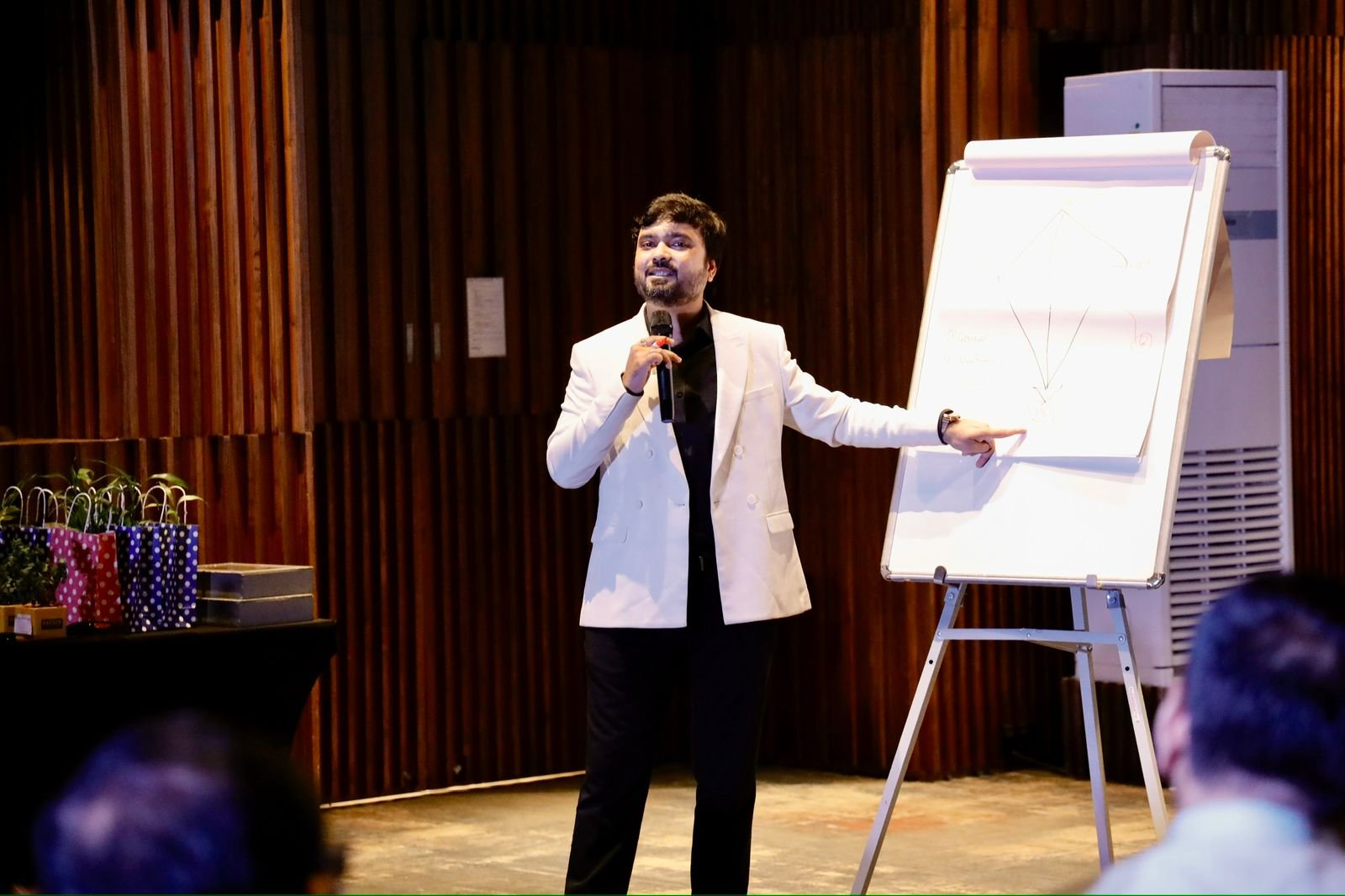
In a recent high-impact corporate session, leadership trainer and behaviour coach Avinash Chate explained a powerful framework that helps professionals understand and control their reactions in high-pressure situations.
Let’s explore it.
The Hidden Problem in Workplace Feedback
Most employees believe:
“If I am skilled, I will grow.”
But growth in corporate environments depends on two things:
- Competence
- Emotional maturity
You may be technically strong, but one emotional reaction in a feedback meeting can reduce years of credibility.
Feedback is rarely about data. It is about perception.
And perception is shaped by how you respond under pressure.
The Three Personality Modes That Control Workplace Behaviour
During the session, Avinash introduced a simple yet powerful behavioural model:
- Hitler Mode (The Dominating Reactor)
This mode appears when a person: - Interrupts aggressively
- Justifies loudly
- Blames others
- Tries to overpower criticism
- Child Mode (The Emotional Withdrawer)
Becomes silent - Feels attacked
- Takes feedback personally
- Mental shuts down
- Genius Mode (The Strategic Responder)
This is the most powerful mode. - Pauses before reacting
- Separates emotion from data
- Asks clarifying questions
- Responds thoughtfully
This reaction often damages relationships and creates resistance.
Outwardly calm, inwardly hurt. This is one of the most common reactions in corporate environments.
This builds respect, authority, and long-term trust.
Why Emotional Triggers Happen: The Story of Rahul
To make this relatable, Avinash shared the story of Rahul, an IT professional.
Rahul was technically brilliant. However, whenever his manager pointed out an improvement area, he felt attacked.
Why?
Because feedback triggered past experiences:
- School criticism
- Parental pressure
- Comparison
- Fear of failure
His reaction wasn’t about the present moment; it was about unresolved emotional memory.
This is why even smart professionals react emotionally.
Feedback hits identity, not just performance.
The Eight Second Comeback Formula
The breakthrough moment in the session was learning the practical Eight Second Comeback Formula.
When feedback hits:
- Pause for 8 seconds.
No immediate reaction. - Breathe slowly.
This reduces emotional spike. - Ask one clarifying question.
Example:
“Could you help me understand where specifically I can improve?”
Those eight seconds prevent you from entering Child Mode or Hitler Mode.
They shift you into Genius Mode.
And that shift changes everything.
Why This Skill Is Career Critical
In modern corporate culture:
- Promotions go to emotionally stable professionals.
- Leadership roles demand composure under criticism.
- Credibility is built through response quality.
Technical skills may get you hired. Emotional regulation gets you promoted.
Mastering this shift helps you:
- Respond calmly in meetings
- Think clearly during feedback
- Avoid workplace conflicts
- Strengthen professional relationships
- Build executive presence
Final Reflection: The Real Competitive Advantage
Every professional will face criticism.
But not every professional knows how to handle it strategically.
If you want to:
- Earn respect
- Become promotion-ready
- Build long-term authority
- Grow into leadership roles
You must master the shift from emotional reaction to intelligent response.
And sometimes, all it takes…
Is eight seconds.
About the Session
This powerful behavioural session by Avinash Chate is designed for corporate teams, managers, and professionals who want to build emotional intelligence, workplace maturity, and leadership readiness.
Because in today’s competitive environment, success is not about reacting faster.
It’s about responding smarter.
ACAvinash Chate
India's Leading Corporate Trainer | TEDx Speaker | Author
With 80+ organizations trained including RBI, JSW Steels, and Ferrero, Avinash Chate delivers high-impact corporate training across India. Creator of the KITE Leadership Framework and bestselling author of "The Winning Edge."
Website YouTubeBook Avinash Chate for Your Next Event
Maharashtra's #1 Corporate Trainer · India's leading Motivational Speaker & Team Building Expert · 2x TEDx · Available across India in English, Hindi & Marathi.
✅ Thanks! Avinash team will reach out within 24 hours.'}).catch(function(e){f.outerHTML='Something went wrong. WhatsApp +91 8793630001
'});return false;"> Select Service Motivational Speaking / Keynote Team Building Workshop Corporate Training / Leadership Development Manager Development Employee Training Outbound Training Book Avinash Now →Or WhatsApp directly: +91 87936 30001
Work with Avinash Chate
- Signature Corporate Training Programs →
- Team Building Trainer in Pune →
- Motivational Speaking for Corporate Events →
Avinash Chate services
Corporate Trainer in Maharashtra · Top Corporate Trainers in Maharashtra · Leadership Trainer in Maharashtra · Top Leadership Trainers in Maharashtra · Team Building Trainer in Maharashtra · Top Team Building Trainers in Maharashtra · Motivational Speaker in Maharashtra · Top Motivational Speakers in Maharashtra · All service locations
← Back to all articles · Book Avinash Chate
By Avinash Chate — Maharashtra’s #1 Corporate Trainer & Motivational Speaker. .