काम करणारे vs काम टाळणारे Employees
अनेक संस्थांमध्ये नेत्यांना नेहमी एक प्रश्न पडतो की काही कर्मचारी उत्कृष्ट कामगिरी का करतात तर काही कर्मचारी प्रयत्न करूनही अपेक्षित परिणाम देऊ शकत नाहीत. यामाग...
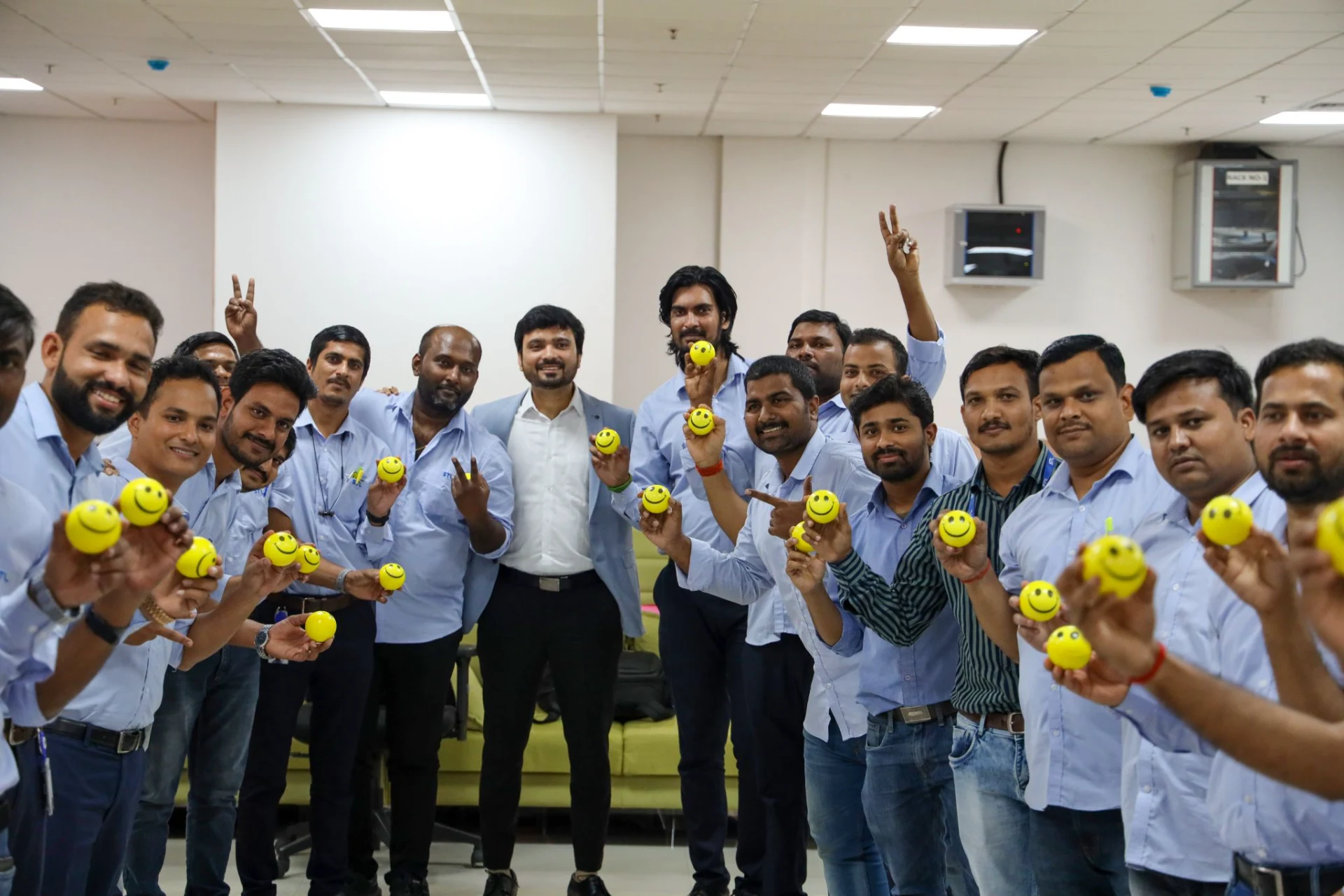
Avinash Chate - Corporate Coach at annual leadership conference
Why Some Employees Deliver and Others Avoid WorkIn almost every organization, leaders ask me the same question: why do some employees consistently perform, while others keep delaying, avoiding responsibility, or delivering below expectations?
The answer is not always attitude alone, and it is not always skill alone. In my experience, the difference usually comes down to two powerful factors: commitment and capability.
Key takeaway: When commitment and capability come together, performance becomes predictable. When both are missing, excuses multiply and results disappear.
As a corporate trainer, TEDx speaker, and author of The Winning Edge, I have seen this pattern repeatedly while working with professionals across 80+ organizations. Whether I am speaking to frontline teams, managers, or senior leaders, this framework helps them understand people more clearly and lead more effectively.
In this article, I want to simplify how I look at employees through the lens of commitment and capability, why some people appear to be working but avoid real accountability, and what leaders must do to build stronger teams.
The Two Factors That Shape Employee Performance
Let us begin with the basics. Every employee can be understood through two dimensions.
- Capability: Does the person have the knowledge, skill, judgment, and execution ability required for the role?
- Commitment: Does the person have the willingness, ownership, discipline, and intent to do the work sincerely?
Many leaders make the mistake of judging employees only by outcomes. But outcomes are often the visible result of these two invisible drivers.
An employee may be highly committed but still underperform because they lack capability. Another may be capable but still disappoint because they are not committed. And then there are those rare professionals who combine both. These are the people every organization wants to retain.
Avinash Chate has often emphasized in training sessions that leadership becomes easier when we stop labeling people emotionally and start diagnosing them accurately.
The Three Types of Employees I Commonly See
In practical workplace situations, I usually explain this through three broad employee types.
1. Low Capability, Low Commitment
This is the most difficult category. These employees neither have the required competence nor the desire to improve. They often avoid responsibility, blame circumstances, resist feedback, and do just enough to remain visible without creating value.
They may look busy, but they are not productive. They may attend meetings, send messages, and make promises, but their work lacks substance.
For leaders, this category creates frustration because coaching works only when the employee is willing. If both skill and intent are missing, the issue is not just performance. It becomes a culture risk.
2. Low Capability, High Commitment
These employees are sincere. They want to do well. They try hard. They may stay late, ask questions, and genuinely care about the team. But they still struggle because they lack the required skill, clarity, or confidence.
This category deserves patience and development. These are not work avoiders. These are people who need training, mentoring, process support, and structured feedback.
As Avinash Chate, I always remind leaders not to punish sincerity. A committed employee with low capability can become a strong performer if developed properly.
3. High Capability, High Commitment
This is the ideal category. These employees know their work and own their responsibilities. They do not wait to be chased. They solve problems, communicate early, and contribute consistently.
They are dependable because they combine competence with intent. They are the backbone of execution in any organization.
When I have worked with teams in organizations like RBI, one clear pattern has always stood out: high-performing cultures are built when leaders identify, develop, and protect this category.
Why Leaders Misread Work Avoidance
One of the biggest problems in organizations is that leaders often confuse different issues.
Sometimes an employee is not avoiding work; they are overwhelmed, undertrained, or unclear about expectations. Sometimes the employee is capable but emotionally disconnected. Sometimes they are simply not taking ownership because the system has taught them that mediocrity has no consequences.
This is why diagnosis matters more than reaction.
If you treat a low-capability employee as if they are lazy, you damage morale. If you treat a low-commitment employee as if they only need more training, you waste time. Leadership requires the ability to see the real issue behind the visible behavior.
This is also where trust and communication become critical. If you want people to take ownership, they must believe that accountability is fair and expectations are clear. I have written more about this in Credibility, Reliability, Intimacy: The Three Pillars of Trust.
What Leaders Should Do With Each Employee Type
Once you understand the employee category, your response becomes smarter.
For low capability, low commitment employees
Set clear expectations. Define measurable outcomes. Document commitments. Give direct feedback. Do not overinvest emotionally without evidence of effort. If behavior does not change, leaders must take firm decisions.
An organization cannot grow if it keeps carrying people who neither learn nor contribute.
For low capability, high commitment employees
Train them. Coach them. Break work into smaller milestones. Give them opportunities to practice. Appreciate progress. Build confidence through support, not pressure alone.
This is where structured development frameworks help. In my work, I often connect such growth conversations with the KITE Leadership Framework, because leadership is not just about driving outcomes; it is also about enabling people to rise to their potential.
For high capability, high commitment employees
Retain them through trust, challenge, and recognition. Give them meaningful responsibilities. Involve them in problem-solving. Do not suffocate them with micromanagement.
These employees do not just want rewards. They want respect, autonomy, and growth.
Also remember: your body language as a leader shapes how your message is received. If your words say support but your posture says irritation, employees notice the mismatch. I explore this deeply in People Hear Your Body Before Your Words.
How to Build a Culture Where More Employees Deliver
Leadership is not only about identifying weak performers. It is about creating conditions where more people become reliable contributors.
Here are a few principles I strongly recommend.
- Hire for attitude, train for skill: Capability can often be built faster than commitment.
- Clarify expectations early: Ambiguity creates delay, confusion, and excuse-making.
- Review consistently: Do not wait for annual appraisals to discuss obvious performance issues.
- Reward ownership visibly: What gets recognized gets repeated.
- Address non-performance quickly: Tolerated mediocrity spreads silently.
- Create developmental spaces: Team learning, reflection, and alignment improve both confidence and accountability.
That is one reason many organizations now invest in offsite learning and team interventions. If designed well, they can strengthen ownership, communication, and collaboration. For leaders planning such experiences, I recommend reading How to Create an Impactful Team-Building Retreat in Nagpur: A Complete Guide.
Avinash Chate believes that culture is not built by slogans on walls. It is built by what leaders repeatedly allow, correct, coach, and reward.
The Real Leadership Question
The real question is not simply, who is working and who is avoiding work?
The deeper question is: do I, as a leader, understand why each person is performing the way they are?
When leaders become better at reading commitment and capability, they stop reacting impulsively. They start leading intentionally. They know when to train, when to support, when to challenge, and when to take tough calls.
As Avinash Chate, I have seen this shift transform managers into stronger leaders. Teams become more accountable, communication becomes more honest, and performance conversations become more productive.
If you want a stronger culture, do not begin with motivation posters. Begin with clear expectations, fair accountability, skill development, and leadership maturity.
That is how organizations move from excuses to execution.
If you would like to build a high-commitment, high-capability team in your organization, book a corporate training session.
Frequently Asked Questions
What is the main difference between a high performer and a work avoider?
The main difference is usually a combination of commitment and capability. High performers have both the willingness to take ownership and the ability to execute well, while work avoiders typically lack commitment, capability, or both.
Can a committed employee with low capability become a strong performer?
Yes. In many cases, committed employees can improve significantly with proper training, coaching, feedback, and role clarity. They are often worth investing in because the intent to grow is already present.
How should leaders deal with employees who have neither skill nor commitment?
Leaders should set clear expectations, monitor outcomes, provide direct feedback, and define timelines for improvement. If there is no visible effort or progress, firm performance decisions may be necessary.
Why do some capable employees still underperform?
Capability alone does not guarantee performance. Some capable employees underperform because of low commitment, lack of recognition, poor leadership, unclear goals, or emotional disengagement from the organization.
How can organizations create more accountable teams?
Organizations can create more accountable teams by clarifying expectations, reviewing performance regularly, rewarding ownership, addressing non-performance early, and investing in leadership and skill development.
Related Articles by Avinash Chate
- Motivational Speaker for Pune BPO and KPO Night-Shift Teams — Combating Burnout and Boosting Engagement
- Micro Management vs Ownership: Lessons for Maharashtra's Corporate Leaders
- Motivational Speaker for Lower Parel Corporate Offices — Energizing Teams in Mumbai's Evolving Business District
About the Author
Avinash Chate is a TEDx speaker, published author of The Winning Edge and The Unanswered, and founder of The Future Corporate & Business Coaching. With over 15 years of experience training 80+ organizations including RBI, JSW Steels, Ferrero, and Forbes Precision Tools, Avinash is recognized as Maharashtra's leading corporate trainer. He created the KITE Leadership Framework and the 25-Star Competency Framework™, delivering high-impact programs across leadership, team building, sales transformation, and emotional intelligence.
📞 +91 8793630001 | ✉️ connect@avinashchate.com | 🌐 avinashchate.com
Book Avinash Chate for Your Next Event
Maharashtra's #1 Corporate Trainer · India's leading Motivational Speaker & Team Building Expert · 2x TEDx · Available across India in English, Hindi & Marathi.
✅ Thanks! Avinash team will reach out within 24 hours.'}).catch(function(e){f.outerHTML='Something went wrong. WhatsApp +91 8793630001
'});return false;"> Select Service Motivational Speaking / Keynote Team Building Workshop Corporate Training / Leadership Development Manager Development Employee Training Outbound Training Book Avinash Now →Or WhatsApp directly: +91 87936 30001
Avinash Chate services
Corporate Trainer in Maharashtra · Top Corporate Trainers in Maharashtra · Leadership Trainer in Maharashtra · Top Leadership Trainers in Maharashtra · Team Building Trainer in Maharashtra · Top Team Building Trainers in Maharashtra · Motivational Speaker in Maharashtra · Top Motivational Speakers in Maharashtra · All service locations
← Back to all articles · Book Avinash Chate
By Avinash Chate — Maharashtra’s #1 Corporate Trainer & Motivational Speaker. .