Workplace Psychology: How Leaders Should React to Good News
In many workplaces, employees hesitate to share their achievements with their managers. Not because they lack confidence, but because they fear the response the...
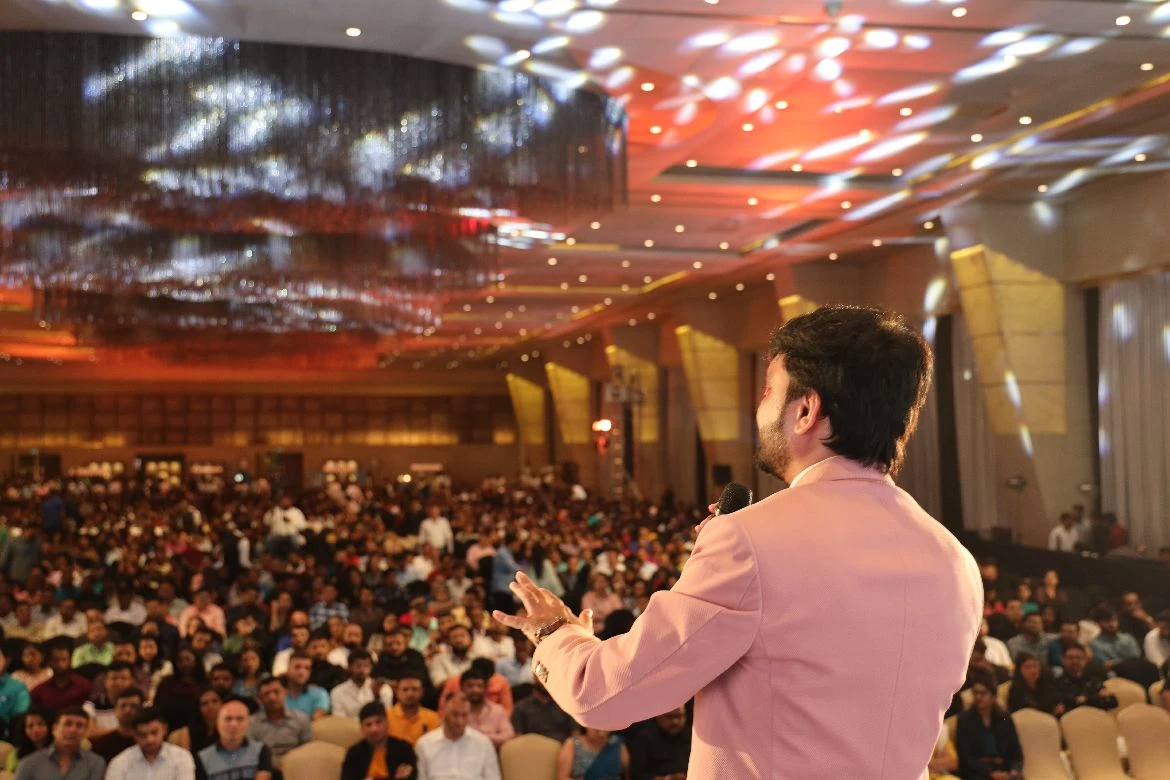
Avinash Chate - Corporate Coach at annual leadership conference
Why a Leader’s Response to Good News Shapes Team Trust and MotivationOne of the most overlooked moments in leadership is not how we respond to failure, but how we respond to success. I have seen this repeatedly in my work with leaders across industries: an employee walks in with enthusiasm, shares a win, and within seconds the manager’s reaction either lifts that person higher or shuts the energy down.
Key takeaway: when people share good news, they are not only reporting an achievement, they are testing whether their leader is emotionally safe, encouraging, and worthy of trust.
As Avinash Chate, a TEDx speaker and author of The Winning Edge, I believe leadership is often revealed in these small, human moments. Over 15+ years of working with professionals and teams, I have noticed that motivation does not always collapse because of major conflict. Sometimes it fades because good news is met with indifference, comparison, interruption, or suspicion.
Why Employees Hesitate to Share Their Achievements
Many employees do not hesitate because they are insecure. They hesitate because they are experienced. They have learned from past interactions. They know that a leader may react with a flat expression, quickly move to the next task, ask why the result was not bigger, or worse, make the moment about themselves.
This creates a subtle psychological message: your success is not welcome here.
In workplace psychology, these moments matter far more than most leaders realize. When a team member shares good news, they are doing more than informing you. They are inviting you into their emotional world. They are saying, in effect, this matters to me, and I want to know if it matters to you too.
If the response is dismissive, the employee may still continue working, but something changes internally. They become more cautious. They stop volunteering ideas. They reduce emotional investment. They share less. Over time, this affects collaboration, trust, and discretionary effort.
I have discussed similar patterns in leadership communication in Credibility, Reliability, Intimacy: The Three Pillars of Trust. Trust is not built only in crisis. It is also built when leaders know how to handle positive moments with maturity and presence.
The Power of Active Constructive Responding
A powerful concept in positive psychology is Active Constructive Responding. Simply put, it means responding to someone’s good news with genuine interest, energy, and support. Not exaggerated praise. Not artificial excitement. Genuine engagement.
When someone says, “We closed a difficult client,” or “My presentation went really well,” an active constructive leader does not merely say, “Good.” That leader leans in. They ask, “That’s excellent. What made the biggest difference?” or “Fantastic. How are you feeling about it?” or “Well done. Tell me more about how you achieved that.”
This kind of response does three things. First, it validates the person. Second, it extends the positive emotion. Third, it strengthens the relationship between leader and employee.
As Avinash Chate, I often remind leaders that communication is not just about information exchange. It is about emotional impact. The words may be short, but the interpretation can be long-lasting.
When leaders celebrate with sincerity, employees feel seen. When employees feel seen, they contribute with greater confidence.
Four Common Mistakes Leaders Make When Reacting to Good News
Let me share the mistakes I frequently observe in organizations.
1. Responding passively
A passive response sounds like, “Okay,” “Nice,” or “Good job,” followed by immediate disengagement. Technically, it is not negative, but emotionally it feels empty. The employee expected connection and received closure.
2. Turning the moment into evaluation
Some leaders instantly shift to, “Good, but what about the next target?” While performance orientation is important, timing matters. If every success is immediately converted into pressure, people stop enjoying progress.
3. Making it about themselves
An employee shares a win, and the leader responds with their own story, their own past achievement, or their own role in making it happen. This weakens ownership and reduces the employee’s emotional reward.
4. Showing doubt or comparison
Questions like, “Are you sure?” or comments like, “Let’s see if you can repeat it,” may sound practical, but in that moment they dilute enthusiasm. Similarly, comparing one employee’s success with another person’s performance can create competition where encouragement was needed.
In my sessions, I tell leaders that the first response is rarely forgotten. It becomes part of the employee’s internal narrative about the manager.
How Leaders Can Respond Better in Real Workplace Situations
So what should a leader do instead? I recommend a simple approach.
- Pause and be present. Give the person your attention for a few moments.
- Acknowledge the achievement clearly. Name what was done well.
- Ask one or two meaningful follow-up questions. This shows genuine interest.
- Appreciate effort, strategy, or growth. Do not praise only outcomes.
- Connect the success to future confidence. Help the employee see what this win means.
For example, if an employee says, “The client appreciated my handling of the issue,” a better response is, “That is excellent. You handled a difficult situation with maturity. What exactly did you do that worked so well?”
Now the conversation becomes developmental and encouraging at the same time.
This is especially important in high-pressure sectors, where people are often recognized only when something goes wrong. During corporate training engagements, including with teams from Canpack, I have seen how quickly culture improves when leaders learn to respond constructively to progress, not just problems.
If you are interested in how speaking and leadership communication influence performance in operational environments, you may also enjoy How Motivational Speaking Transforms Textile and Manufacturing Workforce Performance.
What This Means for Leadership Culture
Leadership culture is not created only by values printed on a wall. It is created by repeated emotional experiences. If employees repeatedly experience encouragement, respect, and recognition, they become more open, resilient, and committed. If they repeatedly experience emotional coldness, they become careful and transactional.
This is why I connect this idea with the KITE Leadership Framework in my work. Strong leadership is not only about direction and execution. It is also about how leaders create trust, inspiration, and emotional safety through everyday behavior.
Avinash Chate has worked with 80+ organizations, and one pattern stands out clearly: the best leaders do not wait for annual awards to appreciate people. They know how to respond in the moment. They know that a team member’s good news is an opportunity to reinforce confidence.
And let me add something important. Reacting well to good news does not make a leader soft. It makes a leader effective. People perform better when their positive efforts are noticed and expanded.
If you lead a team in a fast-changing business environment, you may also find value in Motivational Speaker for Lower Parel Corporate Offices — Energizing Teams in Mumbai's Evolving Business District, which explores how energy, communication, and motivation shape workplace culture.
A Simple Leadership Practice You Can Start Today
Here is my suggestion. For the next seven days, whenever someone on your team shares good news, do not rush past it. Stay with it for one minute longer than usual.
Listen fully. Smile if the moment calls for it. Ask a question. Recognize the effort. Let the person experience that their progress matters.
This one-minute investment can create a powerful shift. It increases openness. It improves morale. It encourages future initiative. Most importantly, it tells people that success is safe to share here.
As Avinash Chate, I believe great leadership is often hidden inside small responses. The workplace does not become motivating only because of strategy, incentives, or systems. It becomes motivating when leaders know how to make people feel valued in real time.
If you want to build leaders who communicate with impact, strengthen trust, and inspire teams consistently, book a corporate training session. As a TEDx speaker and author of The Winning Edge, I work with organizations to help leaders create meaningful change through practical, human-centered leadership.
Frequently Asked Questions
Why is a leader’s reaction to good news so important?
Because it influences how safe, valued, and motivated employees feel. A positive and engaged response strengthens trust and encourages future initiative.
What is Active Constructive Responding?
It is a communication approach where a leader responds to someone’s good news with genuine interest, encouragement, and thoughtful follow-up, helping extend positive emotion and connection.
What should leaders avoid when employees share achievements?
Leaders should avoid passive replies, instant criticism, making the moment about themselves, or comparing the achievement with someone else’s performance.
Can this approach improve team culture?
Yes. When leaders consistently respond well to progress and success, teams become more open, confident, and collaborative. It creates a healthier emotional climate at work.
How can organizations train leaders to communicate better?
Organizations can invest in focused leadership and communication training that helps managers build trust, respond constructively, and lead with emotional intelligence in daily interactions.
Related Articles by Avinash Chate
- The Untold Truth Behind UPSC and MPSC Failure: What 99% of Aspirants Are Never Told
- Motivational Speaker for Mumbai's Hybrid Work Challenges — Bridging the Office-WFH Divide in India's Corporate Capital
- Best Motivational Speaker in Maharashtra — Top 10 Trainers 2026
About the Author
Avinash Chate is a TEDx speaker, published author of The Winning Edge and The Unanswered, and founder of The Future Corporate & Business Coaching. With over 15 years of experience training 80+ organizations including USK agro science, Mumbai Port Authority, Kwality Walls, Perfexan Chem Pvt. Ltd, Avinash is recognized as Maharashtra's leading corporate trainer. He created the KITE Leadership Framework and the 25-Star Competency Framework™, delivering high-impact programs across leadership, team building, sales transformation, and emotional intelligence.
📞 +91 8793630001 | ✉️ connect@avinashchate.com | 🌐 avinashchate.com
Book Avinash Chate for Your Next Event
Maharashtra's #1 Corporate Trainer · India's leading Motivational Speaker & Team Building Expert · 2x TEDx · Available across India in English, Hindi & Marathi.
✅ Thanks! Avinash team will reach out within 24 hours.'}).catch(function(e){f.outerHTML='Something went wrong. WhatsApp +91 8793630001
'});return false;"> Select Service Motivational Speaking / Keynote Team Building Workshop Corporate Training / Leadership Development Manager Development Employee Training Outbound Training Book Avinash Now →Or WhatsApp directly: +91 87936 30001
Avinash Chate services
Corporate Trainer in Maharashtra · Top Corporate Trainers in Maharashtra · Leadership Trainer in Maharashtra · Top Leadership Trainers in Maharashtra · Team Building Trainer in Maharashtra · Top Team Building Trainers in Maharashtra · Motivational Speaker in Maharashtra · Top Motivational Speakers in Maharashtra · All service locations
← Back to all articles · Book Avinash Chate
By Avinash Chate — Maharashtra’s #1 Corporate Trainer & Motivational Speaker. .