₹250 CR Manufacturing Secrets: How Ranjit Patil Built 5 Pune Factories
Ranjit Patil reveals how he runs a ₹250 CR empire with 5 Pune factories — and what Indian manufacturers must know about Industry 4.0, the 90% failure rate, and scaling in 2026.
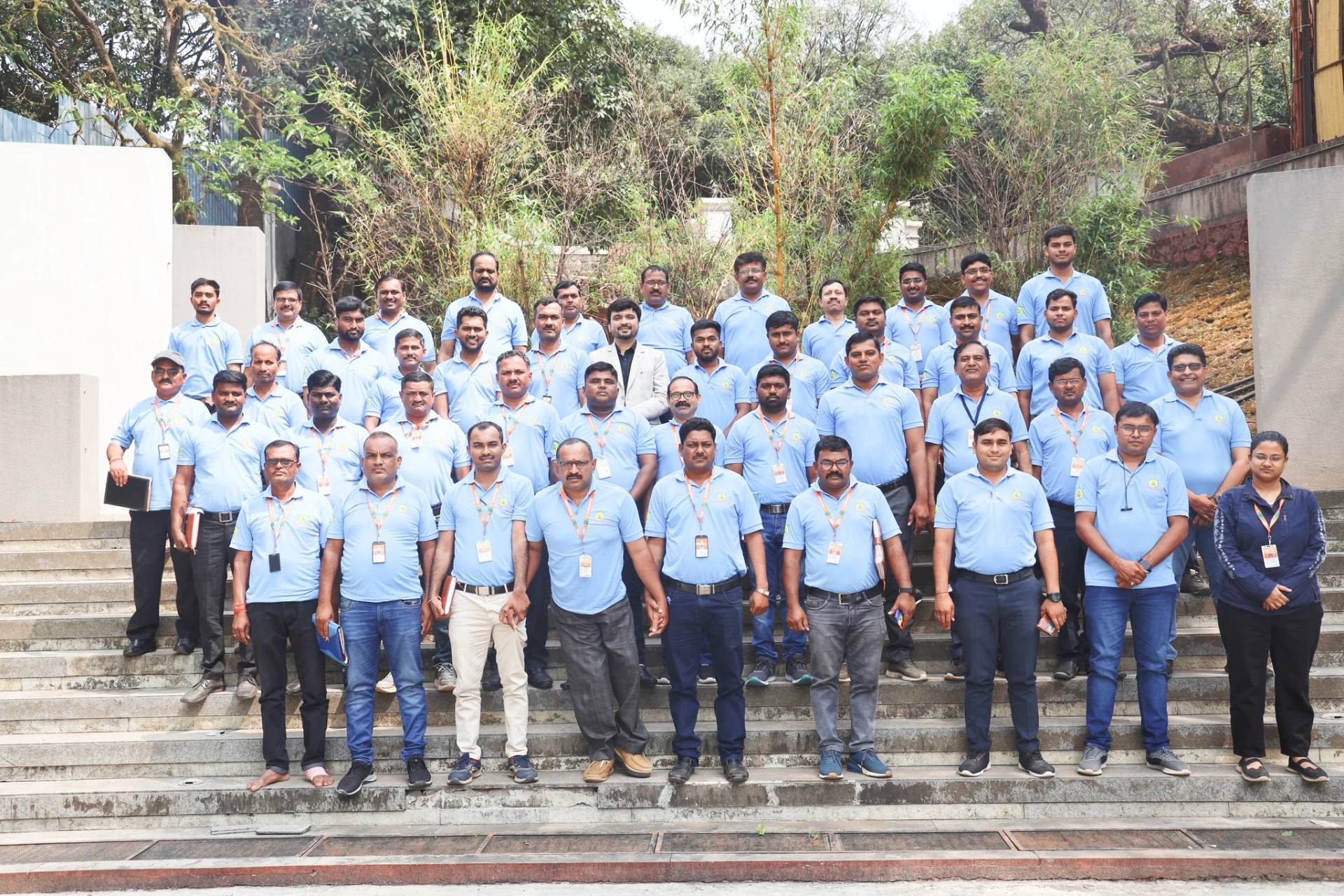
Here's the thing about manufacturing in India — most people think it's heavy, slow, and unglamorous next to startups and tech. Ranjit Patil, VP of a ₹250 CR manufacturing empire with 5 factories in Pune, would disagree. With India targeting 25% of GDP from manufacturing by 2030, understanding how to scale factories and avoid the 90% failure rate isn't optional — it's survival.
TL;DR- Ranjit Patil runs a ₹250 CR manufacturing empire with 5 factories in Pune as shared on The ABC Podcast
- Manufacturing vs service: both have merits, but manufacturing offers compounding product-based leverage
- 90% of manufacturing businesses fail within 5 years — avoiding this requires specific strategic discipline
- Industry 4.0 is reshaping Indian manufacturing and companies that ignore it will be left behind fast
- Managing multiple factories requires centralized strategy with decentralized operational authority
Who Is Ranjit Patil and What Does Running a ₹250 CR Manufacturing Empire Look Like?
Manufacturing in India is not easy money — and Ranjit Patil will be the first to tell you that. In Episode 5 of The ABC Podcast, I sat down with Ranjit, VP of a ₹250 CR manufacturing enterprise with 5 factories operating across Pune. This isn't a startup story — this is a relentless operational story of building, failing, rebuilding, and scaling in one of the most capital-intensive, regulation-heavy business environments in India. And it's one of the most instructive conversations I've had about what it actually takes to run a serious, sustainable manufacturing operation.
How Ranjit Patil Built and Scaled 5 Manufacturing Factories Across Pune
Ranjit Patil didn't build 5 factories overnight. He started with one, learned the operational discipline required, and scaled only when he had the systems and people to justify the next investment. This is the critical insight most Indian manufacturing entrepreneurs miss — they scale capital before they scale systems, which is why they fail. Each of Ranjit's plants has its own operational rhythm, its own quality standards, and its own management team — but they share centralized strategy, finance oversight, and a common culture of accountability. That architecture is what allows a single VP to manage ₹250 CR across five locations without losing operational control or quality consistency.
| Business Factor | Manufacturing Business | Service Business |
|---|---|---|
| Startup Capital | High — equipment, factory, inventory | Low — mainly talent and tools |
| Time to Profitability | 3–5 years typical | 6–18 months typical |
| Competitive Moat | Physical assets, quality expertise | Brand, relationships, speed |
| Scalability | Capital-intensive per unit | Scales with talent and systems |
| Quality Control | Physical, measurable, auditable | Harder to standardize |
| Industry 4.0 Impact | Automation reduces cost per unit | AI changes service delivery models |
| Resilience in Downturns | Asset base provides collateral | Revenue can vanish quickly |
Manufacturing vs Service Business: Which Model Is Right for Indian Entrepreneurs?
Manufacturing versus service is a genuine strategic choice, not just a personal preference. Manufacturing has higher upfront capital requirements, longer gestation periods, more complex regulatory environments, and thinner early margins. But what manufacturing offers that services rarely can: tangible products that create physical barriers to competition, scalable production that doesn't require proportional headcount, and asset bases that provide financial resilience during downturns. Service businesses scale faster and with less capital, but are more vulnerable to commoditization and talent loss. Ranjit Patil's advice: understand which model fits your strengths, your capital, and your market — and don't romanticize either option.
Why 90% of Manufacturing Businesses Fail — and How to Be in the Surviving 10%
The 90% failure rate in Indian manufacturing is real, and the reasons are predictable. Most businesses fail because of one or more of the following: undercapitalization for the actual gestation period, hiring operations talent before building operational systems, entering markets where they can't achieve minimum viable scale, and confusing revenue with cash flow. Ranjit Patil survived by being brutally honest about his cash position at every stage, maintaining strict quality standards even when it hurt short-term volumes, and building client relationships before he needed them — not after. The 10% that survive do so through discipline, not luck or timing.
What Industry 4.0 Means for Indian Manufacturing Companies in 2026
Industry 4.0 is not a technology trend — it's an existential shift for Indian manufacturing. AI-driven quality control, IoT-enabled predictive maintenance, digital supply chains, and robotic automation are moving from pilot programs to competitive requirements. Companies that build the data infrastructure to support Industry 4.0 today will have a decisive advantage in the next 5–10 years. Those that delay are building operational debt they'll struggle to repay. Ranjit Patil's 5-factory operation is already implementing digital monitoring systems across plants — not because it's fashionable, but because the labour cost economics of Indian manufacturing are shifting and efficiency technology is how you stay competitive at scale.
How to Manage 5 or More Factories Without Losing Control of Quality or Culture
Managing five factories is a leadership and systems challenge, not just an operational one. The model Ranjit Patil uses: centralized strategy and finance, decentralized operations. Each factory has a plant manager who owns operational KPIs — production efficiency, quality reject rates, workforce attendance, and safety compliance. The VP level owns strategy, client relationships, capital allocation, and organizational culture. The key tool: a shared dashboard that gives real-time visibility across all plants without requiring constant escalation. This is the architecture that lets a leader manage at scale without micromanaging — which is the only way to stay effective running multiple factories simultaneously.
Business Lessons From Ranjit Patil Every Indian Entrepreneur Must Apply Today
From my conversation with Ranjit Patil on The ABC Podcast, the single most important business lesson was this: patience is a manufacturing virtue. Service businesses can iterate fast. Manufacturing cannot. Every mistake in a factory costs capital, time, and potentially client trust. The entrepreneurs who succeed in Indian manufacturing are those willing to spend two to three years building systems before optimizing revenue, who resist the temptation to scale before they're operationally ready, and who treat quality as a non-negotiable standard rather than a cost variable. Ranjit Patil built 5 factories not because he was lucky — he built them because he was patient, disciplined, and relentlessly focused on operational excellence every single day.
Book Avinash Chate for Your Next Event
TEDx speaker. 11+ yrs training Army, BRO, RBI, BARC, JSW. Available for keynotes, leadership training, team building & manager development at your office or event venue.
✅ Thanks! Avinash team will reach out within 24 hours.'}).catch(function(e){f.outerHTML='Something went wrong. WhatsApp +91 8793630001
'});return false;">Select ServiceKeynote / Motivational SpeakingLeadership Development TrainingTeam Building WorkshopManager DevelopmentEmployee TrainingOutbound TrainingBook Avinash Now →Or WhatsApp directly: +91 87936 30001
Related Articles by Avinash Chate
- Avinash Chate: Motivational Speaker for Bhosari MIDC Pune 2026
- From Goal-Setting to Goal-Getting: The 3-Step System India 2026
- Winning Is a Habit: The Success Mindset for Engineering Careers India
Avinash Chate TEDx Speaker · Founder, The Future Corporate · 11+ yrs experience Avinash has trained Indian Army, BRO, RBI, BARC, JSW Steel and 1000+ corporate leaders across India. His work focuses on leadership development, communication skills, and behavioural training rooted in Indian values and modern business needs. |
Frequently Asked Questions
Who is Ranjit Patil and what is his ₹250 CR manufacturing empire?
Ranjit Patil is the Vice President of a ₹250 CR manufacturing enterprise that operates 5 factories across Pune, India. His company manufactures industrial products and has built a strong reputation for quality and operational excellence across multiple production facilities. Ranjit shared his entrepreneurship journey, business insights, and hard-won lessons on Episode 5 of The ABC Podcast hosted by Avinash Chate. His experience covers the complete arc of manufacturing entrepreneurship — starting small, building operational systems, scaling intelligently, managing through industry downturns, and now positioning for Industry 4.0 transformation in Indian manufacturing.
What is the biggest reason 90% of manufacturing businesses fail in India?
The biggest reasons manufacturing businesses fail in India are undercapitalization and premature scaling. Most founders underestimate the true cash requirements to sustain manufacturing operations through the first three to five years before achieving profitable scale. When cash runs out before operational maturity, the business fails even if the product and market are fundamentally sound. The second major cause is scaling capital before scaling systems — building a second or third factory before the first is operationally optimized. Ranjit Patil specifically emphasizes: build systems first, then scale capital. Discipline in this sequence separates the 10% who survive from the 90% who don't in Indian manufacturing.
Should Indian entrepreneurs choose manufacturing or service businesses in 2026?
The choice between manufacturing and service in 2026 depends on your capital position, operational patience, and competitive strategy. Manufacturing requires more upfront capital, takes longer to become cash-flow positive, and demands deep operational discipline and quality systems. But manufacturing also builds stronger competitive moats — physical assets, production expertise, and client stickiness that services rarely match. Service businesses scale faster and cheaper but face constant commoditization pressure. The right answer depends on your specific market, financing capacity, and whether you have the temperament for the longer, more capital-intensive path that manufacturing demands. Both can build significant wealth in India — they just require very different approaches and timelines.
How is Industry 4.0 changing Indian manufacturing companies in 2026?
Industry 4.0 is transforming Indian manufacturing through four key technologies: IoT-enabled predictive maintenance that reduces unplanned downtime, AI-driven quality control that catches defects earlier and more accurately, digital supply chain management that improves procurement and delivery reliability, and robotic process automation for repetitive high-precision tasks. Indian manufacturers who integrate these technologies gain measurable cost and quality advantages over those who don't. The window for early adoption advantage in India's manufacturing sector is narrowing quickly as more players invest — those who wait will face growing competitive disadvantage against domestic and international manufacturers who are further along in their Industry 4.0 implementation journey.
Avinash Chate services
Corporate Trainer in Pune · Top Corporate Trainers in Pune · Leadership Trainer in Pune · Top Leadership Trainers in Pune · Team Building Trainer in Pune · Top Team Building Trainers in Pune · Motivational Speaker in Pune · Top Motivational Speakers in Maharashtra · All service locations
← Back to all articles · Book Avinash Chate
By Avinash Chate — Maharashtra’s #1 Corporate Trainer & Motivational Speaker. .