Ego and Poor Delegation: The Biggest Mistake Leaders Make on the Way to ₹170 Crore
Mr. Gandhi of M-Tech Innovations built a ₹170 crore company — and warns that ego and poor delegation are the #1 mistakes that silently destroy businesses from within. Here's the India lesson.
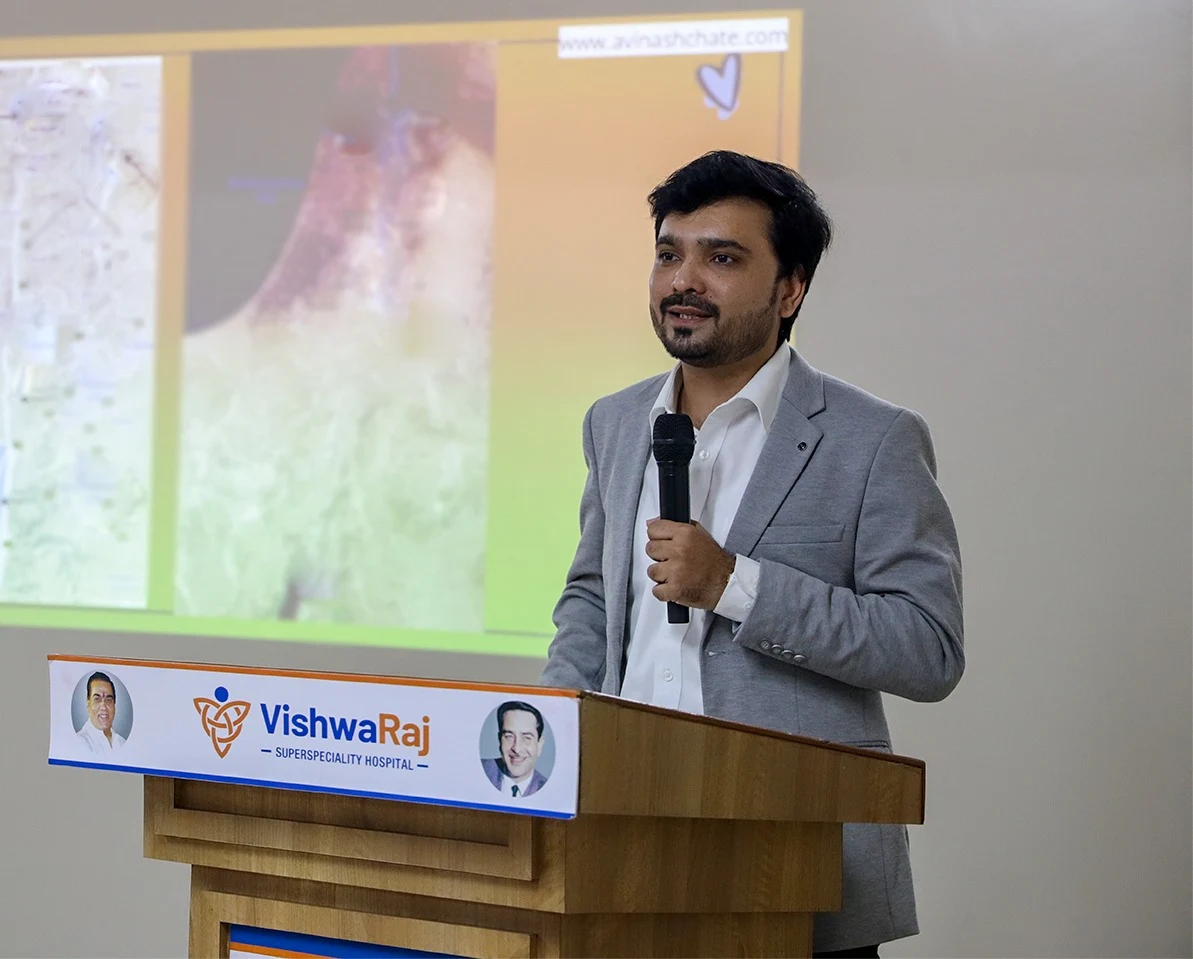
LinkedIn India's 2026 skills report ranks leadership as the single most in-demand professional competency — yet the most common leadership failure isn't a lack of vision or strategy. Mr. Gandhi, founder of M-Tech Innovations Ltd., built a ₹170 crore technology company and identifies ego paired with poor delegation as the #1 mistake that silently destroys businesses from within — a lesson every Indian entrepreneur and manager needs to hear before it's too late.
TL;DR- Ego and poor delegation are the #1 silent destroyers of business performance — the lesson from Mr. Gandhi's ₹170 crore M-Tech Innovations journey
- Leaders who can't delegate destroy team ownership, initiative, and long-term capability building
- Listening over commanding is the hallmark of leaders who build businesses that survive them
- Trust and empowerment are not soft skills — they are the hard levers of scalable business growth
- Avinash Chate's framework: how Indian leaders can systematically replace ego-driven control with trust-driven delegation
What Mr. Gandhi's ₹170 Crore Journey Reveals About the Biggest Leadership Mistake
Mr. Gandhi, the founder of M-Tech Innovations Ltd., didn't build a ₹170 crore technology business by accident. He built it by confronting the same mistake that stops most Indian entrepreneurs before they reach half that scale: the belief that if you want something done right, you have to do it yourself. That belief — rooted in ego and expressed through poor delegation — is the #1 mistake Mr. Gandhi identifies as a silent business destroyer. It doesn't kill companies overnight. It kills them slowly, by eroding team performance, ownership, and the organization's ability to function without a single person at the center of every decision.
Why Ego Is the Silent Business Killer That Indian Leaders Rarely Diagnose
Here's the thing about ego in leadership: it's rarely the loud, arrogant variety that leaders recognize in themselves. The more dangerous form of leadership ego is the one that disguises itself as quality standards, responsibility, and high expectations. 'Nobody else can do this as well as I can.' 'My team isn't ready to handle this yet.' 'It's faster if I just do it myself.' Every one of these thoughts sounds reasonable on the surface and contains a grain of truth — but collectively, they add up to a leadership style that prevents the team from ever developing the capability the leader says they need. It's a self-fulfilling prophecy dressed as a high standard.
| Leadership Behavior | Ego-Driven (Control Mode) | Trust-Driven (Delegation Mode) | Business Impact |
|---|---|---|---|
| Decision Making | All decisions go through the leader | Decisions made at the appropriate level | Delegation = 5x faster execution speed |
| Team Capability | Team stays dependent, never develops | Team builds capability through empowered practice | Organizational resilience and scalability |
| Leader's Focus | Operational tasks that team should own | Strategic direction, relationships, innovation | Leader operates at their highest-value level |
| Talent Retention | High performers leave — lack of autonomy | High performers stay and grow | Attrition cost avoided = ₹10-40 lakh per hire |
| Business Ceiling | Company stalls at founder's personal capacity | Company scales beyond any single person | Path from ₹10 crore to ₹170 crore+ (M-Tech model) |
| Communication Style | Commanding — tells, directs, corrects | Listening — asks, learns, then guides | Better decisions, higher team engagement |
Poor Delegation: How It Destroys Team Performance From the Inside
Poor delegation is the behavioral expression of leadership ego — and its damage to team performance is measurable. When a leader fails to delegate meaningfully, three things happen in sequence. First, team members stop taking initiative because they've learned their initiatives will be overridden or micro-managed. Second, the leader becomes a bottleneck — every decision, every action, every communication runs through one person. Third, the business hits a ceiling exactly at the scale the leader can personally manage. In India's rapidly growing business ecosystem, that ceiling is fatal. A ₹10 crore business needs one type of leader. A ₹100 crore business needs a fundamentally different one — one who leads through others, not instead of others.
Listening Over Commanding — The Leadership Shift That Changes Everything
What most people don't realize about the listening versus commanding distinction is that it's not primarily about communication style — it's about information access and decision quality. Leaders who command more than they listen make decisions based on their own mental model of reality. Leaders who listen first make decisions based on how reality actually is, as experienced by the people closest to the work. At M-Tech Innovations, Mr. Gandhi's growth from a garage operation to a ₹170 crore company required systematically shifting from commanding to listening — because at scale, no single person can have the complete picture anymore. The leader who still insists on being the picture is the one whose picture stays small.
How Great Leaders Build Trust and Empower Teams: The M-Tech Approach
The good news is trust and empowerment are learnable leadership behaviors, not fixed personality traits. My corporate training programs for companies like Bajaj Auto, Tata Tech, and Mahindra consistently demonstrate that leaders who are currently controlling can shift to empowering within a structured, supported practice. The key is making delegation explicit, progressive, and feedback-rich. Start by delegating decisions that have a low cost of error — let your team make calls, observe, debrief, build capability. Over time, increase the decision stakes as demonstrated capability grows. This isn't abdication; it's systematic trust building. And it's the only way to build an organization that can scale beyond the founder's personal capacity.
Avinash Chate's Framework: Replacing Ego-Driven Control with Trust-Driven Leadership
Here's my specific framework for Indian leaders who want to systematically replace ego-driven control with trust-driven delegation. Step one: audit your current decisions. For one week, log every decision you make and categorize each as 'only I can make this' versus 'someone on my team could make this with the right preparation.' Most leaders are shocked by the ratio. Step two: identify the three to five decisions in the 'could delegate' category that you're holding onto for comfort rather than capability. Step three: design explicit handover plans — not just 'figure it out,' but structured briefings with clear outcomes, decision rights, and check-in cadences. Step four: debrief without ego — when your delegate makes a decision differently than you would have, ask what you can learn from their approach before deciding whether to correct it.
The Real Cost of Not Delegating: What Indian Businesses Lose Every Quarter
The real cost of not delegating shows up in India's business metrics in three places. First, leadership burnout — over 70% of Indian founders and senior managers report decision fatigue as a major performance drain. When you're making decisions that your team should be making, you're spending your most limited resource — your cognitive energy — on the wrong level of problem. Second, talent attrition — high-potential team members leave organizations where their initiative isn't trusted, consistently citing 'lack of autonomy' as a primary reason. Third, business ceiling — the organization literally cannot grow beyond the scale at which the leader can personally function. This is why so many Indian businesses stall at the same revenue point, year after year, despite being in growing markets.
Building a Business That Works Without You — The Ultimate Leadership Test
The ultimate leadership test — the one I use in every management development program — is this question: if you took a month away from your business or team, completely unreachable, what would happen? The honest answer to that question tells you exactly where you are in your leadership development journey. At M-Tech Innovations, Mr. Gandhi built an organization that could function and grow without him needing to be the center of every decision. That's not just good management — it's the definition of a scalable business. And it starts with addressing the same ego and delegation patterns that destroy so many Indian companies before they reach their real potential.
Book Avinash Chate for Your Next Event
TEDx speaker. 11+ yrs training Army, BRO, RBI, BARC, JSW. Available for keynotes, leadership training, team building & manager development at your office or event venue.
✅ Thanks! Avinash team will reach out within 24 hours.'}).catch(function(e){f.outerHTML='Something went wrong. WhatsApp +91 8793630001
'});return false;">Select ServiceKeynote / Motivational SpeakingLeadership Development TrainingTeam Building WorkshopManager DevelopmentEmployee TrainingOutbound TrainingBook Avinash Now →Or WhatsApp directly: +91 87936 30001
Related Articles by Avinash Chate
- Types of ATM and Credit Cards: The Complete Guide Every Indian Professional Needs in 2026
- Cheated in Business: How M-Tech's Mr. Gandhi Turned Betrayal Into a ₹170 Crore Comeback
- Empathy Plus Discipline: Mr. Gandhi's Leadership Style That Built a ₹170 Crore Tech Powerhouse
Avinash Chate TEDx Speaker · Founder, The Future Corporate · 11+ yrs experience Avinash has trained Indian Army, BRO, RBI, BARC, JSW Steel and 1000+ corporate leaders across India. His work focuses on leadership development, communication skills, and behavioural training rooted in Indian values and modern business needs. |
Frequently Asked Questions
What is the biggest mistake a leader can make according to Mr. Gandhi of M-Tech Innovations?
Mr. Gandhi, founder of M-Tech Innovations Ltd. and builder of a ₹170 crore technology company, identifies ego combined with poor delegation as the #1 mistake that silently destroys businesses from within. This isn't the loud, obvious ego of someone who boasts about their achievements — it's the subtler ego that says 'nobody else can do this as well as I can,' 'my team isn't ready,' or 'it's faster if I just do it myself.' These thoughts prevent leaders from developing their team's capability, create decision-making bottlenecks, and place an invisible ceiling on the organization's growth at exactly the scale the leader can personally manage.
How does ego silently destroy a business from within?
Ego destroys businesses silently because its effects are delayed and feel reasonable in the short term. When a leader holds onto decisions, micro-manages execution, or bypasses team members' judgment, the immediate outcome often looks fine — the work gets done. The damage happens in what doesn't happen: team members stop taking initiative, high-potential employees start looking for employers who trust them more, and the organization develops a structural dependency on one person that becomes a fatal bottleneck as the business grows. By the time these effects are visibly damaging, the culture has already calcified around the leader's control style and changing it requires significant, sustained effort.
Why is listening more important than commanding for Indian business leaders?
Listening over commanding is the leadership shift that unlocks access to information the leader doesn't already have. Leaders who command more than they listen operate from their own mental model of reality — which is inevitably incomplete. The closer your team is to the actual work, customers, and problems, the more accurate their picture of reality is. Leaders who listen first make decisions informed by that accuracy. In Indian corporate culture specifically, hierarchy often suppresses upward information flow — team members don't share problems or ideas with commanding leaders because they've learned it's not welcome. Listening leaders actively break that pattern, and the quality of their decisions improves measurably as a result.
How can I start delegating effectively as an Indian manager or entrepreneur?
Start with an honest audit. For one week, log every decision you make and categorize each as 'genuinely requires me' versus 'could be made by a capable team member with the right briefing.' Most managers and entrepreneurs are surprised to find the majority of their decisions fall in the second category. From that list, pick three to five decisions you're holding onto for comfort rather than necessity, and design explicit handover plans — not vague 'figure it out' instructions, but structured briefings with clear outcomes, decision rights, and check-in cadences. Run this for 90 days, debrief without ego, and rebuild your delegation muscle systematically. This is exactly the process I take leaders through at companies like Tata Tech, L&T, and JSW.
Avinash Chate services
Corporate Trainer in Maharashtra · Top Corporate Trainers in Maharashtra · Leadership Trainer in Maharashtra · Top Leadership Trainers in Maharashtra · Team Building Trainer in Maharashtra · Top Team Building Trainers in Maharashtra · Motivational Speaker in Maharashtra · Top Motivational Speakers in Maharashtra · All service locations
← Back to all articles · Book Avinash Chate
By Avinash Chate — Maharashtra’s #1 Corporate Trainer & Motivational Speaker. .