Daniel Kahneman's Two-Brain Model: Why Checklists Are the Antidote to 'Cocaine Brain'
Nobel laureate Daniel Kahneman's System 1 vs System 2 framework reveals why experienced professionals make avoidable errors — and why checklists are the rational mind's best defence.
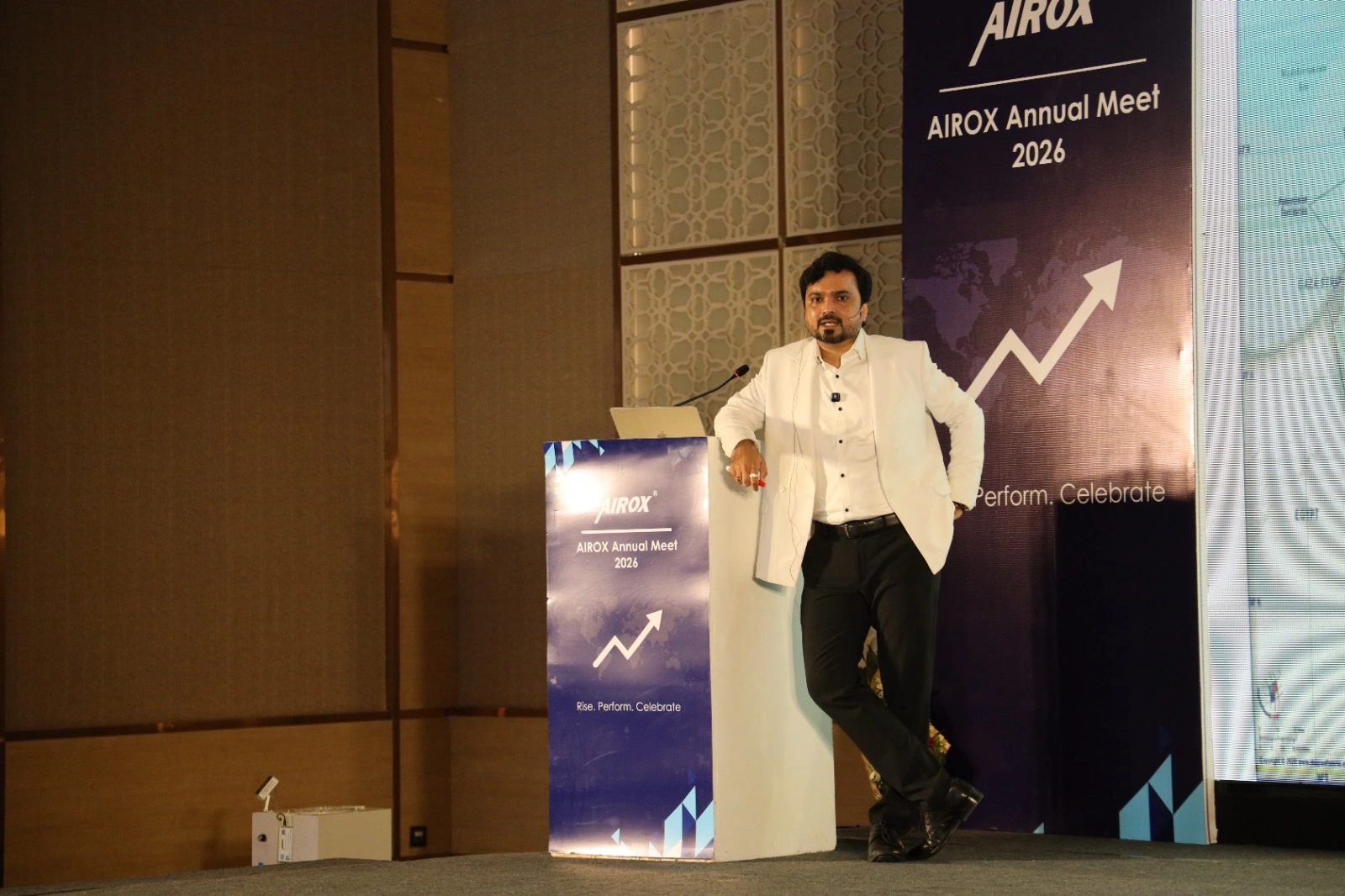
There is a chapter in my book The Winning Edge, The Champion Mindset that I have watched change the way managers and professionals carry themselves in meetings, on project sites and in boardrooms across Maharashtra. It is the chapter on checklists — and it begins not with a productivity hack but with a question from Nobel Prize-winning cognitive psychologist Daniel Kahneman: which brain are you operating from right now?
Kahneman's landmark work Thinking, Fast and Slow introduced the world to two operating systems inside every human skull. He called them System 1 and System 2. Once you understand what these two systems do — and more importantly, which one quietly takes the wheel when you are busy, tired or overconfident — you will never look at professional errors the same way again.
This article unpacks Kahneman's framework through the lens of my own corporate training experience, explains why I call System 1 the "cocaine brain," and gives you the single most reliable antidote: a well-built checklist. If you have ever wondered why smart, experienced people keep making the same avoidable mistakes, read on — the answer is sitting inside your head.
The Two Brains Kahneman Discovered
Daniel Kahneman did not just win the Nobel Prize in Economic Sciences — he fundamentally rewrote how we understand human decision-making. His central insight is deceptively simple: we do not have one thinking process. We have two, and they operate on entirely different principles.
System 1: Fast, Automatic, Emotional
System 1 is the brain you use most of the time. It is fast, intuitive, emotional and almost entirely automatic. It reads a face and decides in milliseconds whether to trust the person. It completes the sentence "salt and…" without any conscious thought. It navigates a route you have driven a hundred times while your conscious mind is elsewhere. System 1 is incredibly efficient — and dangerously overconfident.
- Operates on habit and heuristics (mental shortcuts)
- Delivers instant, effortless conclusions
- Is heavily shaped by past experience and emotion
- Gives you a feeling of knowing even when you do not know
- Cannot be easily switched off — it runs continuously in the background
System 2: Slow, Deliberate, Rational
System 2 is the brain you activate when you sit down to solve a complex maths problem, draft a strategy document or carefully evaluate a contract clause. It is slow, effortful, methodical and patient. It checks the assumptions that System 1 blithely skips over. But it has a fundamental weakness: it is lazy. System 2 only engages when it absolutely must — and even then, it conserves energy by deferring to System 1 wherever possible.
- Requires conscious attention and cognitive effort
- Follows logical steps and checks its own reasoning
- Can override System 1 — but only if it is activated
- Fatigues quickly under stress, overload or time pressure
- Is the seat of genuine expertise and deliberate skill
"System 1 is the author of most of what you do. System 2 is the editor — but the editor keeps falling asleep on the job."
— Avinash Chate, The Winning Edge, The Champion Mindset
Why I Call System 1 the "Cocaine Brain"
In my workshops, the moment I use the phrase "cocaine brain" for System 1, I see eyes widen around the room. It is a deliberate provocation, and it works because it is accurate. Just as cocaine delivers a rapid flood of dopamine — effortless pleasure with no real work done — System 1 delivers rapid, effortless conclusions that feel rewarding and correct even when they are neither.
System 1 runs on instant gratification. It bypasses the slow, uncomfortable work of verification. It tells you "I have done this a hundred times, I know exactly what to do" — and in that moment of false certainty, mistakes are born. The dangerous thing about this brain is not that it is wrong often. It is that it is wrong at exactly the moments when the stakes are highest: under pressure, in familiar territory, when you are at your most experienced and therefore your most automatic.
The Expert Paradox
Here is the counterintuitive truth that Kahneman's research forces us to confront: expertise does not protect you from System 1 errors. It can make you more vulnerable to them. The more experienced you are in a domain, the more your System 1 has colonised that domain with automatic routines. The surgeon who has performed a procedure five hundred times is more likely to skip a preparatory step on autopilot than the resident who checks every item nervously. The veteran project manager who has run a hundred launches is more likely to assume a standard dependency is in place than the junior who verifies each one.
- Experience builds fast, reliable System 1 patterns — which is mostly good
- But those same patterns create blind spots in familiar situations
- The more confident you feel, the less System 2 bothers to verify
- This is why seasoned professionals make errors that puzzle even themselves in retrospect
"In surgery, experienced surgeons sometimes forget to put on gloves because System 1 autopilots them through the routine. The gloves are so automatic that the mind registers the act before the hands have actually completed it."During a corporate training session in Pune — unpacking Kahneman's two-brain model with managers and team leaders.
— From Chapter 5, The Winning Edge, The Champion Mindset
How System 1 Errors Show Up in Indian Workplaces
I have trained professionals across industries — manufacturing, IT, banking, real estate, pharmaceuticals, FMCG — and System 1 errors are endemic. They hide behind different labels: "human error," "oversight," "miscommunication," "he should have known better." But underneath virtually every one of them is the same mechanism: a fast, automatic brain that substituted a confident assumption for an actual verification.
Common Workplace Manifestations
- The meeting that was never confirmed: "I assumed Rahul got the invite" — System 1 completing a pattern it expected.
- The approval that was never obtained: "I thought the budget was already cleared" — System 1 filling a gap with a wishful heuristic.
- The handover that was never completed: "I thought the next team knew what to do next" — System 1 inferring a shared understanding that did not exist.
- The safety step that was skipped: "We always do it this way" — System 1 routing around a procedure because it felt unnecessary.
- The data that was never checked: "The number looked right" — System 1 confirming what it expected to see rather than what was actually there.
None of these people were careless or incompetent. Most were experienced, well-intentioned professionals who simply let their fast brain run unguarded through a familiar situation. This is not a character flaw. It is a design feature of the human brain that every organisation needs to account for.
The Checklist: A System 2 Discipline Tool
If System 1 is the accelerator, a checklist is the speed bump that forces System 2 to wake up and look at the road. This is the insight at the heart of Chapter 5 of my book: a checklist is not a sign of distrust. It is a design for reliability.
A checklist works because it externalises the verification process. It takes what System 2 knows should be done and puts it somewhere that System 1 cannot bypass. Instead of relying on your brain to remember to check the item, the checklist physically stops you and asks: did you actually do this? The moment you must tick a box, System 2 is forced into the conversation.
Why the Best Performers Use Checklists
- Commercial pilots — among the most highly trained professionals on earth — use checklists for every takeoff and landing, regardless of how many thousands of hours they have logged
- Surgeons at the world's leading hospitals use pre-operative checklists developed by the World Health Organisation, because research showed they cut surgical complications dramatically
- In my own experience running large construction projects, my teams developed complex RACI matrix checklists for multi-trade coordination — because when you have electricians, plumbers, civil contractors and finishing teams working in sequence, no human intuition is reliable enough to manage every dependency
"A checklist is a System 2 discipline tool. It forces the rational mind to verify what the fast mind has already assumed is done."
— Avinash Chate, The Winning Edge, The Champion Mindset
What Makes a Checklist Actually Work
Not all checklists are created equal. A list of fifty items that nobody reads is not a checklist — it is a compliance document. A genuine checklist designed to interrupt System 1 has these characteristics:
- It is short enough to use in the moment — ideally five to nine critical items per phase or task
- Each item is a binary check — either done or not done; no grey areas that System 1 can exploit
- It covers the steps that experience tells you are most often skipped — not everything, just the failure-prone nodes
- It is reviewed by the person doing the task, not just signed off by a supervisor — the interruption only works if the doer pauses
- It is treated as a commitment, not a formality — a cultural decision that requires leadership to model
Building a Champion Mindset Around Checklists
In my corporate training sessions, I consistently meet resistance at this point. Managers say: "Avinash, I am not a surgeon. I am not a pilot. Do I really need a checklist to run my weekly review?" My answer is always the same: the stakes are different, but the brain is identical. Your System 1 does not know the difference between a cockpit and a conference room. It runs the same autopilot either way.
The champion mindset — the mindset I explore throughout The Winning Edge — is not about being smarter than everyone else. It is about building systems that make you reliable even when your brain is tired, distracted or overconfident. High performers do not trust their instincts blindly. They trust the systems they have built around their instincts.
Practical Steps for Managers and Professionals
- Identify your highest-stakes recurring tasks — the ones where an error has serious consequences: client deliverables, financial approvals, hiring decisions, compliance sign-offs
- Map the failure points — ask yourself and your team: where have we made mistakes before? Where do we assume rather than verify?
- Build a five-point pre-flight check for each — five questions you must answer yes to before you proceed
- Use a physical or digital prompt — a printed card, a pinned note in your project tool, a recurring calendar reminder before every such task
- Review and refine quarterly — as your context changes, your failure points change; your checklist must evolve too
The RACI Matrix as a Checklist Framework
In large cross-functional teams — something I worked with extensively in construction and now see replicated in IT, manufacturing and services — the most powerful checklist is a RACI matrix applied at every project milestone. RACI defines who is Responsible, Accountable, Consulted and Informed for each action. When you run a milestone check against a RACI, you are forcing System 2 to verify that every handover, every approval, every communication has actually happened — not just that it should have happened according to System 1's comfortable assumption.
Building checklist culture in teams — a core module in my corporate training programmes across Pune and Mumbai.Organisational Culture: When Checklists Fail — and Why
I want to be honest about something: checklists fail when the culture does not support them. If a senior leader skips the checklist because "I have been doing this for twenty years and I know what I am doing," that single act of bypassing the system communicates to every junior professional in the room that the checklist is optional. System 1 is highly social — it reads status cues and adjusts its autopilot accordingly.
For a checklist culture to work, it must be non-negotiable at the top. The CEO who reviews a checklist before a board presentation, the sales head who runs through a call-preparation checklist before every key account meeting, the operations director who signs off on a delivery checklist before every dispatch — these are not signs of insecurity. They are signals of a champion mindset that the entire organisation then absorbs.
Key Principles for Leaders
- Model the behaviour publicly — be seen using your own checklist
- Never punish the person who stops the process to check — reward the pause
- Treat an error that a checklist would have caught as a systems failure, not a personal failure
- Review near-misses with the same seriousness as actual errors — System 1 rarely gives second chances
Bring this to your team. I run productivity and mindset-focused corporate training and keynotes for companies across Pune, Mumbai and all of Maharashtra. The System 1 / System 2 module — with practical checklist-building workshops — is one of the most requested sessions I deliver.
Book a session · Explore corporate training programs
Frequently Asked Questions
What is the difference between System 1 and System 2 thinking according to Daniel Kahneman?
According to Daniel Kahneman's research, System 1 is the fast, automatic and emotional mode of thinking — it operates on habit, intuition and heuristics, and runs continuously with almost no effort. System 2 is the slow, deliberate and rational mode — it activates for complex problems, careful analysis and step-by-step reasoning, but it is effortful and fatigues quickly. Most professional errors occur when System 1 takes over in high-stakes situations, overriding the careful verification that System 2 would perform if it were engaged.
Why does Avinash Chate call System 1 the "cocaine brain"?
I use the phrase "cocaine brain" for System 1 because it captures something important: just as cocaine delivers effortless pleasure with no real work, System 1 delivers effortless, instant conclusions that feel deeply satisfying and correct — even when they are neither. It gives you a rush of confidence that bypasses the slower, less comfortable work of actual verification. In my book The Winning Edge, The Champion Mindset, I use this term to help professionals recognise when they are being seduced by their own fast brain into skipping a critical check.
Why do experienced professionals make more System 1 errors, not fewer?
This is the expert paradox that Daniel Kahneman's research reveals. The more experience you have in a domain, the more deeply System 1 has encoded that domain as automatic routines. This is mostly an advantage — expertise makes you fast and fluent. But it also creates blind spots in familiar territory, because System 2 stops bothering to verify what System 1 confidently assumes. The surgeon who has done five hundred procedures is more likely to autopilot through a preparatory step than the junior who nervously checks every item. Expertise makes System 1 more powerful and System 2 more complacent — which is exactly why the most experienced people need checklists most.
How can Indian managers and teams build a practical checklist habit?
Start by identifying the three to five highest-stakes recurring tasks in your role — areas where an error has serious consequences and where you or your team have made assumptions that proved wrong in the past. For each task, build a short checklist of five to nine binary checks: questions that must be answered yes before you proceed. Use a physical prompt — a card, a pinned note, a calendar reminder — so System 1 cannot route around it. Critically, leaders must model the habit publicly. In my corporate training workshops, I guide teams through this process and help organisations build checklist cultures that reduce avoidable errors and raise overall performance standards.
The two-brain model is not just a fascinating piece of cognitive science — it is a practical map of where your professional performance breaks down and where it can be rebuilt. If you are ready to give your team the tools to engage System 2 consistently and build the kind of reliability that compounds into genuine competitive advantage, I would be glad to bring this conversation into your organisation. Reach out via the contact page, explore my corporate training programmes, or learn more about my approach at my profile page.
This article is adapted from my book The Winning Edge, The Champion Mindset.Related Articles by Avinash Chate
- Why Manufacturing Industry is Difficult to Start in India: 5 Key Challenges
- From Goal-Setting to Goal-Getting: The 3-Step System India 2026
- Why Adaptability Is Your Most Valuable Skill in India's Corporate Workplace 2026
| AC | Avinash ChateIndia's Leading Corporate Trainer | TEDx Speaker | Author With 80+ organizations trained including RBI, JSW Steels, and Ferrero, Avinash Chate delivers high-impact corporate training across India. Creator of the KITE Leadership Framework and bestselling author of "The Winning Edge." Website YouTube |
Avinash Chate services
Corporate Trainer in Maharashtra · Top Corporate Trainers in Maharashtra · Leadership Trainer in Maharashtra · Top Leadership Trainers in Maharashtra · Motivational Speaker in Maharashtra · Top Motivational Speakers in Maharashtra · All service locations
← Back to all articles · Book Avinash Chate
By Avinash Chate — Maharashtra’s #1 Corporate Trainer & Motivational Speaker. .