Why Adaptability Is Your Most Valuable Skill in India's Corporate Workplace 2026
In India's fast-changing corporate world, adaptability isn't a personality trait — it's a skill you can build. Here's why it matters more than technical expertise and how to develop it deliberately.
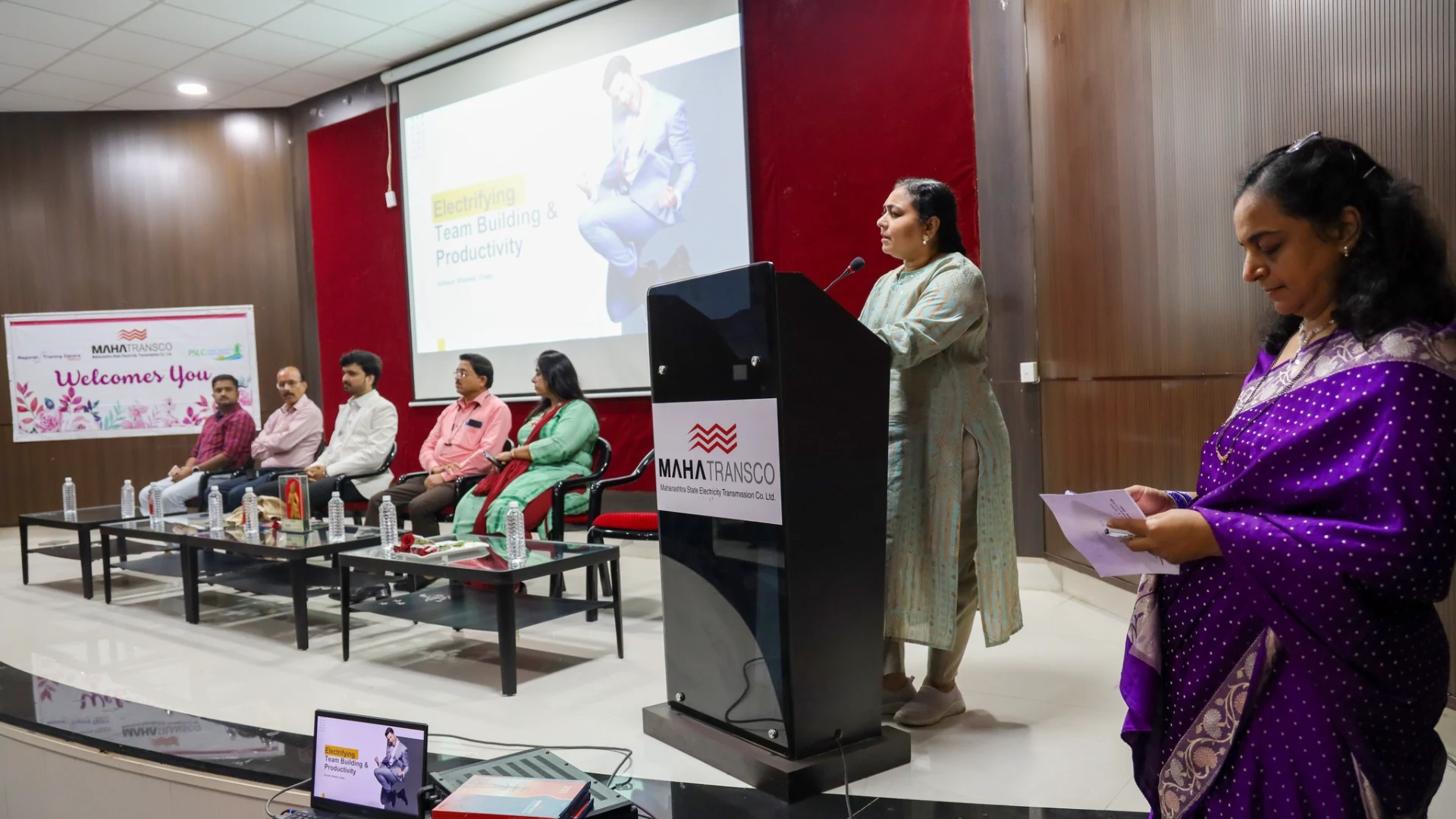
What most people don't realize is that adaptability isn't something you either have or don't have — it's a skill, and it can be trained. NASSCOM projects 1.25 million AI professionals needed in India by 2027, with AI/ML hiring growing 25% year-on-year. In that environment, the professional who can adapt their skills and mindset faster than the market changes will always win. I've spent 11 years helping teams at Tata Tech, Mahindra, and KPIT build exactly that capability.
TL;DR- Adaptability is a learnable skill — not a fixed personality trait — and it can be systematically developed
- In India's AI-driven 2026 workplace, adaptability matters more than most technical certifications
- The three dimensions of workplace adaptability: cognitive, emotional, and behavioural flexibility
- Building adaptability requires deliberate discomfort — routinely taking on unfamiliar challenges
- Teams with high adaptability recover from setbacks faster and outperform rigid peers consistently
Why Adaptability Has Become India's #1 Corporate Survival Skill in 2026
The pace of change in Indian corporates has accelerated dramatically. AI adoption, remote-hybrid work models, organisational restructuring, and global competition have compressed the half-life of any fixed skill set to less than three years. NASSCOM-Deloitte data projects 1.25 million AI professionals needed by 2027 — a demand that current supply cannot meet without massive upskilling. In this environment, the most valuable thing you can offer any organisation isn't a specific skill — it's the demonstrated ability to acquire new skills faster than the situation demands.
The Three Dimensions of Adaptability Every Professional Must Develop
Adaptability has three distinct dimensions that each need deliberate development. Cognitive adaptability is the ability to think flexibly — to let go of old mental models and genuinely entertain new ways of framing a problem. Emotional adaptability is the ability to manage uncertainty without anxiety spiralling into paralysis — staying grounded when the ground keeps shifting. Behavioural adaptability is the ability to change what you actually do, not just how you think — adjusting your approach based on feedback and new information. Most professionals are stronger in one dimension and need work in the others. True adaptability requires all three.
| Adaptability Dimension | What It Means | How to Build It |
|---|---|---|
| Cognitive Flexibility | Letting go of old mental models | Cross-domain reading, challenging your own assumptions |
| Emotional Resilience | Staying grounded under uncertainty | Mindfulness practice, reframing setbacks as data |
| Behavioural Agility | Changing what you actually do based on feedback | Deliberate discomfort, cross-functional projects |
Why Technical Expertise Alone No Longer Guarantees Career Security in India
Here's the uncomfortable truth I share with mid-career professionals at every corporate I train, from Infosys engineers to Mahindra managers: the very expertise that got you to your current position can become a liability if you hold it too tightly. When you become identified with a specific method, a specific domain, or a specific way of working, you resist changes that threaten that identity. I've seen this play out painfully at several large Indian corporates — brilliant technical experts who couldn't adapt to new platforms or new ways of working and found themselves sidelined by professionals with less experience but more flexibility.
How to Build Adaptability Through Deliberate Discomfort
The most effective way to build adaptability is deliberate exposure to discomfort. Not catastrophic discomfort — not quitting and starting over. Structured, intentional challenges that require you to operate outside your current mastery zone. This can be as simple as volunteering for a cross-functional project in a domain you don't know, taking on a presentation for a stakeholder audience you've never addressed, or asking to shadow a colleague in a completely different function for a day. At Bosch and JSW, I run structured adaptability challenges for teams — small experiments designed to expand their comfort zone without overwhelming them. The research consistently shows that frequent small stretches compound into significant adaptability gains.
Building Adaptable Teams: What Leaders at Bajaj Auto and Siemens Do Differently
The most adaptable teams I've worked with share a specific leader behaviour: their leaders model adaptation openly. At Bajaj Auto, I worked with a division head who deliberately shared his own learning curve when the team moved to a new project management system — not just saying "we're all learning" but actually demonstrating struggle and growth visibly. At Siemens India, a manufacturing team leader ran monthly "what changed this month and what did we learn?" sessions that made adaptation a normal, named, celebrated activity rather than something to be embarrassed about. The pattern is consistent: leaders who adapt publicly give their teams permission to do the same.
Common Adaptability Blockers in Indian Corporate Culture and How to Overcome Them
The most common adaptability blockers in Indian corporate culture are three: first, the fear of losing expert status — many professionals have built their identity around being "the expert" and resist learning situations where they're visibly a beginner; second, the "this is how we've always done it" institutional reflex — especially strong in organisations that have been successful for a long time; third, a punishing response to mistakes — when errors lead to blame rather than learning, people stop taking the adaptive risks that create growth. Each blocker requires a different intervention, and leaders are the key variable in all three cases.
Measuring and Growing Your Adaptability Quotient Over Time
You can track your adaptability development using a simple quarterly self-assessment across three indicators: novel challenge ratio (what percentage of my work this quarter involved genuinely new skills or situations?), recovery speed (when I encountered a major setback or change this quarter, how quickly did I return to productive output?), and learning to action gap (when I learned something new, how quickly did I apply it in my actual work?). Improving scores across all three over consecutive quarters is strong evidence that your adaptability is genuinely developing — not just being tested by circumstance.
Book Avinash Chate for Your Next Event
TEDx speaker. 11+ yrs training Army, BRO, RBI, BARC, JSW. Available for keynotes, leadership training, team building & manager development at your office or event venue.
✅ Thanks! Avinash team will reach out within 24 hours.'}).catch(function(e){f.outerHTML='Something went wrong. WhatsApp +91 8793630001
'});return false;">Select ServiceKeynote / Motivational SpeakingLeadership Development TrainingTeam Building WorkshopManager DevelopmentEmployee TrainingOutbound TrainingBook Avinash Now →Or WhatsApp directly: +91 87936 30001
Related Articles by Avinash Chate
- Team Motivation Strategies That Energize and Inspire Corporate Teams India 2026
- When Leadership Crosses the Line: How Favoritism and Blind Support Destroy Team Credibility India 2026
- The Seed-Soil Effect: Why Your Environment Shapes Your Mindset and Career Growth India 2026
Avinash Chate TEDx Speaker · Founder, The Future Corporate · 11+ yrs experience Avinash has trained Indian Army, BRO, RBI, BARC, JSW Steel and 1000+ corporate leaders across India. His work focuses on leadership development, communication skills, and behavioural training rooted in Indian values and modern business needs. |
Frequently Asked Questions
Is adaptability a natural trait or can it be learned?
Adaptability is not a fixed personality trait — it is a learnable skill that can be deliberately developed through structured practice. Research consistently shows that cognitive flexibility, emotional resilience, and behavioural agility all respond to training. The most effective development method is deliberate exposure to manageable discomfort: regularly taking on challenges that require operating outside your current mastery zone. Small, frequent stretches compound into significant adaptability gains over 6–12 months, making it one of the highest-return personal development investments a professional can make.
Why is adaptability more important than technical skills in India's 2026 workplace?
Technical skills have a half-life of under three years in India's AI-driven corporate landscape, with NASSCOM projecting 1.25 million AI professionals needed by 2027. In this environment, the ability to continuously acquire and apply new skills matters more than mastery of any single domain. Adaptable professionals can move between technologies, roles, and business contexts as the market demands — making them nearly recession-proof and consistently valuable to their organisations. Technical expertise is a baseline; adaptability is what determines whether that expertise stays relevant.
How do you build adaptability in a corporate team?
Building adaptability in a corporate team requires deliberate leader behaviour and structural design. Leaders should model adaptation openly — sharing their own learning curves, running monthly change-reflection sessions, and explicitly rewarding early adoption of new approaches. Structurally, organisations can build adaptability through cross-functional rotation programs, stretch assignment cultures, and explicit recognition for learning from failure. Teams at Bajaj Auto and Siemens that implement these structures consistently show measurably higher adaptability scores within two quarters.
What blocks adaptability in Indian corporate culture?
The three most common adaptability blockers in Indian corporate culture are: the fear of losing expert status (professionals resist situations where they are visibly beginners), institutional rigidity (the "this is how we've always done it" reflex, strongest in historically successful organisations), and blame culture (when mistakes lead to punishment rather than learning, people stop taking adaptive risks). Each blocker requires a different leader intervention, but all three share a common root: an organisational culture that values certainty over growth. Shifting that culture requires deliberate, sustained signals from the top.
Avinash Chate services
Corporate Trainer in Maharashtra · Top Corporate Trainers in Maharashtra · Leadership Trainer in Maharashtra · Top Leadership Trainers in Maharashtra · Team Building Trainer in Maharashtra · Top Team Building Trainers in Maharashtra · Motivational Speaker in Maharashtra · Top Motivational Speakers in Maharashtra · All service locations
← Back to all articles · Book Avinash Chate
By Avinash Chate — Maharashtra’s #1 Corporate Trainer & Motivational Speaker. .