Presentation & Public Speaking Training
The best thinker in the room just lost it to the best presenter in the room.
You have watched it happen. The person with the sharpest analysis stands up, opens with an apology, turns to face the slides, and reads. Ninety seconds in, the room is on its phones. Then someone with half the substance and twice the presence takes the floor, tells one story, makes one point land, and walks away with the decision. It isn't fair — the deeper idea should win — but rooms don't reward the person who knows the most; they reward the person who makes them feel something and remember it. Your talented people are not short on substance. They were simply never taught to stand up and land a message. This programme teaches exactly that.
★ 5.0 client rating · Across Maharashtra, pan-India & internationally · English, Hindi & Marathi
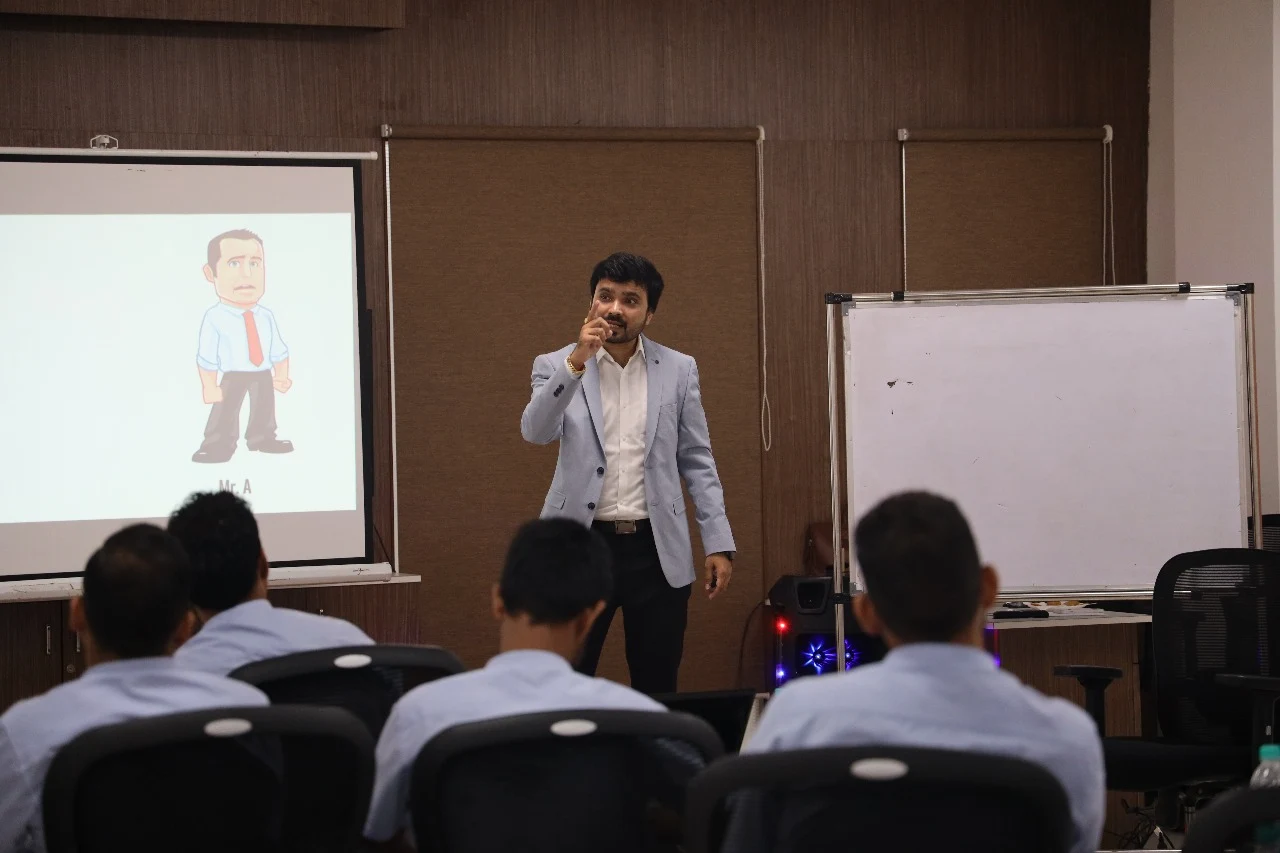
The Meeting Where the Better Idea Quietly Lost
Sit in enough review meetings, town halls and client pitches and a pattern becomes impossible to miss. The engineer who actually built the thing puts forty words on a slide and reads them out, eyes down, voice flat, hedging every claim. The numbers are right. The thinking is right. And still the room drifts, because nobody is being led through it — they are being left to decode a document while a person mumbles over the top. By the time the ask arrives, the energy is gone, and a genuinely good proposal dies not on its merits but on its delivery.
The cost of this is invisible precisely because it never shows up as a line item. Budgets go to whoever pitched with conviction. Promotions go to whoever can hold a room, not whoever did the deepest work. Your strongest analysts stay in the back office because the moment they are put in front of leadership they freeze, and everyone privately concludes they are "not leadership material" — when the truth is narrower and far more fixable: no one ever taught them how to speak.
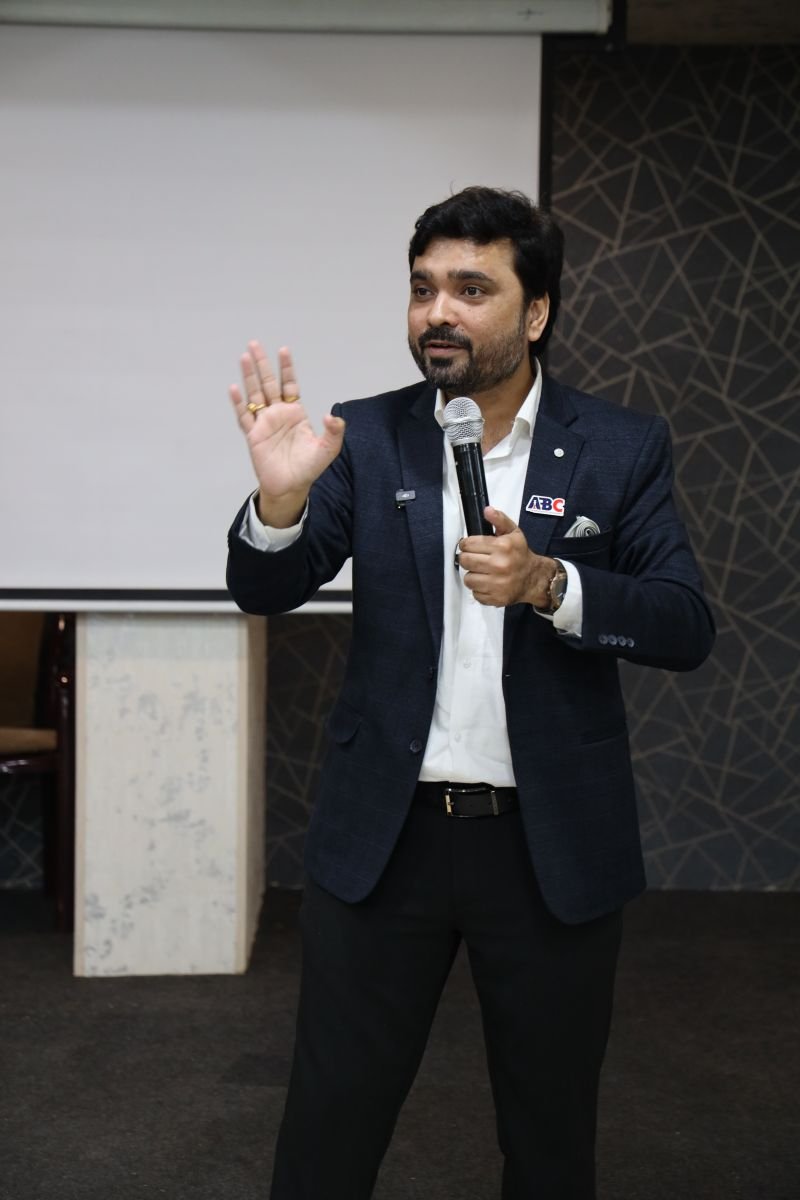
Why Smart People Freeze — And Why It's Completely Trainable
Here is what almost no one says out loud: presenting well and knowing your material are two entirely separate abilities. Mastery of the content lives in your head; a talk lives in the room — in how you open, how you sequence an idea so a listener can follow it, what you cut, how you use your voice and your body, and how you make one point matter more than the other nine. Standing exposed in front of judging faces triggers a genuine physiological alarm, and the untrained response to that alarm is to hide: behind dense slides, behind a monotone, behind reading. That is not a lack of intelligence or courage. It is the absence of a skill nobody bothered to teach.
And a skill is exactly what it is — which is the hopeful part. Great speakers are made, not born; every one of them was once terrified, and got good through structure and reps, not natural gift. The nerves never fully vanish, but they become fuel. A message can be built to land instead of merely be delivered. This programme gives your people that structure and those reps deliberately — in the room, on their feet, on real talks they will actually have to give — so the growth happens here, in safety, and not in front of the board.
Does This Sound Familiar?
If your capable people go quiet, flat or robotic the moment they have to present, it is almost never that they lack substance. It is that no one taught them to deliver it. Here is what you are likely seeing, what it is quietly costing, and exactly which part of the programme fixes it.
| The symptom you see | What it is costing you | The real cause | How the programme fixes it |
|---|---|---|---|
| Your best people read their slides word-for-word, eyes down | Strong work lands weak; the room decodes a document instead of being led | They treat slides as the presentation and themselves as the narrator of it | The Structure module — building a talk, not a document |
| A genuinely nervous presenter goes stiff, rushes, and loses the room in the first minute | The audience decides "not confident, not credible" before the content even starts | Untrained stage fright with no technique to steady the body and the voice | The Conquering Nerves module — turning fear into fuel |
| The deck is a wall of bullet points and dense charts nobody can read | Attention splits between reading and listening, and both lose | Slides built to be documents, not visual support for a live speaker | The Slide & Visual Design module — less is more |
| The talk is all data and no story, so nothing is remembered an hour later | Decisions default to whoever was more memorable, not whoever was right | No one taught them that people are moved and made to remember by story | The Storytelling module — making the message stick |
| They fall apart in Q&A, or freeze in front of senior leadership | One hostile question or one high-stakes room undoes the whole pitch | They rehearsed the slides but never rehearsed the pressure | The Q&A & the Senior Room module — handling the heat |
What Changes When Your People Can Actually Present
Picture your strongest thinker walking to the front and owning it. Opening with something that makes the room lean in — not "sorry, I know we're short on time." Leading the audience through one clear arc instead of forty bullet points. Landing the key idea with a story people repeat in the corridor afterwards. Standing still, speaking with a voice that carries conviction, letting a silence do its work. Taking the hardest question in the room and looking better for it.
And underneath it, the shift that pays for the whole programme: the best idea starts winning again. Your quiet experts get heard, your pitches convert, your town halls land, and leadership finally sees who your real talent is — because your people can now put what they know into a room and make it move. You stop losing to the better presenter, because now you have them.
What Your Speakers Will Be Able to Do
- ✓ Manage nerves and stage fright with real technique — steadying the body, breath and voice so fear becomes fuel
- ✓ Structure any talk around a strong opening, a clear arc and a close that drives action
- ✓ Use story and vivid example to make an idea land and be remembered, not just heard
- ✓ Design slides that support a speaker instead of replacing one — less text, one idea per slide
- ✓ Command the stage with grounded body language, deliberate voice, pace and pause
- ✓ Field Q&A — including hostile and curveball questions — with composure and control
- ✓ Present convincingly on video and to senior, high-stakes rooms where every minute counts
What the Programme Covers
Seven connected modules that take a professional from dreading the front of the room to owning it. Every module pairs a short, practical input with real practice on the exact talks your people have to give — and ends with a concrete change in how they present.
These are building blocks, not a fixed-length course. A two-hour session goes deep on the two or three that matter most to you; a half or full day covers more; a multi-day intensive — or an ongoing monthly, quarterly or half-yearly rhythm — works through them all, with far more practice. We shape which ones, in what order and how deep, with you.
Conquering Nerves — Turning Fear Into Fuel
What we cover: Why even brilliant people freeze — the real physiology of stage fright and why it is not a character flaw. Breath, posture and pre-talk routines that steady the body before the first word. Reframing adrenaline as energy rather than a threat. Handling the shaking hands, the dry mouth, the racing mind and the fear of going blank. Building the quiet confidence that comes from being prepared, not from being fearless.
What changes: The speaker walks to the front steadier and in control — nerves present but harnessed, no longer running the show.
Structure — Building a Talk That Lands
What we cover: Why a presentation is not a document read aloud. Designing an opening that earns attention in the first thirty seconds instead of wasting them on apologies and agendas. Building a clear arc the audience can follow — signposting, one thread, not forty bullets. Deciding ruthlessly what to cut. Landing a close that tells the room exactly what to think, feel or do next. The Rule of Three, the 10-20-30 discipline, and opening–body–close as a spine for any talk.
What changes: The speaker builds a talk that leads the audience from first line to final ask — clear, tight and impossible to zone out of.
Storytelling — Making the Message Stick
What we cover: Why people are moved by story and forget bullet points. Turning a dry data point into a moment the room feels. Using a simple story spine — a situation, a turn, a resolution — to carry a business message. Choosing the one vivid example that makes an abstract idea concrete. Weaving evidence and narrative so the talk is both credible and memorable. Landing an idea that gets repeated in the corridor after you sit down.
What changes: The speaker makes the key message land emotionally and stick in memory — so it is still alive an hour, a day and a decision later.
Slide & Visual Design — Less Is More
What we cover: Why the wall-of-text slide is killing presentations. The discipline of one idea per slide, of images over paragraphs, of a headline that makes the point on its own. Cutting text so the audience listens to you instead of reading ahead. Making a chart say one thing clearly. Designing so the slide supports the speaker and never competes with them. What to put on the screen — and what to keep in your mouth, not on the wall.
What changes: The speaker's slides amplify the message instead of drowning it — clean, visual, and built to be spoken over, not read.
Voice, Body Language & Stage Presence
What we cover: How you say it, and what your body says while you do. Using pace, pitch, volume and — above all — the pause to hold attention and add weight. Standing grounded instead of pacing, fidgeting or hiding behind the lectern. Eye contact that connects with a room rather than scanning past it. Purposeful gesture, an open stance, and the presence that makes an audience trust you before you have proved a thing. Killing the filler words, the ums and the nervous tics.
What changes: The speaker commands the room with a deliberate voice and grounded presence — read as calm, credible and worth listening to.
Q&A and the Senior Room — Handling the Heat
What we cover: Why the pitch is often won or lost after the slides end. Fielding tough, curveball and hostile questions without getting defensive or thrown. Buying a beat to think, reframing a loaded question, and saying "I don't know — I'll come back to you" with authority. Reading a senior room where you have five minutes and no patience for the build-up. Leading with the answer, respecting the clock, and staying composed under challenge from people more powerful than you.
What changes: The speaker handles pressure, challenge and the high-stakes room with composure — often looking strongest exactly when tested.
Practice — Deliver, Record, Refine
What we cover: The reps where confidence is actually built. Delivering real talks on your feet — a pitch, an update, a town-hall moment drawn from your own work. Recording each delivery and watching it back to see what the room sees. Specific, kind, actionable feedback from the trainer and the group. A second and third pass so the improvement is felt, not just noted. Presenting to camera for the virtual and hybrid rooms your people now speak to constantly.
What changes: The speaker leaves having delivered, watched themselves, and visibly improved across takes — the change earned in the room, not promised on a slide.
How It Is Delivered
This is not a lecture about communication theory, and it could not be — you do not learn to speak by being spoken at. It is a workshop where people spend most of their time on their feet, delivering real talks drawn from their own work: the pitch they have to give next month, the update they dread, the town-hall moment. Deliveries are recorded and watched back, because nothing changes a habit faster than seeing what the room actually sees. The models are kept few and immediately usable; the reps and the feedback are where the confidence is built.
The format flexes to your needs. It runs as a focused half-day, a full-day workshop, a multi-day intensive for a cohort of high-potentials, or a series of shorter modules spread over weeks so each skill is practised and embedded before the next. It works beautifully as an ongoing programme — a speakers' academy run each quarter as new people need it. Because everyone must present, not just watch, groups are organised into small batches so every participant delivers, records and refines. The exact depth, duration and cadence are shaped with you in the design call.
Formats That Fit Your Calendar
Half-day or full-day workshop
A high-impact session to lift a group of presenters fast — ideal before a pitch season, a conference, an investor round or an internal town hall.
Multi-day intensive
Two or more days to go deep, with multiple recorded deliveries per person — perfect for a leadership cohort, a sales team or a batch of subject-matter experts being put in front of clients.
Modular series over weeks
Shorter sessions spaced out — nerves, then structure, then storytelling, then stage presence — so each skill is practised on real talks before the next is added.
An ongoing speakers' academy
Run it each quarter for whoever is stepping up to present — making strong speaking a permanent, repeatable capability across the organisation rather than a one-off event.
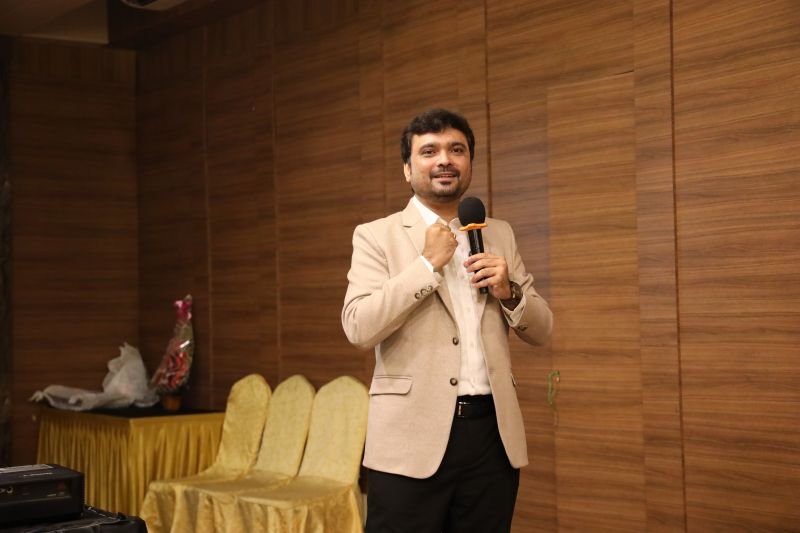
The Thinking Behind It
This programme is not a generic slides-and-tips deck. It draws on the best writing and research on speaking, story and design — distilled into a few models a presenter can use the very next day — and then goes further, into the frameworks Avinash uses as a TEDx speaker himself and to build speakers inside his own 100-plus member organisation.
Ideas & books we draw on
- Talk Like TED — Carmine Gallo · reverse-engineers what the most-watched talks on earth actually do — passion, story and one memorable moment
- Resonate — Nancy Duarte · the deep study of shaping a talk like a story so an audience feels the journey, not just the data
- Presentation Zen — Garr Reynolds · the case for restraint on the slide — simplicity, image over text, and letting the speaker carry the point
- TED Talks: The Official TED Guide to Public Speaking — Chris Anderson · the head of TED on the one thing that matters most — planting an idea in another mind
- Confessions of a Public Speaker — Scott Berkun · an honest, funny field guide to what really happens on stage — the fear, the failures and how the pros recover
- The Quick and Easy Way to Effective Speaking — Dale Carnegie · the enduring first principle — earn the right to speak, then say it with sincerity and conviction
Models we use for great presentations
- The Rule of Three · three points, three parts, three words — the pattern audiences hold on to and remember
- Monroe's Motivated Sequence · attention, need, satisfaction, visualization, action — the classic structure of a persuasive talk
- The story spine (situation–turn–resolution) · the narrative arc that carries a business message so the room feels it, not just hears it
- The 10-20-30 rule (Guy Kawasaki) · ten slides, twenty minutes, thirty-point type — the discipline that forces clarity and cuts the clutter
- Signposting — opening, body, close · tell them where you're going, take them there, and tell them what to do — the spine of any clear talk
And Avinash's own frameworks — the part you won't find anywhere else
Beyond the established thinking, the programme is built on frameworks Avinash has created and written about himself — including his KITE leadership framework and the principles in his book The Winning Edge. These come from actually running a 100-plus member organisation and developing its people year after year, not from a textbook. It is the layer competitors cannot copy, and the one your speakers remember long after the session ends.
Who It Is For
Anyone who has to stand up and be believed — leaders pitching a vision, managers running town halls, sales and pre-sales teams presenting to clients, and the subject-matter experts and analysts whose brilliant work keeps dying in delivery. It is especially powerful for the quiet high-performers you want to put in front of leadership and customers but who freeze the moment they are asked to. Run as a cohort, it gives a team a shared language for feedback and a safe room to be bad in before they have to be good. From campus-to-corporate hires learning to present for the first time, to senior leaders preparing for a keynote or a board, it meets people exactly where their fear is.
Taught by a TEDx Speaker Who Lives on the Stage
Avinash Chate does not teach this from a textbook. He is a TEDx speaker who has stood in front of the exact rooms your people are afraid of — and he builds speakers inside his own 100-plus member organisation, so the structure, storytelling and stage-craft taught here are the real thing, tested from the stage and not borrowed from a slide. As author of The Winning Edge and creator of the KITE framework, he has spent years turning nervous professionals into people who own a room, across 1,000-plus organisations and 15,000-plus professionals — from shop-floor engineers presenting for the first time to senior leaders preparing to keynote.
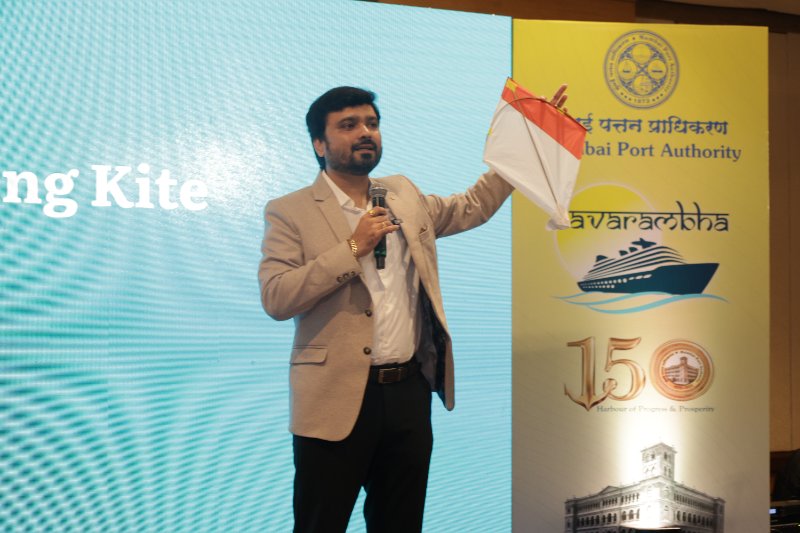
Why Avinash Chate
Avinash Chate is an entrepreneur and corporate trainer who runs ABC Trainings and The Future Corporate & Business Coaching, a TEDx speaker and published author. Over the last decade he has trained teams at 1,000-plus organisations and 15,000-plus professionals.
He teaches these skills not from a manual, but because he practises them himself — leading a 100-plus member team of his own. That is the difference working leaders feel in the room.
Presentation & Public Speaking Training — FAQ
What is Presentation & Public Speaking Training?
It is a practical, hands-on programme that turns capable professionals into speakers who can hold a room and land a message. It builds the specific skills great presenting actually requires — managing nerves and stage fright, structuring a talk with a strong opening, arc and close, storytelling that makes an idea stick, designing slides that support rather than replace the speaker, voice, body language and stage presence, and handling Q&A and high-stakes senior rooms. Unlike generic "communication skills" theory, it is built around the real talks your people have to give, delivered and refined on their feet until they feel confident.
Who should attend this training?
Anyone who has to present and be believed — leaders and managers, sales and pre-sales teams, and especially the subject-matter experts and analysts whose strong work loses the room in delivery. It is at its most valuable for talented, quieter people you want to put in front of leadership or clients but who currently freeze. It works powerfully as a cohort, so a team builds a shared language and a safe space to practise, and it is a natural step for campus-to-corporate hires learning to present for the very first time.
Can you really train someone who is terrified of public speaking?
Yes — and those are often the people who improve the most. Stage fright is a normal physiological response, not a character flaw, and it responds to technique: breath, preparation, structure and, above all, repetition in a safe room. Great speakers are made, not born; nearly every confident presenter you have watched was once petrified. The nerves rarely disappear entirely, but they stop running the show and start working as fuel. The programme is deliberately supportive — people deliver, watch themselves back, get kind and specific feedback, and go again — so confidence is built through evidence, not slogans.
What does the programme cover?
Seven connected modules: conquering nerves and stage fright; structuring a talk that lands with a strong opening, arc and close; storytelling that makes the message stick; slide and visual design where less is more; voice, body language and stage presence; handling Q&A and the senior room; and extensive practice where participants deliver, record and refine real talks. Every module pairs a short, usable model with practice on the actual presentations your people have to give.
How is the training delivered — and how long does it take?
It is highly interactive — people are on their feet delivering real talks, with deliveries recorded and watched back, and minimal lecture. The duration is flexible: the same programme runs as a half-day, a full day, a multi-day intensive for a cohort, or a series of shorter modules spread over weeks so each skill embeds before the next, and it works well as an ongoing speakers' academy run each quarter. We shape the exact length and cadence with you. Because everyone must present, sessions are organised into small batches so every participant delivers and refines, rather than just watches.
Does it cover slide and PowerPoint design too?
Yes — a full module. So much presenting is killed by the wall-of-text slide, so the programme teaches the discipline of one idea per slide, image over paragraph, headlines that make the point, and cutting text so the audience listens to the speaker instead of reading ahead. The principle throughout is that the slide supports the speaker and never competes with them. People leave able to build decks that amplify what they say rather than drown it.
Is the programme customised to our organisation?
Yes. The talks people practise are their own — the real pitch, update, town-hall moment or client presentation they have to give next — and the examples and scenarios are built around your industry and context. Generic public-speaking training is exactly what fails; the value is in rehearsing the actual presentations and questions your people will face, in front of a supportive room, before they face them for real in front of a client or the board.
Can it be delivered on-site, and in which languages?
Yes. Most engagements are across Maharashtra — Pune, Mumbai, Chhatrapati Sambhajinagar, Nashik, Nagpur and the surrounding MIDC industrial belts — and the programme is equally delivered pan-India and internationally on request. Delivery is available in English, Hindi and Marathi, or a natural mix, which matters especially for engineers and first-line professionals presenting in the language they are most confident in.
What outcomes can we expect?
Presenters who open strong instead of apologising, lead a room through a clear arc instead of reading bullet points, make the message land with a story people repeat, and handle the hardest question without losing their footing. Pitches that convert, town halls that land, and — the quiet one that matters most — your best thinkers finally getting heard, so decisions start going to the strongest idea rather than the slickest delivery. Over time, strong speaking becomes a repeatable capability across the organisation, not a rare gift held by a lucky few.
Why Avinash Chate for this programme?
Because he teaches this from the stage, not from theory. Avinash Chate is a TEDx speaker who has stood in the exact high-stakes rooms your people fear, and he builds speakers inside his own 100-plus member organisation — so the nerves, structure, storytelling and stage-craft taught here are lived and tested, not borrowed. He is the author of The Winning Edge, creator of the KITE framework, and has trained 15,000-plus professionals at 1,000-plus organisations including RBI, JSW Steel, BARC, the Indian Army and Ferrero. That combination of real stage experience and his own frameworks is what nervous presenters respond to.
Related Training Topics
Turn your quiet experts into speakers who own the room
Give your people the skills no one taught them — conquering nerves, structuring a talk that lands, storytelling, slide design, stage presence and Q&A under pressure. Taught by a TEDx speaker, on-site across Maharashtra, pan-India and internationally, in English, Hindi or Marathi.
Request a Proposal →