Corporate Communication Training
The best idea in the room rarely wins. The best-communicated one does.
Somewhere in your organisation right now, a good idea is dying. Not because it is wrong — because the person holding it cannot get it across. They walk into the meeting with something worth doing, then bury it under fifteen slides of context, lose the room, and leave with a polite "let's take it offline." The decision that felt clear on Monday has fractured into three different versions of itself by Wednesday, one per person who was in the room. The work your teams do is genuinely good. The communication wrapped around that work — the asking, the aligning, the persuading, the writing — is quietly costing you rework, missed deadlines and momentum you never get back. This programme fixes that layer.
★ 5.0 client rating · Across Maharashtra, pan-India & internationally · English, Hindi & Marathi
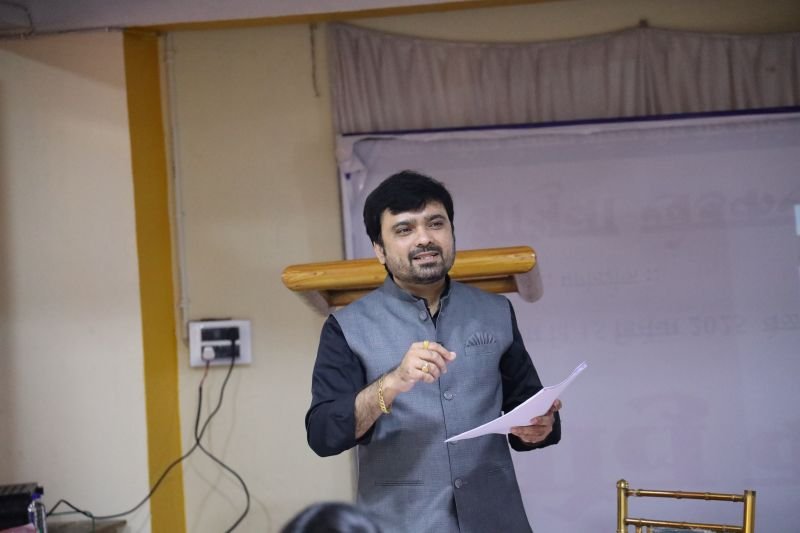
The Meeting Everyone Leaves With a Different Answer
Sit in on a week of your own organisation's conversations and a pattern shows up fast. Someone presents when they should have persuaded — a wall of detail with no ask at the end, so the room nods and nothing moves. A message goes up to leadership and gets lost, because it was framed for the sender, not for a busy person deciding between ten things. A request goes across to another function and stalls, because no one had the standing to command it and no one thought to make it worth their while. A decision goes down to the team and arrives distorted, each layer sanding off a little more meaning until the floor is working from a rumour.
And none of it announces itself as a communication problem. It shows up as a slipped deadline, a project that quietly went sideways, two teams that "weren't aligned," an email thread twenty replies deep that a single clear sentence would have closed. Everyone assumes the issue was the plan, or the priorities, or the other department. Almost no one names the real one: the ideas were fine, but the communication around them leaked meaning at every handoff — up, down and across — and the business paid for the leak in rework nobody logged.

Why Smart People Miscommunicate — And Why It's Entirely Learnable
Here is the part most people never get told: being clear in your own head and making yourself clear to someone else are two different skills, and the workplace only rewards the second. When an idea is obvious to you, its context is invisible — so you lead with the background instead of the point, you assume shared knowledge that isn't there, and you mistake "I said it" for "they got it." Communication is not transmission; it is the far harder work of landing a thought inside a mind that is busy, sceptical and starting from somewhere else entirely. What you said matters less than what they now understand.
So a capable, intelligent person — with nothing wrong with their thinking — defaults to what feels natural: more words, more detail, more emphasis, hoping volume closes the gap. It rarely does. The good news is that everything underneath good communication is a skill, not a gift you were born with or without. Structuring a message so it lands, reading your listener, making an ask, persuading without a title, writing so it gets read, listening so people tell you the truth — these are teachable moves that improve fast with the right practice. This programme gives your people that practice, deliberately, on the exact conversations they have every day.
Does This Sound Familiar?
If these sound like your meetings, your inboxes and your handoffs, it is almost never that your people aren't smart enough. It is that no one ever taught them to make themselves understood. Here is what you are likely seeing, what it is quietly costing, and exactly which part of the programme fixes it.
| The symptom you see | What it is costing you | The real cause | How the programme fixes it |
|---|---|---|---|
| People present a wall of detail and never actually make the ask | Meetings end with "let's discuss later," decisions stall, and good ideas quietly die | They were taught to inform, never to structure a message around a point and a request | The Clarity module — leading with the answer and structuring to land |
| Messages to senior leaders miss — the point gets lost or the moment is wasted | Approvals stall, your best people go unseen, and leadership decides on worse information | They frame the message for themselves, not for a busy decision-maker's attention | The Communicating Up module — managing up and framing for leaders |
| Cross-functional requests stall — nobody has the authority to force them through | Projects slip at the handoffs, silos harden, and everything needs escalation to move | No one learned to gain buy-in and influence peers without a title to command it | The Communicating Across module — persuasion and influence without authority |
| Decisions arrive at the team distorted — the floor works from a garbled version | Rework, wrong priorities, and a workforce that doesn't understand the "why" | Managers relay information instead of translating and cascading it deliberately | The Communicating Down module — cascading and translating for teams |
| Email threads run twenty replies deep and reports go unread | Hours lost to clarification, decisions delayed, and the real point buried on page three | People write to empty their own head, not to be understood in ten seconds by a busy reader | The Written Communication module — brevity, structure and the one clear ask |
What Changes When Your People Can Actually Get an Idea Across
Picture a meeting where the point comes first and the ask is unmistakable, so the room decides instead of deferring. A message to leadership that lands in one read and gets the answer it needed. A request to another function that moves because the person made it genuinely worth saying yes to — no escalation required. A decision that reaches the floor intact, with the "why" attached, so the team acts on it instead of guessing. An email that closes a loop in three lines rather than opening a thread of twenty.
And underneath all of it, the shift that pays for the whole programme: your good ideas stop leaking meaning between the head that has them and the people who need to act on them. Alignment stops being something you chase in follow-up meetings and starts being something you achieved the first time. The work was always good — now the communication around it finally does the work justice, and the rework, the drift and the lost momentum quietly disappear.
What Your People Will Be Able to Do
- ✓ Structure any message so the point lands first and the ask is impossible to miss
- ✓ Communicate up — frame for a busy leader, manage up, and get the decision they need
- ✓ Communicate across — gain buy-in and move peers and other functions without authority
- ✓ Communicate down — cascade and translate decisions so teams act on them intact
- ✓ Persuade and influence — build a case that changes minds instead of just stating a view
- ✓ Write email and reports with brevity — read in ten seconds, acted on, not buried
- ✓ Listen so people tell them the truth — turning a monologue into a real two-way exchange
What the Programme Covers
Seven connected modules that take a person from "I said it" to "they got it, and they acted." Every module pairs a short, immediately usable model with real practice on the exact conversations your people have every day — the meeting ask, the note to leadership, the cross-functional request, the team cascade, the email that has to land — and ends with a concrete change in how they communicate.
These are building blocks, not a fixed-length course. A two-hour session goes deep on the two or three that matter most to you; a half or full day covers more; a multi-day intensive — or an ongoing monthly, quarterly or half-yearly rhythm — works through them all, with far more practice. We shape which ones, in what order and how deep, with you.
Clarity — Structuring a Message So It Lands the First Time
What we cover: Why the point belongs at the top, not the bottom — leading with the answer instead of the build-up. Structuring an argument so a listener can follow it (grouping, sequencing, one governing idea). Stripping the curse of knowledge: saying what they need, not everything you know. Making the ask explicit — what you want, from whom, by when. Tailoring the same message for a two-minute corridor and a thirty-minute meeting.
What changes: People stop informing and start landing — every message has a clear point, a clear structure and a clear ask, so the room understands and moves.
Communicating Up — Managing Up and Reaching Leadership
What we cover: How a busy senior leader actually reads and decides — and why the sender's framing usually loses. Getting to the point fast, leading with the decision or the risk, and respecting attention. Making a recommendation, not just presenting options. Giving a status update that builds confidence instead of anxiety. Managing up: keeping your own boss informed, flagging early, and disagreeing without damage.
What changes: Messages to leadership land in one read and get the answer they needed — your best people become visible, and decisions upstream get made on better information.
Communicating Down — Cascading and Translating for Teams
What we cover: Why decisions distort as they travel down, and how to stop the leak. Translating strategy and instructions into language the floor owns. Cascading a change so every layer carries the "why," not just the "what." Setting context and expectations that remove ambiguity. Communicating difficult news — targets, changes, setbacks — with honesty that keeps trust intact.
What changes: Decisions reach the team intact and understood, so people act on the intent instead of a garbled version — and rework born of misunderstanding disappears.
Communicating Across — Influence Without Authority
What we cover: The daily reality of getting things done through people who don't report to you. Building the relationship and credibility that make a "yes" possible. Framing a request around the other person's goals and pressures, not only your own. The principles of influence — reciprocity, social proof, commitment — used ethically to gain buy-in. Handling a "no," negotiating priorities, and resolving friction between functions without escalation.
What changes: Cross-functional work moves because peers choose to help — silos soften, handoffs hold, and far less has to be escalated to get done.
Written Communication — Email, Reports and the Discipline of Brevity
What we cover: Writing to be understood in ten seconds by a reader who is scanning, not studying. The one-idea email: subject that says the ask, point up top, action clear. Structuring a report or proposal so the decision is on page one. Cutting ruthlessly — brevity as respect, not laziness. Choosing the right channel, and knowing when a message should be a conversation instead of a thread.
What changes: Emails get read and acted on, threads close instead of spiral, and reports drive decisions — hours of clarification vanish from every week.
Persuasion and Influence — Changing Minds, Not Just Stating Views
What we cover: Why a good argument alone rarely moves anyone — and what does. Building a case that combines credibility, evidence and genuine connection to the listener. Anticipating and answering objections before they harden. Making an idea memorable and repeatable so it survives the room. Reading resistance and adapting in real time. Persuading with integrity — winning agreement without pressure or spin.
What changes: People make cases that actually change minds — proposals get backed, initiatives get adopted, and good ideas stop losing to louder, worse-argued ones.
Listening and Two-Way Communication — So People Tell You the Truth
What we cover: Why most "communication problems" are really listening problems. Active listening: attention, reflecting back, and asking the question that opens someone up. Checking for understanding instead of assuming it landed. Reading tone, hesitation and what is not being said. Creating enough safety that people raise the risk, the doubt and the bad news early — while it is still cheap to fix.
What changes: Communication becomes genuinely two-way — people surface the truth early, misunderstandings get caught before they cost anything, and every exchange builds trust instead of spending it.
How It Is Delivered
This is not a lecture about communication theory. It is a workshop where your people rebuild the conversations they actually have. They spend most of the time on their feet — restructuring a real message so the point lands, making the ask they usually bury, rewriting an email that spiralled, taking a cross-functional request through resistance, delivering a decision down to a team — using situations drawn from your own organisation. The models are kept few and immediately usable; the practice, and the feedback on it, is where the skill is actually built.
The format flexes to your needs. It runs as a focused half-day, a full-day workshop, a multi-day intensive for a cohort, or a series of shorter modules spread across a quarter so each skill is practised and then embedded — and it works beautifully as an ongoing rhythm that keeps communication sharp as teams and priorities change. For 20 to 40 participants it is organised into small batches so every person speaks, writes and gets feedback, rather than watching from a seat. The exact depth, duration and cadence are shaped with you in the design call.
Formats That Fit Your Calendar
Half-day or full-day workshop
A high-impact session to sharpen how a group communicates — ideal for a team that keeps leaving meetings misaligned or a function that lives in email.
Multi-day intensive
Two or more days to go deep across up, down, across, written and persuasion — perfect for a leadership cohort, a project team or a client-facing group.
Modular series across a quarter
Shorter sessions spread over time, so each skill — clarity, managing up, influence, brevity, listening — is practised, applied at work, then built on.
An ongoing communication rhythm
Run it as a standing programme for new joiners, new managers and each cohort — making clear communication a permanent part of how the organisation works.
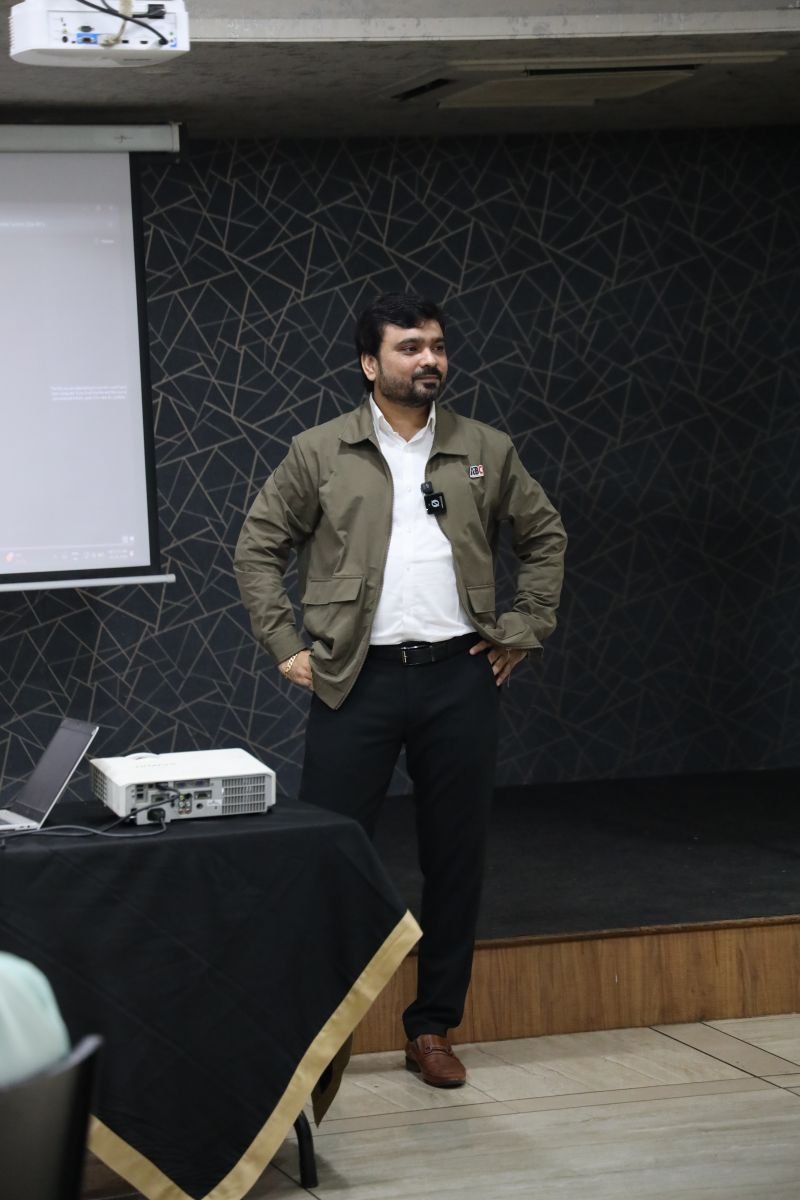
The Thinking Behind It
This programme is not a generic communication deck. It draws on the sharpest writing and research on how ideas land, how people are persuaded and how brevity earns attention — distilled into a few models your people can use in their next meeting — and then goes further, into the frameworks Avinash uses to keep communication clear across his own 100-plus member organisation.
Ideas & books we draw on
- Made to Stick — Chip Heath & Dan Heath · why some messages survive the room and most evaporate — and how to make your idea the one that sticks
- Influence: The Psychology of Persuasion — Robert Cialdini · the ethical levers that move people to say yes — essential for persuading across a business without authority
- Words That Work — Frank Luntz · it's not what you say, it's what people hear — choosing language that actually lands the intended meaning
- Simply Said — Jay Sullivan · a practical field guide to being clear and concise at work, from the email to the boardroom
- Smart Brevity — Jim VandeHei, Mike Allen & Roy Schwartz · how to be heard in a world of overload — the discipline of writing so a busy reader actually gets it
- Everyone Communicates, Few Connect — John C. Maxwell · the difference between transmitting information and genuinely connecting so people act on what you say
Models we use for clear communication
- The Pyramid Principle (Barbara Minto) · answer first, then group and structure the support — so any message lands top-down
- Ethos, pathos, logos (Aristotle) · credibility, connection and evidence — the three legs every persuasive case stands on
- The sender–message–receiver model · communication succeeds at the receiver, not the sender — decode the noise and check it landed
- Cialdini's principles of influence · reciprocity, social proof, commitment and more — gaining buy-in ethically without authority
- Active listening · attention, reflecting back and asking the opening question — so people tell you the truth
And Avinash's own frameworks — the part you won't find anywhere else
Beyond the established thinking, the programme is built on frameworks Avinash has created and written about himself — including his KITE leadership framework and the principles in his book The Winning Edge. These come from actually running a 100-plus member organisation and developing its people year after year, not from a textbook. It is the layer competitors cannot copy, and the one your people remember long after the session ends.
Who It Is For
Anyone whose results depend on being understood — which, in a modern organisation, is nearly everyone. Managers and leaders who need to align teams and reach the people above them. Project and programme leads who get everything done across functions without owning any of them. Engineers, analysts and specialists whose excellent work is let down by how it is explained. Sales, client-facing and support teams who live or die on clarity. It is especially powerful run as an intact team or a cross-functional cohort, so a shared language for clear communication takes hold across the group — and it is a natural fit for campus-to-corporate joiners learning to communicate in a professional setting for the first time.
Taught by Someone Whose Whole Business Runs on Clear Communication
Avinash Chate does not teach this from a textbook. He runs a 100-plus member organisation where every day depends on ideas travelling cleanly — up to decisions, down to teams and across functions — so the clarity, persuasion and cascading taught here are the real thing, tested in his own business. As a corporate trainer and TEDx speaker, and the author of The Winning Edge, communication is the craft he practises in front of rooms constantly. Programmes that build workplace communication have been delivered across sectors, from manufacturing floors where a message has to survive several layers, to IT, sales and services teams whose work lives or dies on how well it is explained.
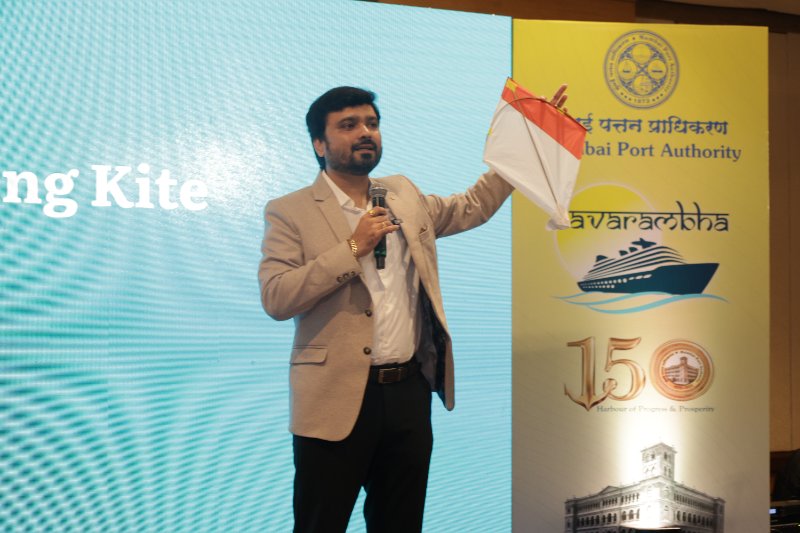
Why Avinash Chate
Avinash Chate is an entrepreneur and corporate trainer who runs ABC Trainings and The Future Corporate & Business Coaching, a TEDx speaker and published author. Over the last decade he has trained teams at 1,000-plus organisations and 15,000-plus professionals.
He teaches these skills not from a manual, but because he practises them himself — leading a 100-plus member team of his own. That is the difference working leaders feel in the room.
Corporate Communication Training — FAQ
What is Corporate Communication Training?
It is a practical programme that builds the everyday communication a business actually runs on — not public speaking or presentation polish alone, but the ability to get an idea across so it is understood and acted on. It covers structuring a message so it lands, communicating up to leadership and managing up, communicating across functions without authority, cascading decisions down to teams, persuasion and influence, writing email and reports with brevity, and listening that makes communication genuinely two-way. Unlike generic soft-skills sessions, it is built around the real meetings, messages and handoffs your people face every day, practised in the room until they improve.
Who should attend this training?
Anyone whose results depend on being understood — managers and leaders aligning teams and reaching upward, project leads getting work done across functions, specialists whose good work is let down by how it is explained, and client-facing teams who live on clarity. It is most powerful run as an intact team or a cross-functional cohort, so a shared language for clear communication takes hold. It is also an ideal foundation for campus-to-corporate joiners communicating in a professional setting for the first time.
How is this different from presentation or public speaking training?
Presentation and public speaking are about standing in front of a room and holding it. This programme is broader and more everyday: it is about the communication that happens in meetings, inboxes, corridors and one-to-ones — getting an idea across up, down and across the organisation, persuading peers you don't manage, cascading a decision, and writing so it gets read. Presentation skill is one slice of communication; this covers the whole of how ideas travel through a business. The two are complementary, and many organisations run both.
What does the programme cover?
Seven connected modules: structuring a message so it lands the first time; communicating up and managing up to leadership; communicating down — cascading and translating for teams; communicating across — influence without authority; written communication and the discipline of brevity; persuasion and influence that changes minds; and listening and two-way communication so people tell you the truth. Every module pairs a short, usable model with practice on situations drawn from your own organisation.
How is the training delivered — and how long does it take?
It is highly interactive — real messages, real emails and real scenarios, with minimal lecture. The duration is flexible: the same programme runs as a half-day, a full day, a multi-day intensive for a cohort, or a series of shorter modules spread across a quarter so each skill is practised and then embedded, and it works well as an ongoing rhythm. We shape the exact length and cadence with you. For 20 to 40 participants, sessions are organised into small batches so everyone speaks, writes and gets feedback rather than just listening.
Can the programme focus on written communication — email and reports — specifically?
Yes. Written communication is a full module in its own right, and for teams that live in email and documents it can be expanded into the core of the engagement — the one-idea email, subject lines that carry the ask, reports where the decision sits on page one, and the discipline of brevity as respect for the reader's time. Equally, if your need is more about meetings, managing up or cross-functional influence, the emphasis shifts there. The mix is set with you before the first session.
Is the programme customised to our organisation?
Yes. Before the first session, the examples, messages and role-play scenarios are built around your context — your industry, your structure, and the real situations your people face, from the shop floor to the boardroom to the client call. We can work with your own actual emails, meeting situations and cross-functional friction (suitably anonymised). Generic communication training is exactly what fails; the value is in practising the actual conversations and messages your people will face next week.
Can it be delivered on-site, and in which languages?
Yes. Most engagements are across Maharashtra — Pune, Mumbai, Chhatrapati Sambhajinagar, Nashik, Nagpur and the surrounding MIDC industrial belts — and the programme is equally delivered pan-India and internationally on request. Delivery is available in English, Hindi and Marathi, or a natural mix, which matters especially when communication has to work between the boardroom and the floor.
What outcomes can we expect?
Meetings that end in decisions instead of "let's discuss later." Messages to leadership that land in one read. Cross-functional requests that move without escalation. Decisions that reach the team intact, with the "why" attached. Emails that close loops instead of opening threads. Over time, less rework born of misunderstanding, alignment achieved the first time rather than chased in follow-ups, and a noticeable rise in the speed and quality of how work gets done across the organisation.
Why Avinash Chate for this programme?
Avinash Chate is an entrepreneur and corporate trainer who runs a 100-plus member organisation where the business depends every day on ideas travelling cleanly up, down and across — so he teaches communication from lived practice, not theory. He is a TEDx speaker and author of The Winning Edge, creator of the KITE framework, and has trained teams at 1,000-plus organisations and more than 15,000 professionals across manufacturing, IT, sales and services. That combination of real operating experience and his own frameworks is what working professionals respond to.
Related Training Topics
Stop losing good ideas to unclear communication
Give your people the skill to get an idea across — structuring a message, communicating up, down and across, persuading without authority, and writing with brevity. On-site across Maharashtra, pan-India and internationally, in English, Hindi or Marathi.
Request a Proposal →