Signature Program
Team Building Excellence
You did not hire a team. You hired ten capable individuals and hoped they would become one. Nobody ever taught them how — and hope is not a method.
Avinash Chate's flagship behavioural team-building programme — the indoor, in-room work of trust, accountability and collaboration. Trusted by Kaeser, Ferrero, Hitachi, JSW Steels and 1,000+ organisations across India.
Almost every organisation has one: a team on paper that has never become a team in truth. The people are good — skilled, sincere, hard-working when you look at them one at a time. And yet, together, something is quietly wrong. They guard information instead of sharing it. They stay polite in the meeting and vent in the corridor afterwards. When a target slips, the energy goes into locating who is to blame rather than fixing it. New joiners are left to sink or swim. Each person defends their own patch, and the seams between them — the handoffs, the shared decisions, the moments that need trust — are exactly where the work leaks. Nobody is a villain. They are simply a collection of individuals who were put in a room and expected to fuse on their own. This programme is the deliberate, in-the-room work of making that happen — turning good people who happen to sit together into a team that trusts, owns and wins together.
Across Maharashtra, pan-India & internationally · English, Hindi & Marathi

The Group That Never Became a Team
Walk into the team and you can feel it before anyone says a word. There is a wariness — people are careful with each other, measuring what to reveal and what to keep back. Meetings are strangely quiet where they should be sharp; the real conversation happens later, in twos and threes, in messages that never reach the whole group. Mistakes get hidden until they are too big to hide, because admitting one feels dangerous. Departments and sub-teams have hardened into little kingdoms, each protecting its own scope, and the moment work has to cross a boundary it slows, snags or drops. When something goes wrong the reflex is not "how do we fix this" but "this wasn't my part" — and the silent blame poisons a little more of the trust each time. Everyone is technically doing their job. That is precisely the problem: doing your job is not the same as being a team.
And the cost is not abstract. It shows up as slow decisions, duplicated effort, and good ideas that die because the person holding them did not feel safe enough to say them out loud. It shows up as a capable new hire who leaves in six months because nobody made them belong. It shows up as a leader who is exhausted from being the only connective tissue in the group — the single point through which every coordination, every conflict, every decision must pass. Most of all it shows up as a strange, draining flatness: a team that is busy but not alive, present but not pulling together, full of talent that never compounds. The talent was never the issue. The team was never built.

Why It Happens — And Why It Is Completely Fixable
Here is what almost no one is told: a team is not a natural formation, it is a built one. Putting capable people in the same reporting line does not make them a team any more than putting instruments in the same room makes an orchestra. Real teams run on things nobody hires for and nobody trains — trust deep enough to be vulnerable, the safety to disagree openly, clarity about who owns what, accountability that flows peer-to-peer and not just top-down, and a shared identity strong enough that "we" outranks "me". None of that is taught in school, in college, or in the technical training that got each person their job. So a group of talented individuals defaults to the only setting they know — protect yourself, do your part, keep your head down — and then everyone wonders why the whole is so much less than the sum of its parts.
This is exactly why the outcome is so reliable. Poor teamwork is almost never a people problem — you rarely have bad people; you have good people who were never given the behaviours, the safety or the shared clarity a team is made of. Those are learnable, and they are learnable fastest in the room, on the real frictions the team actually lives with. This programme does not deliver a motivational talk that fades by Monday or a day of games with no follow-through. It names the specific behaviours that separate a real team from a group — trust, healthy conflict, clarity, accountability, collaboration, identity — shows the team exactly where it stands on each, and rebuilds them deliberately, using the team's own tensions as the material. The bonding is real because the work is real.
Does This Sound Familiar?
If any of these describe your team, it is almost never that the people are wrong. It is that the behaviours of a real team were never built. Here is what you see, what it is quietly costing, the real cause beneath it, and exactly which part of the programme fixes it.
| The symptom you see | What it is costing you | The real cause | How the programme fixes it |
|---|---|---|---|
| People don't trust each other — they guard information and stay careful | Everything slows down; work is duplicated, double-checked and defended instead of shared | No emotional bonding or shared risk — the team has never had a reason to be vulnerable together | The Trust and Psychological Safety module — trust-building experiences and honest reflection |
| Everyone works as an individual; there is no real interdependence | The team is a set of solo performers whose output never compounds into more than its parts | No interdependent mindset — success is understood as "my task done", not "our outcome delivered" | The Collaboration and Interdependence module — interlinked challenges and shared-goal design |
| Conflicts stay unresolved — polite in the room, vented in the corridor | Tension festers under the surface, decisions get re-litigated, and resentment quietly builds | Fear of expression, or a blame culture that has made disagreement feel unsafe | The Healthy Conflict and Candour module — emotional-safety practice and conflict mapping |
| Nobody gives feedback — good or corrective | Small issues grow into big ones; people never learn how they actually land on their teammates | Feedback feels unsafe or personal, and there is no shared, low-threat way to give it | The Feedback and Candour practice — a peer feedback protocol the team can keep using |
| New joiners feel isolated and take months to integrate | Talented hires disengage or leave early; the team keeps paying to onboard and re-onboard | No structured team integration — belonging is left to chance instead of designed | The Team Identity module — role discovery and structured integration into the "we" |
| The team waits to be told; nobody takes initiative | The leader becomes the bottleneck for every decision, and momentum dies without a push | No shared ownership or pride — responsibility stops at "I did my bit" | The Accountability and Ownership module — ownership exercises and role clarity |
| Departments and sub-teams work in silos with no collaboration | Handoffs fail, priorities clash, and the same problem gets solved twice in two corners | Zero shared experiences across the boundaries — the groups have never actually worked as one | The Collaboration module — cross-functional challenges and alignment tasks |
| Energy is low in meetings; there is no spark | The team is present but flat — busy without being alive, and it shows in the output | No emotional investment in a shared win; nobody feels the score is truly theirs | The Shared Purpose module — success-loop experiences and a celebration mindset |
| People just "do their job" with no sense of a bigger why | Effort stays minimal-and-compliant; nobody goes the extra inch because nothing pulls them to | Low awareness of team purpose — the work has no meaning beyond the task list | The Shared Purpose and Identity module — purpose-building simulations and value mapping |
| The leader feels alone — carrying the whole team on their back | Burnout at the top, and a team that collapses into passivity the moment the leader steps away | The team lacks distributed leadership presence — everyone waits for the one person in charge | The Accountability module — rotating team-lead challenges with peer feedback |
What Changes When a Group Finally Becomes a Team
Picture the same people, a few months on. The wariness is gone — they say the difficult thing to each other's faces instead of saving it for the corridor. A mistake gets named early and fixed together, because owning up is no longer dangerous. The meeting is alive: people disagree openly, decide, and leave aligned rather than quietly resentful. When work crosses a boundary it moves, because the handoff runs on trust and a shared goal, not on turf. New joiners are pulled in and made to belong in weeks, not lost for months. And the leader is no longer the only thing holding it together — the team carries itself, takes initiative, and holds each other to account without needing to be chased.
And the change pays four different people at once, which is why the whole team benefits from the same room. Each team member gains trust, a voice, and the simple relief of not working alone against everyone else. The team lead inherits a group that self-organises, surfaces problems early and needs far less firefighting — freeing them to actually lead instead of endlessly coordinate. HR and L&D get a visibly more collaborative, engaged, lower-attrition team, and hard proof that a people investment moved something real. And the organisation gets the compounding effect it was paying for all along — talent that finally multiplies instead of merely adding up. One programme, one transformed team, four returns.
What's the Goal? — What Each Stakeholder Gains
It is one root problem — capable people out of balance — but it is felt differently depending on where you sit. Here is the pain from each seat, what the programme is designed to do about it, and what you gain.
As a Team Member
What you gain
- ✓Trust teammates enough to share, ask for help and admit mistakes
- ✓Have a real voice — and be heard — in meetings and decisions
- ✓Get and give feedback that feels safe and useful, not personal
- ✓Feel the relief of interdependence instead of working alone against everyone
- ✓Belong to a genuine "we" with a shared purpose worth the extra effort
As the Team Lead
What you gain
- ✓Inherit a team that self-organises and takes initiative without being chased
- ✓Stop being the single point every decision and conflict must run through
- ✓See problems surfaced early instead of hidden until they are too big
- ✓Distribute ownership and leadership across the team, not just the top
- ✓Spend time leading the team forward instead of endlessly coordinating it
As HR / L&D
What you gain
- ✓Build a visibly more collaborative, engaged and cohesive team
- ✓Reduce attrition driven by friction, isolation and a poor team experience
- ✓Integrate new joiners faster through structured belonging, not chance
- ✓Get hard proof that a people investment moved real team behaviour
- ✓Embed trust, accountability and collaboration as lasting team norms
As the Organisation
What you gain
- ✓Turn talent that merely adds up into talent that compounds
- ✓Break silos so work stops leaking in the gaps between functions
- ✓Speed up decisions and delivery through clarity and clean handoffs
- ✓Build a culture where teams own outcomes, not just tasks
- ✓Create resilient teams that hold together through growth, merger and change
What Your Team Will Be Able to Do
- ✓ Trust each other enough to be honest — sharing information, admitting mistakes and asking for help
- ✓ Disagree openly and resolve conflict without damage, instead of burying it or fighting dirty
- ✓ Work to one shared scoreboard, with clarity on goals, roles and who owns what
- ✓ Hold themselves and each other accountable, peer-to-peer, not only when the boss is watching
- ✓ Collaborate across sub-teams and functions, so handoffs are clean and silos stop leaking work
- ✓ Give and receive feedback in a way that feels safe, specific and useful rather than personal
- ✓ Feel like a genuine "we" with a shared purpose — a team worth belonging to and worth going the extra inch for
What the Programme Covers
Seven connected modules that take a group of capable individuals to a real, high-performing team. Every module pairs a short, practical input with a designed team experience and an honest debrief on the exact frictions this team actually lives with — and ends with a concrete shift in how the team behaves back at work. The arc is deliberate: it builds from the foundation of trust upward, because clarity, accountability and collaboration only hold once the base is real.
These are building blocks, not a fixed-length course. A focused session goes deep on the two or three that matter most to you; a half or full day covers more; a multi-day intensive — or an ongoing monthly, quarterly or half-yearly rhythm — works through them all, with far more practice. We shape which ones, in what order and how deep, with you.
Trust and Psychological Safety — The Foundation Everything Rests On
What we cover: Why a team with no trust is just a group with a shared calendar, and why every other team behaviour fails without this base. The difference between predictability-trust ("you'll do your job") and vulnerability-trust ("I can admit a mistake to you"). Structured trust-building experiences and shared-risk activities that create real bonding rather than forced fun. Making it safe to say "I don't know", "I need help" and "I got it wrong" without cost. Honest reflection that turns the experience into insight the team can name.
What changes: The team stops guarding and starts opening up — the moment a collection of careful individuals becomes a group that can actually tell each other the truth.
Healthy Conflict and Candour — Disagreeing Without Damage
What we cover: Why the absence of conflict is not harmony but avoidance — and what unspoken disagreement quietly costs a team. Mapping how conflict currently plays out here: who goes silent, who dominates, what gets vented in the corridor instead of the room. Emotional-safety games and simple structures for disagreeing on the idea without attacking the person. Giving and receiving feedback through a peer protocol that feels specific and safe, not personal. Turning the corridor conversation into the meeting conversation.
What changes: The team learns to fight well — surfacing tension openly and resolving it, so decisions are real and committed instead of quietly resented afterwards.
Clarity of Goals and Roles — One Shared Scoreboard
What we cover: The quiet chaos of a team where everyone is busy but no two people would describe the goal the same way. Building one shared, visible definition of what winning looks like for this team. Clarity on roles and ownership — who does what, who decides what, where the boundaries and the overlaps are. Clean handoffs, so work stops leaking in the gaps between people. Alignment tasks that expose, in real time, where the team's picture of the goal is actually fractured.
What changes: The team pulls in one direction against one scoreboard — replacing duplicated effort, crossed wires and "I thought you had it" with shared clarity.
Accountability and Ownership — Owning It Together
What we cover: The shift from "I did my bit" to "we own the outcome" — the single change that most distinguishes a team from a group. Peer-to-peer accountability: holding each other to commitments without it becoming policing or blame. Ownership exercises that move the team from waiting-to-be-told to taking initiative. Rotating team-lead challenges, so leadership presence is distributed and the leader stops being the only load-bearing wall. Taking responsibility when things go wrong, together, instead of hunting for whose fault it was.
What changes: The team starts holding itself — initiative and follow-through become shared, and the leader is freed from being the single point every decision runs through.
Cross-Functional Collaboration — Breaking the Silos
What we cover: Why sub-teams and departments harden into kingdoms, and the real price of the walls between them. Moving from "my box" to a shared outcome that no single group can deliver alone. Interlinked, cross-functional challenges that force the silos to work as one and reveal exactly where collaboration breaks. Building trust and clean handoffs across boundaries where people don't share a boss. Turning "not my part" into "our result", so the seams between people become strengths instead of leaks.
What changes: The walls come down — the team collaborates across its own internal boundaries, and work stops dropping in the gaps between functions.
Shared Purpose and Team Identity — A "We" Worth Belonging To
What we cover: Why a team with no shared purpose runs on minimum effort, and how meaning changes what people are willing to give. Purpose-building simulations and value mapping that surface what this team actually stands for, together. Building a team identity strong enough that "we" outranks "me" under pressure. Success-loop experiences and a celebration mindset, so shared wins are felt and the energy returns to the room. Structured integration for new joiners, so belonging is designed rather than left to chance.
What changes: The team becomes a genuine "we" — a group people are proud to belong to, energised by a shared purpose and willing to go the extra inch for each other.
Practice — Real Team Challenges and Honest Debriefs
What we cover: The heart of an experiential programme: designed team challenges — indoors, and outdoors where the format allows — built to expose how this team really operates under pressure. Each challenge followed by a structured debrief on the Experience, the Insight and the Action, tying every lesson straight back to the daily work. Practice on the team's own live frictions: the failing handoff, the silent meeting, the conflict nobody names. Agreeing shared team norms and commitments the group will actually keep. Rituals and review points that keep the change alive long after the session.
What changes: The team walks out with new behaviours proven in practice, shared commitments in its own words, and a plan to keep them — turning a one-off event into a lasting change in how it works.
How It Is Delivered
This is not a day of games with no follow-through, and it is not a lecture on teamwork the group forgets by Monday. It is experiential and behavioural: the team spends most of its time in designed challenges and real practice, then in honest debriefs that convert each experience into insight and a concrete action. Every activity is chosen to expose how this specific team actually behaves under pressure — how it handles trust, conflict, clarity, ownership and collaboration — and every debrief ties it straight back to the team's real work. The models are kept simple and immediately usable; the transformation comes from the reflection and the practice, done on the team's own frictions, not from the theory.
Crucially, this is the in-room, behavioural sibling of Outbound Training, not a duplicate of it. Outbound is the experiential outdoor programme — the Sahyadri venues, the physical challenges, the offsite reset. Team Building Excellence is the indoor, behavioural work: trust, accountability, healthy conflict, collaboration and identity, built in the room on the exact tensions the team lives with every day. The two are designed to complement each other, and the format flexes to your calendar and your people — a focused half-day to shift a team quickly, a full-day intensive, a multi-day residential that blends indoor sessions with outbound challenges, or a modular series on a monthly, quarterly or annual rhythm so the gains hold instead of fading. It is designed for intact teams of all sizes, organised into the right batch structure so every person takes part, not just watches. The exact depth, duration and cadence are shaped with you in the design call — the same programme scales from a single reset to a year-long team-development journey.
Formats That Fit Your Calendar
Half-day or full-day workshop
A focused indoor session to shift a team's trust, candour, clarity and collaboration quickly — ideal as a reset for an intact team or a fast start for a newly formed or merged one.
Multi-day residential off-site
Two or more days away, blending the indoor behavioural work with experiential and outbound challenges — the deep option for a leadership team or a group that needs to genuinely re-form.
Modular monthly or quarterly series
The behaviours broken into themed sessions across the year — trust, conflict, clarity, accountability, collaboration, identity — so each is learned, practised and embedded rather than rushed in one sitting.
An ongoing team-development rhythm
A standing cadence revisited as teams grow, merge or change, making team excellence a permanent habit rather than a one-off event — so the gains hold instead of fading.
Who should attend
- ✓Project teams, department teams and leadership teams
- ✓Newly formed, merged or restructured teams that need to become one fast
- ✓Cross-functional groups that struggle to collaborate across boundaries
- ✓Shift teams and plant crews on the shop floor
- ✓Any team with low trust, internal friction, low energy or a leader carrying it alone
Works in every industry
- ✓IT & Technology
- ✓Engineering & Manufacturing
- ✓Banking, Finance & Insurance (BFSI)
- ✓Retail, Healthcare & Education
- ✓Startups, Government & PSUs
- ✓Any workplace where teamwork decides the outcome

The Thinking Behind It
This programme is not a generic team-bonding deck. It is built on the sharpest research and writing on what actually turns a group into a team — trust, accountability, collaboration and shared purpose — distilled into models a team can use the very next day, and delivered through experiential practice on the team's own real frictions. Deliberately, the titles below are chosen to complement, not repeat, the reading behind the related Team Building, Trust and Cross-Functional Collaboration programmes.
Ideas & books we draw on
- The Ideal Team Player — Patrick Lencioni · the three virtues — humble, hungry and smart — that make someone a genuine team player, and how to build a whole team of them
- Leaders Eat Last — Simon Sinek · the "Circle of Safety" — why teams that feel protected trust and cooperate, and how belonging is wired into how a group performs
- The Progress Principle — Teresa Amabile & Steven Kramer · the research that small, shared wins and a healthy inner work life — not perks — are what most drive a team's energy and momentum
- The Best Team Wins — Adrian Gostick & Chester Elton · the field-tested drivers of engaged, accountable teams across generations — managing to strengths, not to sameness
- Collaborative Intelligence — Dawna Markova & Angie McArthur · understanding the different thinking talents on a team, so people combine their minds instead of clashing over how they work
- Committed Teams — Mario Moussa, Madeline Boyer & Derek Newberry · the Wharton research on the three things — commitment, communication and collaboration — that separate teams that deliver from teams that just meet
Models your team will actually use
- Tuckman's team stages · forming, storming, norming, performing — knowing where a team is and how to move it forward
- Vulnerability-based trust · the base of every real team — the safety to admit a mistake, ask for help and not have to be right
- Experiential learning cycle (Kolb) · Experience → Insight → Action — the debrief engine that turns a team challenge into a lasting behaviour change
- Peer-to-peer accountability · holding each other to commitments across the team, not just top-down from the leader
- Belbin Team Roles · the complementary roles a balanced team needs, and the gaps that quietly hold one back
And Avinash's own frameworks — the part you won't find anywhere else
Everything on this page is built on work Avinash created and published himself — the Winning Kite and the 25-Star Competency Framework from Stars at India Inc., and the success principles in his earlier book The Winning Edge. None of it is borrowed from a textbook; it was earned running a 100-plus member organisation and developing its people year after year. That is the layer a competitor cannot copy — and the one your team remember long after the session ends.
Who It Is For
Any intact team that has to work together but has never truly gelled — a project team, a department, a leadership team, a shift or a plant crew. It is built for teams that have just formed, merged or been restructured and need to become one fast; for cross-functional groups that struggle to collaborate across their boundaries; and for any team living with low trust, internal friction, silent conflict, low energy or a leader who feels they are carrying the whole group alone. It works whether the team is five people or fifty, organised into the right batch structure so everyone takes part rather than watches.
It runs across sectors and settings — IT and engineering teams in Pune and Bangalore, BFSI in Mumbai, manufacturing and plant crews on the MIDC shop floors of Chhatrapati Sambhajinagar and Nashik, retail, healthcare, education and EdTech, startups, government bodies and PSUs — anywhere teamwork decides the outcome. It is Maharashtra-primary, delivered pan-India and internationally on request, in English, Hindi and Marathi, which matters especially for mixed-seniority teams and crews promoted from the floor.
Built in Real Rooms, With Real Teams
Team Building Excellence is not assembled from borrowed slides or a generic games catalogue. It comes from years of standing in real rooms with real teams — watching exactly which behaviours turn a wary, siloed group into one that trusts, owns and collaborates, and designing the experiences that get them there. Avinash Chate runs a 100-plus member organisation and builds and leads teams himself, so the trust, accountability and collaboration taught here are tested in his own business, not theorised. Team-building and team-development work has been delivered across sectors — from manufacturing floors and plant crews to BFSI, IT and services teams — for organisations including Kaeser Compressors, Ferrero, Hitachi and JSW Steels, across Maharashtra, pan-India and internationally.
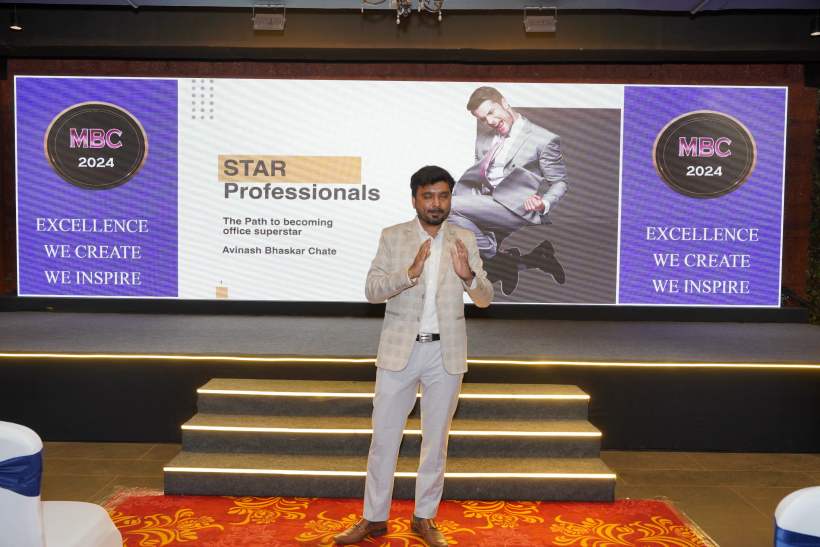
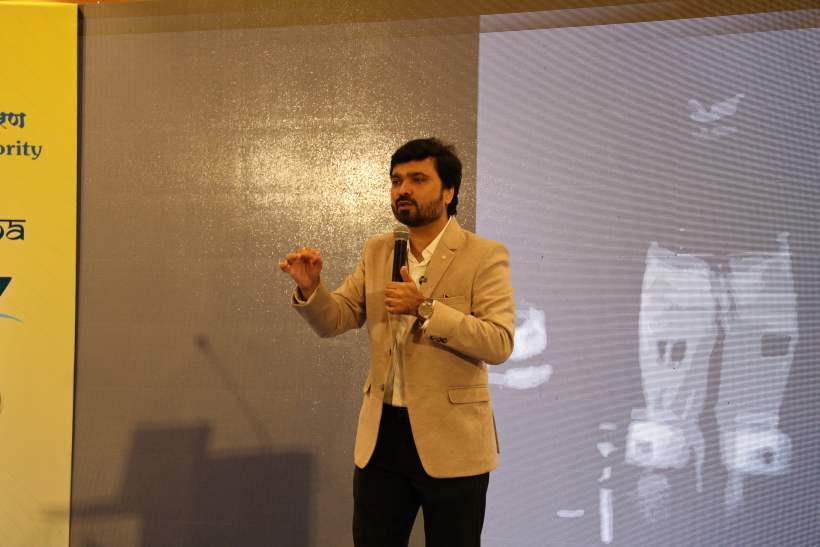
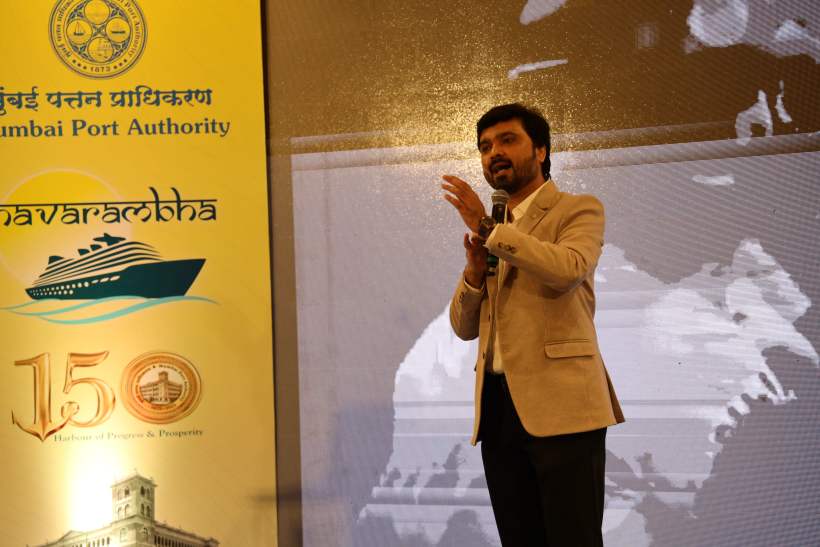
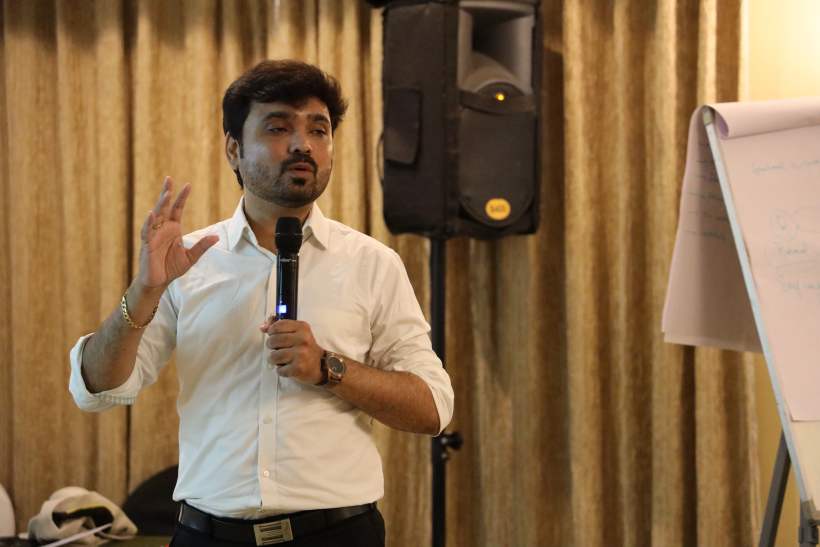
Inside the Room
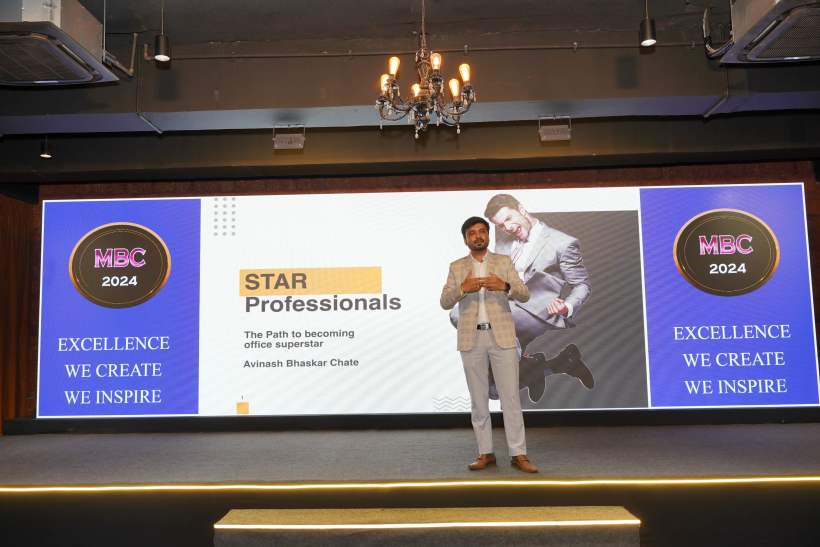
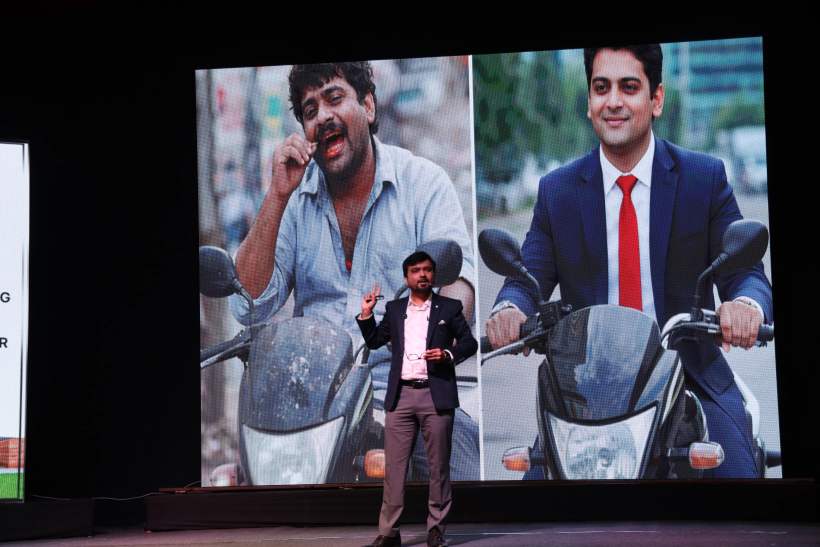

Why Avinash Chate
Avinash Chate is the owner of the personal speaking and training practice represented on this website, an entrepreneur, TEDx speaker and published author. He also owns and operates ABC Trainings and The Future Corporate as separate businesses with their own brands and course catalogues. The programmes on this page are Avinash Chate's personal corporate-training offerings; through his personal practice, he has trained teams at 1,000-plus organisations and 15,000-plus professionals.
He teaches these skills not from a manual, but because he practises them himself — leading a 100-plus member team of his own. That is the difference working leaders feel in the room.
Team Building Excellence — FAQ
What is "Team Building Excellence"?
It is Avinash Chate's flagship signature programme for turning a group of capable individuals into a genuine, high-performing team. It is the in-room, behavioural work of team performance — building trust and psychological safety, unlocking healthy conflict and candour, creating clarity of goals and roles, growing shared accountability, breaking silos into real collaboration, and forging a team identity worth belonging to. Unlike a day of games with no follow-through or a motivational talk that fades, it uses designed team experiences and honest debriefs on the team's own real frictions to change how the team actually behaves back at work.
How is this different from Outbound Training?
They are designed as complementary siblings, not duplicates. Outbound Training is the experiential outdoor programme — the Sahyadri venues around Lonavala, Lavasa and Igatpuri, the physical challenges, the offsite reset. Team Building Excellence is the indoor, behavioural work: trust, healthy conflict, clarity, accountability, collaboration and shared identity, built in the room on the exact tensions the team lives with every day. Many organisations run both — the outbound experience to break the ice and energise, and the in-room programme to embed the behaviours of a real team. A multi-day residential can blend the two.
Who should attend this programme?
Any intact team that has to work together — a project team, a department, a leadership team, a shift or plant crew. It is especially powerful for teams that have just formed, merged or been restructured and need to become one quickly; for cross-functional groups that struggle to collaborate across boundaries; and for any team with low trust, internal friction, unspoken conflict, low energy, or a leader who feels they are carrying the group alone. It works for teams of all sizes, organised into the right batch structure so everyone takes part.
Why do good people fail to become a team?
Because a team is a built formation, not a natural one. Putting capable people in the same reporting line does not make them a team any more than putting instruments in one room makes an orchestra. Real teams run on things nobody hires for and nobody trains — trust deep enough to be vulnerable, the safety to disagree openly, clarity on who owns what, peer-to-peer accountability, and a shared identity where "we" outranks "me". None of that is taught in school, college or technical training, so good individuals default to protecting themselves and doing their part. It is almost never a people problem; it is a behaviour-and-safety gap, and gaps close with the right practice.
Isn't team building just games and fun with no lasting impact?
That distinction is central to this programme. The activities are not entertainment for its own sake — every challenge is designed to expose how this specific team actually behaves under pressure, and every one is followed by a structured debrief that turns the experience into insight and a concrete action back at work. The learning lives in the reflection, not the game. The team leaves with new behaviours proven in practice, shared norms in its own words, and review points to keep them — which is exactly what a day of games alone can never deliver.
What does the programme cover?
Seven connected modules, built from the foundation up: trust and psychological safety; healthy conflict and candour; clarity of goals and roles; accountability and ownership; cross-functional collaboration; shared purpose and team identity; and a practice module of real team challenges with honest debriefs. Every module pairs a short, usable model with a designed team experience and reflection on the frictions this team actually lives with.
How is it delivered, and how long does it take?
It is experiential and highly interactive — designed challenges, real practice and honest debriefs, with minimal lecture. The duration is flexible: the same programme runs as a half-day, a full day, a multi-day residential off-site that blends indoor work with outbound challenges, or a modular series on a monthly, quarterly or annual rhythm so the gains hold instead of fading. We shape the exact length and cadence with you in a design call. It works for teams of all sizes, organised into the right batch structure so every person takes part.
What do leaders, HR and the organisation get out of it?
One programme delivers four returns. Each team member gains trust, a voice and the relief of not working alone against everyone else. The team lead inherits a group that self-organises, surfaces problems early and needs far less firefighting — freeing them to lead instead of endlessly coordinate. HR and L&D get a visibly more collaborative, engaged, lower-attrition team and hard proof that a people investment moved something real. And the organisation gets the compounding effect it was paying for — talent that finally multiplies instead of merely adding up.
Can it be delivered on-site, and in which languages?
Yes. Most engagements are across Maharashtra — Pune, Mumbai, Chhatrapati Sambhajinagar, Nashik, Nagpur and the surrounding MIDC industrial belts — and the programme is equally delivered pan-India and internationally on request, whether in your own premises, at a venue, or as a residential off-site. Delivery is available in English, Hindi and Marathi, or a natural mix, which matters especially for mixed-seniority teams and crews promoted from the floor.
Why Avinash Chate for this programme?
Because it is built from real rooms, not borrowed slides. Avinash Chate is an entrepreneur and corporate trainer who runs a 100-plus member organisation and builds and leads teams himself, so the trust, accountability and collaboration he teaches are tested in his own business. He is a TEDx speaker and author of The Winning Edge, creator of the KITE leadership framework, and has delivered team-building and team-development work for 1,000-plus organisations — including Kaeser Compressors, Ferrero, Hitachi and JSW Steels — across manufacturing, BFSI, IT and services. That combination of real operating experience and designed, debriefed experiential practice is what makes this programme land where a games day cannot.
Explore More
How to Bring This to Your Team
Every run of this programme is shaped around your team and your calendar — there is no off-the-shelf package. Getting started is simple.
Tell us the situation
Share who the team is — newly merged, siloed, low on trust, or simply never gelled — and what you want to change. A short enquiry is enough to begin.
A design call
We shape the objectives, the format and the cadence together — from a half-day to a residential off-site to an annual rhythm — and decide how deep to take each team behaviour for your group.
A proposal built for you
You get a clear, customised proposal — scope, format, investment and outcomes — for your specific team. No templated pricing; the programme scales to what you need.
Investment is scoped to the format, team size and cadence you choose, and shared in the proposal — from a single team reset to a year-long team-development journey. Email connect@avinashchate.com or call +91 87936 30001 to start.
Turn your group of capable individuals into a real team
Give your people the in-room behaviours a team is actually made of — trust, healthy conflict, clarity, accountability, collaboration and shared identity — through Avinash Chate's signature Team Building Excellence programme. On-site across Maharashtra, pan-India and internationally, in English, Hindi or Marathi.
Request a Proposal →