Trust & Psychological Safety Training
The most dangerous thing on your team isn't disagreement. It's the silence where the disagreement should have been.
From the outside, the team looks fine. Meetings are calm. Nobody argues. Heads nod. But sit with it a little longer and you start to notice what isn't happening. The junior who has clearly spotted a flaw but says nothing. The idea that dies in someone's throat because it might sound stupid. The mistake that gets quietly buried instead of flagged early, when it was still cheap to fix. No one is being difficult — they have simply learned, from a hundred tiny signals, that around here it is safer to stay quiet. And that silence is the most expensive thing in the building: it is where problems grow, where good ideas go to die, and where your best people slowly, invisibly check out. This programme builds the one thing that ends it — a team where the truth can actually be said out loud.
★ 5.0 client rating · Across Maharashtra, pan-India & internationally · English, Hindi & Marathi
The Team That Looks Harmonious — And Is Quietly Editing Itself
There is a particular kind of team that fools everyone, including the people running it. It is polite. It is agreeable. Nobody rocks the boat. And precisely because it looks so smooth, the leader assumes all is well. Underneath, though, everyone is doing a subtle, constant calculation — is it safe to say this? — and, more often than not, deciding it is not. So the concern about the timeline stays unspoken until the deadline is already blown. The half-formed idea, the one that might have been brilliant, never leaves the person's head. The disagreement that should have sharpened the decision simply doesn't happen, and a flawed plan sails through unchallenged because challenging it felt risky.
And the cost is almost impossible to see, which is exactly what makes it so ruinous. You never find out about the innovations you didn't get, the errors that could have been caught, the talented people who stopped contributing long before they resigned. Everyone is protecting themselves — hiding mistakes, agreeing in the room and objecting in the corridor, holding back the very candour the team needs to be good. The team is not lazy or incapable. It has simply concluded, correctly, that honesty is not worth the risk here. That single, unspoken conclusion is the ceiling on everything the team could otherwise become.
Why Smart People Stay Silent — And Why That Can Be Undone
The instinct to protect yourself is not weakness; it is wiring. Human beings are exquisitely sensitive to social risk — to looking ignorant, incompetent, negative or disruptive in front of the group. The moment a team member senses that a question will be met with a sigh, that an admitted mistake will be remembered and held against them, or that dissent will be treated as disloyalty, the rational move is to go quiet. Psychological safety is simply the shared belief that this team is safe for interpersonal risk-taking — that you can speak up, ask, disagree and admit you got it wrong without being punished or humiliated. Where it exists, people bring their full intelligence to work. Where it is missing, they bring a careful, self-edited fraction of it.
The good news — and it genuinely surprises people — is that trust and safety are not personality traits some teams are lucky enough to have. They are outcomes, built or broken by specific, learnable behaviours: how a leader responds the first time someone admits an error, whether questions are welcomed or punished, whether people keep their word in small things, whether disagreement is framed as contribution rather than threat. Change those behaviours deliberately and the silence lifts, usually faster than anyone expects. This programme makes that build explicit — it teaches the anatomy of trust, the behaviours that create safety, and how to repair both when they have been damaged.
Does This Sound Familiar?
If your team is quieter, more guarded or more politely agreeable than it should be, it is almost never a people problem — it is a safety problem, and safety can be built. Here is what you are likely seeing, what that silence is quietly costing you, and exactly which part of the programme addresses it.
| The symptom you see | What it is costing you | The real cause | How the programme fixes it |
|---|---|---|---|
| Meetings are calm and agreeable, yet the real objections surface later in the corridor | Flawed decisions go unchallenged; the team commits to plans half of them privately doubt | People don't believe it is safe to disagree openly, so dissent goes underground | The Safe to Speak module — making disagreement a contribution, not a risk |
| Mistakes get hidden or discovered late, rarely flagged early | Small, cheap problems grow into large, expensive ones before anyone admits them | People have learned that owning up to an error here costs more than concealing it | The Anatomy of Trust module — and building error-friendly norms |
| A few voices dominate while the quieter, often newer people say almost nothing | You are paying for a whole team's thinking and getting a fraction of it | The unspoken pecking order tells most people their input is not wanted | The Safe to Speak module — drawing out every voice, not just the loud ones |
| Trust between two people, or two functions, has broken and the tension now poisons the wider team | Cooperation stalls, information is hoarded, and everyone starts taking sides | A breach of trust was never repaired, so it hardened into suspicion | The Rebuilding Trust module — repairing a breach deliberately |
| People do exactly what is asked and not one thing more — the discretionary effort is gone | Innovation dries up and your best performers quietly disengage before they leave | Without safety, offering ideas or extra effort feels exposed and unrewarded | The Why Safety Drives Performance module — reconnecting effort and safety |
What Changes When Your Team Is Actually Safe to Speak
Picture the same team, six months on. The junior speaks up in the meeting and the room leans in instead of shutting them down. Someone says "I got this wrong, and here's what I've learned" — and it is met with respect, not a flinch. A decision gets genuinely stress-tested because two people were willing to disagree well, in the open, and the plan is better for it. The problem that would once have been buried is now raised early, while it is still small and fixable. Nobody is performing harmony; they are doing the honest, sometimes uncomfortable work of a team that trusts each other enough to tell the truth.
And underneath it sits the shift that pays for the entire programme: the silence is gone, and with it the hidden tax it was charging you. You get the ideas, the early warnings and the discretionary effort you were quietly losing. Your best people re-engage because contributing finally feels safe. The team stops managing its image and starts raising its performance — because trust and psychological safety, the foundation every high-performing team stands on, are finally in place beneath it.
What Your Team Will Be Able to Do
- ✓ Understand what psychological safety is, why it drives performance, and how its absence hides problems
- ✓ See clearly what builds trust on a team and what quietly erodes it
- ✓ Speak up, ask questions, disagree and admit mistakes without fear — and make it safe for others to do the same
- ✓ Recognise the specific behaviours that create safety, and the ones that silently kill it
- ✓ Repair trust deliberately after it has been broken, instead of letting a breach harden into suspicion
- ✓ Give and receive candour — honest feedback and open disagreement — in a way that strengthens rather than strains the relationship
- ✓ Embed norms and habits that keep safety alive in how the team meets, decides and works every day
What the Programme Covers
Seven connected modules that take a team from polite and guarded to open and honest. Every module pairs a short, practical input with real practice on the exact situations your team faces — the admitted mistake, the hard disagreement, the broken trust — and ends with a concrete change in how the team works together.
These are building blocks, not a fixed-length course. A two-hour session goes deep on the two or three that matter most to you; a half or full day covers more; a multi-day intensive — or an ongoing monthly, quarterly or half-yearly rhythm — works through them all, with far more practice. We shape which ones, in what order and how deep, with you.
Why Psychological Safety Drives Performance — and Its Absence Hides Problems
What we cover: What psychological safety actually is — and, just as importantly, what it is not (not niceness, not lowered standards, not endless comfort). The research linking safety to learning, innovation and results, from Google's own study of what makes teams effective to decades of work on team performance. Why a team without safety looks calm on the surface while problems quietly accumulate underneath. The hidden cost of silence — the unraised concern, the buried mistake, the unshared idea — and why you almost never see the bill.
What changes: The team stops mistaking politeness for health and understands, concretely, why speaking up is what high performance is actually built on.
The Anatomy of Trust — What Builds It and What Breaks It
What we cover: Trust broken down into its real components rather than treated as a vague feeling — competence, reliability, care and honesty, and how each is earned or lost. The trust equation — credibility, reliability and intimacy set against self-interest — as a practical diagnostic. How trust is built slowly through small, kept commitments and broken quickly through a single careless breach. The distinction between trusting someone's character and trusting their competence, and why the two are repaired differently.
What changes: The team can name exactly what is building or eroding trust between its members — and stop leaving something this important to chance.
Making It Safe to Speak Up, Disagree and Admit Mistakes
What we cover: The three things people are most afraid to do — ask a question, voice a dissent, own an error — and how to make each of them safe. Reframing disagreement as a contribution to be welcomed rather than a threat to be managed. Practical ways to draw out the quiet voices and stop the loud ones from crowding the room. Responding to a hard truth or an admitted mistake so that the person who spoke feels respected — because that single response teaches everyone watching whether it is safe to speak next time.
What changes: The team learns, in practice, how to raise the hard thing and how to receive it — so honesty becomes the norm instead of the exception.
The Leader's Behaviours That Create — or Kill — Safety
What we cover: Why safety is set at the top of the room: the leader's smallest reactions teach the team what is and isn't allowed. The behaviours that build it — humble inquiry, genuine curiosity, admitting your own mistakes and not-knowing, thanking people for bad news. The behaviours that quietly destroy it — the dismissive sigh, the interruption, punishing the messenger, needing to be the smartest person present. Modelling fallibility and asking real questions instead of performing certainty. How a leader turns a mistake into a learning moment rather than a blame moment.
What changes: Leaders and influencers on the team see exactly how their everyday behaviour creates or kills safety — and start deliberately doing the things that build it.
Rebuilding Trust After It Has Been Broken
What we cover: What actually happens when trust is breached — the shift from openness to self-protection, and how quickly it spreads through a team. The difference between a breach of competence and a breach of character, and why each needs a different repair. The real anatomy of rebuilding — acknowledging the breach honestly, taking genuine ownership, and then the patient work of rebuilt reliability over time. Why a sincere repair can leave a relationship stronger than before, and why avoidance leaves it festering.
What changes: The team can face a broken trust and actually mend it — instead of letting the tension harden into permanent suspicion and quiet division.
Embedding Safety Into How the Team Works
What we cover: Turning safety from a good workshop into a durable habit. Simple team norms and agreements — how we disagree, how we treat mistakes, how we make sure every voice is heard — made explicit rather than assumed. Building candour into the rhythm of the team: check-ins, retrospectives and the ordinary meetings where safety is either reinforced or eroded. Naming and interrupting the behaviours that silence people the moment they reappear. Keeping standards high and safety high at the same time, so honesty never becomes an excuse for mediocrity.
What changes: Safety stops depending on one good day and becomes the ordinary way the team meets, decides and works together.
Practice — Real Team Scenarios in the Room
What we cover: Live practice on the moments where trust and safety are actually won or lost: raising an unpopular concern to a senior person, admitting a costly mistake to the team, disagreeing well with a colleague who outranks you, responding to bad news without shooting the messenger, and repairing a specific breach of trust between two people. Practised in the room, using the real, sometimes uncomfortable situations from your own team.
What changes: The team walks out having already lived the hard, honest moments once, in safety — so the real ones, days later, feel possible instead of impossible.
How It Is Delivered
This is not a talk about trust; it is a room where a team practises being honest with each other. Because the subject is safety itself, the session is carefully built so that the practice never becomes exposure — people work on real situations at a depth they choose, and the facilitation protects them while they stretch. Most of the time is spent doing the actual thing: raising the hard concern, admitting the real mistake, disagreeing well, repairing a breach. The models are kept simple and immediately usable; the shift happens in the practice, where a team experiences, often for the first time, what it feels like to tell the truth and be met with respect.
The format flexes to your team and your reality. It runs as a focused half-day, a full-day workshop, a multi-day intensive when trust needs deeper repair, or a series of shorter sessions that build safety over time and let new norms actually take hold — and it works powerfully as an ongoing rhythm, revisited as teams re-form and change. For an intact team it is best delivered whole, so the people who work together practise together; for larger groups it is organised into small circles so everyone participates rather than watches. The exact depth, sequence and cadence are shaped with you in the design call.
Formats That Fit Your Calendar
Half-day or full-day workshop
A focused session to open up a guarded team quickly — ideal for an intact team that needs to start telling the truth to each other.
Multi-day intensive
Two or more days to go deep — right when trust has been damaged, a team has been through change, or the silence has become entrenched and needs real repair.
Modular series over time
Shorter sessions spread across weeks so new norms are practised, revisited and given time to become how the team actually behaves.
An ongoing team-health rhythm
Revisited periodically as teams re-form, merge or grow — keeping trust and psychological safety a living part of how the organisation works, not a one-off event.
The Thinking Behind It
This programme is not a generic teamwork deck. It draws on the best research and writing on trust and psychological safety — distilled into a few models a team can use immediately — and then goes further, into the frameworks Avinash uses to build trust and candour inside his own 100-plus member organisation.
Ideas & books we draw on
- The Speed of Trust — Stephen M.R. Covey · the case that trust is a hard, measurable driver of speed and cost — not a soft nicety
- Trust and Betrayal in the Workplace — Dennis Reina & Michelle Reina · the practical anatomy of how workplace trust is built, broken and — crucially — rebuilt
- The Thin Book of Trust — Charles Feltman · trust broken into four plain, usable assessments you can actually act on with a team
- Daring Greatly — Brené Brown · why vulnerability — admitting mistakes and not-knowing — is the birthplace of trust and safety
- Trust Factor — Paul J. Zak · the neuroscience of trust, and the concrete management behaviours that raise it in a team
- Humble Inquiry — Edgar H. Schein · the quiet art of asking instead of telling — the leader behaviour that makes it safe to speak
Models we use to build trust
- The trust equation · credibility + reliability + intimacy, divided by self-orientation — a practical diagnostic for trust
- The 4 cores of credibility (Covey) · integrity, intent, capabilities and results — the roots trust actually grows from
- Psychological safety (Amy Edmondson) · the shared belief that the team is safe for speaking up, questioning and admitting error
- The Reinas' three dimensions of trust · trust of character, of communication and of capability — and how each is repaired
- Humble inquiry (Edgar Schein) · asking genuine questions from curiosity, the behaviour that draws people out and builds safety
And Avinash's own frameworks — the part you won't find anywhere else
Beyond the established thinking, the programme is built on frameworks Avinash has created and written about himself — including his KITE leadership framework and the principles in his book The Winning Edge. These come from actually running a 100-plus member organisation and developing its people year after year, not from a textbook. It is the layer competitors cannot copy, and the one your teams remember long after the session ends.
Who It Is For
Any intact team that senses it is more guarded, more polite or more silent than it should be — leadership teams, project teams, cross-functional groups and shop-floor crews alike. It is especially powerful for a team that has been through change, a merger or a rough patch that has left trust frayed, and for newly formed teams that want to build safety deliberately from the start rather than hope it appears. Because the leader sets the tone, it is at its most transformative when the manager goes through it alongside their team — practising, in the same room, the behaviours that create the safety they are asking for.
Taught by Someone Who Has Built Trust in His Own Team
Avinash Chate does not teach this from a textbook. He runs a 100-plus member organisation, where trust, candour and the safety to raise hard things are not a concept but a daily operating requirement — so the trust-building, the repair after a breach and the making-it-safe-to-speak taught here are the real thing, tested in his own business. Programmes that build trust, psychological safety and honest teamwork have been delivered across sectors, from manufacturing shop floors where speaking up can be a safety matter, to IT, sales and services teams learning to disagree well and tell each other the truth.
Why Avinash Chate
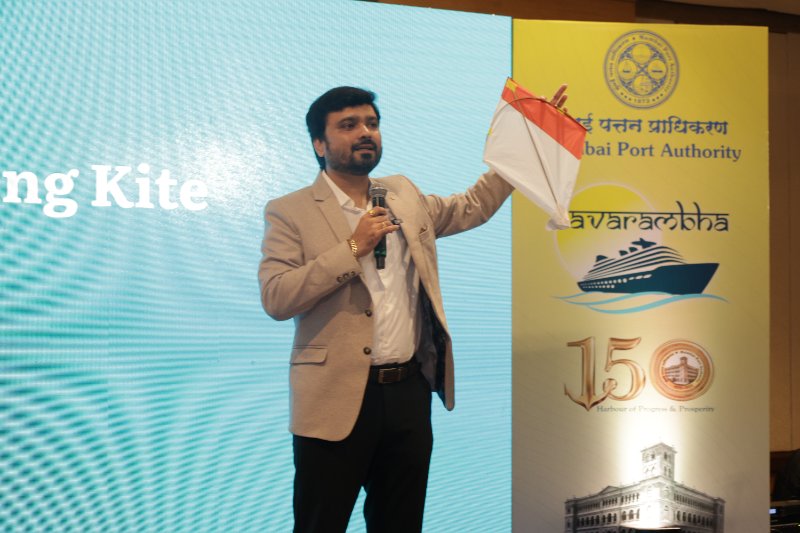
Avinash Chate is an entrepreneur and corporate trainer who runs ABC Trainings and The Future Corporate & Business Coaching, a TEDx speaker and published author. Over the last decade he has trained teams at 1,000-plus organisations and 15,000-plus professionals.
He teaches these skills not from a manual, but because he practises them himself — leading a 100-plus member team of his own. That is the difference working leaders feel in the room.
Trust & Psychological Safety Training — FAQ
What is Trust & Psychological Safety Training?
It is a practical programme that helps a team build the foundation every high-performing team stands on — trust between its members and the psychological safety to speak up. It covers why safety drives performance and how its absence hides problems, the anatomy of what builds and breaks trust, how to make it safe to disagree and admit mistakes, the specific leader behaviours that create or kill safety, how to rebuild trust after a breach, and how to embed all of it into how the team works day to day. Unlike a generic teamwork session, it is built around the real, uncomfortable moments your team actually faces — practised in the room until honesty starts to feel possible.
Who should attend this training?
Whole, intact teams get the most from it — leadership teams, project teams, cross-functional groups and shop-floor crews — because trust is built between the people who actually work together. It is especially valuable for teams that have been through change, a merger or a difficult period that has left trust frayed, and for new teams that want to build safety deliberately from the start. It is most powerful when the manager attends alongside the team, since the leader's behaviour is what sets the tone for safety in the first place.
Isn't psychological safety just about being nice and avoiding conflict?
No — and this is the most important misunderstanding to clear up. Psychological safety is not niceness, not lowered standards, and not the absence of disagreement. It is precisely what makes healthy disagreement possible: the shared belief that you can voice a dissent, ask a naive question or admit a mistake without being punished or humiliated. High safety and high standards go together — in fact, safety is what lets a team hold high standards honestly, because people can name problems instead of hiding them. A team that is merely polite is often the opposite of safe: the harmony is real, but so is the silence underneath it.
Can trust actually be built deliberately, or is it just something some teams have?
It can absolutely be built. Trust and safety feel like fixed traits, but they are outcomes produced by specific, learnable behaviours — how a leader responds the first time someone admits an error, whether questions are welcomed or punished, whether people keep their word in small things, whether disagreement is treated as contribution or disloyalty. Change those behaviours deliberately and the silence lifts, usually faster than people expect. That is exactly what the programme teaches: not a vague aspiration to trust more, but the concrete behaviours that build it and repair it.
What does the programme cover?
Seven connected modules: why psychological safety drives performance and how its absence hides problems; the anatomy of trust — what builds it and what breaks it; making it safe to speak up, disagree and admit mistakes; the leader behaviours that create or kill safety; rebuilding trust after it has been broken; embedding safety into how the team works; and extensive practice on real team scenarios. Every module pairs a short, usable model with practice on situations drawn from your own team.
Our team has had a real breakdown in trust — can this help repair it?
Yes — repairing broken trust is a core part of the programme, not an afterthought. There is a whole module on what actually happens when trust is breached, the difference between a breach of competence and a breach of character, and the real work of rebuilding — honest acknowledgement, genuine ownership and the patient re-establishing of reliability over time. When trust has broken between two people or two functions and the tension is poisoning the wider team, a facilitated, carefully-held session is often what finally lets it be named and mended rather than left to fester.
Is the training safe to do — won't asking people to be honest backfire?
This is the right question, and the session is built entirely around it. Because the subject is safety itself, the facilitation is carefully designed so that practice never tips into exposure — people work on real situations at a depth they choose, the ground rules are set together, and the facilitator protects the room while people stretch. The aim is never to force confessions or stage confrontations; it is to let a team experience, in a protected setting, what it feels like to raise the hard thing and be met with respect. Done well, people leave feeling safer with each other, not more exposed.
How is the training delivered — and how long does it take?
It is highly interactive — real scenarios and guided practice, with minimal lecture, and the examples are customised to your team, your industry and the situations your people actually face. The duration is flexible: the same programme runs as a half-day, a full day, a multi-day intensive when trust needs deeper repair, or a series of shorter sessions that let new norms take hold over time, and it works well as an ongoing rhythm revisited as teams re-form and change. We shape the exact length and cadence with you. For an intact team it is delivered whole; for larger groups it is organised into small circles so everyone participates rather than watches.
Can it be delivered on-site, and in which languages?
Yes. Most engagements are across Maharashtra — Pune, Mumbai, Chhatrapati Sambhajinagar, Nashik, Nagpur and the surrounding MIDC industrial belts — and the programme is equally delivered pan-India and internationally on request. Delivery is available in English, Hindi and Marathi, or a natural mix, which matters especially on shop floors and mixed teams where trust and candour have to be built in the language people actually speak.
Why Avinash Chate for this programme?
Avinash Chate is an entrepreneur and corporate trainer who runs a 100-plus member organisation, where trust and the safety to raise hard things are a daily operating requirement rather than a theory — so he teaches this from lived experience. He is a TEDx speaker and author of The Winning Edge, creator of the KITE leadership framework, and has trained teams at 1,000-plus organisations and more than 15,000 professionals across manufacturing, IT, sales and services. That combination of real operating experience and his own frameworks is what teams respond to when the subject is something as fragile, and as important, as trust.
Related Training Topics
Turn a guarded, silent team into one that tells the truth
Build the trust and psychological safety every high-performing team stands on — where people speak up, disagree, admit mistakes and do their best work. On-site across Maharashtra, pan-India and internationally, in English, Hindi or Marathi.
Request a Proposal →