Conflict Management Training
The dangerous conflict in your team isn't the loud one — it's the one no one will say out loud.
On the surface, the team looks fine. Meetings are polite. Everyone is professional, agreeable, calm. And yet something is off. Two departments that should be working together keep missing each other's handoffs. A decision that should take a day takes three weeks. People are unusually careful about who they email, who they copy, who they avoid. The real disagreement — the one everyone can feel — is never actually said in the room. It has gone somewhere quieter: into corridor conversations, into a grudge that started six months ago, into a slow, silent withdrawal of goodwill. This is what unaddressed conflict looks like in most workplaces. Not a fight. A fog. This programme is about clearing it.
★ 5.0 client rating · Across Maharashtra, pan-India & internationally · English, Hindi & Marathi
The Conflict Everyone Can Feel and No One Will Name
Real workplace conflict rarely announces itself. It doesn't happen at the top of anyone's voice. It happens in what is not said — the point someone swallows in the meeting and vents about in the car park afterwards, the request between two teams that quietly stops being answered, the ally who cools into a stranger. On paper everything is professional. Underneath, two people or two functions are working around each other instead of with each other, and everyone in the room knows it while everyone in the room pretends not to.
The trouble is that buried conflict does not stay buried, and it does not stay contained. It leaks. It shows up as missed deadlines nobody can quite explain, as a project that keeps stalling at the same seam between two departments, as passive resistance to a decision that was supposedly agreed. It shows up in a good person handing in their notice for reasons that sound vague, because the true reason — a relationship that was never repaired — is too awkward to write down. The tension was never dealt with; it just changed shape and kept charging interest.
Why Conflict Goes Underground — And Why That Can Be Undone
Here is the part most people were never told: the goal was never a workplace with no conflict. A team that never disagrees is not harmonious — it is either bored or afraid. Wherever there are two smart people with real stakes, there will be friction, and that friction is often where the better decision is hiding. The problem is not that conflict exists. The problem is that almost no one was ever taught what to do with it, so they do the only two things instinct offers: attack, or avoid. And because attacking feels risky and unprofessional, most people at work choose avoidance — over and over, until the avoidance becomes the culture.
Avoided conflict is not resolved conflict. It is conflict driven underground, where it hardens into positions, stories and sides. The disagreement that could have been settled in one honest twenty-minute conversation instead metastasises across months — into a grudge, a silo, a reputation. This is a skill gap, not a character flaw, and skill gaps close with practice. When people learn to lower the heat, separate the person from the problem, hear the real interest under the stated position and actually work it through, the very same tension that was poisoning the team starts producing better calls and deeper trust. That is what this programme builds — deliberately, in the room, on the conflicts your people are actually carrying.
Does This Sound Familiar?
If your team is polite on the surface but tense underneath, it is almost never that you have the wrong people. It is that no one taught them how to handle disagreement without either blowing up or shutting down. Here is what you are likely seeing, what it is quietly costing, and exactly which part of the programme addresses it.
| The symptom you see | What it is costing you | The real cause | How the programme fixes it |
|---|---|---|---|
| Everyone stays professional and agreeable, yet nothing controversial ever gets truly resolved | Decisions get relitigated in private, momentum drains, and the same issue keeps resurfacing | The team's default is avoidance — disagreement feels unsafe, so it goes underground instead of onto the table | The understanding-conflict module — styles, defaults and making it safe to disagree |
| Two people or two departments keep working around each other instead of with each other | Broken handoffs, duplicated effort, and a project that stalls at the same seam every time | An unrepaired rift has hardened into sides, and nobody has surfaced what the fight is actually about | The interests-beneath-positions module — finding the real disagreement under the standoff |
| A disagreement from months ago still quietly shapes who talks to whom | Silos, cliques and lost collaboration between people who should be each other's closest allies | The original conflict was never worked through, so it calcified into a grudge and a story | The rebuilding-trust module — repairing a relationship after a fallout |
| When a disagreement does surface, it gets hot fast — voices rise, or someone goes cold and silent | People stop raising real issues at all, and the team learns that honesty is dangerous | No one has the skill to regulate the heat, so the choice narrows to fight or flee | The de-escalation module — bringing down emotion so the issue can be discussed |
| As a manager you keep getting pulled in to referee disputes between your people | Your time disappears into firefighting, and the same two people never learn to sort it out | Nobody was taught to mediate — to sit between two parties and help them reach their own resolution | The mediation module — facilitating a resolution between others |
What Changes When Your Team Can Actually Handle Conflict
Picture the disagreement happening in the room instead of the corridor. Someone says the hard thing — clearly, and without heat — and the team can hear it because it was aired as a problem to solve, not a person to defeat. The tension between the two departments gets named, worked through in a single honest session, and turned into a cleaner way of working together. When emotions do rise, someone in the room knows how to bring the temperature down before it does damage. The manager stops refereeing and starts coaching, because the people can now sort most of it out themselves.
And underneath all of it, the shift that makes it worth doing: the conflict stops being the thing that quietly erodes the team and becomes the thing that sharpens it. Trust deepens, because people have seen that a disagreement here gets resolved rather than buried. Good people stop leaving over grievances no one ever addressed. The same friction that used to leak out as missed handoffs and passive resistance now shows up where it belongs — as better decisions, argued honestly and settled cleanly.
What Your Team Will Be Able to Do
- ✓ Recognise their own default conflict style — and consciously choose a better response than fight or flight
- ✓ Raise a difficult issue directly and calmly, so it gets addressed instead of driven underground
- ✓ De-escalate a heated exchange — lowering emotion so the real problem can actually be discussed
- ✓ Separate the person from the problem, and hear the genuine interest beneath a hardened position
- ✓ Mediate between two colleagues as a manager, helping them reach a resolution they own
- ✓ Rebuild trust and repair a working relationship after a fallout, rather than living with the rift
- ✓ Treat healthy disagreement as a source of better decisions — not a threat to be smoothed over
What the Programme Covers
Seven connected modules that take a team from burying conflict to working through it. Every module pairs a short, practical input with real practice on the exact tensions your people are living with — and ends with a concrete change in how they handle disagreement.
These are building blocks, not a fixed-length course. A two-hour session goes deep on the two or three that matter most to you; a half or full day covers more; a multi-day intensive — or an ongoing monthly, quarterly or half-yearly rhythm — works through them all, with far more practice. We shape which ones, in what order and how deep, with you.
Understanding Conflict — Sources, Styles and Your Own Default
What we cover: What conflict actually is, and why a team with none is usually afraid rather than aligned. The real sources of workplace conflict — competing goals, unclear roles, scarce resources, clashing values and simple misunderstanding. The five conflict-handling styles, and the honest work of naming your own instinctive default — whether you attack, accommodate, avoid, compromise or collaborate — and what it costs you. Why avoidance is the most common and most expensive default of all.
What changes: Each person sees their own pattern clearly and stops running it on autopilot — the self-awareness every other skill in the programme is built on.
The Real Cost of Conflict You Never Have
What we cover: Where avoided conflict actually goes — into corridor conversations, silent withdrawal, sides and stories. How a single unaddressed disagreement metastasises over months into silos, grudges and attrition. Reading the quiet signals of buried conflict on a team — the careful emails, the stalled handoffs, the meeting where the real point is never said. Why "keeping the peace" often keeps the problem instead, and what harmony genuinely requires.
What changes: The team stops treating avoidance as the safe, professional option and starts seeing the true price of leaving conflict underground.
De-escalating Heat and Emotion
What we cover: Why a disagreement turns into a fight — how threat, ego and the fear of losing face hijack a conversation. Managing your own reaction first, so you do not add fuel. Practical techniques to bring the temperature down — genuine listening, acknowledging the other person's experience, slowing the pace, choosing the right moment and setting. Handling the person who explodes and the person who goes cold and silent. Creating enough safety that the real issue can finally be discussed.
What changes: People can steady a heated moment instead of being swept along by it — turning a flare-up into a conversation the team can actually use.
Surfacing the Real Interests Beneath the Positions
What we cover: The difference between a position — what someone demands — and the interest underneath it — what they actually need. Why people argue over positions and stay stuck, and how to move the conversation to interests where agreement lives. Separating the person from the problem, so you can be hard on the issue and easy on the human. Asking the questions that reveal the real concern, uncovering shared ground that was hidden, and building a resolution that gives both sides what they truly came for.
What changes: Disagreements that felt like a dead-end open up, because people learn to argue the real problem instead of their hardened positions.
Mediating Between Others — The Manager as Referee No Longer
What we cover: The manager's dilemma when two of your people are in conflict — and why taking sides or imposing a verdict rarely holds. The mediator's stance: neutral, structured, in service of their resolution rather than yours. Setting up the conversation, hearing each side fully, moving the parties from blame to the problem, and helping them build an agreement they both own. Knowing when to mediate, when to coach the two to sort it out themselves, and when a matter must be escalated.
What changes: Managers stop being pulled in as referees and start facilitating resolutions that stick — freeing their time and growing their people.
Rebuilding Trust After Conflict
What we cover: Why the aftermath matters as much as the argument — a conflict that is technically settled but leaves the relationship broken has not really ended. The difference between resolution and repair. Offering and accepting a genuine acknowledgement, rebuilding reliability one kept commitment at a time, and dismantling the story each side has been telling about the other. Handling the grudge that has quietly shaped a team for months, and knowing when a relationship can be rebuilt versus merely made workable.
What changes: The team can turn a fallout into a stronger relationship than before, so old conflicts stop silently governing who works with whom.
Practice — Mediating the Real Team Scenarios
What we cover: Live role plays on the conflicts that actually run through a workplace: the two departments blaming each other for a broken handoff, the peer who quietly stopped cooperating after a slight, the heated disagreement that needs cooling before it does damage, the grudge no one will name, the dispute a manager is asked to mediate. Practised in the room, on real situations drawn from your own organisation, with feedback and a second attempt.
What changes: People walk out having already worked through the hard conflicts once, in safety — so the real ones, days later, feel handleable instead of threatening.
How It Is Delivered
This is not a lecture about conflict theory. It is a workshop where people practise the disagreements they usually avoid. They spend most of their time on their feet — de-escalating a heated exchange, surfacing the interest under a position, mediating between two colleagues — using real, disguised situations from your own organisation. The models are kept simple and immediately usable; the confidence is built in the practice, and in the fact that everyone gets to try the hard conversation more than once.
The format flexes to your needs. It runs as a focused half-day, a full-day workshop, a multi-day intensive for a team that is carrying real tension, or a series of shorter modules spaced out so the skills embed between sessions — and it works well as an ongoing rhythm, revisited as new frictions arise. For 20 to 40 participants it is organised into small batches so every person practises mediating and de-escalating, not just watches. The exact depth, duration and cadence are shaped with you in the design call, and where there is live tension in the room, it is handled with care.
Formats That Fit Your Calendar
Half-day or full-day workshop
A high-impact session to give a team the core skills — de-escalation, surfacing interests, and raising the hard issue — and shift how it handles disagreement.
Multi-day intensive
Two or more days to go deep — ideal for a team carrying real, unspoken tension, or for managers who need to become genuinely capable mediators.
Modular series over weeks
Shorter sessions spaced out so each skill is practised, taken back to real conflicts at work, and reinforced in the next session.
An ongoing conflict-resolution rhythm
Revisited periodically as new frictions surface — making honest, well-handled disagreement a permanent part of how the team works.
The Thinking Behind It
This programme is not a generic conflict deck. It draws on the best writing and research on human conflict and resolution — distilled into a few models people can use the moment they leave the room — and then goes further, into the frameworks Avinash uses to keep disagreement healthy inside his own 100-plus member organisation.
Ideas & books we draw on
- High Conflict — Amanda Ripley · on the difference between healthy conflict and the toxic, self-perpetuating kind — and how people climb back out of it
- The Anatomy of Peace — The Arbinger Institute · on the inner shift — seeing the other as a person, not an obstacle — that makes real resolution possible
- Resolving Conflicts at Work — Kenneth Cloke & Joan Goldsmith · a practical field manual for the everyday disputes, standoffs and grudges that actually show up at work
- Crucial Accountability — Kerry Patterson, Joseph Grenny, Ron McMillan & Al Switzler · on holding people to account and addressing broken commitments without the conversation exploding
- The Eight Essential Steps to Conflict Resolution — Dudley Weeks · a clear, humane step-by-step process for working a conflict through to a resolution both sides can own
- Emotional Agility — Susan David · on managing your own reaction in the heat of a disagreement, so you respond by choice instead of by reflex
Models we use to resolve conflict
- Thomas–Kilmann conflict modes · competing, collaborating, compromising, avoiding, accommodating — naming your default and choosing a better fit
- Interests vs positions · move off what people demand and onto what they actually need, where agreement lives
- Separate the people from the problem · the Fisher & Ury principle — hard on the issue, easy on the human
- The drama triangle (Karpman) · spotting the victim–persecutor–rescuer roles that keep a conflict stuck, and stepping out of them
- De-escalation ladder · lowering emotion and threat first, so the real problem can be discussed at all
And Avinash's own frameworks — the part you won't find anywhere else
Beyond the established thinking, the programme is built on frameworks Avinash has created and written about himself — including his KITE leadership framework and the principles in his book The Winning Edge. These come from actually running a 100-plus member organisation and developing its people year after year, not from a textbook. It is the layer competitors cannot copy, and the one your teams remember long after the session ends.
Who It Is For
Any team where the disagreement has gone quiet instead of getting resolved — where two functions work around each other, where old grievances shape who cooperates with whom, or where everyone is professional on the surface and tense underneath. It is powerful for cross-functional teams stuck at the seam between departments, for managers who keep being pulled in to referee disputes, and for leadership teams whose unspoken tensions quietly set the tone for everyone below them. On shop floors, in project rooms and across service and sales teams, it is the skill that turns buried friction into honest, workable disagreement.
Taught by Someone Who Handles Real Conflict, Not Case Studies
Avinash Chate does not teach this from a textbook. He runs a 100-plus member organisation, where disagreement between capable people is a daily reality — so the de-escalation, mediation and trust-rebuilding taught here are the real thing, tested in his own business rather than borrowed from a slide. Programmes that build conflict-handling and behavioural capability have been delivered across sectors — from manufacturing shop floors where two shifts blame each other, to IT, sales and services teams where cross-functional friction quietly stalls the work.
Why Avinash Chate
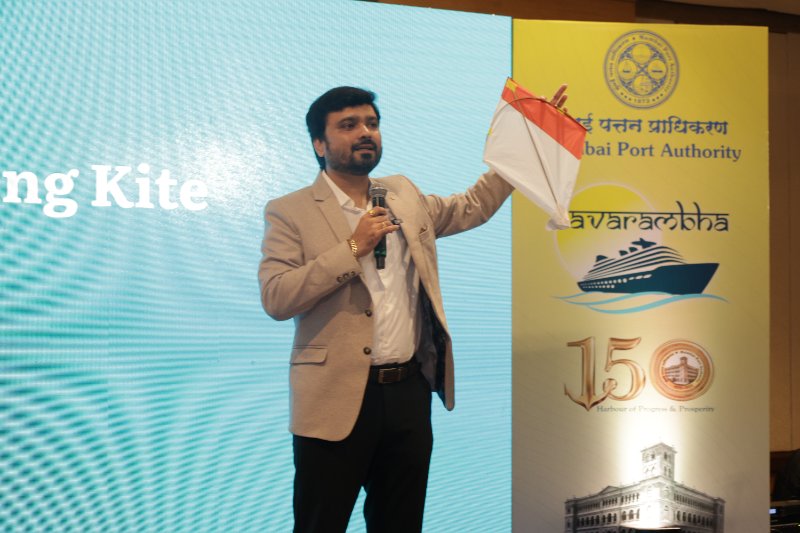
Avinash Chate is an entrepreneur and corporate trainer who runs ABC Trainings and The Future Corporate & Business Coaching, a TEDx speaker and published author. Over the last decade he has trained teams at 1,000-plus organisations and 15,000-plus professionals.
He teaches these skills not from a manual, but because he practises them himself — leading a 100-plus member team of his own. That is the difference working leaders feel in the room.
Conflict Management Training — FAQ
What is Conflict Management Training?
It is a practical programme that teaches a team how to handle the disagreement it currently avoids — before that disagreement goes underground and starts damaging the work. It builds the specific skills conflict actually requires: understanding your own conflict style, raising a hard issue calmly, de-escalating heat, surfacing the real interest beneath a stated position, mediating between two people, and rebuilding trust after a fallout. Unlike generic theory, it is built around the real, unspoken tensions on your team, practised in the room until people feel able to handle them.
Is the goal to eliminate conflict on our team?
No — and that is an important distinction. A team with no conflict is usually not harmonious; it is either disengaged or afraid to speak up. Wherever capable people have real stakes, there will be friction, and that friction is often where the better decision is hiding. The goal is not to remove disagreement but to make it healthy: aired honestly in the room rather than buried in corridors, worked through rather than left to fester. Handled well, the very same tension that was poisoning a team becomes a source of sharper decisions and deeper trust.
Our team seems fine on the surface — why would we need this?
Because the most damaging conflict is usually the quiet kind. When everyone is professional and agreeable but nothing controversial ever truly gets resolved, the disagreement has not disappeared — it has gone underground. It shows up later as broken handoffs, a project that keeps stalling at the same seam, passive resistance to decisions, and good people leaving for reasons that sound vague. A calm surface over unspoken tension is exactly the pattern this programme is built to address, before it costs you a relationship, a project or a person.
What does the programme cover?
Seven connected modules: understanding conflict and your own default style; the real cost of conflict you avoid; de-escalating heat and emotion; surfacing the real interests beneath positions; mediating a resolution between two other people; rebuilding trust after a fallout; and extensive role-play practice on the real conflicts your team is carrying. Every module pairs a short, usable model with practice on situations drawn from your own organisation.
How is the training delivered — and how long does it take?
It is highly interactive — role plays and real, disguised cases, with minimal lecture. The duration is flexible: the same programme runs as a half-day, a full day, a multi-day intensive for a team carrying real tension, or a series of shorter modules spaced out so the skills embed between sessions, and it works well as an ongoing rhythm revisited as new frictions arise. We shape the exact length and cadence with you. For 20 to 40 participants, sessions are organised into small batches so everyone actually practises.
Can you run this when there is real, live tension in the room?
Yes, and it is often where the training matters most — but it is handled with care. Real situations are worked through in a disguised, safe way rather than putting anyone on the spot, and the focus stays on building skill and understanding rather than assigning blame. Where a team is carrying a live rift, the design call is used to understand it first, so the session opens the tension constructively instead of inflaming it. The aim is always a team that leaves more able to work together, not less.
Is the programme customised to our organisation?
Yes. Before the first session, the examples and role-play scenarios are built around your context — your industry, your structure, and the real frictions your people face, from the shop floor to the cross-functional project room. Generic conflict training is exactly what fails; the value is in practising the actual disagreements and standoffs your team is living with, not textbook disputes that feel nothing like the ones on your floor.
Can it be delivered on-site, and in which languages?
Yes. Most engagements are across Maharashtra — Pune, Mumbai, Chhatrapati Sambhajinagar, Nashik, Nagpur and the surrounding MIDC industrial belts — and the programme is equally delivered pan-India and internationally on request. Delivery is available in English, Hindi and Marathi, or a natural mix, which matters especially where conflict and emotion are involved and people express themselves most honestly in their own language.
What outcomes can we expect?
Teams that raise hard issues in the room instead of the corridor, de-escalate heat before it does damage, and repair relationships rather than living with rifts. Managers who mediate resolutions that stick instead of endlessly refereeing. Fewer stalled projects and broken handoffs caused by unspoken friction, and fewer good people leaving over grievances no one ever addressed. Over time, a team where disagreement is a source of better decisions and stronger trust — not the thing quietly eroding it.
Why Avinash Chate for this programme?
Avinash Chate is an entrepreneur and corporate trainer who runs a 100-plus member organisation, where handling disagreement between capable people is a daily reality — so he teaches conflict resolution from lived experience, not theory. He is a TEDx speaker and author of The Winning Edge, creator of the KITE leadership framework, and has trained teams at 1,000-plus organisations and more than 15,000 professionals. That combination of real operating experience and his own frameworks is what teams carrying genuine tension respond to.
Related Training Topics
Turn the conflict that hides in your team into honest, productive disagreement
Give your people the skills to surface the real issue, de-escalate the heat, mediate between others and rebuild trust — so tension sharpens the team instead of quietly poisoning it. On-site across Maharashtra, pan-India and internationally, in English, Hindi or Marathi.
Request a Proposal →