Emotional Intelligence for Leaders
They are the smartest person in the room — and the reason nobody in it feels safe to speak.
They can solve the problem no one else can. They see the flaw in the plan before anyone finishes the sentence. On paper they are exactly who you want in charge. And yet the people who report to them speak carefully, choose their moments, and check the mood before they knock. One sharp reaction in a review, one look of impatience, one time the temper showed — and the team quietly learned to manage around them rather than work with them. The good ones start going quiet. Then one of them leaves, and in the exit conversation the real reason never quite gets said. Their intelligence was never in question. How they handle emotion — their own, and everyone else's — is the whole story. And that, unlike a personality, can be trained.
★ 5.0 client rating · Across Maharashtra, pan-India & internationally · English, Hindi & Marathi
The Leader Everyone Respects — and Quietly Works Around
Every organisation has one. The brilliant, driven leader whose competence is beyond doubt and whose emotional weather the whole team tracks like a forecast. When they are steady, work flows. When they are not, meetings go silent, ideas stop coming, and people spend more energy predicting the mood than doing the job. Nobody names it, because they are too good at what they do and too senior to challenge. So the team adapts — filtering what they say, softening bad news, agreeing in the room and resisting outside it. On the surface, everything looks fine. Underneath, trust is leaking.
And the cost hides in plain sight. The quietest person in the meeting was your best thinker, and they stopped offering because the last idea got cut off mid-sentence. The problem that should have surfaced early stayed buried, because telling this leader bad news feels dangerous. Your strongest performer updates their CV, not over pay, but over one more week of walking on eggshells. When they resign, the feedback is polished and vague, and the leader concludes the person "wasn't a fit." The pattern repeats. Talent keeps arriving, and talent keeps leaving, and no one connects it to the one thing everyone can see but no one will say.
Why Sharp People Struggle With This — And Why It Is Completely Trainable
Here is the part that gets missed: the very wiring that makes someone brilliant can be what makes them hard to work for. People rewarded their whole lives for being right, fast and rigorous learn to lead with the head and treat emotion — theirs and others' — as noise to be cut through. Under pressure the brain does not help. A perceived threat, even a mild one like being contradicted in a meeting, fires the amygdala faster than the thinking brain can catch up, and the reaction is out before judgement arrives. That is not a character defect. It is how everyone's brain is built. The difference between leaders is not whether the impulse fires — it is what they have trained themselves to do in the half-second after it does.
And that is the good news buried in the problem. Emotional intelligence is not a fixed trait you either have or lack, like height. It is a set of learnable skills — noticing what you feel before it drives you, pausing before you react, reading what is actually going on in the person across the table, and choosing a response instead of firing off an impulse. Decades of research, and every experienced leader's own memory, say the same thing: these can be practised and built at any age. This programme builds them deliberately, in the room, so a leader stops leaking trust by accident and starts earning it on purpose.
Does This Sound Familiar?
If a capable, respected leader on your team is showing any of these signs, it is almost never that they lack ability or care. It is that no one ever taught them the emotional side of the job. Here is what you are likely seeing, what it is quietly costing, and exactly which part of the programme addresses it.
| The symptom you see | What it is costing you | The real cause | How the programme fixes it |
|---|---|---|---|
| People go quiet, hedge and stop offering ideas when this leader is in the room | You lose your team's best thinking and hear about problems far too late | The leader has no read on the impact their reactions have on the people around them | The Self-Awareness module — knowing your triggers and your impact |
| Under pressure they get sharp, curt or visibly frustrated, and the room tenses | Fear replaces candour; people manage the mood instead of doing the work | The stress reaction fires and drives the response before judgement can catch up | The Self-Regulation module — managing your reactions under pressure |
| They solve problems fast but seem blind to how people are actually feeling | Decisions land badly, resistance goes underground, and change stalls | They lead entirely from logic and were never taught to read the emotional signals | The Empathy module — reading people and reading the room |
| Feedback and tough conversations leave people bruised, defensive or shut down | Standards slip because hard truths get avoided on both sides | They deliver the message without managing the emotion it triggers in the other person | The EI in Feedback & Difficult Moments module |
| Good people keep leaving this team, and the stated reasons never quite add up | Constant re-hiring, lost knowledge, and a reputation that spreads internally | The climate the leader creates makes people feel unsafe, unseen or on edge | The Emotionally Intelligent Team Culture module |
What Changes When Your Leaders Actually Have EQ
Picture the same sharp, capable leader — but now the room relaxes when they walk in instead of bracing. They catch their own irritation before it lands and choose their response, so people bring them the hard news early instead of hiding it. They read the quiet person in the meeting and draw the idea out rather than steamrolling past it. They give feedback that is honest and still leaves the relationship stronger. The intelligence is exactly the same; the effect on people is transformed.
And underneath it, the shift that pays for the whole programme: your most talented leaders stop being the reason good people leave and become the reason they stay. Candour returns. Problems surface while they are small. The team does its best work because it finally feels safe enough to. You keep the brilliance — and remove the tax it was quietly charging everyone around it.
What Your Leaders Will Be Able to Do
- ✓ Recognise their own emotions and triggers in the moment — before those emotions drive the decision
- ✓ Stay steady and think clearly under pressure instead of reacting sharply and regretting it
- ✓ Read the room and the person in front of them — the unsaid, not just the words
- ✓ Build trust and genuine relationships that make people want to bring them the truth
- ✓ Deliver feedback and handle difficult conversations without leaving people bruised
- ✓ Lead people through pressure, uncertainty and change with steadiness and empathy
- ✓ Create a team climate where people feel safe enough to speak, disagree and do their best work
What the Programme Covers
Seven connected modules that take a technically strong leader from feared-but-respected to trusted-and-followed. Every module pairs a short, practical input with honest self-work and real practice on the exact emotional moments leaders face — and ends with a concrete change in how they show up.
These are building blocks, not a fixed-length course. A two-hour session goes deep on the two or three that matter most to you; a half or full day covers more; a multi-day intensive — or an ongoing monthly, quarterly or half-yearly rhythm — works through them all, with far more practice. We shape which ones, in what order and how deep, with you.
Self-Awareness — Knowing Your Triggers and Your Impact
What we cover: Where emotional intelligence begins and why nothing else works without it. Naming what you actually feel, as it happens, instead of only noticing after the damage. Mapping your own triggers — the specific situations, people and words that set you off. The gap between how you think you come across and how your team actually experiences you. Reading the honest signals in how people behave around you.
What changes: The leader can see themselves clearly — their triggers, their patterns, their real impact on the room — which is the foundation every other skill is built on.
Self-Regulation — Staying Steady Under Pressure
What we cover: Why the sharpest reactions come from the best people under stress, and what is happening in the brain when they do. Catching the impulse in the half-second before it becomes a word or a look. Practical techniques to interrupt the hijack — the pause, the reframe, the exit and return. Choosing a response instead of firing off a reaction. Staying the calmest person in the room when it matters most.
What changes: The leader stops being run by their stress reactions and starts responding by choice — so pressure no longer turns them into someone people fear.
Empathy — Reading People and Reading the Room
What we cover: Why brilliant, logical leaders so often miss what people are feeling — and what it costs them. Listening for the emotion under the words, not just the content. Reading the signals a room is sending: who has checked out, who disagrees but won't say it, what the silence means. Seeing a situation from the other person's position without losing your own. Empathy as a leadership tool, not softness.
What changes: The leader picks up what people are actually feeling and what a room is really saying — so they lead the real situation, not the one on the surface.
Social Skill — Building Trust and Relationships
What we cover: Turning self-awareness and empathy outward into how you connect. Building the kind of trust that makes people bring you bad news early. Adapting your style to different people without becoming inauthentic. Handling tension and disagreement without it becoming personal. Influencing and persuading through relationship rather than authority. Repairing a relationship after you have got it wrong.
What changes: The leader builds real, durable trust across the team — the currency that makes everything else, from candour to change, actually possible.
EI in Feedback and the Difficult Moment
What we cover: Why the hardest conversations are where emotional intelligence matters most. Giving honest, direct feedback without triggering defensiveness or shutting the person down. Managing the emotion in the room — theirs and your own — when a conversation gets heated. Handling the defensive, angry or tearful reaction with steadiness. Naming what is happening emotionally so it stops running the conversation from underneath.
What changes: The leader can say the hard thing honestly and still leave the relationship intact — so difficult conversations stop being avoided and start getting resolved.
Leading With EI Through Pressure and Change
What we cover: How a leader's emotional state ripples through a team and sets its mood — for better or worse. Staying grounded and giving people steadiness when everything around them is uncertain. Reading and responding to the fear, resistance and fatigue that change creates. Being honest about hard realities without spreading panic. Holding your own nerve so the team can hold theirs. Leading the human side of change, not just the plan.
What changes: The leader becomes the steady centre their team can borrow calm from — carrying people through pressure and change instead of adding to the strain.
Building an Emotionally Intelligent Team Culture
What we cover: Moving from your own EI to the emotional climate of the whole team. Creating enough psychological safety that people speak up, disagree and admit mistakes. Setting the emotional tone deliberately rather than by accident. Handling conflict between team members before it festers. Building norms where candour and respect coexist. Making emotional intelligence a team habit, not just a leader's private skill.
What changes: The leader shapes a climate where people feel safe enough to do their best work — turning individual EI into a team-wide advantage that outlasts any one person.
How It Is Delivered
This is not a personality test and a lecture about the four quadrants of EQ. It is honest, practical work on how a leader actually shows up. Participants examine their own real triggers, practise catching and managing reactions in the moment, and rehearse the emotional conversations they usually get wrong — using real situations from their own teams. The models are kept simple and immediately usable; the change happens in the self-awareness and the practice, not in the theory.
The format flexes to your needs. It runs as a focused half-day, a full-day workshop, a multi-day deep-dive for a leadership cohort, or a series of shorter modules spaced out so leaders can practise between sessions and build the habit — and it works powerfully as an ongoing programme with periodic reinforcement, because emotional intelligence is built through repetition, not a single day. For 15 to 30 leaders it is organised into small groups so the work stays personal and honest, not performative. The exact depth, duration and cadence are shaped with you in the design call.
Formats That Fit Your Calendar
Half-day or full-day workshop
A high-impact session to open a leadership team's eyes to their own impact and give them the core self-regulation tools — ideal as a strong first intervention.
Multi-day leadership deep-dive
Two or more days to go properly deep into self-awareness, empathy and the difficult moments — perfect for a senior team or a high-potential cohort ready to do real work.
Spaced modular series
Shorter sessions spread over weeks or months, so leaders practise each skill with their real teams between sessions and actually build the habit — the way EQ is genuinely developed.
An ongoing EI leadership programme
Periodic reinforcement across the year — because emotional intelligence, like fitness, is kept through practice, not learned once and retained forever.
The Thinking Behind It
This programme is not a generic EQ deck built around a single quadrant model. It draws on the best writing and research on emotional intelligence in leadership — distilled into a few models leaders can use immediately — and then goes further, into the frameworks Avinash uses to develop emotionally intelligent leaders inside his own 100-plus member organisation.
Ideas & books we draw on
- Emotional Intelligence — Daniel Goleman · the book that put EQ on the map — why it matters as much as IQ for how a leader actually performs
- Primal Leadership — Daniel Goleman, Richard Boyatzis & Annie McKee · how a leader's emotions ripple through a team and set its mood, for better or worse
- Emotional Intelligence 2.0 — Travis Bradberry & Jean Greaves · the practical, do-it-today handbook — concrete strategies to raise each part of your EQ
- The EQ Edge — Steven J. Stein & Howard E. Book · the workplace-focused guide that ties emotional intelligence directly to leadership success and results
- Search Inside Yourself — Chade-Meng Tan · Google's engineer-friendly path to self-awareness and regulation, built for sceptical, logical minds
- Permission to Feel — Marc Brackett · why naming emotions accurately is a skill — and how doing it changes how you lead and are led
Models your leaders will actually use
- Goleman's five domains · self-awareness, self-regulation, motivation, empathy and social skill — the map of what EQ actually is
- The amygdala hijack · why the reaction fires before judgement arrives — and how to catch the half-second in between
- The SCARF model (David Rock) · Status, Certainty, Autonomy, Relatedness, Fairness — the five things that quietly make people feel threatened
- Emotion labelling · naming the feeling — "name it to tame it" — so it stops running the moment from underneath
- Empathic listening · listening for the emotion under the words, so people feel genuinely heard rather than handled
And Avinash's own frameworks — the part you won't find anywhere else
Beyond the established thinking, the programme is built on frameworks Avinash has created and written about himself — including his KITE leadership framework and the principles in his book The Winning Edge. These come from actually running a 100-plus member organisation and developing its people year after year, not from a textbook. It is the layer competitors cannot copy, and the one your leaders remember long after the session ends.
Who It Is For
Any leader whose technical ability is not in question but whose impact on people could be sharper — senior leaders and heads of function, high-performing managers being groomed for bigger roles, and the brilliant specialists whose promotion into leadership depends on this exact shift. It is especially powerful for the driven, results-first leader who has never been given honest feedback about how they land, and for technical and engineering leaders moving from being the expert to leading the experts. Run as a cohort, it gives a leadership team a shared language for the emotional side of the job and the safety to hold each other to it.
Taught by Someone Who Leads a Real Team, Not From a Textbook
Avinash Chate does not teach emotional intelligence as theory. He runs a 100-plus member organisation, where his own reactions, empathy and steadiness under pressure shape whether people bring him the truth or hide it — so the self-awareness, regulation and difficult-conversation skills taught here are the real thing, practised in his own business every day. Programmes that build leadership EQ and behaviour have been delivered across sectors — from manufacturing and engineering teams where brilliant technical leaders must learn to lead people, to IT, banking, sales and services teams facing the very same shift.
Why Avinash Chate
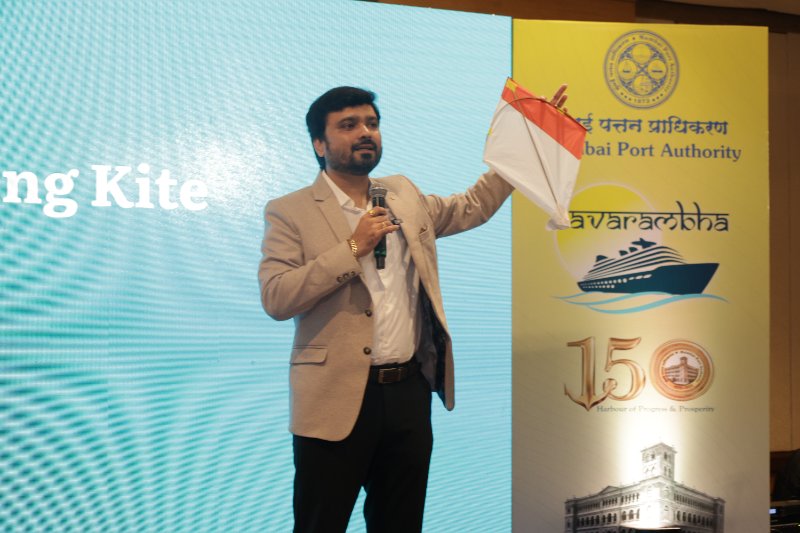
Avinash Chate is an entrepreneur and corporate trainer who runs ABC Trainings and The Future Corporate & Business Coaching, a TEDx speaker and published author. Over the last decade he has trained teams at 1,000-plus organisations and 15,000-plus professionals.
He teaches these skills not from a manual, but because he practises them himself — leading a 100-plus member team of his own. That is the difference working leaders feel in the room.
Emotional Intelligence for Leaders — FAQ
What is Emotional Intelligence for Leaders training?
It is a practical development programme that builds the emotional skills leadership actually depends on — self-awareness and knowing your triggers, self-regulation and staying steady under pressure, empathy and reading the room, building trust and relationships, handling feedback and difficult conversations well, leading people through change, and creating an emotionally intelligent team climate. Unlike a generic EQ workshop built around a single quadrant model, it works on how each leader actually shows up, practised honestly in the room until the change is real.
Who should attend this training?
Leaders whose competence is beyond doubt but whose effect on people could be stronger — senior leaders, heads of function, high-performing managers being prepared for bigger roles, and brilliant specialists stepping into leadership. It is particularly valuable for the driven, results-first leader who has never had honest feedback about how they land, and for technical and engineering leaders moving from expert to leader of experts. It is at its most powerful run as a leadership cohort that builds a shared language and holds each other to it.
Can emotional intelligence actually be taught to an adult, or is it just personality?
It can genuinely be taught. Emotional intelligence is not a fixed trait like height — it is a set of learnable skills: noticing what you feel before it drives you, pausing before you react, reading the person in front of you, and choosing your response. Decades of research and every leader's own experience confirm these can be developed at any age with the right practice. What the programme does is make that practice deliberate, so the change happens in the room rather than being left to chance over a career.
Why do brilliant, capable leaders so often struggle with this?
Because the very wiring that makes someone sharp can make them hard to work for. People rewarded their whole lives for being right, fast and rigorous learn to lead from the head and treat emotion as noise. Under pressure the brain doesn't help — a perceived threat fires the reaction before judgement catches up. That isn't a character flaw; it's how everyone's brain works. The difference is simply whether a leader has been trained in what to do in the half-second after the impulse fires. That training is exactly what this programme provides.
What does the programme cover?
Seven connected modules: self-awareness and knowing your triggers and impact; self-regulation and staying steady under pressure; empathy and reading the room; social skill and building trust; using emotional intelligence in feedback and difficult moments; leading with EI through pressure and change; and building an emotionally intelligent team culture. Every module pairs a short, usable model with honest self-work and practice on real situations drawn from the leaders' own teams.
How is the training delivered — and how long does it take?
It is highly interactive — honest self-work, real cases and practice on the actual emotional conversations leaders get wrong, with minimal lecture. The duration is flexible: the same programme runs as a half-day, a full day, a multi-day deep-dive for a leadership cohort, or a spaced series of shorter modules so leaders practise between sessions and build the habit. It also works as an ongoing programme with periodic reinforcement, because EQ is built through repetition. We shape the exact length and cadence with you. For 15 to 30 leaders, sessions are kept in small groups so the work stays personal and honest.
Is the programme customised to our organisation?
Yes. Before the first session, the examples and practice scenarios are built around your context — your industry, your leadership challenges, and the real emotional moments your leaders face, from the shop floor to the boardroom. Generic EQ training is exactly what fails, because the value is in a leader practising their own real triggers and their own hardest conversations, not discussing a model in the abstract.
Can it be delivered on-site, and in which languages?
Yes. Most engagements are across Maharashtra — Pune, Mumbai, Chhatrapati Sambhajinagar, Nashik, Nagpur and the surrounding MIDC industrial belts — and the programme is equally delivered pan-India and internationally on request. Delivery is available in English, Hindi and Marathi, or a natural mix, which matters especially when working with leaders who came up through the floor and lead diverse teams.
What outcomes can we expect?
Leaders who catch their reactions before they land, so their teams bring them the truth early instead of hiding it. Feedback and difficult conversations that resolve issues instead of bruising relationships. Rooms that relax rather than brace when a leader walks in. And, over time, talented people who stay because a once-difficult leader has become someone worth following — turning a quiet cause of attrition into a genuine strength.
Why Avinash Chate for this programme?
Avinash Chate is an entrepreneur and corporate trainer who runs a 100-plus member organisation, where his own emotional intelligence shapes whether people trust him with the truth — so he teaches this from lived experience, not theory. He is a TEDx speaker and author of The Winning Edge, creator of the KITE leadership framework, and has trained teams at 1,000-plus organisations across manufacturing, IT, banking and services. That mix of real operating experience and his own frameworks is what results-driven leaders respond to.
Related Training Topics
Turn your most brilliant leaders into your most trusted ones
Give your leaders the emotional intelligence no one taught them — self-awareness, staying steady under pressure, empathy, and handling the hard conversations without breaking trust. On-site across Maharashtra, pan-India and internationally, in English, Hindi or Marathi.
Request a Proposal →