Cross-Functional Collaboration Training
Each of your departments is excellent. Put together, they leak.
Look at any single team and there is nothing wrong. Sales is hungry and hitting quota. Operations is disciplined and on time. Engineering ships. Marketing is busy. Every dashboard, read on its own, is green. And yet the thing the customer actually experiences keeps breaking — a promise made in one room that another room can't keep, an order that stalls in the gap between two systems, a launch where the product and the pitch describe two different things. The failures don't live inside any department. They live in the white space between them, in the handoffs nobody owns, and that is precisely the space no one was ever trained to work in. This programme trains it.
★ 5.0 client rating · Across Maharashtra, pan-India & internationally · English, Hindi & Marathi
The Work That Falls Through the Cracks Between Functions
Every organisation past a certain size quietly organises itself into boxes. Sales, ops, engineering, finance, HR — each with its own targets, its own tools, its own idea of what matters and its own quiet suspicion that the others are the problem. Inside each box, people are competent and conscientious. The trouble is that the customer, the deadline and the strategy do not respect the boxes. They run straight across them — and every time work crosses a boundary, it hits a wall of translation, delay and defensiveness. The most important work an organisation does is almost always the work that no single department can finish alone.
And the cost is brutal precisely because it is invisible on any one team's numbers. Sales books revenue that operations cannot fulfil, so a delighted customer becomes a furious one two weeks later. Engineering builds a feature marketing can't explain and customers never asked for. A project that needed four teams pulling together instead becomes four teams protecting their own scope, and the launch slips a quarter while everyone's individual metrics stay perfectly healthy. Nobody failed. That is the maddening part. Everyone did their job — and the organisation still lost, in the seam where the jobs were supposed to join.
Why Silos Form — And Why You Can Actually Dismantle Them
Here is what almost nobody says out loud: silos are not caused by bad people, turf-hungry egos or a "collaboration problem" you can slogan your way out of. They are the natural, predictable result of how organisations are built. We hire people into a function, train them deeply in that function, measure them on that function's numbers, pay them for that function's wins, and seat them with their function all day. Then we act surprised when they optimise their own patch and defend their own figures. Of course they do — that is the game we designed. A finance team rewarded for control and a sales team rewarded for speed are not being difficult; they are being rational inside conflicting incentives.
Which is exactly why this is fixable. If silos come from structure and skill rather than character, then structure and skill can dissolve them. Collaborating across a boundary — building trust with people who don't report to you, aligning on a goal bigger than your own metric, negotiating a clean handoff, disagreeing with a peer team without it turning cold — is a set of concrete, learnable capabilities. Most people were carefully taught to run their box and never taught how to reach across boxes. This programme teaches the second skill, and helps you put the shared goals, roles and rhythms in place that make collaboration the path of least resistance instead of an act of heroism.
Does This Sound Familiar?
If these patterns feel familiar, it is almost never because your teams are weak or your people don't care. It is that everyone is optimising their own box and no one owns the space between boxes. Here is what you are likely seeing, what it is quietly costing you, and exactly which part of the programme addresses it.
| The symptom you see | What it is costing you | The real cause | How the programme fixes it |
|---|---|---|---|
| Departments hit their own targets, yet the customer's experience keeps breaking | Churn and complaints that no single team's dashboard ever predicted | Everyone optimises their own metric; the end-to-end outcome is nobody's job | The mindset shift from "my box" to shared outcomes |
| The handoff between two teams is where deadlines quietly die | Slipped launches and rework, always blamed on "the other department" | No clear owner, definition of "done", or agreed interface at the boundary | Clarity of shared goals, roles and handoffs |
| Cross-functional meetings are tense, circular and end without decisions | Weeks lost to re-litigating the same points; real work happens in side-channels | No shared goal, no decision rights, and unspoken inter-team mistrust in the room | Running effective cross-functional projects and meetings |
| Two teams are politely at war — cold emails, cc'd bosses, quiet blame | Escalations that eat leadership time and poison the wider culture | Competing priorities were never surfaced or reconciled, so they went underground | Handling conflict and competing priorities across functions |
| People trust and help their own team but treat other departments as outsiders | Information hoarded, favours refused, and collaboration that only happens under pressure | No relationships or trust exist across teams that don't report to each other | Building trust across teams that don't share a boss |
What Changes When Your Teams Stop Guarding Boxes and Start Sharing Outcomes
Picture the same departments, working the way they were always meant to. A shared goal on the wall that every function can see itself in, so nobody has to choose between "my number" and "the outcome". Handoffs so clean that work crosses a boundary without stalling, because both sides agreed what "done" looks like before it arrived. Cross-functional meetings that open with the shared objective, name who decides what, and end with owners and dates instead of resentment. Peers from other teams picking up the phone before there is a crisis, because a relationship already exists.
And underneath all of it, the change that pays for the whole programme: the white space between functions — where the customer, the deadline and the strategy actually live — finally has owners. Your competent teams stop leaking value at every seam and start compounding it. You already have the talent in each box. This turns a set of strong departments into one organisation that moves together.
What Your Teams Will Be Able to Do
- ✓ See how silos form from structure and incentives — and stop treating other departments as the enemy
- ✓ Shift from defending their own metric to owning the shared, end-to-end outcome
- ✓ Build trust and working relationships with peers who don't report to them
- ✓ Agree clean handoffs — clear owners, interfaces and a shared definition of "done"
- ✓ Run cross-functional projects and meetings that reach decisions instead of stalemate
- ✓ Surface and reconcile competing priorities across functions before they turn political
- ✓ Escalate and negotiate across boundaries without damaging the relationship
What the Programme Covers
Seven connected modules that take a set of siloed departments and turn them into one collaborating organisation. Every module pairs a short, practical input with real work on your own cross-functional breakdowns — and ends with a concrete change in how your teams work across boundaries.
These are building blocks, not a fixed-length course. A two-hour session goes deep on the two or three that matter most to you; a half or full day covers more; a multi-day intensive — or an ongoing monthly, quarterly or half-yearly rhythm — works through them all, with far more practice. We shape which ones, in what order and how deep, with you.
Why Silos Form — and the Real Price They Charge
What we cover: Where silos actually come from — specialised functions, local metrics, separate tools and incentives that quietly pull teams apart. Why they are a predictable result of structure, not a character flaw or an attitude problem. Mapping the true cost of your own silos: the customer experiences that break at the seams, the rework, the launches that slip, the value that leaks in the handoffs. Seeing the whole value stream that runs across every department, and where it currently snags.
What changes: Teams stop moralising the problem ("they don't care") and start seeing silos as a fixable, structural issue — which is the first shift that makes collaboration possible.
From "My Box" to a Shared Outcome
What we cover: The core mental shift from being measured by your own function's numbers to owning the outcome the customer actually receives. Why a green dashboard on your team can sit right next to a failing organisation. Finding the shared, unifying goal — the "rallying cry" — that every function can see itself inside. Learning to ask "what does the whole system need?" before "what does my box need?", and why that question, asked early, prevents most cross-functional pain.
What changes: People start optimising for the end-to-end result rather than their local metric — so the work that lives between functions finally has committed owners.
Trust Across Teams That Don't Share a Boss
What we cover: Why collaboration runs on trust, and why trust is scarcest exactly where there is no shared manager to enforce it. Building real relationships with peer teams before you need a favour. Understanding the pressures, incentives and world-view of the other function so their behaviour stops looking irrational. Repairing the low-trust, "us versus them" dynamics that make every handoff a fight. Creating the psychological safety for people from different teams to speak candidly across the line.
What changes: Teams that used to treat each other as outsiders start behaving like allies — sharing information, extending goodwill and picking up the phone before there is a crisis.
Shared Goals, Clear Roles and Clean Handoffs
What we cover: Turning a vague "we should collaborate" into hard clarity: who owns what, who decides, who is consulted, and who just needs to be informed. Defining the interface between two teams — what one side must deliver for the other to succeed, and an agreed definition of "done". Using tools like a RACI matrix and the GRPI lens (goals, roles, processes, interpersonal) to design collaboration deliberately instead of hoping for it. Killing the ambiguity at the boundary where deadlines quietly die.
What changes: Work crosses the boundary between teams without stalling, because both sides agreed the goal, the roles and the handoff before the work ever arrived.
Running Cross-Functional Projects and Meetings That Ship
What we cover: Why cross-functional projects fail differently from ordinary ones — no shared boss, competing calendars, misaligned incentives. Setting up a project across functions: shared charter, clear decision rights, a cadence that keeps everyone honest. Running a cross-functional meeting that opens with the shared goal, keeps the room out of turf mode, and closes with owners and dates. Mapping and managing the stakeholders each initiative depends on, and keeping momentum when no one in the room reports to you.
What changes: Cross-functional initiatives reach decisions and actually ship, instead of dissolving into circular meetings and side-channel workarounds.
Conflict and Competing Priorities Across Functions
What we cover: Why conflict between teams is not a failure but an inevitable feature of different functions with different mandates. Surfacing competing priorities openly instead of letting them go underground into cold wars and cc'd bosses. Negotiating trade-offs between two teams so both feel heard and the organisation wins. Separating the problem from the people when the pressure is on. Knowing when and how to escalate cleanly — as a shared request for a decision, not as an accusation.
What changes: Disagreements between departments get resolved out in the open and quickly, so tension becomes a source of better decisions instead of quiet, corrosive politics.
Practice — Fixing a Real Cross-Functional Breakdown
What we cover: A live working session on an actual breakdown from your own organisation — a broken handoff, a stalled cross-team project, a recurring inter-departmental fight. Teams from both sides of the seam map what is really happening, redesign the goal, roles and handoff together, and agree the first concrete changes. Practising the hard conversations across the line in the room — the priority clash, the missed handoff, the "your team keeps doing this" — before they happen for real.
What changes: Teams leave with a specific, agreed fix to a real cross-functional problem already in motion — not a theory, but a working change they built together.
How It Is Delivered
This is not a seminar on why teamwork is nice. It is a working session where two or more functions sit in the same room and fix the seams between them. Wherever possible we run it with the actual teams who have to collaborate — sales and operations, engineering and marketing, project and support — so the trust built, the handoffs redesigned and the conflicts resolved are the real ones, not hypotheticals. The models stay simple and immediately usable; the value is in the cross-team work that happens on the day.
The format flexes to your situation. It runs as a focused half-day to break a specific logjam between two teams, a full-day workshop for a wider group, a multi-day intensive when several functions need to re-align, or a modular series that keeps the collaboration muscle warm — and it works beautifully as an ongoing rhythm timed to your planning cycles, when priorities are set and inter-team friction is highest. For larger groups it is organised so both sides of every boundary are in the room together. The exact depth, mix of functions and cadence are shaped with you in the design call.
Formats That Fit Your Calendar
Half-day or full-day workshop
A focused session to break a specific silo — ideal for two or three teams whose handoff keeps failing and who need to reset it fast.
Multi-day intensive
Two or more days to re-align several functions at once — perfect after a reorg, a merger, or before a launch that depends on everyone pulling together.
Modular series across the quarter
Shorter sessions spread across your planning cycle, so shared goals, clean handoffs and cross-team trust are built and reinforced as the work unfolds.
An ongoing collaboration rhythm
Run it around each planning or goal-setting cycle, making cross-functional alignment a permanent habit rather than a rescue mission when things break.
The Thinking Behind It
This programme is not a generic teamwork deck. It draws on the sharpest writing and research on silos and collaboration — distilled into a few models teams can use immediately — and then goes further, into the frameworks Avinash uses to keep the many functions of his own 100-plus member organisation working as one.
Ideas & books we draw on
- Silos, Politics and Turf Wars — Patrick Lencioni · the fable on how a single unifying goal — a "rallying cry" — dissolves the walls between departments
- The Silo Effect — Gillian Tett · an anthropologist's account of how specialisation quietly blinds whole organisations, and what breaks the spell
- Collaboration — Morten T. Hansen · the disciplined case for when to collaborate and when not to — collaboration as a decision, not a virtue
- Radical Collaboration — James W. Tamm & Ronald J. Luyet · the interpersonal skills — trust, candour, conflict — that make working across boundaries actually possible
- Impact Players — Liz Wiseman · why the people who own the whole outcome, not just their slice, are the ones who make cross-functional work move
- Beyond Collaboration Overload — Rob Cross · the counterweight — collaborating smarter, so teamwork multiplies value instead of drowning everyone in meetings
Models we use to collaborate across silos
- The unifying "rallying cry" (Lencioni) · one shared, thematic goal every function can see itself inside, so silos have nothing to defend against
- The RACI matrix · Responsible, Accountable, Consulted, Informed — killing the ambiguity at the handoff where deadlines die
- The GRPI model · Goals, Roles, Processes, Interpersonal — diagnosing exactly where a cross-functional team is breaking down
- Stakeholder mapping · charting who each initiative depends on across functions, and how to bring them along
- T-shaped collaboration · deep in your own function, but able to reach broadly across others — the profile that makes silos permeable
And Avinash's own frameworks — the part you won't find anywhere else
Beyond the established thinking, the programme is built on frameworks Avinash has created and written about himself — including his KITE leadership framework and the principles in his book The Winning Edge. These come from actually running a 100-plus member organisation and developing its people year after year, not from a textbook. It is the layer competitors cannot copy, and the one your teams remember long after the session ends.
Who It Is For
Any set of departments that has to work together and currently doesn't — sales and operations, engineering and marketing, product and support, finance and the business, HR and the line. It is at its most powerful when the actual teams on either side of a broken handoff are in the room together, rather than one function at a time. It is invaluable for cross-functional project teams, for leadership groups trying to align their departments behind a shared strategy, and for any organisation that has grown into silos — after scaling fast, after a reorg, or after a merger where two ways of working now have to become one.
Taught by Someone Who Runs Many Functions as One Organisation
Avinash Chate does not teach this from a diagram. He runs a 100-plus member organisation with all the functions that pull in different directions — delivery, sales, content, operations, support — and the job of keeping them aligned behind one outcome is his own daily work, not a case study. The shared goals, clean handoffs and cross-team trust taught here are the very things he has had to build in his own business. Programmes that break down silos and get functions collaborating have been delivered across sectors — manufacturing, IT, sales and services — wherever competent departments were quietly leaking value in the space between them.
Why Avinash Chate
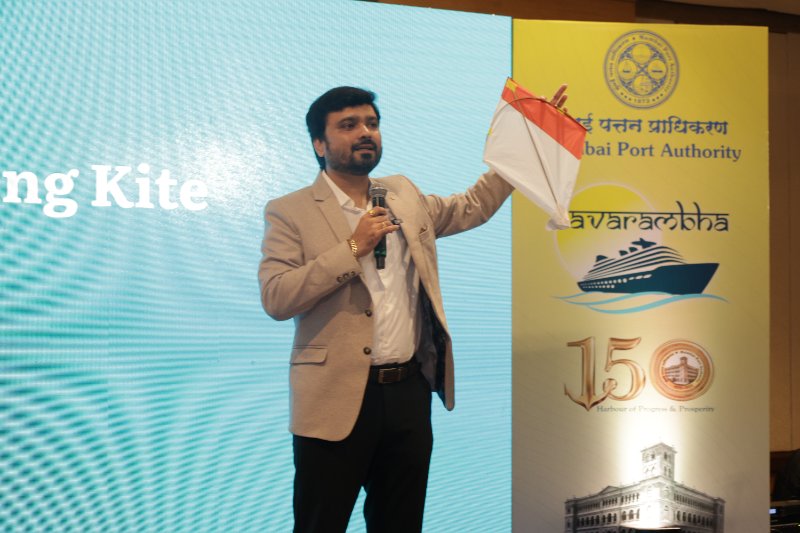
Avinash Chate is an entrepreneur and corporate trainer who runs ABC Trainings and The Future Corporate & Business Coaching, a TEDx speaker and published author. Over the last decade he has trained teams at 1,000-plus organisations and 15,000-plus professionals.
He teaches these skills not from a manual, but because he practises them himself — leading a 100-plus member team of his own. That is the difference working leaders feel in the room.
Cross-Functional Collaboration Training — FAQ
What is Cross-Functional Collaboration Training?
It is a practical programme that gets departments who have to work together to actually work together. It builds the specific skills and structures collaboration across boundaries requires — understanding why silos form, shifting from defending your own metric to owning the shared outcome, building trust with teams that don't report to you, designing clean handoffs, running cross-functional projects and meetings that reach decisions, and handling conflict and competing priorities between functions. Unlike a generic teamwork session, it is built around your real cross-functional breakdowns and worked on in the room with the actual teams involved.
Who should attend this training?
Any departments that depend on each other and currently clash or leak value at the seams — sales and operations, engineering and marketing, product and support, finance and the business, HR and the line. It is most powerful when both sides of a broken handoff attend together rather than one function at a time. It also suits cross-functional project teams, and leadership groups trying to align their departments behind a single strategy. It is especially valuable for organisations that have grown into silos after scaling fast, a reorg or a merger.
Why do silos form even when everyone is competent and well-intentioned?
Because silos are a structural result, not a character flaw. Organisations hire people into a function, train them deeply in it, measure and pay them on that function's numbers, and seat them with their own team all day. People then rationally optimise their own patch and defend their own figures — that is the game the structure created. A finance team rewarded for control and a sales team rewarded for speed are not being difficult; they are responding sensibly to conflicting incentives. The good news is that because silos come from structure and skill rather than bad people, structure and skill can dismantle them.
What does the programme cover?
Seven connected modules: why silos form and what they cost; the mindset shift from "my box" to shared outcomes; building trust across teams that don't share a boss; clarity of shared goals, roles and handoffs; running cross-functional projects and meetings that ship; handling conflict and competing priorities across functions; and a live practice session fixing a real cross-functional breakdown from your own organisation. Every module pairs a short, usable model with hands-on work on your actual boundaries between teams.
How is the training delivered — and how long does it take?
It is highly interactive — real cross-functional cases, redesigning actual handoffs, practising the hard conversations across the line, with minimal lecture. The duration is flexible: the same programme runs as a half-day to break one specific logjam, a full day for a wider group, a multi-day intensive to re-align several functions, or a modular series across your planning cycle, and it works well as an ongoing rhythm timed to your goal-setting cycles. We shape the exact length, mix of functions and cadence with you. Wherever possible, both sides of each boundary are in the room together.
Can it really break down silos, or is that just a slogan?
It can, because it does not treat collaboration as a slogan. It works on two levels at once — the skills people need (trust across teams, negotiating handoffs, disagreeing with a peer function without going cold) and the structures that support them (a shared unifying goal, clear roles and decision rights, agreed interfaces, the right meeting rhythm). Slogans fail because they ask people to behave differently inside a system that still rewards silos. This changes both the skill and the system, so collaboration becomes the easier path rather than an act of heroism.
Is the programme customised to our organisation?
Yes. Before the first session, we work with you to identify your real cross-functional breakdowns — the handoff that keeps failing, the two teams at war, the launch that always slips — and the sessions are built around those. The role plays and working exercises use your actual boundaries, priorities and functions. Generic teamwork training is exactly what fails here; the value is in redesigning the specific handoffs and resolving the specific conflicts your teams will face next week.
Can it be delivered on-site, and in which languages?
Yes. Most engagements are across Maharashtra — Pune, Mumbai, Chhatrapati Sambhajinagar, Nashik, Nagpur and the surrounding MIDC industrial belts — and the programme is equally delivered pan-India and internationally on request. Delivery is available in English, Hindi and Marathi, or a natural mix, which matters when the teams collaborating span the shop floor, the office and the field.
What outcomes can we expect?
Departments that own the end-to-end outcome instead of just their slice, handoffs that stop dropping work, cross-functional meetings that reach decisions, and inter-team conflict that gets resolved in the open rather than festering into politics. Practically, that shows up as fewer things falling through the cracks between teams, launches and projects that ship on time because the seams hold, and a customer experience that stops breaking at the boundaries — all from the talent you already have, now working as one organisation instead of several.
Why Avinash Chate for this programme?
Avinash Chate is an entrepreneur and corporate trainer who runs a 100-plus member organisation and lives the work of keeping its many functions aligned behind one outcome — so he teaches collaboration across silos from real operating experience, not theory. He is a TEDx speaker and author of The Winning Edge, creator of the KITE leadership framework, and has trained teams at 1,000-plus organisations, reaching over 15,000 professionals across sectors. That mix of running a real multi-function organisation and his own frameworks is what teams respond to.
Related Training Topics
Turn a set of strong departments into one organisation that moves together
Break down the silos, clean up the handoffs, and get your teams owning the outcome the customer actually receives. On-site across Maharashtra, pan-India and internationally, in English, Hindi or Marathi.
Request a Proposal →