Influence Without Authority Training
Responsible for everything, able to command nothing — the quiet bind of your most important people.
Look at the people carrying your most important work and you will notice something strange: many of them can't tell a single person what to do. The project lead answerable for the deadline. The quality manager, the safety officer, the HR business partner, the digital champion — staff roles whose whole job is to change how the line operates, with no line reporting to them. The matrix owner who needs three functions to move at once. They are measured on outcomes that depend entirely on people they cannot instruct — and so they email, they follow up, they escalate, and they wait. Getting things done through people you can't order is the defining skill of a modern organisation, and almost no one was ever taught it. This programme teaches it.
★ 5.0 client rating · Across Maharashtra, pan-India & internationally · English, Hindi & Marathi

Responsible for the Outcome, in Charge of No One
It is one of the most common — and least discussed — positions in any real organisation. Someone is handed a target that lives across boundaries. Ship the product; the code sits with IT, the budget with finance, the rollout with operations, and not one of them reports to them. Fix the process; three departments would each have to change how they work, and none of them has to listen. They have all of the accountability and none of the levers. When they need finance to reprioritise a spend, IT to build the thing before next quarter, or another team to simply do it differently, their only tool is persuasion — and if that runs out, they are stuck.
So the pattern sets in, and it is quiet. They chase over email and get polite silence. They nag, and become the person whose messages get left on read. Eventually they escalate — dragging their boss and the other boss into a meeting to force a decision that should never have needed one — and every time they do, they spend credibility they cannot easily earn back. Or, worse, they stop. The initiative that needed four teams to lean in dies in the gaps between the silos, and in the review nobody names the real cause: a good person with a real mandate and no authority was left to make it happen on charm and luck alone.
Why Persuasion Runs Dry — And Why That Is a Learnable Skill
Here is what almost no one is told: authority and influence are two completely different things, and most people only ever learned to operate the one they no longer have. Authority is positional — you decide, and it happens because of where you sit. Influence is relational — the other person chooses to help you, and they do it for their reasons, not yours. The moment a role depends on people outside its command, the old model breaks. Pushing harder, reminding more often, and pulling rank you don't hold simply teaches everyone to route around you. Real influence runs the other way — through relationship built before you need it, through understanding what the other side genuinely values, and through an exchange they experience as fair.
And this is precisely why capable people flounder here without ever being at fault. Nobody handed them a way to see the exchange — what each stakeholder cares about, what they can offer in return, whose backing actually moves a decision. So they fall back on the only instrument they were given, which is asking again, louder. That is not a personality problem; it is an unlearned craft, and craft is exactly what deliberate practice builds. This programme gives your people the map and the moves — so that getting a yes from someone who never had to give it becomes a repeatable skill, not a lucky day.
Does This Sound Familiar?
If the people responsible for your cross-boundary work are showing any of these signs, it is almost never that they lack drive. It is that no one taught them how to move people they cannot command. Here is what you are likely seeing, what it is quietly costing, and exactly which part of the programme addresses it.
| The symptom you see | What it is costing you | The real cause | How the programme fixes it |
|---|---|---|---|
| Cross-functional work stalls because other teams simply don't prioritise it | Deadlines slip, initiatives die between departments, and the accountable person carries the blame | They are relying on the strength of the request instead of the currencies the other side actually values | The Currencies of Exchange module — leading with what they care about |
| Your project leads escalate constantly to force other teams to act | Senior time is burned on decisions that shouldn't need it, and the lead's own credibility erodes | No relationship or trust was built before it was needed, so persuasion has nothing to stand on | The Trust Bank module — building the relationship before you draw on it |
| They keep asking the same people and keep getting a polite no | Momentum stalls, goodwill wears thin, and they become the person others avoid | They haven't mapped who actually holds sway, so effort lands on the wrong doors | The Stakeholder Mapping module — reading power, interest and the real path |
| Good asks get turned down, mistimed or lost in the noise | Work that should have been a quick yes drags into weeks of chasing | The request is made badly — wrong framing, wrong moment, nothing offered in return | The Art of the Ask module — the request and the reciprocity that carries it |
| Influencing their own boss and senior peers feels impossible | Good ideas stall for want of a sponsor; the person feels invisible in the matrix | They were never taught to influence upward and sideways without formal power | The Influencing Up and Across module |
What Changes When Your People Can Move Others Without a Title
Picture the same project lead a few months on. Before they need a thing, they have already invested in the relationship — so when the ask comes, there is a bank of goodwill to draw on. They walk into finance leading with what finance cares about, not with their own deadline. They have mapped the room and know whose yes unlocks the rest. They make the ask cleanly, at the right moment, with something real offered back — and they get a yes from people who were never obliged to give one. The escalations quietly stop, because they are no longer needed.
And underneath it, the shift that changes the whole organisation: work stops dying in the gaps between silos. Your staff functions actually change how the line operates. Your matrix roles get three teams moving in step. The people you made responsible for outcomes finally have the one thing that lets them deliver — the ability to get things done through people they can't instruct. You stop losing good initiatives to the space between departments, and start finishing them.
What Your People Will Be Able to Do
- ✓ Tell influence apart from authority — and stop reaching for a lever they no longer hold
- ✓ Build relationships and a bank of trust before they ever need to make an ask
- ✓ Uncover what each stakeholder genuinely values, and lead with that instead of their own agenda
- ✓ Map a room by power and interest, and find the real path to a decision
- ✓ Make a clean, well-timed request backed by a fair exchange the other side wants to say yes to
- ✓ Influence upward and sideways in a matrix — winning sponsors and peers without formal power
- ✓ Carry a real cross-functional ask to a yes, and keep the relationship intact for next time
What the Programme Covers
Seven connected modules that take someone from stuck-and-escalating to genuinely influential. Every module pairs a short, practical input with real practice on the exact situations a person with responsibility and no authority faces — and ends with a concrete change in how they get things done.
These are building blocks, not a fixed-length course. A two-hour session goes deep on the two or three that matter most to you; a half or full day covers more; a multi-day intensive — or an ongoing monthly, quarterly or half-yearly rhythm — works through them all, with far more practice. We shape which ones, in what order and how deep, with you.
Authority Isn't Influence — Why the Old Lever Is Gone
What we cover: The crucial distinction between positional authority and real influence, and why so many capable people confuse the two. Why pushing harder, reminding more and pulling rank you don't hold makes people route around you. The mindset shift from "make them" to "make them want to" — recognising that outside your command, people help for their reasons, not yours. Seeing your own role as a network of exchanges rather than a chain of instructions.
What changes: The person stops trying to command people they can't command, and starts operating the way influence actually works — which is where every other skill in the programme becomes possible.
The Trust Bank — Building the Relationship Before You Need It
What we cover: Why the worst time to start a relationship is the moment you need something from it. Investing in cross-functional relationships early and deliberately, so there is goodwill to draw on later. The components of trust — credibility, reliability, closeness and low self-orientation — and how each is earned or lost. Being genuinely useful to others before you ask anything of them. The compounding effect of a reputation for keeping your word across the organisation.
What changes: The person builds a reserve of trust across the business, so that when the ask finally comes it lands on a relationship, not on a cold request from a stranger.
Currencies of Exchange — What the Other Side Actually Values
What we cover: Why your deadline is not a reason for anyone else to move, and what is. Identifying the many "currencies" people value — recognition, a easier job, information, visibility to their own boss, a returned favour, being part of something that matters. Learning to see a request through the other person's world, and framing it in terms of what they gain, not what you need. Trading fairly across currencies so both sides come out ahead.
What changes: The person walks into every ask leading with the other side's interests, so cross-functional requests stop feeling like an imposition and start feeling like a good deal.
Reading the Room — Stakeholder Mapping
What we cover: Why effort spent on the wrong person is effort wasted. Mapping stakeholders by power and interest — who can block you, who can champion you, who to keep close and who to keep informed. Finding the real decision-maker behind the nominal one, and the quiet influencers whose backing unlocks a yes. Reading each stakeholder's stance — supporter, sceptic, blocker, fence-sitter — and choosing a different approach for each. Sequencing who you win over, and in what order.
What changes: The person stops knocking on the wrong doors, and instead works the map — spending their influence where it actually moves the decision.
The Art of the Ask — Request and Reciprocity
What we cover: Why a good idea, asked for badly, still gets a no. Framing a request so it is clear, specific and easy to say yes to. Timing the ask for when the other side has the bandwidth and the reason to help. The principle of reciprocity — giving first, so the ask sits on a foundation of something already offered. Making it easy to help and hard to refuse without ever manipulating. Handling the no gracefully so the relationship — and the next ask — survives.
What changes: The person makes clean, well-timed asks backed by genuine give-and-take, turning requests that used to drag into weeks of chasing into a quick, willing yes.
Influencing Up and Across in a Matrix
What we cover: The particular challenge of moving people who outrank you and peers who owe you nothing. Managing up — earning a senior sponsor, framing your ask in your leader's priorities, and disagreeing without damaging. Influencing sideways across functions where there is no shared boss to appeal to. Leading from the middle: caught between the layer above and the teams beside you, with responsibility flowing down and power flowing everywhere but to you. Building coalitions so a decision arrives already supported.
What changes: The person gains sponsors above and allies alongside, so their ideas move through the matrix instead of stalling for want of formal power.
Practice — Win a Real Cross-Functional Ask
What we cover: Live work on a genuine, current ask each participant is stuck on — the budget finance won't release, the delivery IT keeps deprioritising, the change another department won't make. Mapping its stakeholders, identifying their currencies, planning the relationship groundwork, scripting and rehearsing the actual conversation, and pressure-testing it in role play against a realistic pushback. Practised in the room, on the real situations from your own organisation.
What changes: The person leaves not with theory but with a worked plan and a rehearsed conversation for a real ask they are stuck on — ready to win it in the days that follow.
How It Is Delivered
This is not a talk about persuasion. It is a workshop where people practise moving others they cannot command. They spend most of their time on their feet — mapping a real stakeholder situation, working out another person's currencies, and rehearsing an actual ask — using genuine, current problems from their own work. The models are kept simple and immediately usable; the practice, on real asks people are stuck on right now, is where the confidence and the results come from.
The format flexes to your needs. It runs as a focused half-day, a full-day workshop, a multi-day intensive for a cohort of project leads or staff-function managers, or a series of shorter modules spread across a quarter so each skill is applied to live work between sessions — and it works well as an ongoing rhythm for everyone who has to deliver across boundaries. For 20 to 40 participants it is organised into small batches so every person practises on their own real situation, not just listens. The exact depth, duration and cadence are shaped with you in the design call.
Formats That Fit Your Calendar
Half-day or full-day workshop
A high-impact session for a group of project leads, staff-function managers or matrix owners who need to get others moving without authority — fast.
Multi-day intensive
Two or more days to go deep — ideal for a cohort of cross-functional leaders, a project-management office or a group of internal change champions.
Modular series across a quarter
Shorter sessions spread across weeks, so each participant applies stakeholder mapping, currencies and the ask to a live piece of cross-functional work between sessions.
An ongoing influencing programme
Run it as a standing capability for everyone accountable across boundaries — making influence without authority a permanent strength of how your organisation gets things done.
The Thinking Behind It
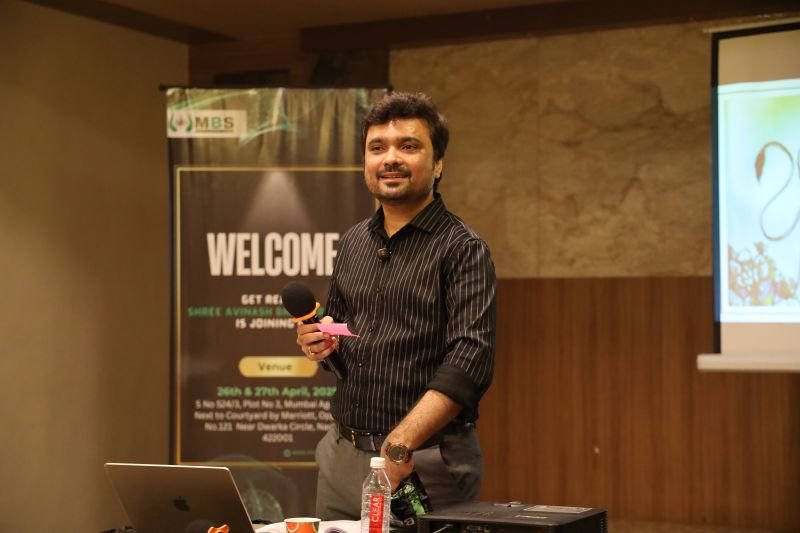
This programme is not a generic persuasion deck. It draws on the best writing and research on influence, reciprocity and getting things done across boundaries — distilled into a few models people can use immediately — and then goes further, into the frameworks Avinash uses to get things done across a 100-plus member organisation and with the clients he serves.
Ideas & books we draw on
- Influence Without Authority — Allan Cohen & David Bradford · the foundational work on the law of reciprocity and trading "currencies" to get things done through people you don't control
- Give and Take — Adam Grant · why the people who give first build the deepest, most useful networks — and how that quietly becomes influence
- Pre-Suasion — Robert Cialdini · the science of setting the stage before the ask, so the moment you request, the yes is already half-made
- Leading from the Middle — Scott Mautz · written for exactly this bind — responsible to the layer above and the teams beside you, with power flowing everywhere but to you
- Getting Things Done When You're Not in Charge — Geoffrey Bellman · the honest playbook for making things happen from a position with responsibility but no command
- The Catalyst — Jonah Berger · how to change minds by removing the barriers to yes rather than pushing harder — influence as reducing resistance
Models we use to influence without authority
- The Cohen–Bradford influence model · reciprocity and "currencies of exchange" — trade what the other side values to earn cooperation
- Cialdini's six principles of influence · reciprocity, commitment, social proof, authority, liking and scarcity — the levers of a willing yes
- The power/interest grid · mapping stakeholders by influence and stake, so effort lands where it actually moves the decision
- The trust equation (Maister) · credibility, reliability and closeness over self-interest — the maths of why someone chooses to help you
- Influence styles · asserting, bridging, inspiring and reasoning — knowing which approach fits which person and moment
And Avinash's own frameworks — the part you won't find anywhere else
Beyond the established thinking, the programme is built on frameworks Avinash has created and written about himself — including his KITE leadership framework and the principles in his book The Winning Edge. These come from actually running a 100-plus member organisation and developing its people year after year, not from a textbook. It is the layer competitors cannot copy, and the one your professionals remember long after the session ends.
Who It Is For
Anyone responsible for outcomes they can't command — project and programme managers, product owners, and matrix leaders who need several functions to move at once. Staff-function professionals whose whole job is to change how the line works: quality, safety, HR business partners, finance partners, IT, digital and transformation champions, PMO teams, and internal consultants. And any individual contributor or specialist who has to get colleagues, other departments and senior people on board without a shred of formal authority. It is especially powerful run as a cohort, so a group facing the same cross-boundary reality builds a shared language and a network they can lean on.
Taught by Someone Who Gets Things Done Across Boundaries Every Day
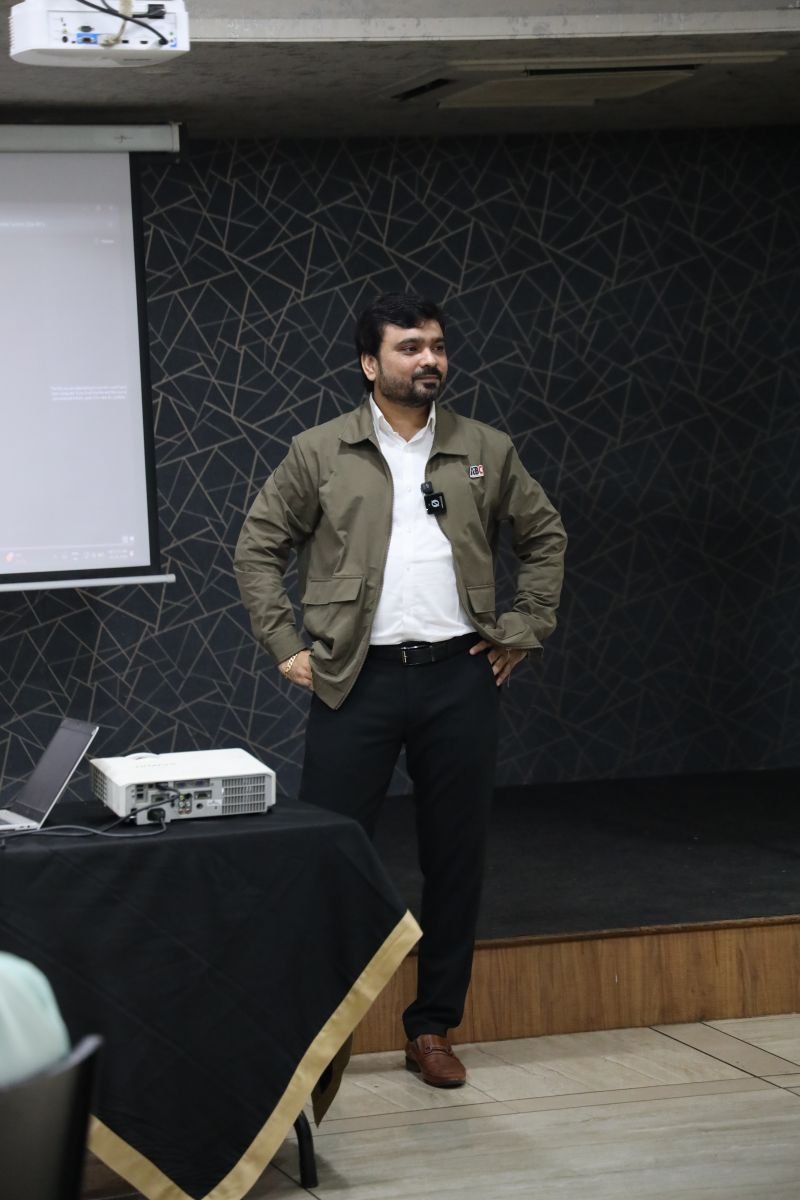
Avinash Chate does not teach this from a textbook. He runs a 100-plus member organisation and works constantly across clients, partners and teams where he holds no formal authority — so the trust-building, stakeholder-reading and the art of the ask taught here are the real thing, tested in his own work. Programmes that build influence, stakeholder management and cross-functional effectiveness have been delivered across sectors — from manufacturing and MIDC shop floors where a staff function must change how the line runs, to IT, banking and services teams where projects only ever succeed across departmental lines.
Why Avinash Chate
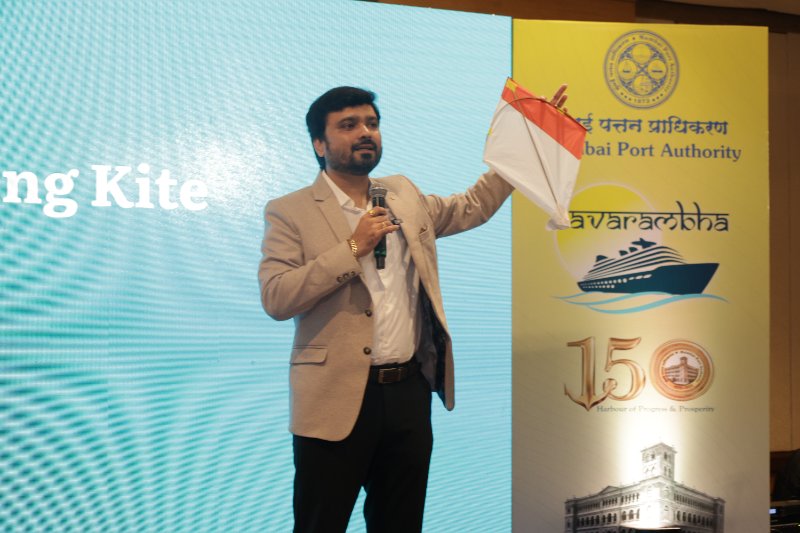
Avinash Chate is an entrepreneur and corporate trainer who runs ABC Trainings and The Future Corporate & Business Coaching, a TEDx speaker and published author. Over the last decade he has trained teams at 1,000-plus organisations and 15,000-plus professionals.
He teaches these skills not from a manual, but because he practises them himself — leading a 100-plus member team of his own. That is the difference working leaders feel in the room.
Influence Without Authority Training — FAQ
What is Influence Without Authority Training?
It is a practical development programme for people who are responsible for outcomes but have no power to command the people they depend on — project leads, staff functions and matrix roles. It builds the specific skills that make persuasion work: telling influence apart from authority, building relationships and trust before you need them, understanding what the other side actually values, mapping stakeholders, making a clean and well-timed ask backed by fair exchange, and influencing upward and sideways in a matrix. Unlike generic persuasion theory, it is built around the real cross-boundary situations your people are stuck on, practised in the room until they can win them.
Who should attend this training?
Project and programme managers, product owners, PMO teams, and matrix leaders who need multiple functions to move at once. Staff-function professionals whose job is to influence the line without commanding it — quality, safety, HR and finance business partners, IT, digital, transformation and change champions, and internal consultants. And any specialist or individual contributor who must get other departments and senior people on board without formal authority. It is at its most powerful when run as a cohort, so people facing the same reality build a shared language and a supportive network.
How is this different from a negotiation or communication course?
Negotiation is usually about dividing value between two parties across a table; communication skills are about clarity and delivery. Influence without authority is about the specific, everyday bind of being accountable for an outcome while commanding none of the people who deliver it — getting a yes from someone who is under no obligation to give one. It draws on reciprocity, currencies of exchange, stakeholder mapping and trust rather than on positional leverage. It complements negotiation and communication training, but it solves a different, and for many roles a more constant, problem.
What does the programme cover?
Seven connected modules: why authority and influence are different; building the relationship and trust bank before you need it; understanding the currencies the other side values; mapping and reading stakeholders; the art of the ask and reciprocity; influencing upward and across in a matrix; and an extensive practice module where each participant plans and rehearses a real cross-functional ask they are stuck on. Every module pairs a short, usable model with practice on situations drawn from your own organisation.
How is the training delivered — and how long does it take?
It is highly interactive — stakeholder mapping, real cases and rehearsed asks, with minimal lecture. The duration is flexible: the same programme runs as a half-day, a full day, a multi-day intensive for a cohort, or a series of shorter modules spread across a quarter so people apply each skill to live work between sessions, and it works well as an ongoing rhythm for everyone who delivers across boundaries. We shape the exact length and cadence with you. For 20 to 40 participants, sessions are organised into small batches so everyone practises on their own real situation.
Can people bring their own real, current situations to work on?
Yes — and that is exactly the point. Rather than practising on invented scenarios, participants work on a genuine ask they are stuck on right now: the budget finance won't release, the delivery IT keeps deprioritising, the change another department won't make. They map its stakeholders, work out the currencies at play, plan the relationship groundwork and rehearse the actual conversation. Many leave the room with a worked plan and a scripted ask they go on to win within days.
Is the programme customised to our organisation?
Yes. Before the first session, the examples and practice scenarios are built around your context — your industry, your matrix, the real cross-functional walls your people run into, whether that is a staff function trying to change the line or a project spanning four departments. Generic influencing training is exactly what fails; the value is in practising the actual stakeholders, currencies and conversations your people will face next week.
Can it be delivered on-site, and in which languages?
Yes. Most engagements are across Maharashtra — Pune, Mumbai, Chhatrapati Sambhajinagar, Nashik, Nagpur and the surrounding MIDC industrial belts — and the programme is equally delivered pan-India and internationally on request. Delivery is available in English, Hindi and Marathi, or a natural mix, which matters especially for staff-function and project people who have to influence colleagues across very different levels and backgrounds.
What outcomes can we expect?
People who build trust before they need it, lead with what the other side values, map the room instead of knocking on the wrong doors, and make asks that get a willing yes — so cross-functional work stops stalling and escalations quietly fall away. Project leads who finish what they start across departments. Staff functions that actually change how the line operates. And, over time, fewer good initiatives lost in the gaps between silos, because the people responsible for them can finally get things done through people they cannot instruct.
Why Avinash Chate for this programme?
Avinash Chate is an entrepreneur and corporate trainer who runs a 100-plus member organisation and gets things done every day across clients, partners and teams where he holds no formal authority — so he teaches influence from lived experience, not theory. He is a TEDx speaker and author of The Winning Edge, creator of the KITE leadership framework, and has trained teams at 1,000-plus organisations and more than 15,000 professionals across sectors. That combination of real cross-boundary experience and his own frameworks is what working professionals respond to.
Related Training Topics
Give the people responsible for your outcomes the power to deliver them
Equip your project leads, staff functions and matrix roles to get finance, IT and other teams to prioritise and deliver — through trust, currencies and the well-made ask, not the escalation. On-site across Maharashtra, pan-India and internationally, in English, Hindi or Marathi.
Request a Proposal →