Design Thinking Training
Your team can build almost anything. That's exactly why they keep building the wrong thing.
Hand a capable team a problem and watch what happens. Within minutes someone has a solution. The whiteboard fills, the plan firms up, the build begins — and it is genuinely impressive work, shipped on time. Then it lands, and the customer shrugs. Nobody asked for this. The team did not fail at execution; they were superb at it. They failed at the quiet step no one scheduled: understanding what the person on the other end actually needed before deciding what to make for them. This programme teaches that step — and it turns out any team can learn it, not just designers.
★ 5.0 client rating · Across Maharashtra, pan-India & internationally · English, Hindi & Marathi
The Wrong Thing, Built Brilliantly and On Time
There is a particular kind of waste that never shows up in a status report, because on paper everything went right. The brief was clear, the sprint was on schedule, the code was clean, the feature shipped. And it did nothing. Usage stayed flat, the complaint the feature was meant to solve kept coming in, and everyone quietly moved on to the next build. Somewhere between the problem and the product, the team solved a question no customer had actually asked — the one they assumed on day one and never went back to check.
The cost is brutal precisely because the effort was real. Weeks of good engineering, aimed at the wrong target. And it compounds: the next release inherits the same assumption, the roadmap fills with features nobody uses, and the team grows a little more cynical each time their best work meets a shrug. The problem was never their talent for building. It was that no one taught them to fall in love with the problem first — to sit in the discomfort of not-knowing long enough to find the real need hiding underneath the obvious one.
Why Smart Teams Solve the Wrong Problem — And How to Retrain the Instinct
The instinct to jump to a solution is not laziness; it is competence turned against itself. Skilled people are rewarded, all their careers, for having the answer fast. So the moment a problem appears, the mind races to something buildable — and once there is a solution to execute, the messy, ambiguous work of asking whose problem is this, and what do they really need feels like a delay. The team engineers the assumption instead of interrogating it. They fall in love with their idea, and every hour they invest in it makes it harder to admit it was aimed at the wrong thing.
Design thinking rewires that instinct deliberately. It forces a gap between the problem and the solution and fills it with something uncomfortable but priceless: genuine empathy for the user, a sharply framed problem, a wide field of options before any judgement, and cheap prototypes tested with real people before a single expensive commitment. None of this is innate talent or a designer's gift. It is a learnable discipline — a sequence of habits any engineer, marketer, operator or manager can run — and this programme builds those habits in the room, on a real challenge your team brings.
Does This Sound Familiar?
If your teams are shipping polished work that quietly misses the mark, it is rarely a skills-or-effort problem. It is that the aim was set before anyone understood the user. Here is what you are likely seeing, what it is costing you, and exactly which part of the programme corrects it.
| The symptom you see | What it is costing you | The real cause | How the programme fixes it |
|---|---|---|---|
| Your team leaps to a solution the moment a problem is raised | Weeks of effort aimed at an assumption no one ever tested against a real user | They were trained to have the answer fast, never to sit with the problem | The Mindset module — falling in love with the problem before the solution |
| Features ship on time but usage stays flat and complaints keep coming | A roadmap full of things nobody uses and a team that stops believing its work matters | The team solved the problem it assumed, not the human need underneath it | The Empathise module — understanding the real user need |
| Everyone is busy building, yet no one can say what problem they are actually solving | Effort scattered across symptoms while the real issue goes untouched | The problem was never framed — the team started from a solution, not a question | The Define module — framing the right problem |
| The first idea in the room becomes the plan, and better options never surface | Predictable, safe solutions and a quiet ceiling on how good the outcome can get | Judgement arrives before invention does, killing options while they are still fragile | The Ideate module — generating many options before judging |
| Ideas are argued about in meetings for weeks instead of being tried | Expensive builds committed on opinion, discovered to be wrong only after launch | The team has no habit of making an idea tangible and testing it cheaply and early | The Prototype and Test modules — cheap, tangible, tested with real users |
What Changes When Your Teams Fall in Love With the Problem First
Picture a team that meets a problem and, instead of sprinting to build, gets curious. They go and watch the actual user, listen past what people say to what they mean, and come back with a problem framed so sharply the solution half-suggests itself. They put a dozen options on the wall before anyone judges one. They mock the promising ones up in an afternoon — paper, clicks, a rough model — and put them in front of real people before spending a rupee on the real thing.
And the shift that pays for the whole programme: your team's formidable talent for building finally gets pointed at the right target. The same effort, the same craft — now aimed at something a customer genuinely wanted. Less rework, fewer dead features, and a team that trusts its own work again because, at last, the things they build get used.
What Your Teams Will Be Able to Do
- ✓ Resist the jump to a solution and hold a problem open long enough to understand it
- ✓ Build real empathy for users — observing and interviewing to find the need beneath the ask
- ✓ Frame a sharp, human-centred problem statement instead of inheriting an assumed one
- ✓ Generate a wide field of ideas before judging, so the best option has a chance to appear
- ✓ Turn an idea into a cheap, tangible prototype in hours rather than weeks
- ✓ Test with real users, read the signal honestly, and iterate instead of defending the first idea
- ✓ Run a compressed design sprint end-to-end on a live business challenge
What the Programme Covers
Seven connected modules that take a team from solving the problem they assumed to solving the one that actually exists. Every module pairs a short, practical input with hands-on work on a real challenge your team brings into the room — and ends with a concrete change in how they approach the next problem.
These are building blocks, not a fixed-length course. A two-hour session goes deep on the two or three that matter most to you; a half or full day covers more; a multi-day intensive — or an ongoing monthly, quarterly or half-yearly rhythm — works through them all, with far more practice. We shape which ones, in what order and how deep, with you.
The Design-Thinking Mindset — Falling in Love With the Problem
What we cover: Why competent teams jump to solutions and what it quietly costs. The core reframe of design thinking: fall in love with the problem, not the solution. Sitting with ambiguity instead of racing past it. Separating the problem space from the solution space, and why collapsing them is where good teams go wrong. The difference between desirability, feasibility and viability — and why so much effort is spent making the wrong thing well.
What changes: The team stops treating "we have an idea" as the starting line and learns to earn the right to a solution by first understanding the problem.
Empathise — Understanding the Real User Need
What we cover: Getting out of the building and into the user's world. Observing what people do rather than trusting what they say they do. Interviewing for depth — asking why, staying silent, chasing the story instead of the opinion. Building an empathy map to capture what a user says, thinks, does and feels. Spotting the difference between the stated ask and the real underlying need, and finding the job the user is truly trying to get done.
What changes: The team develops genuine empathy for the person they are building for — and discovers needs that no brief and no assumption would ever have surfaced.
Define — Framing the Right Problem
What we cover: Turning a pile of user insight into one sharp, actionable problem. Writing a point-of-view statement and framing challenges as "How might we…" questions that open possibility instead of prescribing an answer. Widening and narrowing the problem to find the altitude worth solving at. Why a well-framed problem is half-solved, and why most teams never pause to frame theirs at all.
What changes: The team replaces the assumed problem with a precisely framed, human-centred one — so every hour that follows is aimed at the right target.
Ideate — Generating Many Options Before Judging
What we cover: Why the first idea in the room is almost never the best one. Separating divergent from convergent thinking so invention and judgement stop killing each other. Running ideation that generates volume — deferring criticism, building on others' ideas, welcoming the wild ones. Techniques to break fixation and reach non-obvious options, then converging deliberately to choose which few are worth making tangible.
What changes: The team stops defaulting to the safe first idea and learns to open a wide field of options — then choose from it, instead of settling into it.
Prototype — Making Ideas Tangible Cheaply
What we cover: Why an idea argued about in a meeting is worth less than a rough one you can hold. Prototyping to learn, not to impress — paper sketches, storyboards, clickable mock-ups, physical models, role-played services. Matching the fidelity of the prototype to the question you are trying to answer. Building the cheapest possible thing that makes the idea real enough to react to, and being willing to throw it away.
What changes: The team learns to make an idea tangible in hours instead of committing weeks to it — so being wrong becomes cheap, fast and early.
Test and Iterate With Real Users
What we cover: Putting the prototype in front of the actual user and getting out of the way. Testing to learn rather than to be validated — watching where people stumble, listening for what they did not expect, separating what users do from what they politely say. Reading the signal honestly, even when it kills a favourite idea. Iterating fast, and knowing when to loop back to empathise, redefine or re-ideate rather than pushing a flawed idea forward.
What changes: The team treats every prototype as a question to real users, not a decision already made — and iterates its way to something people genuinely want.
Practice — Run a Mini Design Sprint on a Real Challenge
What we cover: A compressed, end-to-end design sprint on a live challenge your organisation is facing right now. Moving as a team through empathise, define, ideate, prototype and test in a single tight loop. Making the whole method real under time pressure, with real users where possible. Capturing what to carry back into the actual work — and how to run the loop again without a facilitator in the room.
What changes: The team walks out having run the full design-thinking cycle once, on a real problem — so the method is a lived experience they can repeat, not a theory they heard.
How It Is Delivered
This is not a lecture about innovation. It is a working studio where teams do design thinking on a problem they actually own. They spend most of their time on their feet — observing and interviewing, framing problems on the wall, generating options, and building rough prototypes out of paper, sticky notes and clicks — on a live challenge from your own organisation. The models are kept simple and immediately usable; the doing is where the mindset shift actually happens.
The format flexes to your needs. It runs as a focused half-day introduction, a full-day workshop, a multi-day design-sprint intensive that takes a real problem from empathy to tested prototype, or a modular series that builds the discipline over time — and it works beautifully as an ongoing innovation rhythm, run each time a team takes on a fresh challenge. For 15 to 40 participants it is organised into small cross-functional teams so everyone does the work, not just watches. The exact depth, duration and cadence are shaped with you in the design call.
Formats That Fit Your Calendar
Half-day or full-day workshop
A high-impact introduction to the mindset and the full cycle — ideal for a team that keeps building the wrong thing and needs the reframe fast.
Multi-day design-sprint intensive
Several days to run a real problem end-to-end, from user empathy to a tested prototype — perfect when there is a live challenge worth cracking properly.
Modular series
Shorter sessions spread over weeks — empathy, then framing, then ideation, then prototyping and testing — so each habit embeds before the next is added.
An ongoing innovation rhythm
Run it each time a team picks up a new challenge, making human-centred problem-solving a permanent part of how your organisation works, not a one-off event.
The Thinking Behind It
This programme is not a generic innovation deck. It draws on the seminal writing and practice of human-centred design — distilled into a few models a team can use the same afternoon — and then goes further, into the frameworks Avinash uses to solve real problems and build products inside his own 100-plus member organisation.
Ideas & books we draw on
- Change by Design — Tim Brown · the IDEO chief executive's definitive case for design thinking as a discipline any organisation can adopt
- The Design of Everyday Things — Don Norman · the classic that reframes bad products as design failures, not user failures — the empathy lens in book form
- Sprint — Jake Knapp · the Google Ventures playbook for compressing months of debate into a tested prototype in days
- Creative Confidence — Tom Kelley & David Kelley · the argument, and the practice, that creativity is a learnable muscle — not a gift reserved for designers
- This Is Service Design Thinking — Marc Stickdorn & Jakob Schneider · extends human-centred design beyond products to whole experiences and services
- Solving Problems with Design Thinking — Jeanne Liedtka, Andrew King & Kevin Bennett · ten real cases showing managers using design thinking on genuinely hard business problems
Models we use for design thinking
- The d.school five stages · empathise, define, ideate, prototype, test — the backbone every design-thinking effort runs on
- The Double Diamond · diverge then converge, twice — first on the problem, then on the solution
- Jobs-to-be-Done · people hire a product to make progress on a job — find the job, not just the feature request
- Empathy mapping · capturing what a user says, thinks, does and feels to surface the real, unstated need
- The design sprint · a time-boxed loop from problem to tested prototype in days, not months
And Avinash's own frameworks — the part you won't find anywhere else
Beyond the established thinking, the programme is built on frameworks Avinash has created and written about himself — including his KITE leadership framework and the principles in his book The Winning Edge. These come from actually running a 100-plus member organisation and developing its people year after year, not from a textbook. It is the layer competitors cannot copy, and the one your teams remember long after the session ends.
Who It Is For
Any team that builds, decides or serves — product and engineering teams shipping features, marketing and sales teams designing campaigns and journeys, operations and service teams redesigning how work gets done, and the cross-functional groups asked to innovate but never taught how. It is deliberately not just for designers: the whole point is that human-centred problem-solving is a discipline any function can learn. It is at its most powerful run as a mixed team on a live challenge, so people from different corners of the business build a shared language for attacking problems together.
Taught by Someone Who Solves Real Problems, Not Just Teaches Them
Avinash Chate does not teach this from a textbook. He runs a 100-plus member organisation and builds real products and services for real customers himself — so the empathy work, the problem framing and the cheap-and-fast prototyping taught here are the working methods of his own business, not a borrowed framework. Programmes that build innovation and human-centred problem-solving capability have been delivered across sectors, from manufacturing and IT to sales, services and product teams learning to aim their considerable talent at the right problem.
Why Avinash Chate
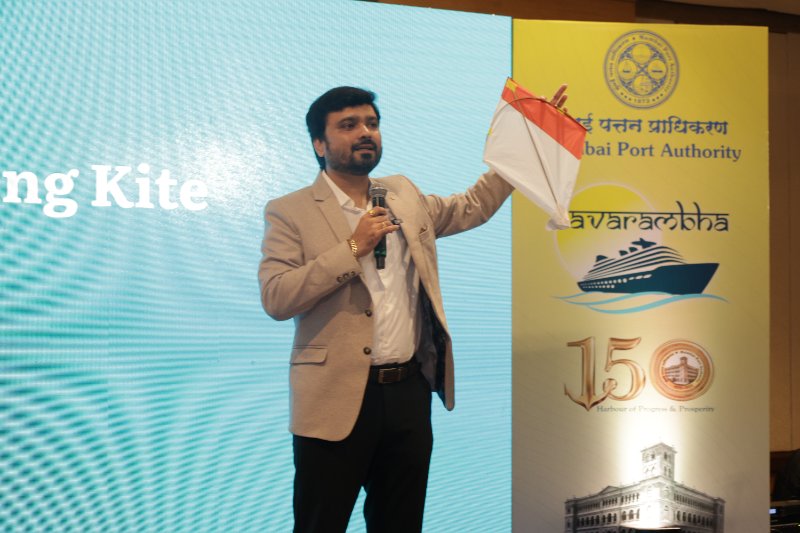
Avinash Chate is an entrepreneur and corporate trainer who runs ABC Trainings and The Future Corporate & Business Coaching, a TEDx speaker and published author. Over the last decade he has trained teams at 1,000-plus organisations and 15,000-plus professionals.
He teaches these skills not from a manual, but because he practises them himself — leading a 100-plus member team of his own. That is the difference working leaders feel in the room.
Design Thinking Training — FAQ
What is Design Thinking Training?
It is a practical programme that teaches teams a human-centred way of solving problems — falling in love with the problem before the solution. It builds the specific habits the approach requires: empathising with real users to find the need beneath the ask, framing the right problem, generating many options before judging, making ideas tangible with cheap prototypes, and testing and iterating with real people. Unlike a lecture on innovation, it is built around a real challenge your team brings, worked through in the room until the mindset actually shifts.
Who should attend this training?
Any team that builds, decides or serves — product, engineering, marketing, sales, operations and service teams, and the cross-functional groups asked to innovate. It is deliberately not just for designers; the whole premise is that human-centred problem-solving is a learnable discipline for every function. It works best run as a mixed team on a live problem, so people from different parts of the business develop a shared language for tackling challenges together.
Isn't design thinking only for designers?
No — and that misunderstanding is exactly what this programme corrects. Design thinking is a way of approaching problems: understand the human need deeply, frame the right problem, explore widely, prototype cheaply and test early. Engineers, marketers, operators and managers all benefit from it, often more than designers do, because it is precisely the step their training skips. The method is a sequence of habits any capable team can learn and run on its own.
Why do smart teams so often build the wrong thing?
Because the instinct to jump to a solution is competence turned against itself. Skilled people are rewarded their whole careers for having the answer fast, so the moment a problem appears they race to something buildable — and skip the uncomfortable work of asking whose problem it really is and what they actually need. They engineer the assumption instead of interrogating it, and every hour invested makes the wrong aim harder to abandon. The fix is not more talent; it is a discipline that forces understanding before building, and that discipline is learnable.
What does the programme cover?
Seven connected modules: the design-thinking mindset of falling in love with the problem; empathising to understand the real user need; defining and framing the right problem; ideating to generate many options before judging; prototyping to make ideas tangible cheaply; testing and iterating with real users; and a hands-on mini design sprint that runs a real challenge end-to-end. Every module pairs a short, usable model with practice on a problem drawn from your own organisation.
How is the training delivered — and how long does it take?
It is highly hands-on — observing, framing, ideating and prototyping, with minimal lecture. The duration is flexible: the same programme runs as a half-day, a full day, a multi-day design-sprint intensive that takes a real problem from empathy to tested prototype, or a modular series that builds the discipline over weeks, and it works well as an ongoing innovation rhythm run for each new challenge. We shape the exact length and cadence with you. For 15 to 40 participants, people are organised into small cross-functional teams so everyone does the work.
Do we work on a real business problem during the training?
Yes — that is the heart of it. Before the session, we identify a live challenge your organisation is genuinely facing, and the team works that problem through the full cycle, from user empathy to a tested prototype. Generic, hypothetical exercises are exactly what makes innovation training forgettable; the value is in running the method on a problem your people actually care about, so they leave with both the skill and the start of a real solution.
Is the programme customised to our organisation?
Yes. The challenge, the examples and the prototyping exercises are built around your context — your industry, your users, the real problems your teams are wrestling with, from a product feature to a customer journey to an internal process. Off-the-shelf innovation training is exactly what fails; the value is in practising the actual empathy, framing and testing your people will use on next quarter's real work.
Can it be delivered on-site, and in which languages?
Yes. Most engagements are across Maharashtra — Pune, Mumbai, Chhatrapati Sambhajinagar, Nashik, Nagpur and the surrounding MIDC industrial belts — and the programme is equally delivered pan-India and internationally on request. Delivery is available in English, Hindi and Marathi, or a natural mix, which helps mixed teams do the messy, human work of empathy and ideation in the language they think in.
Why Avinash Chate for this programme?
Avinash Chate is an entrepreneur and corporate trainer who runs a 100-plus member organisation and solves real product and customer problems himself — so he teaches human-centred design from lived practice, not theory. He is a TEDx speaker and author of The Winning Edge, creator of the KITE leadership framework, and has trained teams at 1,000-plus organisations including RBI, JSW Steel, BARC, the Indian Army and Ferrero, reaching more than 15,000 professionals. That combination of real operating experience and his own frameworks is what working teams respond to.
Related Training Topics
Point your team's talent at the right problem
Teach your teams to fall in love with the problem before the solution — empathy, sharp framing, wide ideation, cheap prototypes and real-user testing. On-site across Maharashtra, pan-India and internationally, in English, Hindi or Marathi.
Request a Proposal →