Motivation & Peak Performance Training
The work gets done and the clock gets watched — and the fire that turns a job into a mission is nowhere in the room.
Your team shows up, and does exactly enough. Tickets close, targets are met to the second decimal, and by six o'clock the office empties like a fire drill. Nothing is technically wrong — and everything quietly is. The energy that makes someone stay ten more minutes to get it right, the pride that makes a person care whether it is good and not merely done, the spark that turns a paycheque into a purpose — it is missing. You have watched the same people come alive at a side project, a sport, a cause on the weekend, and go grey the moment they badge in on Monday. This programme is about lighting that fire at work — not by pushing harder from the outside, but by unlocking what was always there inside.
★ 5.0 client rating · Across Maharashtra, pan-India & internationally · English, Hindi & Marathi
The Fire You Can't Buy — and Keep Trying To
Every leader knows the feeling of a team that is present but not switched on. The output is acceptable and the effort is measured — never a drop more than the job strictly demands. So you reach for the levers everyone reaches for. A bonus to sweeten a hard quarter. A stern word when standards slip. A new incentive scheme, a contest, a leaderboard, a motivational email with an exclamation mark. For a week, something stirs. And then the needle drifts back to exactly where it was, because carrots and sticks move people the way a push moves a stalled car — only while you are pushing, and only as far as your arms reach.
Meanwhile the cost stacks up where no dashboard shows it. The person who could have solved the problem elegantly does it adequately, because adequate is all the job seems to want. The idea that never gets raised in the meeting. The customer who feels, without being able to name it, that they were handled rather than helped. Your most capable people give their discretionary best to a marathon, a startup on the side, a hobby that lights them up — and hand you the leftovers. You are paying full salary for half a heart, and the gap between what your team could produce and what it does is the most expensive number you will never see on a report.
Why Rewards Fizzle — and Why Real Drive Can Be Built
Here is what the pep talks and the incentive decks get backwards: motivation is not a substance you pour into people from the outside. Decades of research — Deci and Ryan, Herzberg, Pink — all point the same way. Money and threats are extrinsic, and extrinsic motivators have a short, sharp half-life; worse, when you dangle a reward for work that was once done for its own sake, you can actually kill the inner drive that was there. What lasts is intrinsic — the pull of doing work you have some control over (autonomy), work you are visibly getting better at (mastery), and work that connects to something bigger than the task (purpose). Those are not soft ideals. They are the levers that produce effort no bonus can buy.
And peak performance itself is not a mood you catch on a good Monday — it is a science with rules. It has a state, called flow, that can be engineered by matching challenge to skill. It has an engine, and the engine runs on the same cycle every elite performer knows: stress plus rest equals growth, while stress without rest equals burnout. It has a method — deliberate practice — that separates people who improve from people who merely repeat. None of this is inspiration; all of it is trainable. This programme replaces the Monday-morning pep talk with the actual mechanics of why humans do their best work — so the same team, unchanged in headcount, produces at a level incentives could never reach.
Does This Sound Familiar?
If your team is competent but flat — turning up, doing enough, saving their real energy for elsewhere — it is almost never that you hired the wrong people or paid them too little. It is that the fire is being chased from the outside instead of unlocked from within. Here is what you are likely seeing, what it is quietly costing, and exactly which part of the programme addresses it.
| The symptom you see | What it is costing you | The real cause | How the programme fixes it |
|---|---|---|---|
| People do precisely the minimum — the task closes, but no one reaches past it | You capture a fraction of the talent you pay for; the best ideas and effort never surface | The work is being driven by extrinsic pressure, so people give exactly what is demanded and no more | The intrinsic-drivers module — autonomy, mastery and purpose that pull real effort |
| Every incentive, contest or bonus lifts energy for a week, then it sags back | Rising spend on rewards for a motivation curve that always returns to flat | Carrots and sticks have a short half-life — and can quietly erode the inner drive they replace | The "what really motivates" module — beyond carrots and sticks |
| People grind for hours but rarely hit that absorbed, effortless, high-output state | Long hours, mediocre output, and work that feels like a slog rather than a pull | The conditions for flow — clear goals, matched challenge, protected focus — are never set up | The flow module — engineering the state where best work happens |
| Your strongest performers are visibly running on empty — tired, cynical, fraying | Burnout, mistakes, and your best people quietly deciding to leave | The team lives in constant stress with no deliberate recovery — the equation is broken | The peak-performance module — stress plus rest, the growth equation |
| Drive collapses the moment things get hard, boring, or a setback lands | Projects stall at the first obstacle; momentum is lost and never rebuilt | No one was taught how to build momentum or hold motivation through a slump | The momentum and the resilience modules — winning habits and sustaining drive |
What Changes When the Fire Comes From Within
Picture the same team — same people, same pay — walking in switched on. Someone stays the extra ten minutes not because a manager is watching but because they cannot leave it half-right. Problems get solved a notch better than the brief asked for, because pride is doing the work now, not compliance. People slip into that absorbed, hours-vanish state where the best work quietly gets done, and they protect it because they have felt how good it is. The energy in the room is generated inside it, not squeezed out of it.
And underneath it, the shift that changes the economics of your whole team: motivation stops being something you have to keep manufacturing and starts being something your people bring. They know how to recover so they do not burn out, how to rebuild momentum after a setback instead of stalling, how to keep going when the work turns boring or brutal. You stop paying full salary for half a heart — and start seeing the level of performance the outside levers could never reach, because it was always an inside job.
What Your People Will Be Able to Do
- ✓ Understand what genuinely drives human effort — and why carrots and sticks stop working
- ✓ Tap their own intrinsic engines — autonomy, mastery and purpose — instead of waiting to be pushed
- ✓ Set up the conditions for flow, and get into their best-work state on demand rather than by luck
- ✓ Apply the science of peak performance — cycling stress and recovery so they grow instead of burn out
- ✓ Build momentum and the daily habits that make high performance automatic, not effortful
- ✓ Sustain motivation through slumps, boredom and setbacks — the point where most drive collapses
- ✓ Leave with a personal peak-performance plan they will actually run after the room empties
What the Programme Covers
Seven connected modules that take a team from going-through-the-motions to genuinely switched on. Every module pairs a short, evidence-based input with real practice on the participant's own work and energy — and ends with a concrete change in how they show up. The final module is hands-on: each person builds a peak-performance plan they walk out with.
These are building blocks, not a fixed-length course. A two-hour session goes deep on the two or three that matter most to you; a half or full day covers more; a multi-day intensive — or an ongoing monthly, quarterly or half-yearly rhythm — works through them all, with far more practice. We shape which ones, in what order and how deep, with you.
What Really Motivates People — Beyond Carrots and Sticks
What we cover: Why the reward-and-threat model is so intuitive and so limited. The short half-life of extrinsic motivators, and the counter-intuitive research showing how a bonus can actually crowd out the drive it was meant to buy. The difference between compliance (doing enough to avoid trouble or earn the treat) and commitment (doing it because it matters). Herzberg's insight that the things that stop people being dissatisfied are not the things that make them motivated. Why "how do I motivate them?" is the wrong question — and what the right one is.
What changes: People stop waiting to be pushed and leaders stop reaching for levers that fizzle — both understand where lasting drive actually comes from.
The Intrinsic Engines — Autonomy, Mastery and Purpose
What we cover: The three drivers that produce effort no incentive can buy. Autonomy — how even small amounts of control over how, when and what turn a task into ownership. Mastery — why visibly getting better at something is one of the most powerful motivators there is, and how to build that sense of progress into ordinary work. Purpose — connecting the daily task to a why that is bigger than the task. Self-Determination Theory made practical, plus relatedness — the pull of doing meaningful work alongside people who matter to you.
What changes: Each person can locate and feed their own intrinsic engines — and leaders learn to design work that switches people on rather than merely paying them.
Finding Flow — Doing Your Best Work
What we cover: Csikszentmihalyi's flow: the absorbed, effortless, high-output state where hours disappear and the work seems to do itself. The exact conditions that trigger it — a clear goal, immediate feedback, and a challenge matched to your skill so you are stretched but not overwhelmed. Why boredom and anxiety are both flow-killers, and how to tune a task back into the channel. Protecting deep focus from the fragmentation of notifications and open-plan noise. Building more flow into a normal working week on purpose.
What changes: People can deliberately create the state their best work comes from — instead of waiting for a rare good day and hoping it strikes.
The Science of Peak Performance — Stress + Recovery
What we cover: The equation every elite performer lives by: stress plus rest equals growth, while stress without rest equals breakdown. Why performance is not about grinding harder but about oscillating — pushing into a demanding challenge, then recovering deliberately so the body and mind actually adapt. Reading the early signals of burnout before it lands. Managing energy rather than just time — physical, mental and emotional. Rest, sleep and detachment treated as performance tools, not indulgences. The myth of the always-on hero, and why it produces worse work.
What changes: People perform at a high level sustainably — cycling effort and recovery so they get stronger over time instead of quietly burning out.
Building Momentum and Winning Habits
What we cover: Why motivation is unreliable and habits are not — and how the highest performers rely on systems, not willpower. The truth beneath the motivation myth: action creates motivation at least as often as motivation creates action, so waiting to "feel ready" is a trap. Starting a streak and the compounding power of small daily wins. Designing an environment that makes the right behaviour the easy one. Anchoring new habits to existing routines. How momentum, once built, becomes its own engine.
What changes: High performance stops depending on how someone feels that morning and becomes automatic — carried by habits and momentum rather than daily effort.
Sustaining Motivation Through Slumps and Setbacks
What we cover: The part no pep talk survives — what to do when the work turns boring, the results stop coming, or a setback knocks you flat. Why drive naturally dips in the messy middle of any hard effort, and how to keep going anyway. Reframing failure as data and feedback rather than verdict. Reconnecting to purpose when the grind obscures it. Protecting motivation from comparison, criticism and self-doubt. Recovering momentum after a break, a loss or a long plateau instead of letting one bad stretch end the whole effort.
What changes: People keep going precisely where most give up — turning slumps and setbacks into a phase they push through rather than a wall they stop at.
Practice — Build Your Personal Peak-Performance Plan
What we cover: A hands-on working session where each participant turns the programme into a plan for themselves. Naming their own intrinsic drivers and where their real motivation lives. Identifying the conditions that put them into flow and how to engineer more of them. Designing their personal stress-and-recovery rhythm. Choosing the one or two keystone habits that will carry their momentum. Writing their plan for the inevitable slump — before it arrives. Built on their actual work, energy and goals, not a generic template.
What changes: Everyone walks out with a concrete, personal peak-performance plan they will actually run — so the fire lit in the room keeps burning long after it empties.
How It Is Delivered
This is not a motivational speech that leaves a nice feeling and no change. It is a working session grounded in the real science of human motivation and performance — Self-Determination Theory, flow, the stress-and-recovery equation, deliberate practice — translated into a handful of ideas people can use on Monday. Participants spend most of their time on their own drivers, their own energy and their own work: finding where their motivation actually lives, tuning a real task into flow, designing their recovery rhythm, and building the plan they will run after the room empties. The models are kept simple and immediately usable; the value is in applying them to the person in the seat.
The format flexes to your needs. It runs as a high-energy half-day, a full-day workshop, a multi-day intensive for a leadership or high-potential cohort, or a modular series spread across weeks so new habits have time to bed in — and it works beautifully as an ongoing rhythm, revisited each quarter to keep the fire from fading. For 20 to 40 participants it is organised into small batches so every person works on their own motivation and plan, not just listens. The exact depth, duration and cadence are shaped with you in the design call.
Formats That Fit Your Calendar
Half-day or full-day workshop
A high-energy session to re-ignite a team or a department — ideal as a kick-off, an offsite centrepiece, or a reset when energy has gone flat.
Multi-day intensive
Two or more days to go deep into intrinsic drive, flow, the performance equation and habit-building — perfect for a leadership team, a high-potential cohort or a sales force that needs to sustain drive.
Modular series over several weeks
Shorter sessions spaced out so people practise flow, recovery and winning habits between them — because motivation and habits change with reps over time, not in a single sitting.
An ongoing performance rhythm
Revisited each quarter or half-year to renew the fire, refresh habits and keep peak performance a living standard rather than a one-day spike that fades.
The Thinking Behind It
This programme is not a bag of quotes and hype. It draws on the best research and writing on motivation and human performance — distilled into a few models a team can use immediately — and then goes further, into the frameworks Avinash uses to keep his own 100-plus member organisation performing at a level incentives alone never could.
Ideas & books we draw on
- Peak — Anders Ericsson & Robert Pool · the definitive science of deliberate practice — how expert performance is built, not born
- Flow — Mihaly Csikszentmihalyi · the foundational work on the absorbed, optimal state where people do their very best work
- The Motivation Myth — Jeff Haden · the counter-intuitive truth that action creates motivation, not the other way around
- Peak Performance — Brad Stulberg & Steve Magness · the stress-plus-rest growth equation drawn from elite athletes and thinkers alike
- Punished by Rewards — Alfie Kohn · the landmark case for why carrots and sticks backfire and erode intrinsic drive
- The Talent Code — Daniel Coyle · how deep practice and motivation physically build skill — greatness grown, not gifted
Models we use to unlock performance
- Self-Determination Theory (Deci & Ryan) · autonomy, competence and relatedness — the three roots of lasting, intrinsic motivation
- Intrinsic vs extrinsic motivation · why the fire that comes from within outlasts and outperforms any reward from without
- Flow (Csikszentmihalyi) · matching challenge to skill to unlock the effortless, high-output best-work state
- Herzberg's two-factor theory · the things that stop dissatisfaction are not the things that create motivation
- Deliberate practice (Ericsson) · focused, feedback-driven repetition — the difference between improving and merely repeating
- The stress + rest equation · stress plus recovery equals growth; stress without recovery equals burnout
And Avinash's own frameworks — the part you won't find anywhere else
Beyond the established thinking, the programme is built on frameworks Avinash has created and written about himself — including his KITE leadership framework and the principles in his book The Winning Edge. These come from actually running a 100-plus member organisation and developing its people year after year, not from a textbook. It is the layer competitors cannot copy, and the one your teams remember long after the session ends.
Who It Is For
Any team that is capable but flat — delivering enough and no more, saving its real energy for elsewhere. Sales forces that need to sustain drive through rejection, operations and delivery teams grinding through repetitive work, knowledge and technical teams whose best output depends on focus and flow, and leaders who are tired of manufacturing motivation from the outside and want people who bring their own. It is especially powerful for high-potential cohorts and any group heading into a demanding stretch, and it works across the shop floor, the office and the field — anywhere the gap between what people could produce and what they do has become expensive.
Taught by Someone Who Runs on This, Not Just Talks About It
Avinash Chate does not teach motivation from a stack of quotes. He runs a 100-plus member organisation whose performance depends every day on people being genuinely switched on rather than merely paid — so the intrinsic drivers, flow conditions and stress-and-recovery discipline taught here are the real thing, tested in his own business. A TEDx speaker and author of The Winning Edge, he has worked with more than 15,000 professionals and 1,000-plus organisations across sectors — from manufacturing floors and sales teams under relentless targets to technical and services teams whose edge is their focus. The result is a session that lights a fire people carry out of the room, not one that fades by Friday.
Why Avinash Chate
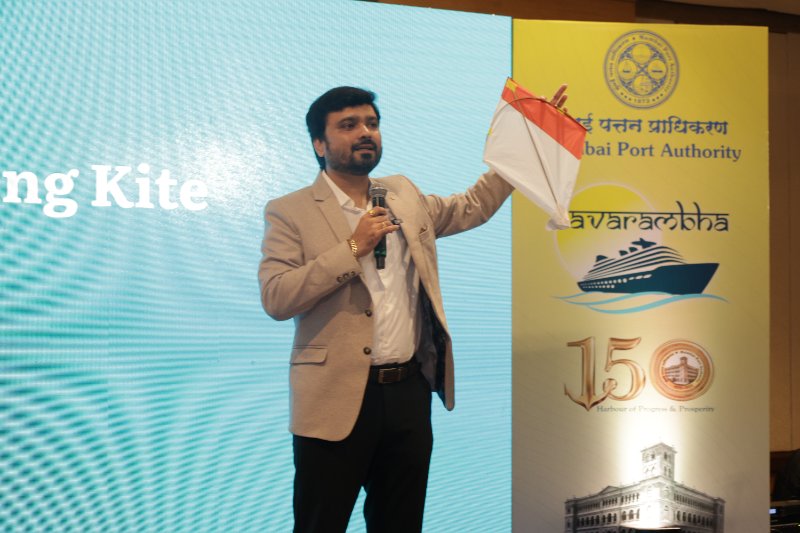
Avinash Chate is an entrepreneur and corporate trainer who runs ABC Trainings and The Future Corporate & Business Coaching, a TEDx speaker and published author. Over the last decade he has trained teams at 1,000-plus organisations and 15,000-plus professionals.
He teaches these skills not from a manual, but because he practises them himself — leading a 100-plus member team of his own. That is the difference working leaders feel in the room.
Motivation & Peak Performance Training — FAQ
What is Motivation & Peak Performance Training?
It is a practical programme that helps people find the drive that carrots and sticks never light — and then perform at their best sustainably. It covers what genuinely motivates human beings beyond rewards and threats, the intrinsic engines of autonomy, mastery and purpose, getting into flow and doing your best work, the science of peak performance through stress and recovery, building momentum and winning habits, and sustaining motivation through slumps and setbacks. Unlike a one-off motivational speech, it treats peak performance as a science with rules — and each person leaves with a personal plan they will actually run.
Who should attend this training?
Any team that is competent but flat — doing enough and saving its real energy for elsewhere. It suits sales forces that must sustain drive through rejection, operations and delivery teams grinding through repetitive work, knowledge and technical teams whose output depends on focus and flow, and leaders who want people who bring their own motivation instead of needing to be pushed. It is especially powerful for high-potential cohorts and any team heading into a demanding stretch, and it works across the shop floor, the office and the field.
Isn't this just a motivational speech that wears off by Friday?
No — and that is the whole point. A pep talk manufactures a feeling from the outside, which is exactly why it fades. This programme is built on the science of why humans are actually driven: Self-Determination Theory, flow, the stress-and-recovery equation, deliberate practice. Instead of pumping people up, it teaches them where lasting drive comes from and how to generate it themselves. People spend most of the time working on their own motivation, energy and habits, and leave with a concrete plan — so the change outlasts the room.
Why do bonuses, incentives and contests stop working?
Because rewards and threats are extrinsic, and extrinsic motivators have a short half-life — they move people while you are actively pushing and no further. Worse, decades of research show that dangling a reward for work someone once did for its own sake can quietly erode the intrinsic drive that was already there. What lasts is intrinsic motivation — autonomy, mastery and purpose — which is why the same team, unchanged in pay, can perform at a level no incentive scheme ever produced once that inner fire is unlocked.
What is flow, and can people really learn to get into it?
Flow is the absorbed, effortless, high-output state where hours vanish and the work seems to do itself — the state your best work comes from. It is not luck: it has conditions you can engineer — a clear goal, immediate feedback, and a challenge matched to your skill so you are stretched but not overwhelmed, plus protected focus. The programme teaches people to recognise those conditions and deliberately set them up in a normal working week, so best-work moments stop being a rare good day and become something they can create on purpose.
How does the programme prevent burnout while raising performance?
By teaching the equation every elite performer lives by: stress plus rest equals growth, while stress without rest equals breakdown. Peak performance is not about grinding harder — it is about oscillating between demanding effort and deliberate recovery so the body and mind actually adapt and get stronger. People learn to read the early signals of burnout, to manage energy rather than just time, and to treat rest and recovery as performance tools. The result is a high level sustained over time, not a spike followed by a crash.
Is the programme customised to our organisation?
Yes. The examples, the pace and the practice are shaped around your context — your industry, the kind of work your people do, and the specific way motivation is leaking in your team, whether that is a sales floor fighting rejection fatigue or a technical team losing focus to constant interruption. People work on their own real tasks, energy and goals throughout, and the personal peak-performance plan each person builds is grounded in their actual role. Generic motivation content is exactly what fades; the value is in applying it to the person in the seat.
Can it be delivered on-site, and in which languages?
Yes. Most engagements are across Maharashtra — Pune, Mumbai, Chhatrapati Sambhajinagar, Nashik, Nagpur and the surrounding MIDC industrial belts — and the programme is equally delivered pan-India and internationally on request. Delivery is available in English, Hindi and Marathi, or a natural mix, which matters especially for shop-floor and field teams where the fire has to be lit in the language people actually think in.
How is it delivered — and how long does it take?
It is highly interactive — participants work on their own motivation, energy and habits, with minimal lecture. The duration is flexible: the same programme runs as a high-energy half-day, a full day, a multi-day intensive for a cohort, or a modular series spread across weeks so new habits have time to bed in, and it works well as an ongoing rhythm revisited each quarter. We shape the exact length and cadence with you. For 20 to 40 participants, sessions are organised into small batches so everyone works on their own plan.
Why Avinash Chate for this programme?
Avinash Chate is an entrepreneur and corporate trainer who runs a 100-plus member organisation whose performance depends on people being genuinely switched on, not merely paid — so he teaches motivation and peak performance from lived experience, not theory. He is a TEDx speaker and author of The Winning Edge, creator of the KITE leadership framework, and has worked with more than 15,000 professionals across 1,000-plus organisations. That combination of real operating experience, the science of performance, and his own frameworks is what makes the fire he lights actually last.
Related Training Topics
Light the fire incentives never could
Give your team the science of real motivation and peak performance — intrinsic drive, flow, stress and recovery, momentum and habits — so the same people produce at a level carrots and sticks could never reach. On-site across Maharashtra, pan-India and internationally, in English, Hindi or Marathi.
Request a Proposal →