AI for Leaders & Managers Training
The board wants an AI strategy. The team wants reassurance. You have neither a framework nor a straight answer.
You are caught in the middle, and it is an exhausting place to stand. Above you, a board or a boss asking what the organisation is "doing about AI," expecting a strategy you have not been given the tools to build. Below you, a team where half are quietly racing ahead with tools you have not sanctioned, and half are quietly terrified the technology is coming for their jobs. All around you, a firehose of noise — every week a new tool, a new headline, a new claim that everything has changed again. And inside you, the honest, unspoken truth: you are not sure which of it is real. This programme is built for exactly that moment. It does not teach you the tools — those change every month. It teaches you the judgement to lead through them.
★ 5.0 client rating · Across Maharashtra, pan-India & internationally · English, Hindi & Marathi
The Pressure to "Do Something About AI" — With No Framework to Decide What
Almost every leader is living some version of this now. The mandate has arrived from the top — become an "AI-first" function, find the efficiencies, do not get left behind — but the mandate came without a map. So the leader does what pressured leaders do: they announce a licence for a tool, they run a workshop, they form a committee, and they hope that motion looks like strategy. Meanwhile the real decisions go unmade. Which of these tasks should we actually hand to a machine? Which roles do we augment and which do we genuinely rethink? What are our people allowed to paste into these systems, and what would be a data breach waiting to happen?
And the cost of that indecision is not loud — it is quiet, and it compounds. Ambitious people, tired of waiting for permission, adopt tools in the shadows and pour sensitive information into them. Anxious people, hearing nothing reassuring, assume the worst and start updating their résumés. The organisation either strangles the upside with a blanket ban or invites disaster with a free-for-all. A year passes, a competitor moves faster or a client learns their data went somewhere it should not have, and in the review nobody names the real failure: this was never a technology problem. It was a leadership problem wearing a technology mask — and no one led.
Why Smart Leaders Freeze on AI — And Why It Is Entirely Learnable
Here is the thing few will admit in the meeting: most leaders are frozen on AI not because they are not clever enough, but because they have been handed the wrong problem. The industry has trained everyone to believe that leading on AI means understanding the technology — so a capable, senior person feels quietly disqualified because they cannot explain a large language model or keep up with the tool of the week. But that is a category error. Deciding what to automate, whom to protect, what your policy should be, and how to carry a frightened team through change are not engineering questions. They are leadership questions — the very ones this leader has answered a hundred times in every other context.
The tools genuinely do change monthly, which is exactly why chasing them is a trap; by the time you have mastered one, the ground has moved. What does not change is the judgement underneath: how to separate a real capability from a marketing claim, how to decide where a human must stay in the loop, how to set a boundary that protects the business without killing curiosity, how to lead people who are afraid. That judgement is completely learnable — it is a set of frameworks and decisions, practised deliberately — and this programme builds it, so a leader stops waiting to feel "technical enough" and starts leading the change from the seat they already hold.
Does This Sound Familiar?
If any of these sound like your organisation right now, it is almost never a sign that you or your managers are behind on the technology. It is a sign that no one has given leadership a framework for the decisions AI actually demands. Here is what you are likely seeing, what it is quietly costing, and exactly which part of the programme addresses it.
| The symptom you see | What it is costing you | The real cause | How the programme fixes it |
|---|---|---|---|
| The mandate is "do something about AI," but no one can say what "done" looks like | Motion mistaken for strategy — licences bought, committees formed, and the real decisions still unmade | Leadership has been handed a technology brief when what it needs is a decision framework | The leader's real job in the AI era — reframing it as leadership, not engineering |
| Half the team is quietly using AI tools you never sanctioned | Sensitive data flowing into unknown systems, and no way to know what has already left the building | There is no policy, so people improvise one privately — the vacuum gets filled either way | Setting AI policy, guardrails and responsible use |
| You cannot tell which tools are genuine signal and which are marketing noise | Money and attention chased toward the loudest demo instead of the highest-value use | No shared way to test a claimed capability against what the business actually needs | Understanding AI's real business impact — separating signal from hype |
| People are afraid AI is coming for their jobs, and no one is saying anything | Quiet disengagement, résumés going out, and your best people hedging their bets | Fear left unnamed always fills the silence with the worst-case story | Driving adoption and leading people through the fear of change |
| You know some work could be automated, but you cannot decide what should be | Either paralysis, or reckless automation of the very judgement a human needed to keep | No lens for sorting tasks into automate, augment or leave-human — so nothing moves cleanly | Deciding what to automate, augment or leave human |
What Changes When You Lead AI Instead of React to It
Picture walking into the AI conversation as its steadiest voice instead of its most anxious one. When the board asks about strategy, you have a clear answer built on a framework you can defend — this is what we automate, this is what we augment, this is where a human stays in the loop, and here is why. When a shiny new tool lands, you can tell in minutes whether it is signal or noise, because you are testing it against real work rather than the demo. Your team has a policy they trust — one that protects the business without treating them like children — so the shadow usage comes into the light and the data stops leaking.
And underneath it all, the shift that makes the whole thing worth it: your people stop being afraid. Because you named the fear honestly, showed them where AI makes their work bigger rather than smaller, and led the change instead of letting it happen to them, they lean in. You become the leader who turned the most disorienting shift of the decade into a source of advantage — calm, clear, and genuinely in front of it, without ever needing to become an engineer.
What You and Your Managers Will Be Able to Do
- ✓ Reframe the AI challenge as a leadership problem you already have the instincts to solve — not an engineering one
- ✓ Separate real AI capability from marketing hype, and judge where it genuinely creates value for your business
- ✓ Decide, using a clear lens, what to automate, what to augment and what to deliberately keep human
- ✓ Lead and motivate a team where humans and AI work together — redesigning roles rather than just cutting them
- ✓ Write and enforce a practical AI-use policy with guardrails that protect data without strangling curiosity
- ✓ Drive genuine adoption across the team, converting both the resisters and the reckless enthusiasts
- ✓ Name and lead people through the fear of change, so your best people lean in instead of quietly leaving
What the Programme Covers
Seven connected modules that take a leader from pressured and uncertain to clear and in front of it. Every module pairs a short, durable framework — one that will still hold when this year's tools are forgotten — with real practice on the exact decisions a leader faces: what to automate, what to permit, how to reassure. It is deliberately tool-agnostic, because the products change monthly and the judgement is what lasts.
These are building blocks, not a fixed-length course. A two-hour session goes deep on the two or three that matter most to you; a half or full day covers more; a multi-day intensive — or an ongoing monthly, quarterly or half-yearly rhythm — works through them all, with far more practice. We shape which ones, in what order and how deep, with you.
The Leader's Real Job in the AI Era — Beyond the Hype
What we cover: Why leading on AI is a leadership challenge, not a technical one — and why so many capable leaders freeze by believing the opposite. Separating the two conversations that get tangled together: the technology (which changes monthly and belongs to others) and the decisions (which are yours and do not). The three pressures every leader is caught between — the board above, the team below, the noise all around — and how to hold all three. Why chasing the tool of the week is a trap, and what to build instead: durable principles for deciding, permitting and reassuring.
What changes: The leader stops waiting to feel "technical enough" and starts leading the AI shift from the seat they already hold — with clarity about what the job actually is.
Understanding AI's Business Impact — What's Real, What's Not
What we cover: A plain-language, durable mental model of what generative AI and AI assistants are genuinely good at and where they reliably fail — pattern, prediction and language versus judgement, accountability and truth. Separating signal from hype: a simple way to test a claimed capability against the work your business actually does, rather than the vendor's demo. Where AI creates real value (and where it quietly creates risk or cost). Why "it can do anything" and "it is just a toy" are both wrong, and how a leader calibrates between them without needing to understand the engineering.
What changes: The leader can hear any AI claim — from a vendor, a headline or an eager team member — and judge in minutes whether it is signal or noise for their business.
Automate, Augment or Leave Human — The Central Decision
What we cover: The single most important lens a leader needs: sorting work into what to automate, what to augment and what to deliberately keep human. Why "can it be automated?" is the wrong first question and "should it be?" is the right one. Where a human must stay in the loop — for judgement, accountability, empathy or the cost of being wrong. Redesigning a role around augmentation rather than simply cutting headcount. Deciding with incomplete information and revisiting the call as the work — and the tools — change.
What changes: The leader can look at any workflow in their function and make a clear, defensible call on what a machine should do, what it should assist, and what stays firmly human.
Leading and Motivating AI-Augmented Teams
What we cover: What changes about leadership when your team is part human, part machine. Motivating people whose roles are shifting under them — protecting dignity, purpose and growth when the "what" of the job is being redrawn. Redistributing work fairly as AI absorbs the routine parts. Keeping human skills — judgement, relationships, creativity, critical thinking — valued and developed rather than quietly hollowed out. Handling the two hard camps at once: the resister who fears the tool and the enthusiast who over-trusts it. Building a team culture where AI is a colleague to direct, not a threat to survive or a crutch to hide behind.
What changes: The leader builds a team that uses AI to do bigger, better work — engaged and growing — rather than one that is anxious, deskilled or quietly checked out.
Setting AI Policy, Guardrails and Responsible Use
What we cover: Why the absence of a policy is itself a policy — and a dangerous one. Writing a practical AI-use policy in plain language: what people may and may not put into these systems, where confidential and personal data must never go, and who is accountable when AI is in the loop. Guardrails that protect the business without strangling curiosity — the difference between a boundary and a ban. Human-in-the-loop rules for high-stakes decisions. Bias, accuracy, disclosure and the reputational cost of getting it wrong. Bringing shadow usage into the light so you can actually govern it.
What changes: The leader can put a clear, trusted policy in front of the team — one that stops the data leaking and the shadow usage, while keeping the upside fully alive.
Driving Adoption and Leading Through the Fear of Change
What we cover: Why AI adoption is a change-management problem first and a technology rollout second. Naming the fear honestly — of redundancy, of irrelevance, of not being able to keep up — because unspoken fear always fills the silence with the worst story. Reading where people sit on the adoption curve and leading each group differently, from the eager few to the deeply reluctant. Communicating the change so it lands as opportunity rather than threat. Creating early wins and safe practice so belief is built by experience, not slogans. Sustaining momentum past the initial burst so adoption becomes how the team works, not a campaign that fades.
What changes: The leader moves a team from fear and resistance to genuine, willing adoption — so people lean into the change instead of quietly waiting it out or leaving.
Practice — Build Your Team's AI Game-Plan
What we cover: A working session where each leader builds the real thing they came for: their own function's AI game-plan. Mapping their team's actual workflows through the automate-augment-leave-human lens. Drafting the first version of an AI-use policy in their own words. Rehearsing the hard conversations live — reassuring the frightened team member, redirecting the reckless enthusiast, answering the board's "what is our AI strategy?" with a straight, defensible reply. Pressure-tested on real situations from the participants' own organisations, not a generic case study.
What changes: The leader walks out with a first-draft policy, a mapped set of automate/augment/human decisions, and the hard conversations already rehearsed once — ready to lead on Monday.
How It Is Delivered
This is not a lecture about the technology, and it is deliberately not a tutorial on any tool — because whichever tool you demo today will have changed by the next quarter, and a leader's job was never to operate the software anyway. It is a decision workshop. Leaders spend most of the time working on their own real situations: sorting their team's actual work into automate, augment or leave-human; drafting the policy they will genuinely publish; and rehearsing the exact conversations — with the board, the resister, the over-eager enthusiast — that the shift demands. The frameworks are kept simple and durable so they still hold when the headlines move on; the practice is where the confidence is built.
The format flexes to your needs. It runs as a focused half-day to align a leadership team quickly, a full-day workshop, a multi-day intensive for a senior cohort building a shared AI playbook, or a modular series that lets leaders apply each decision to their function between sessions — and it works especially well as an ongoing rhythm, revisited as the organisation's AI maturity grows and new questions surface. For a leadership group it is run in small batches so every leader actually decides and rehearses, not just listens. The exact depth, cadence and emphasis are shaped with you in the design call, around where your organisation genuinely is on the curve.
Formats That Fit Your Calendar
Half-day or full-day leadership workshop
A high-impact session to get a leadership team aligned fast — a shared language for automate-versus-augment and a first cut at policy, ideal when the "do something about AI" pressure has just landed.
Multi-day intensive
Two or more days for a senior cohort to build a genuine, shared AI playbook — decision frameworks, a draft policy and an adoption plan for the whole function, not just awareness.
Modular series across the quarter
Shorter sessions with real application in between, so each leader tests the automate-augment lens and the policy on their own team before the group reconvenes to sharpen it.
An ongoing leadership rhythm
Revisited as your AI maturity grows — because the leadership questions deepen as adoption spreads, and a standing forum keeps the judgement ahead of the tools rather than behind them.
The Thinking Behind It
This programme is not a generic slide deck about "the future of AI." It draws on the most serious thinking on how AI reshapes strategy, organisations and decisions — distilled into a few durable frameworks a leader can use immediately — and then goes further, into the leadership frameworks Avinash uses to carry his own 100-plus member organisation through wave after wave of technology change. The tools in these books will date; the judgement in them will not.
Ideas & books we draw on
- Competing in the Age of AI — Marco Iansiti & Karim Lakhani · the Harvard view of how AI rewires an organisation's operating model — strategy for leaders, not tips for users
- Prediction Machines — Ajay Agrawal, Joshua Gans & Avi Goldfarb · reframes AI as cheap prediction, giving leaders a durable economic lens for deciding where it actually pays
- Power and Prediction — Ajay Agrawal, Joshua Gans & Avi Goldfarb · goes to the unit that matters — the decision — and where a human's judgement must stay in the loop
- The Age of AI — Henry Kissinger, Eric Schmidt & Daniel Huttenlocher · the big-picture, statesman's view of what AI means for knowledge, society and responsible leadership
- The Coming Wave — Mustafa Suleyman · from a leading AI builder — the containment problem, and why leaders must set guardrails now, not later
- The Algorithmic Leader — Mike Walsh · ten practical principles for leading and deciding well when the machines around you are getting smarter
Frameworks we use to lead with AI
- Automate / augment / eliminate · the core lens — sort each task by whether a machine should replace, assist or stay out of it
- The technology-adoption curve (Rogers) · innovators to laggards — read where each person sits and lead the group accordingly
- Human-in-the-loop · keeping a person in judgement, accountability and high-stakes calls rather than fully handing them over
- An AI-use policy & guardrails · plain-language rules for what may go into these systems — a boundary that protects without banning
- Signal versus hype · a simple test of any AI claim against the work your business actually does, not the demo
And Avinash's own frameworks — the part you won't find anywhere else
Beyond the established thinking, the programme is built on frameworks Avinash has created and written about himself — including his KITE leadership framework and the principles in his book The Winning Edge. These come from actually running a 100-plus member organisation and developing its people year after year, not from a textbook. It is the layer competitors cannot copy, and the one your leaders remember long after the session ends.
Who It Is For
Any leader or manager who owns people and outcomes and is now expected to have a view on AI — team leads, department heads, functional and business-unit leaders, and the senior team setting direction for the whole organisation. It is not for engineers or data scientists building the models; it is for the leaders who must decide what to do with them, set the policy, and carry the team through the change. It is especially powerful run as a leadership cohort, so a group builds one shared language and a single, consistent AI game-plan — rather than every manager improvising a different answer to the same pressure. On factory floors, in IT and services, and across sales and operations, it is the bridge that turns "we should do something about AI" into a clear, led plan.
Taught by a Leader Who Leads Through Technology Change Himself
Avinash Chate is an unusual fit for this. He is an M.Tech who taught himself more than twenty technical tools — so he is genuinely fluent in what technology can and cannot do — and, at the same time, one of India's most trusted leadership and behavioural trainers, running a 100-plus member organisation that he has personally led through wave after wave of new tools. He does not teach this as a distant futurist; he teaches the human side of AI — deciding what to automate, leading augmented teams, setting policy, managing the fear — because he lives those exact decisions in his own business. Programmes that build leadership and change capability have been delivered across sectors, from manufacturing and IT to sales and services, to the very leaders now being asked to lead their people into the age of AI.
Why Avinash Chate
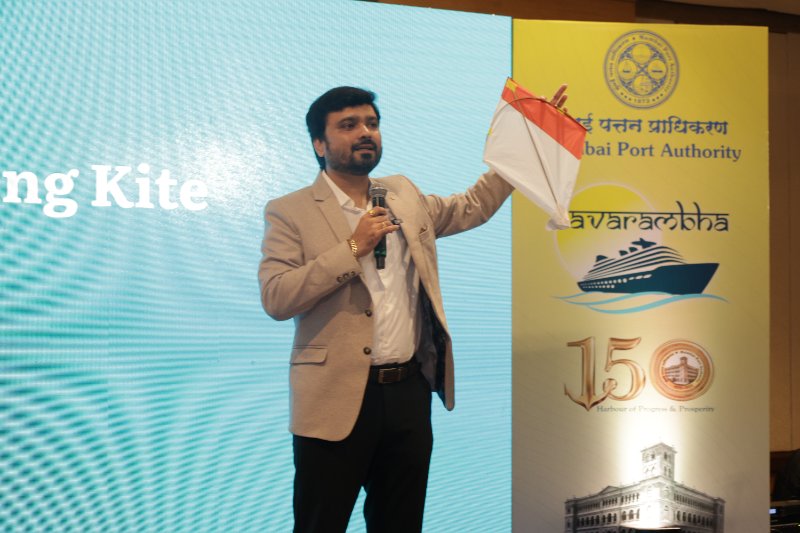
Avinash Chate is an entrepreneur and corporate trainer who runs ABC Trainings and The Future Corporate & Business Coaching, a TEDx speaker and published author. Over the last decade he has trained teams at 1,000-plus organisations and 15,000-plus professionals.
He teaches these skills not from a manual, but because he practises them himself — leading a 100-plus member team of his own. That is the difference working leaders feel in the room.
AI for Leaders & Managers Training — FAQ
What is AI for Leaders & Managers Training?
It is a leadership development programme for the people who must lead an organisation through the age of AI — not the engineers who build the models. It builds the judgement the moment actually demands: reframing AI as a leadership challenge rather than a technical one, separating real capability from hype, deciding what to automate versus augment versus keep human, leading AI-augmented teams, setting a practical use policy with guardrails, and driving adoption while managing genuine fear. It is deliberately tool-agnostic, because the products change every month while the leadership principles endure.
Do I need to be technical, or understand how AI works, to benefit?
No — and that is the point. Many capable leaders freeze on AI because they have been told, wrongly, that leading on it means understanding the technology. Deciding what to automate, whom to protect, what your policy should be and how to carry a frightened team through change are leadership questions, not engineering ones. The programme uses plain language, needs no coding or data-science background, and is built for the leader who must make the calls — not the specialist who builds the systems.
Will this go out of date as AI tools keep changing?
No, by design. The programme deliberately teaches no specific tool or product, because whatever we demonstrated today would be different within a quarter — and chasing the tool of the week is precisely the trap it warns against. Instead it builds durable frameworks: how to judge signal from hype, how to decide where a human stays in the loop, how to set guardrails, how to lead people through change. Those principles hold for years even as the tools underneath them change every month, which is exactly why a leader needs principles rather than product knowledge.
Who should attend this training?
Team leads, managers, department and functional heads, business-unit leaders and the senior team setting organisational direction — anyone who owns people and outcomes and is now expected to have a view on AI. It is at its most powerful run as a leadership cohort, so a group builds a single shared language and one consistent AI game-plan instead of each manager improvising a different answer. It is not aimed at engineers or data scientists building models; it is for the leaders deciding what to do with them.
What does the programme cover?
Seven connected modules: the leader's real job in the AI era beyond the hype; understanding AI's business impact and what is real versus not; deciding what to automate, augment or leave human; leading and motivating AI-augmented teams; setting AI policy, guardrails and responsible use; driving adoption and leading through the fear of change; and a practice session where each leader builds their own team's AI game-plan. Every module pairs a durable framework with practice on real situations from your own organisation.
How is the training delivered — and how long does it take?
It is highly interactive — real decisions, drafting and rehearsal, with minimal lecture and no tool tutorials. The duration is flexible: the same programme runs as a half-day to align a leadership team quickly, a full day, a multi-day intensive for a senior cohort building a shared playbook, or a modular series that lets leaders apply each decision to their function between sessions, and it works well as an ongoing rhythm revisited as your AI maturity grows. We shape the exact length, cadence and emphasis with you. For a leadership group, sessions run in small batches so every leader actually decides and rehearses.
We do not even have an AI policy yet. Is that a problem?
That is one of the best reasons to run this. The absence of a policy is itself a policy — usually a dangerous one, because people quietly improvise their own and sensitive data starts flowing into systems you cannot see. The programme walks your leaders through drafting a practical, plain-language use policy in their own words — what may and may not go into these systems, where personal and confidential data must never go, and where a human must stay accountable — so you leave with a real first draft, not just the intention to write one.
Is the programme customised to our organisation?
Yes. Before the first session, the examples, the workflows we sort and the scenarios we rehearse are built around your context — your industry, your structure, where you genuinely sit on the AI curve, and the real pressures your leaders face. Generic AI-leadership training is exactly what fails, because the value is in making the actual automate-versus-augment calls for your work and drafting the policy your people will actually follow — not in watching a slide about someone else's transformation.
Can it be delivered on-site, and in which languages?
Yes. Most engagements are across Maharashtra — Pune, Mumbai, Chhatrapati Sambhajinagar, Nashik, Nagpur and the surrounding MIDC industrial belts — and the programme is equally delivered pan-India and internationally on request. Delivery is available in English, Hindi and Marathi, or a natural mix, which matters when a leadership group spans the boardroom and the shop floor and everyone needs to leave with the same shared plan.
Why Avinash Chate for this programme?
Because he sits at the rare intersection this topic needs. Avinash Chate is an M.Tech who self-taught more than twenty technical tools, so he is genuinely fluent in what technology can and cannot do — and he is also one of India's most trusted leadership and behavioural trainers, a TEDx speaker and author of The Winning Edge, creator of the KITE leadership framework, who runs a 100-plus member organisation he has personally led through wave after wave of new technology. He teaches the human and leadership side of AI from lived experience, having trained teams at 1,000-plus organisations and 15,000-plus professionals — not as a distant futurist, but as a leader who makes these exact decisions himself.
Related Training Topics
Lead the age of AI instead of reacting to it
Give your leaders the judgement no tool can provide — what to automate, what to augment, what to keep human, how to set policy and how to carry the team through the fear. Tool-agnostic and built to last, on-site across Maharashtra, pan-India and internationally, in English, Hindi or Marathi.
Request a Proposal →